
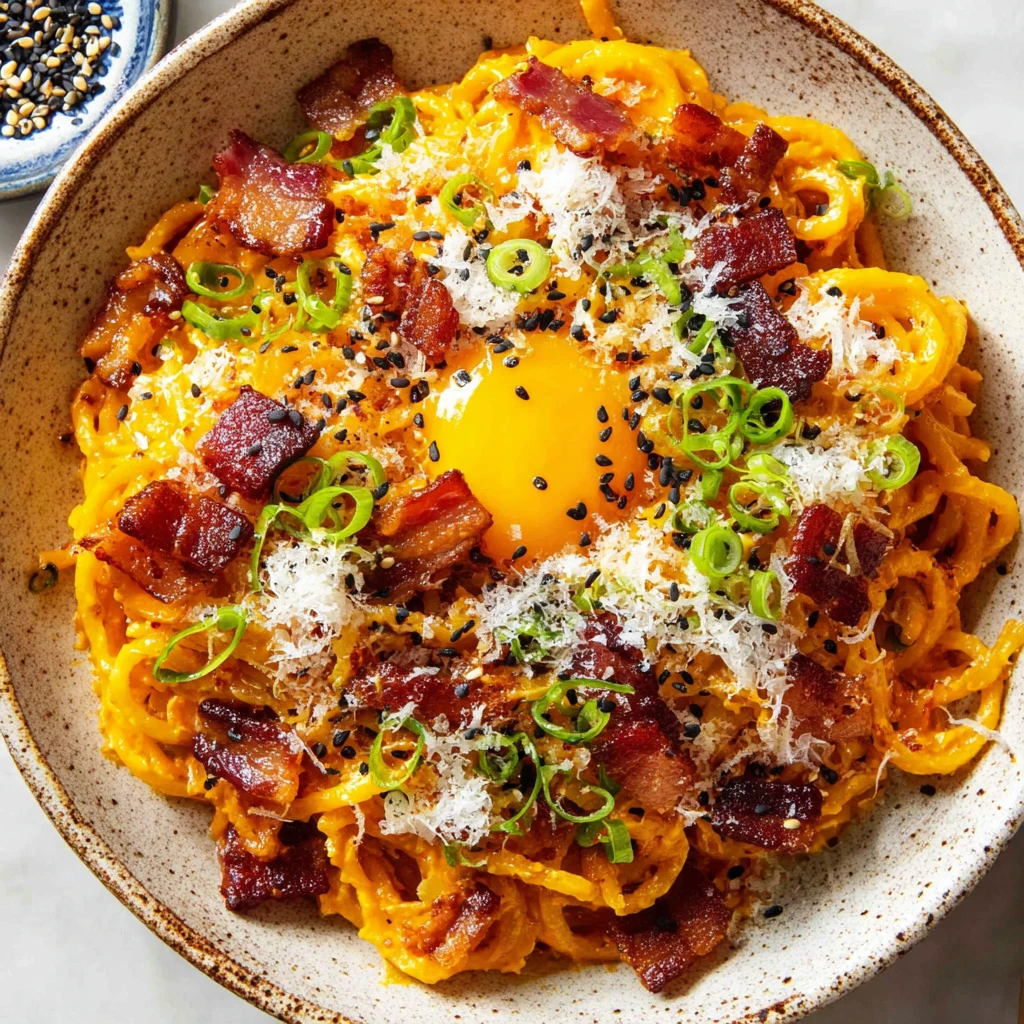
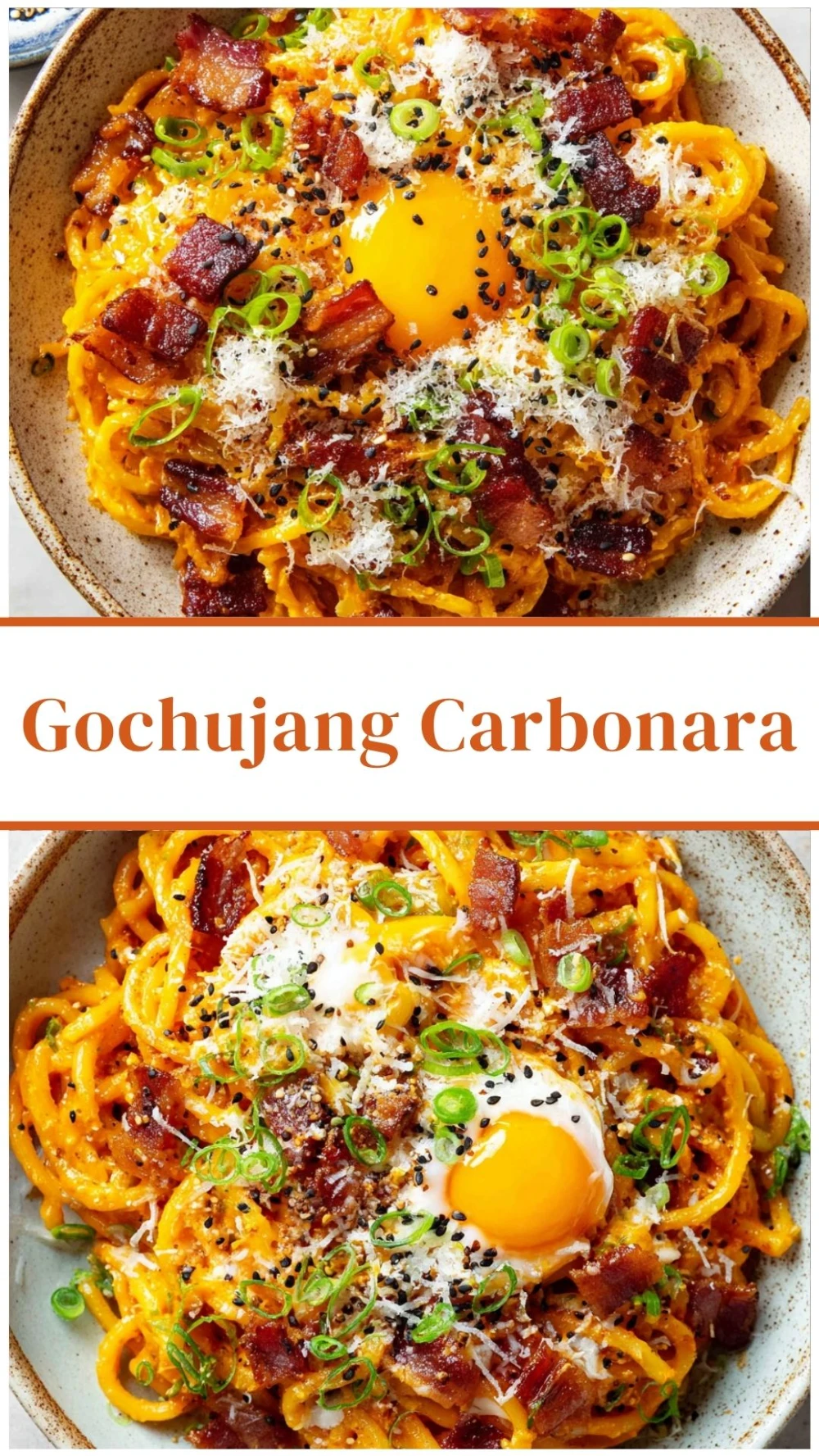
Gochujang Carbonara
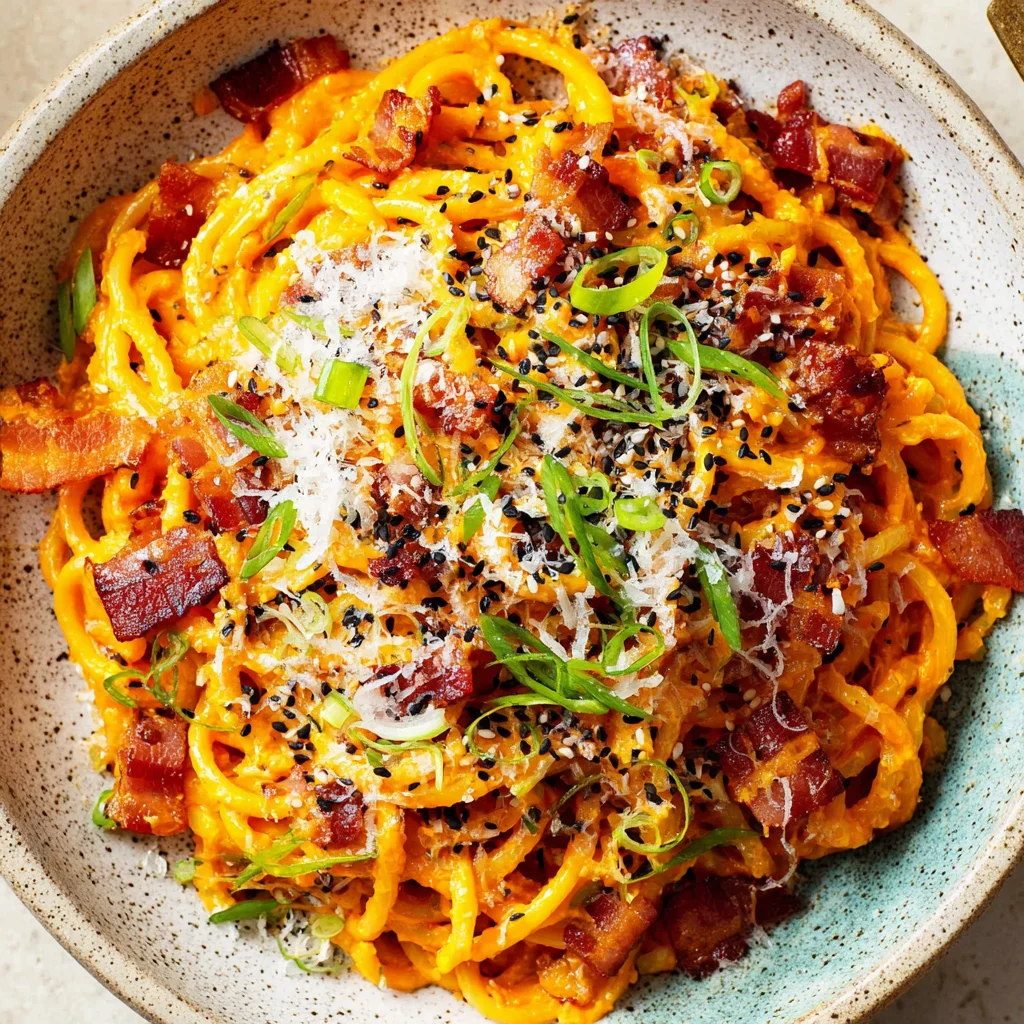
This Gochujang Carbonara is a vibrant and audacious twist on the beloved Italian classic, infusing the rich, savory depth of traditional carbonara with the complex, spicy-sweet kick of Korean gochujang. Creamy, cheesy, and utterly irresistible, it's a culinary fusion that delivers comfort with an exciting burst of flavor. This dish transforms simple ingredients into an extraordinary meal, perfect for a quick weeknight dinner or an impressive gathering.
Prep Time
15 minutes
Cook Time
20-25 minutes
Total Time
35-40 minutes
Servings
4-6 servings
Keywords
Why This Recipe Delivers
- A captivating fusion of Italian comfort and Korean spice.
- Ready in under an hour, perfect for weeknight meals.
- Incredibly creamy texture with a delightful kick.
- Transforms simple ingredients into an unforgettable dish.
- Highly customizable spice level with Gochujang.
Ingredients
- Approximately 280-300 grams (10 ounces) thick-cut bacon
- Approximately 75-85 grams (¾ cup or 3 ounces) grated Pecorino Romano or Parmesan cheese, plus extra for garnishing
- 2 large eggs, at room temperature
- 30 to 45 milliliters (2 to 3 tablespoons) Gochujang (Korean chili paste), adjusted to desired spice level
- 5 grams (1 teaspoon) kosher salt, plus additional to taste
- 2.5 grams (½ teaspoon) garlic powder
- Freshly ground black pepper, to taste
- Approximately 340 grams (12 ounces) dried pasta (fettuccine, conchiglie, or shellbows are recommended)
- 240 milliliters (1 cup) reserved pasta water
- For garnish:
- 2 scallions, thinly sliced
- Toasted sesame seeds (both black and white for visual appeal)
- Lemon zest, optional, for a bright finish
Instructions
- Prepare the bacon. Add the bacon to a large skillet or pan and place over medium heat. Cook the bacon on both sides until it reaches a beautiful golden-brown crispness. If the pan begins to smoke, gently lower the heat to maintain a steady sizzle. Once cooked, transfer the bacon to a cutting board lined with paper towels to absorb any excess grease. Coarsely chop the crispy bacon and set it aside.
- Create the creamy Gochujang sauce. In a medium-sized bowl, thoroughly whisk together the grated Pecorino Romano or Parmesan cheese, two large room-temperature eggs, the Gochujang, kosher salt, garlic powder, and a generous amount of freshly ground black pepper. Whisk until all ingredients are well-combined and the mixture is smooth. Set this sauce aside.
- Cook the pasta. Bring a large pot of generously salted water to a rapid boil over high heat. Add your chosen pasta and cook until it is al dente, following the package directions. Before draining, carefully reserve 240 milliliters (1 cup) of the starchy pasta water. Then, remove the pot from the heat and drain the pasta thoroughly.
- Combine pasta and sauce. Immediately return the hot, drained pasta to the pot. Promptly pour the prepared egg and cheese mixture over the pasta. Using tongs, quickly and vigorously toss and coat the pasta with the sauce. The residual heat from the pasta is crucial here; it will gently cook the eggs into a luxurious, creamy sauce without scrambling them. The sauce should be glossy and cling to the noodles.
- Achieve perfect creaminess and season. Gradually stream in approximately 120 milliliters (½ cup) of the reserved pasta water while continuing to toss. This starchy water helps to emulsify the sauce, creating a smooth and glossy consistency. Add more pasta water, a tablespoon at a time, if needed, to achieve your desired level of creaminess. Taste the finished dish and adjust seasoning with additional salt or pepper as required.
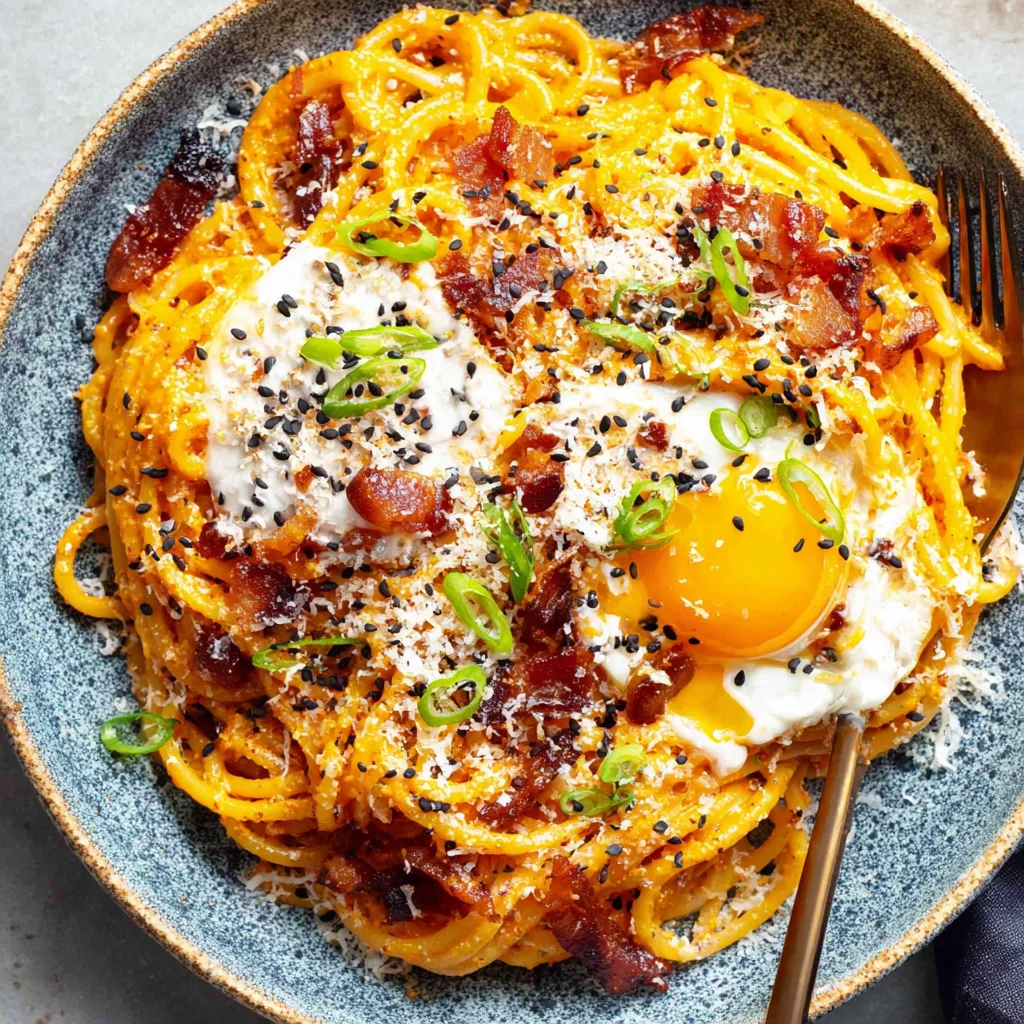
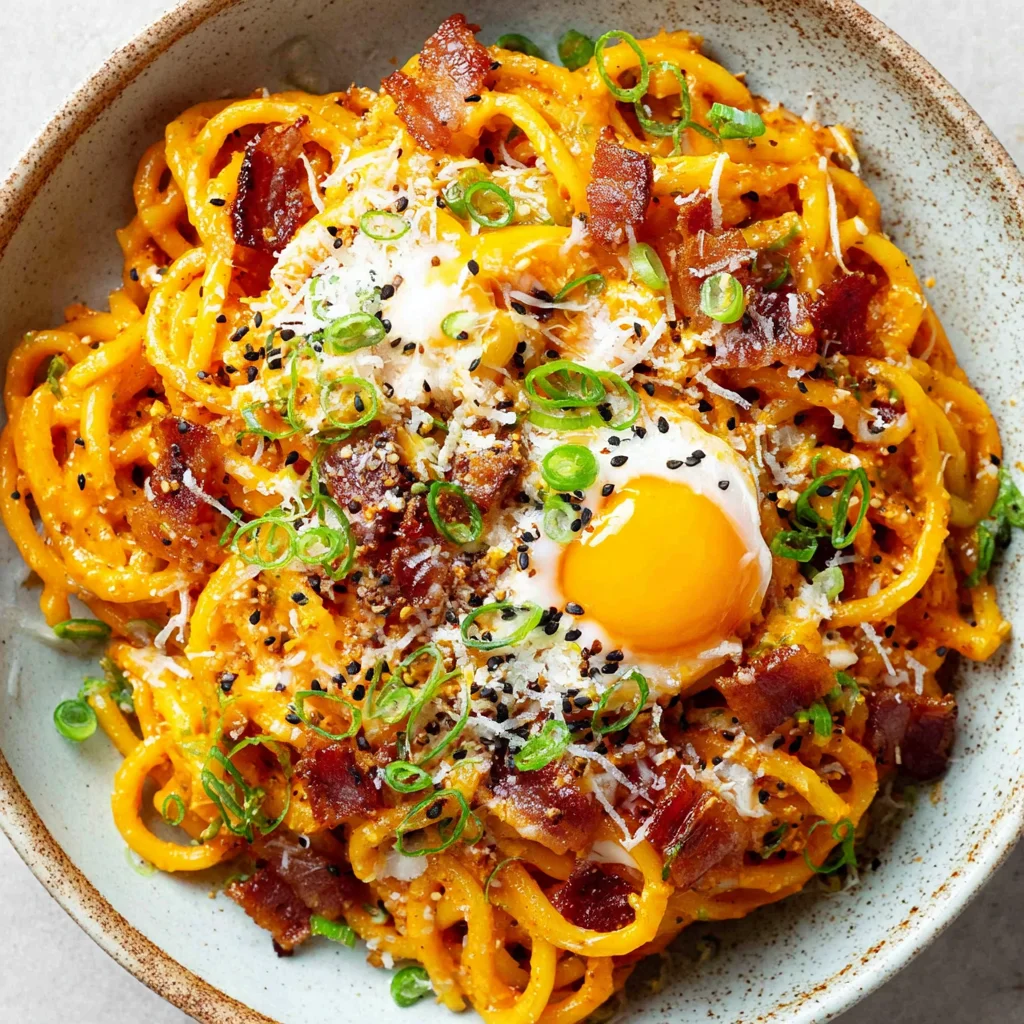
- Serve and garnish. Divide the Gochujang Carbonara evenly among serving bowls or plates. Generously top each portion with the reserved chopped crispy bacon pieces. Sprinkle each bowl with approximately 15 grams (1 tablespoon) of additional grated or shaved Parmesan and a scattering of thinly sliced scallions. For a bright, zesty counterpoint, consider adding a little lemon or lime zest on top. Finish with a final flourish of toasted sesame seeds and serve immediately.
Tools You’ll Need
- Large skillet or baking sheet (for bacon)
- Large pot (for pasta)
- Medium mixing bowl
- Whisk
- Tongs
- Cutting board
- Measuring cups and spoons
Essential Success Tips
- Ensure your eggs are at room temperature; this helps them emulsify more smoothly into the sauce without curdling.
- Work quickly when combining the egg mixture with the hot pasta. Rapid tossing is key to creating a creamy sauce and preventing the eggs from scrambling.
- Always reserve more pasta water than you think you'll need. It's the secret ingredient for adjusting sauce consistency.
- Use good quality Pecorino Romano or Parmesan cheese for the best flavor and melting properties.
- Taste and adjust seasoning, especially salt and Gochujang, as you go to suit your preference.
Professional Cooking Secrets
- For an even richer sauce, consider using egg yolks only, or a combination of whole eggs and extra yolks, ensuring the eggs are whisked very thoroughly before adding to the pasta.
- The quality of your Gochujang makes a difference. Opt for a reputable brand for a more authentic and balanced flavor profile in your carbonara.
- After draining the pasta, do not rinse it. The starch clinging to the noodles is essential for helping the sauce adhere and emulsify properly.
Notes
- This dish is best enjoyed immediately after preparation.
- Storage: While best fresh, leftovers can be stored in an airtight container in the refrigerator for up to 2 days. Reheat gently on the stovetop with a splash of water or broth to loosen the sauce, or microwave briefly.
- Variations: For a vegetarian version, omit the bacon and use a smoked mushroom or roasted vegetable substitute. Adjust Gochujang levels to your preferred spice.
Frequently Asked Questions
Can I use a different type of pasta?
Absolutely! While fettuccine, conchiglie, and shellbows are excellent for capturing the creamy sauce, feel free to use spaghetti, bucatini, or rigatoni. The key is to choose a pasta that holds sauce well.
How can I make this less spicy or spicier?
To reduce the spice, start with 30 milliliters (2 tablespoons) of Gochujang or even less, tasting as you add. For more heat, increase to 45 milliliters (3 tablespoons) or add a pinch of red pepper flakes with the garlic powder.
Why are my eggs scrambling instead of forming a creamy sauce?
This usually happens if the pasta is too hot, or you're not tossing quickly enough. Ensure the pasta is drained and immediately transferred to the pot, then quickly add the egg mixture and toss vigorously. Removing the pot from direct heat before adding the sauce also helps prevent scrambling, allowing the residual heat to gently cook the eggs.
Nutrition Facts (Per Serving)
Calories: 600-700, Protein: 30-40g, Fat: 35-45g, Carbs: 40-50g (per serving, estimated for 1/4 of recipe).
Allergy Information
Contains dairy (cheese), eggs, and gluten (pasta). For a gluten-free version, use gluten-free pasta.

No comment