
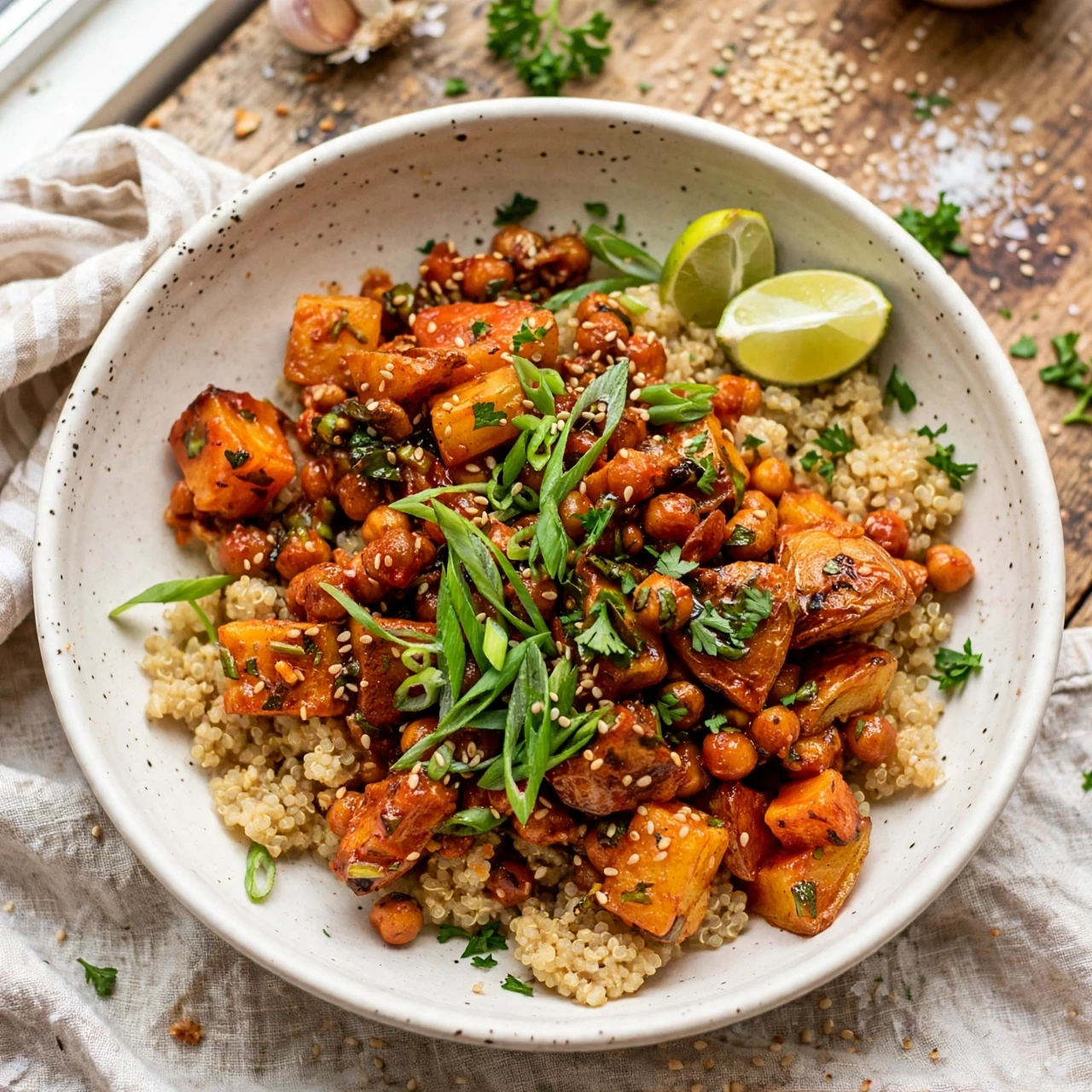
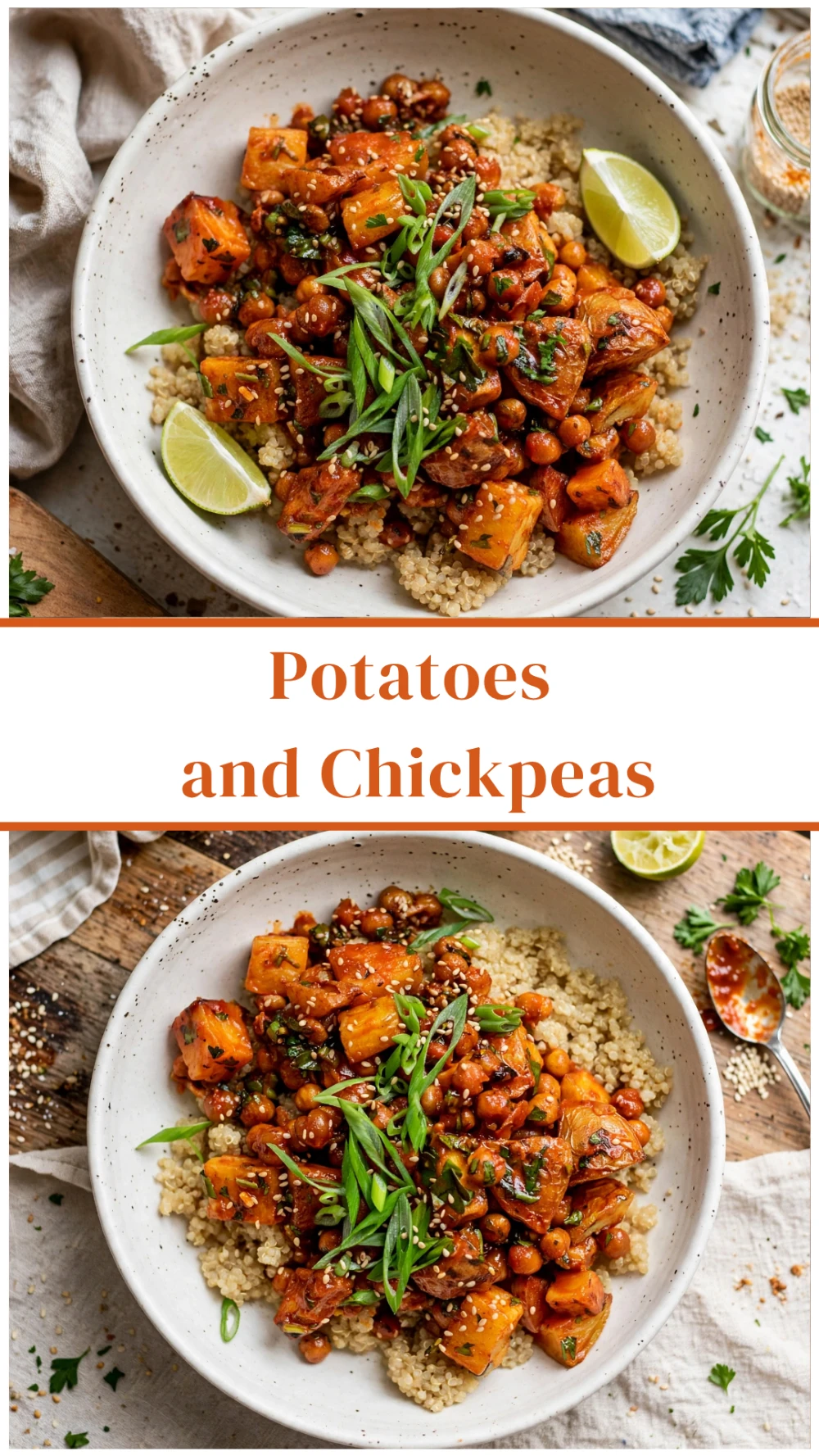
Spicy Gochujang Roasted Potatoes and Chickpeas with Fluffy Quinoa
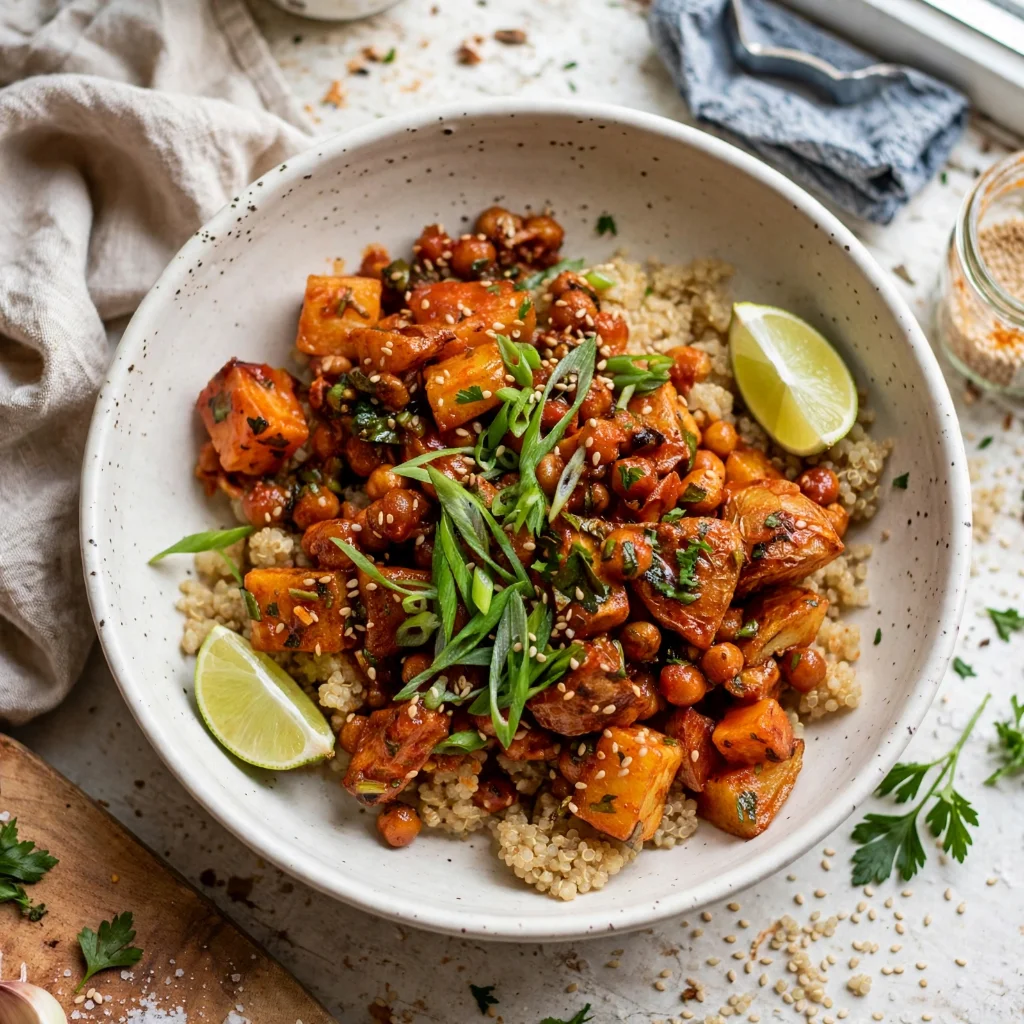
Experience a symphony of textures and bold flavors with this Spicy Gochujang Roasted Potatoes and Chickpeas dish, perfectly paired with fluffy quinoa. Crispy, golden potatoes and tender chickpeas are coated in a vibrant, savory-sweet gochujang sauce with a hint of lime, making for an incredibly satisfying and wholesome meal. This recipe is a fantastic way to elevate simple pantry staples into a dynamic and memorable dining experience.
Prep Time
25 minutes
Cook Time
30 minutes
Total Time
55 minutes
Servings
4 servings
Keywords
Why This Recipe Delivers
- A vibrant and incredibly flavorful dish that satisfies both savory and sweet cravings with a spicy kick.
- Packed with plant-based protein and fiber, making it a wholesome and energizing meal.
- Features beautifully crispy potatoes and tender, seasoned chickpeas roasted to perfection.
- Relatively quick and straightforward to prepare, ideal for a delicious weeknight dinner.
- Naturally gluten-free and easily adaptable to other dietary needs.
Ingredients
- 2-3 Yukon gold potatoes (approximately 450-600 g / 1-1.3 lb), cut into 1.9 cm (3/4 inch) cubes
- 1 can (425 g / 15 oz) chickpeas, rinsed and drained
- 15 ml (1 tbsp) cornstarch
- 2.5 ml (1/2 tsp) dry thyme or 8 sprigs fresh thyme, leaves removed
- 30-45 ml (2-3 tbsp) avocado oil or high-heat oil of choice
- 120 g (1/2 cup) dry quinoa, rinsed well
- 240 ml (1 cup) boiling water
- 2.5 ml (1/2 tsp) vegetable bouillon paste
- Salt and freshly ground black pepper to taste
- For the Gochujang Sauce:
- 30 ml (2 tbsp) gluten-free gochujang (adjust to your spice preference)
- 30 ml (2 tbsp) maple syrup
- 15 ml (1 tbsp) rice wine vinegar
- 15 ml (1 tbsp) tamari or soy sauce
- 15 ml (1 tbsp) water
- 1 clove garlic, finely grated
- Juice and zest of half a lime
- 2 spring onions (scallions), thinly sliced with whites and greens separated
- 60 ml (1/4 cup) fresh parsley, minced
- Sesame seeds for garnish, optional
Instructions
- Preheat your oven to 218°C (425°F). Prepare an ice bath by filling a large bowl with cold water and a few ice cubes. Add the cubed potatoes to this ice water and allow them to soak for 10 minutes; this step helps to remove excess starch, leading to crispier roasted potatoes.
- While the potatoes are soaking, thoroughly dry your rinsed chickpeas using a clean kitchen towel. Place the dried chickpeas on a large, parchment paper-lined baking tray. Remove the potatoes from the ice water, rinse them once more, and then pat them completely dry. Place the dried potatoes on the opposite side of the same baking tray, ensuring they are separate from the chickpeas.
- Sprinkle the cornstarch, dry thyme (or fresh thyme leaves), a generous pinch of salt, and freshly ground black pepper over both the potatoes and chickpeas. Drizzle with enough avocado oil (or your chosen high-heat oil) to lightly coat everything. Toss the ingredients gently on the tray until the potatoes and chickpeas are evenly coated. Spread them out in a single layer, ensuring there is sufficient space between them for even roasting and maximum crispiness.
- In a small ramekin or an oven-safe dish, add the rinsed dry quinoa. In a separate bowl, whisk together the boiling water and vegetable bouillon paste until dissolved. Pour this broth mixture over the quinoa. Cover the quinoa dish tightly with aluminum foil or an oven-safe lid.
- Carefully place the baking tray with the potatoes and chickpeas, along with the covered quinoa dish, into the preheated oven. If your baking tray isn't large enough to accommodate both without crowding, use a separate small oven-safe tray for the quinoa. Roast everything for 20 minutes.
- After 20 minutes, remove the baking tray from the oven. Carefully flip the potatoes and chickpeas to ensure even browning. Return the tray to the oven and cook for an additional 10 minutes, or until the potatoes are beautifully golden around the edges and fork-tender, and the chickpeas are slightly crisp.
- Once done, remove both the potato/chickpea tray and the quinoa from the oven. Keep the quinoa covered for an extra 5 minutes to allow it to steam and absorb any remaining moisture. After 5 minutes, remove the foil or lid from the quinoa and fluff it gently with a fork. Let it stand while you prepare the sauce.
- In a large mixing bowl, combine the gochujang, maple syrup, rice wine vinegar, tamari (or soy sauce), 15 ml (1 tbsp) of water, grated garlic, and the juice and zest of half a lime. Whisk all these ingredients together until well combined. Taste the sauce and adjust the sweetness, acidity, or spice level to your preference by adding more syrup, vinegar, or gochujang.
- Stir the white parts of the sliced spring onions into the prepared gochujang sauce. Add the hot roasted chickpeas and potatoes along with the minced fresh parsley to the bowl with the sauce. Gently toss everything together until the potatoes and chickpeas are thoroughly coated in the vibrant sauce.
- To serve, create a base of the fluffy quinoa on individual plates. Spoon a generous portion of the sauced potato and chickpea mixture over the quinoa. Garnish with the green parts of the sliced spring onions and a sprinkle of sesame seeds, if desired, for extra flavor and visual appeal. Serve immediately and enjoy!
Tools You’ll Need
- Large mixing bowl
- Cutting board and sharp knife
- Large baking tray
- Parchment paper
- Small ramekin or oven-safe dish with lid/foil
- Whisk
- Grater (for garlic)
- Citrus juicer/zester
- Measuring cups and spoons
- Kitchen towel
Essential Success Tips
- For the crispiest potatoes, ensure they are thoroughly dried after soaking and before coating with cornstarch and oil. Excess moisture is the enemy of crispiness!
- Do not overcrowd the baking tray. Spreading the potatoes and chickpeas in a single layer with space between them is crucial for proper roasting and browning. If your tray is too small, use two trays.
- Taste the gochujang sauce before adding the roasted components. Adjust the balance of sweet, sour, and spicy to perfectly match your palate.
- Rinsing quinoa thoroughly before cooking helps to remove saponins, which can impart a bitter taste, ensuring a light and fluffy result.
- Don't skip the final resting time for the quinoa. Keeping it covered allows it to steam, resulting in a perfectly tender and fluffy texture.
Professional Cooking Secrets
- Toasting the sesame seeds lightly in a dry pan for a minute or two before garnishing will enhance their nutty aroma and flavor, adding another layer of depth to the dish.
- If you like a more complex heat, consider adding a pinch of gochugaru (Korean chili flakes) to the roasting vegetables alongside the thyme for a smoky, nuanced spice.
- For an extra layer of umami in the sauce, a tiny splash of toasted sesame oil (1-2 ml) can be added, but be careful not to overpower the gochujang.
Notes
- Leftovers can be stored in an airtight container in the refrigerator for up to 3 days. Reheat gently in a pan or microwave.
- For a vegetarian (not vegan) option, a drizzle of honey could replace maple syrup in the sauce.
- Feel free to add other roasted vegetables like bell peppers or broccoli florets to the tray for a more substantial meal.
Frequently Asked Questions
Can I make this dish less spicy?
Yes, absolutely! The spice level primarily comes from the gochujang. You can reduce the amount of gochujang to 1 tablespoon or even less, or opt for a mild gochujang variety. You can also increase the maple syrup slightly to balance the heat.
What if I don't have fresh lime?
If fresh lime isn't available, you can substitute with 5 ml (1 teaspoon) of apple cider vinegar or white wine vinegar for the acidity, though the fresh zest and juice add a unique brightness that is hard to replicate.
Can I prepare any part of this ahead of time?
You can pre-cut and soak the potatoes for a few hours in the refrigerator. The gochujang sauce can also be made a day in advance and stored in the fridge. Cook the quinoa and roast the vegetables fresh for the best texture and flavor.
Nutrition Facts (Per Serving)
Calories: 480, Protein: 18g, Fat: 15g, Carbs: 70g, Fiber: 12g (per serving, approximate)
Allergy Information
Contains soy (from tamari/soy sauce). For a soy-free version, ensure your gochujang is soy-free and use coconut aminos instead of tamari/soy sauce. Naturally gluten-free if using tamari and gluten-free gochujang, and always check bouillon paste for gluten-free certification.

No comment