
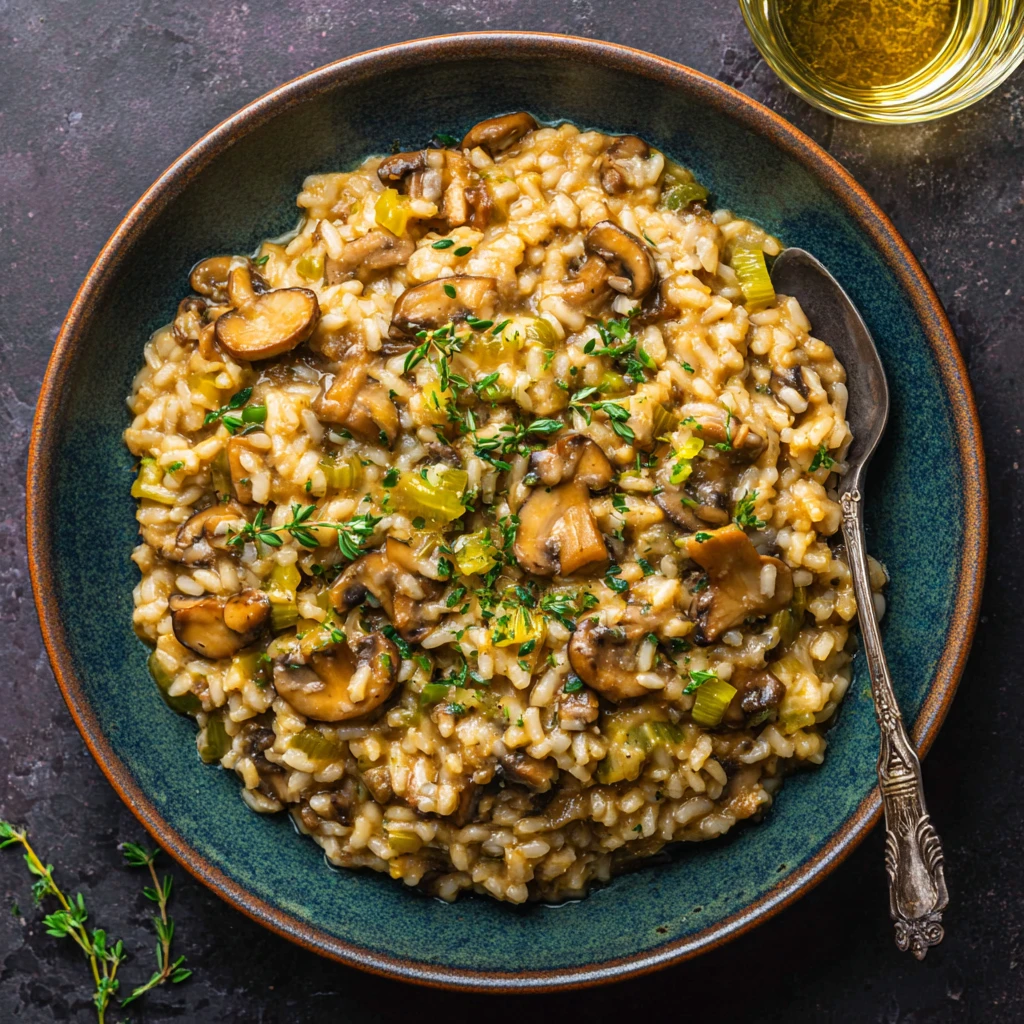
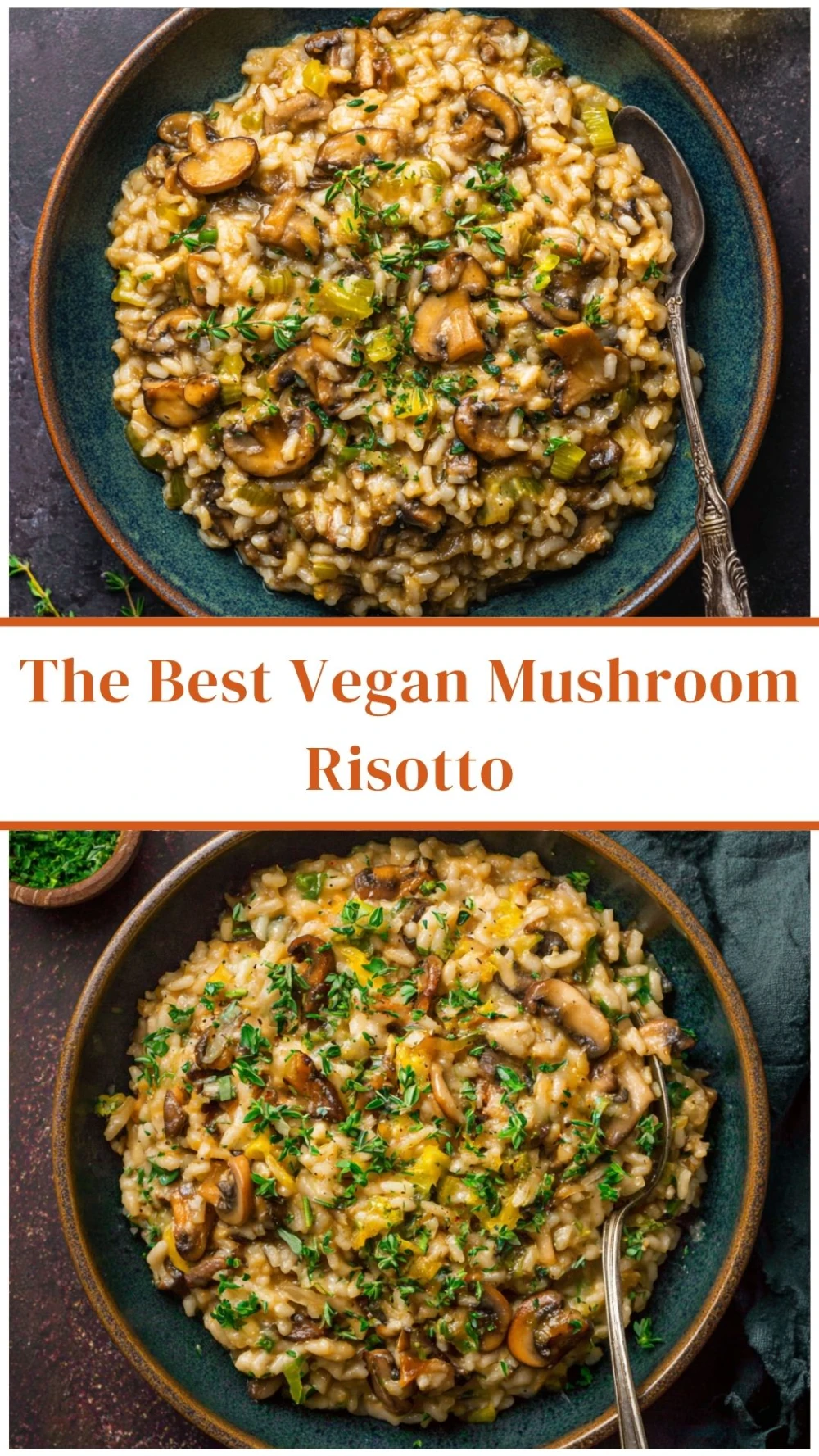
The Best Vegan Mushroom Risotto
Experience the luxurious creaminess of a classic risotto, reimagined for a plant-based diet. This vegan mushroom risotto boasts rich umami flavors from sautéed mixed mushrooms, infused with garlic and thyme, and a velvety texture achieved through a clever miso butter technique. It's a comforting, sophisticated dish that will impress even the most discerning palates.
Prep Time
20 minutes
Cook Time
45 minutes
Total Time
1 hour 5 minutes
Servings
4 servings
Keywords
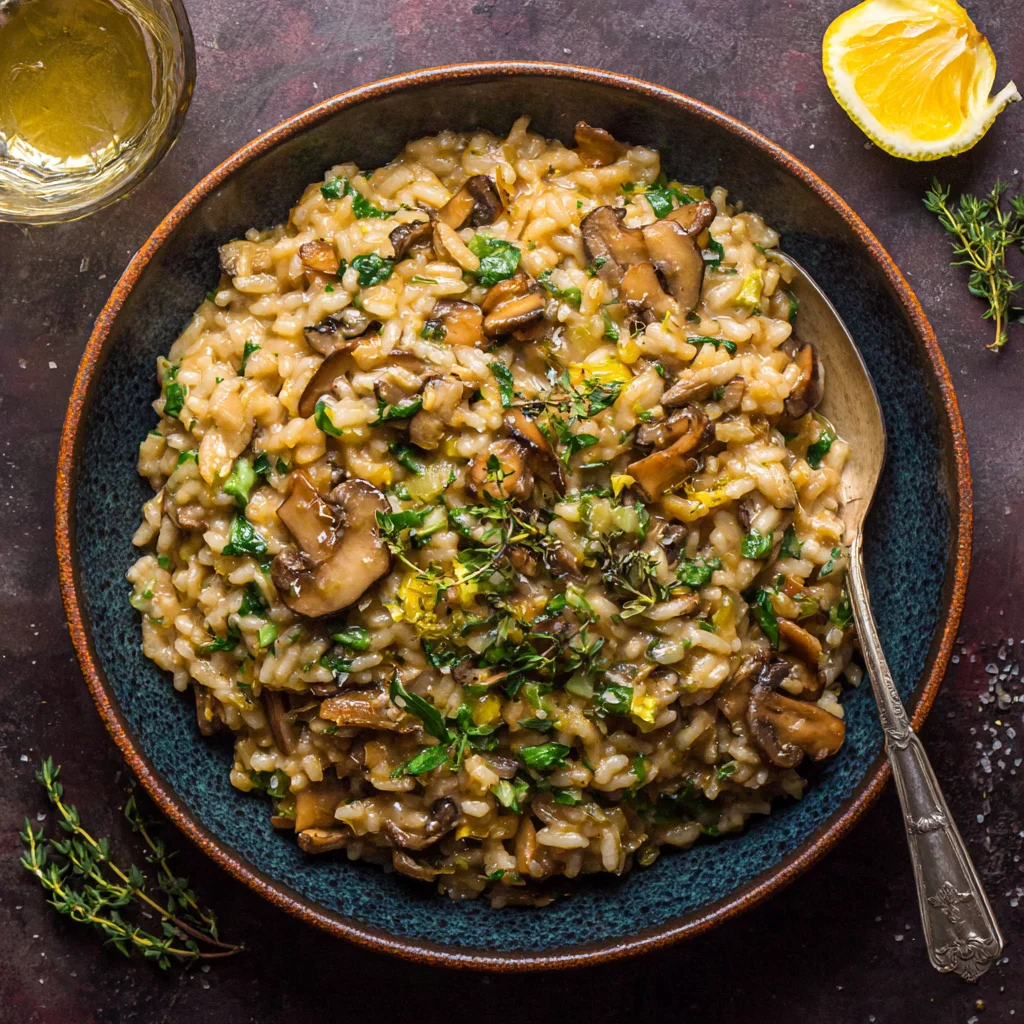
Why This Recipe Delivers
- Achieves an incredibly creamy, luxurious texture without any dairy products.
- Packed with deep, earthy umami flavor from mixed mushrooms and white miso paste.
- A sophisticated and satisfying meal that's surprisingly easy to make.
- Perfect for a comforting weeknight dinner or an elegant plant-based entrée for guests.
- Highly customizable with different mushroom varieties or seasonal vegetables.
Ingredients
- 56 grams (4 tablespoons) vegan butter, softened at room temperature
- 30-35 grams (2 tablespoons) white miso paste, softened at room temperature
- 570 grams (20 ounces) mixed mushrooms, such as cremini, shiitake, or oyster, sliced or torn
- 45 milliliters (3 tablespoons) extra virgin olive oil, divided
- 2 tablespoons roughly chopped fresh thyme leaves
- 6 garlic cloves, minced and divided in half
- 1.5 to 1.9 liters (6 to 8 cups) low-sodium vegetable broth
- 2 large leeks (white & light green parts only), thoroughly cleaned and diced
- 1/2 teaspoon kosher salt, plus more to taste
- Freshly cracked black pepper, to taste
- Approximately 370 grams (2 cups) Carnaroli rice or Arborio rice
- 160 milliliters (2/3 cup) dry white wine, such as Sauvignon Blanc or Pinot Grigio
- 30 grams (1/4 cup) vegan parmesan cheese, grated (optional)
- 1 handful fresh Italian flat-leaf parsley, chopped (for garnish)
Instructions
- Take the vegan butter and white miso paste out of the refrigerator and place them in a small bowl to soften at room temperature. Once softened, use a fork to cream them together until they are thoroughly combined into a smooth mixture. This allows the flavors to meld beautifully and distribute evenly.
- Pour the vegetable broth into a medium saucepan. Bring it to a rapid simmer over medium-high heat, then reduce the heat to low to maintain a gentle, consistent simmer. Keeping the broth warm is crucial for the risotto's texture, as cold broth can shock the rice and prolong cooking time.
- Heat a large frying pan or skillet over medium-high heat. Add 15 milliliters (1 tablespoon) of the olive oil. If you are using a stainless steel or cast iron pan, you may need a bit more oil to prevent sticking. Once the oil is shimmering, add the sliced or torn mushrooms to the pan. Cook them undisturbed for a few minutes to allow a beautiful golden-brown crust to develop, which enhances their flavor and texture.
- Continue cooking the mushrooms for a total of 8 to 9 minutes, stirring only occasionally, until they are nicely browned and have released most of their moisture. Reduce the heat to medium. Add the chopped fresh thyme and half of the minced garlic to the mushrooms. Season with 1/2 teaspoon of kosher salt. Cook for 2 to 4 minutes, stirring frequently to ensure the garlic doesn't burn and the thyme releases its aromatic oils.
- Add the prepared creamed miso butter to the mushrooms. Stir frequently for 2 minutes, ensuring the miso butter thoroughly coats the mushrooms. This step infuses the mushrooms with a rich, umami-packed creaminess. Season with an additional pinch of salt and freshly cracked black pepper to taste, then set the cooked mushrooms aside.
- Heat a Dutch oven or a heavy-bottomed deep sauté pan over medium heat. Add the remaining 30 milliliters (2 tablespoons) of olive oil. Once the oil is hot and shimmering, add the diced leeks and the remaining half of the minced garlic. Sauté for 2 to 3 minutes, stirring occasionally, until the leeks have just softened and become translucent, releasing their sweet aroma.
- Add the Carnaroli or Arborio rice to the pan with the leeks and garlic. Stir quickly and continuously for 60 to 90 seconds, ensuring every grain of rice is well-coated with the olive oil. This
- Pour in the dry white wine. Stir vigorously, scraping any flavorful bits stuck to the bottom of the pot. Continue cooking, stirring constantly, until the wine is almost completely absorbed by the rice and the strong alcoholic smell has dissipated, which usually takes about 3 to 4 minutes. This step is crucial for deglazing and adding depth of flavor.
- Begin adding the warm vegetable broth, one ladleful at a time, approximately 240 milliliters (1 cup) per addition. Stir the rice frequently but not constantly. The goal is to allow the rice to slowly absorb the liquid and release its starches.
- Continue this process, stirring about every 30 seconds and adding the next ladle of broth only when most of the previous liquid has been absorbed by the rice. This gradual addition and constant stirring are key to achieving the signature creamy texture of risotto.
- The entire process of adding broth should take about 20 minutes, or until the risotto reaches an al dente consistency – slightly firm with a creamy texture, but not too soft or mushy. To test for doneness, you can place a few grains of rice on a flat surface and smear downwards with your finger; it should be fairly smooth, and you should still be able to see a tiny bit of the white, al dente center of the rice grain.
- Once the risotto has reached the desired consistency, add the previously cooked mushrooms back into the pot. Stir gently to thoroughly combine and warm them through with the creamy rice.
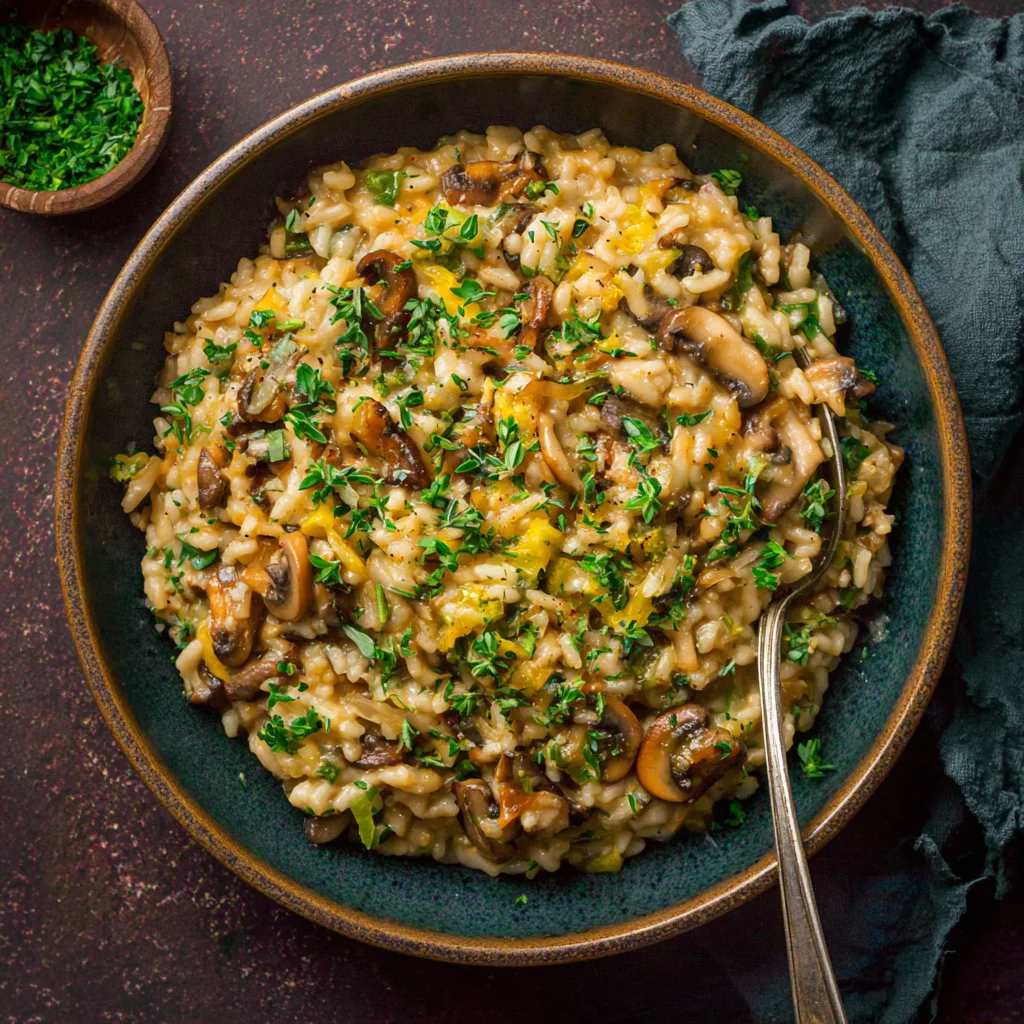
- Thirteenth Step: Remove the risotto from the heat. If using, stir in the grated vegan parmesan cheese. Taste the risotto for seasoning, adding more kosher salt and freshly cracked black pepper as needed to enhance the flavors. Garnish generously with freshly chopped Italian flat-leaf parsley and serve immediately while hot and creamy.
Tools You’ll Need
- Large frying pan or skillet
- Medium saucepan
- Dutch oven or heavy-bottomed deep sauté pan
- Cutting board
- Sharp knife
- Measuring cups and spoons
- Wooden spoon or sturdy spatula
- Ladle
- Small bowl and fork for miso butter
Essential Success Tips
- Keep your vegetable broth simmering gently on a separate burner throughout the risotto cooking process. Adding warm broth maintains a consistent temperature in the pot, which helps the rice cook evenly and absorb liquid efficiently.
- Resist the urge to stir the mushrooms too much during their initial cooking phase. Allowing them to sit undisturbed for a few minutes helps them achieve a beautiful golden-brown sear, which intensifies their flavor and texture.
- The key to creamy risotto is the constant, but not excessive, stirring. This motion gently rubs the starches off the rice grains, creating the desired velvety consistency. However, don't stir constantly, allow the rice a moment to absorb the liquid before the next stir.
- Doneness Test: When testing the rice for al dente, look for a slight resistance in the center, not a hard crunch. The outside should be creamy, and the inside should still have a very subtle bite. Overcooked risotto becomes mushy.
- Choose the right pan: A Dutch oven or a heavy-bottomed deep sauté pan ensures even heat distribution, which is crucial for preventing sticking and achieving uniform cooking of the rice.
Professional Cooking Secrets
- The miso butter is your secret weapon for dairy-free creaminess and a boost of umami. White (shiro) miso paste is preferred for its milder, slightly sweeter flavor profile that complements the mushrooms without overpowering the dish. Ensure it's fully softened and creamed for seamless integration.
- Toast your rice properly: The 'toasting' (tostatura) of the rice grains before adding liquid is a critical step. It seals the exterior of each grain, allowing it to absorb liquid slowly and cook evenly, leading to that perfect al dente bite and preventing a gluey texture.
- For extra depth, consider rehydrating a small amount of dried porcini mushrooms in a portion of your warm vegetable broth. Strain the liquid and add it to the broth, then finely chop the rehydrated porcinis and add them with your fresh mushrooms.
Notes
- Note 1: For the miso paste, white (shiro) miso is recommended for its milder, slightly sweet flavor. Ensure both the miso paste and vegan butter are at room temperature to make creaming them together much easier.
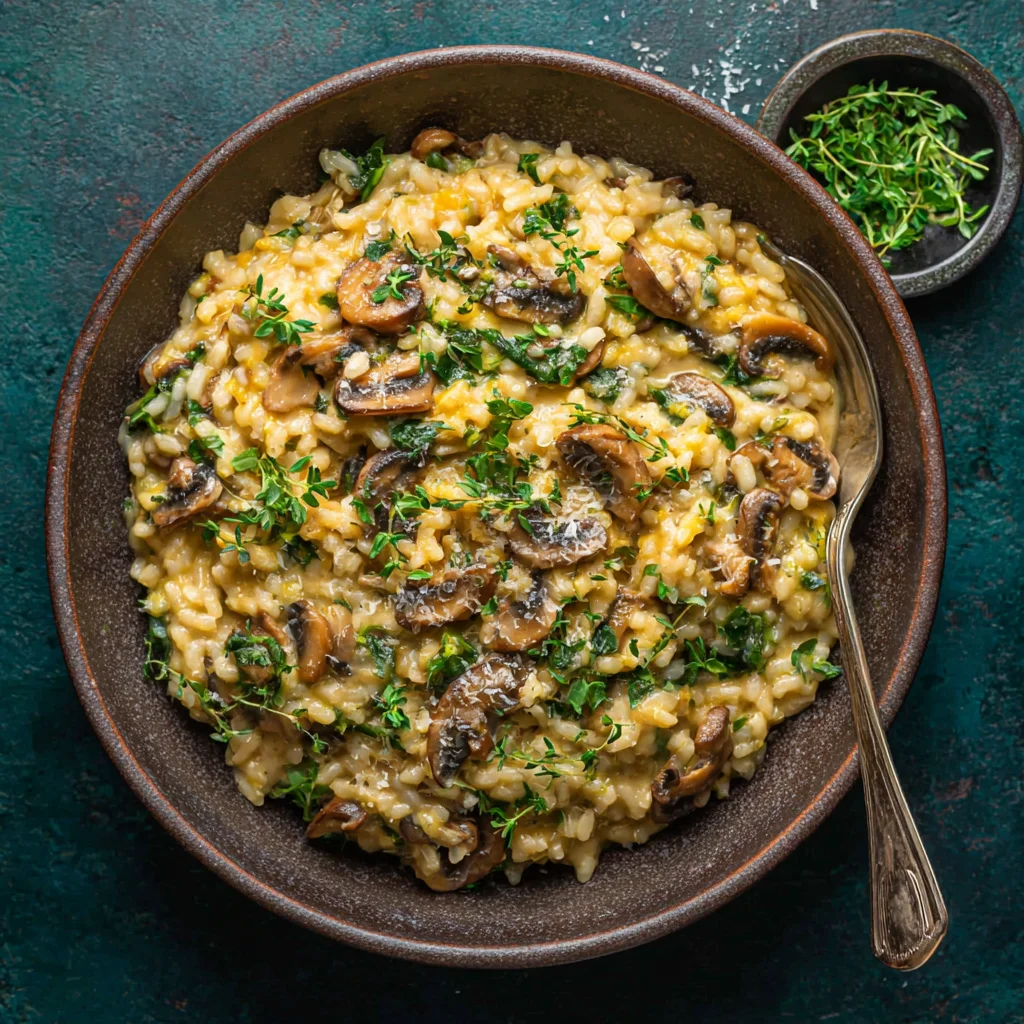
- Note 2: Feel free to use your favorite mix of mushrooms. Cremini, shiitake, oyster, or even some wild mushrooms will work wonderfully to add varying textures and depths of flavor.
- Note 3: Use a good quality, low-sodium vegetable broth. The quantity can vary depending on your rice and desired consistency, so having extra on hand is always a good idea.
- Note 4: Cleaning leeks thoroughly is important as soil can get trapped between their layers. Slice them, then rinse them well in a bowl of cold water, separating the layers to dislodge any grit, before dicing.
- Note 5: A dry white wine such as Sauvignon Blanc, Pinot Grigio, or even a dry vermouth will provide the best flavor for the dish. Avoid sweet wines.
Frequently Asked Questions
Can I prepare vegan mushroom risotto ahead of time?
Risotto is best served immediately after cooking to enjoy its optimal creamy texture. However, leftovers can be stored in an airtight container in the refrigerator for up to 2-3 days. Reheat gently with a splash of extra vegetable broth to restore some creaminess, as it will thicken upon cooling.
What kind of vegan parmesan cheese should I use?
Many excellent brands of vegan parmesan cheese are available, often made from nuts or starches. Choose one with a good, savory flavor that melts well. If you prefer, you can omit it entirely, as the miso butter already adds significant umami and creaminess.
Can I add other vegetables to this risotto?
Absolutely! This risotto is quite versatile. You could add finely diced carrots or celery along with the leeks, or stir in some fresh spinach or peas during the last few minutes of cooking for added color and nutrition.
Nutrition Facts (Per Serving)
Calories: 480, Protein: 12g, Fat: 25g, Carbs: 50g, Fiber: 5g (Estimated per serving)
Allergy Information
Contains soy (from miso paste) and may contain gluten (depending on vegetable broth and vegan parmesan brand). For a gluten-free version, ensure all ingredients, especially broth and vegan parmesan, are certified gluten-free. Always check product labels for specific allergen information.




No comment