
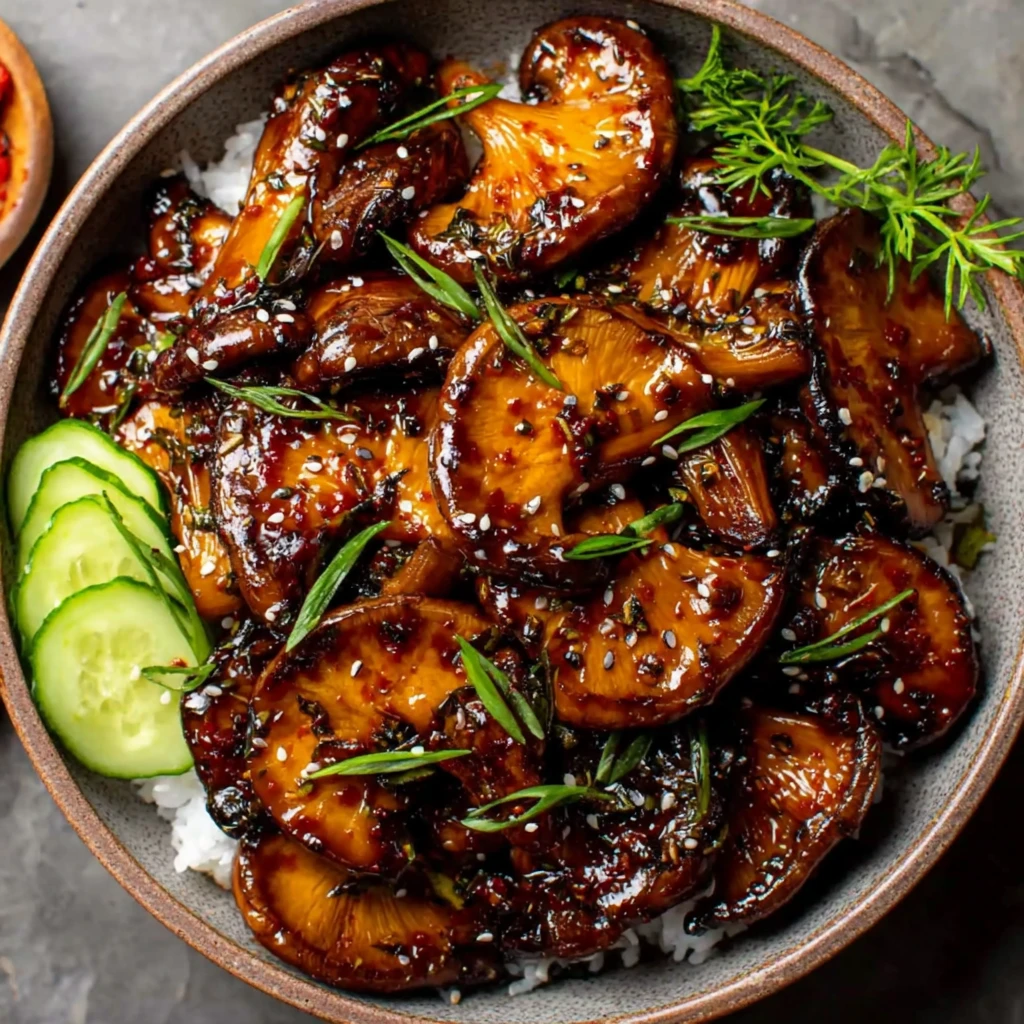
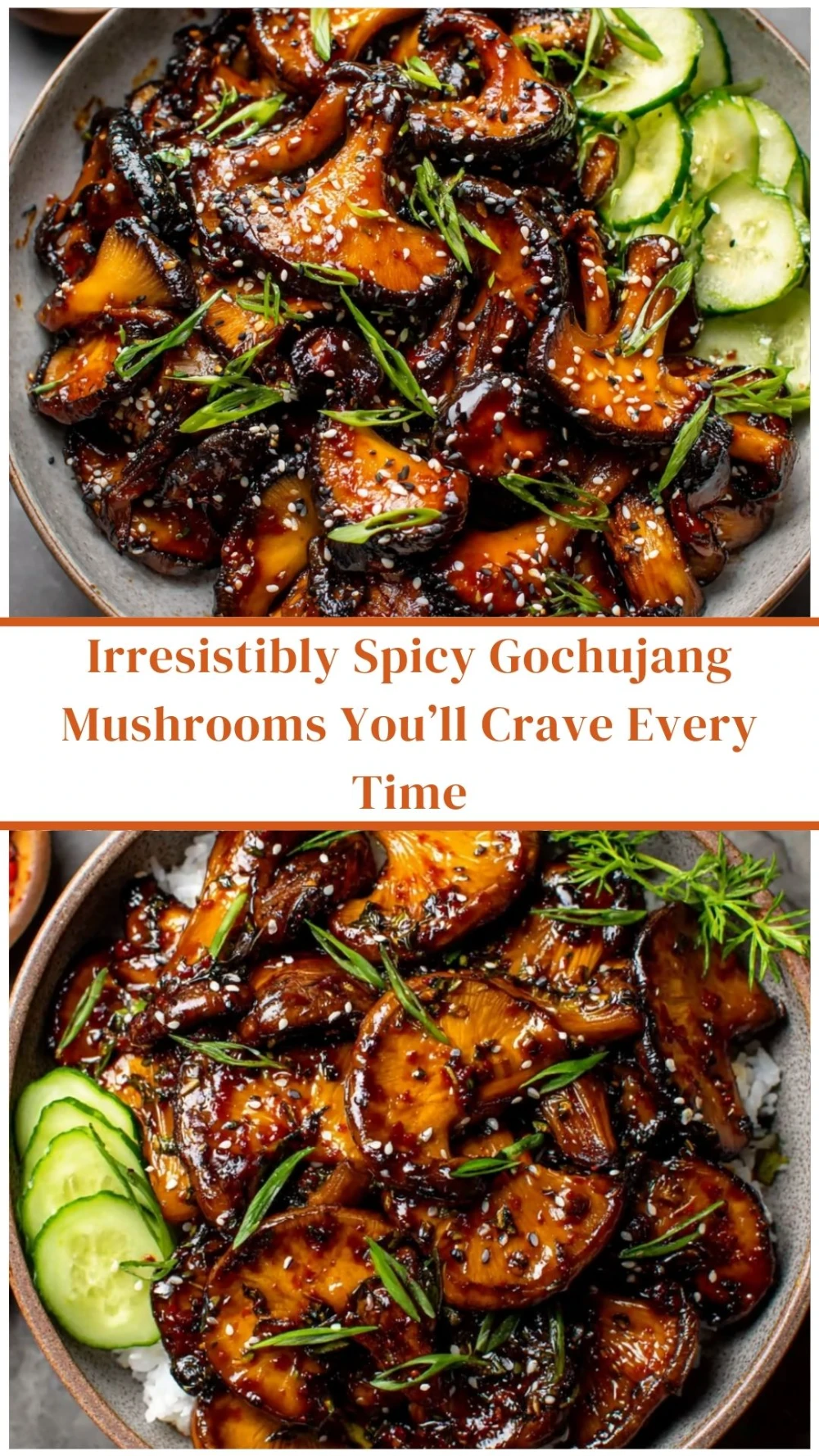
Irresistibly Spicy Gochujang Mushrooms You’ll Crave Every Time
Prepare your palate for an explosion of umami and a perfect kick of spice with these Korean-inspired gochujang mushrooms. This dish transforms humble king oyster mushrooms into a succulent, intensely flavorful main course or side that’s surprisingly easy to prepare. It's a truly addictive plant-based sensation that promises to become a regular in your culinary rotation.
Prep Time
25 minutes
Cook Time
15 minutes
Total Time
40 minutes
Servings
3 servings
Keywords
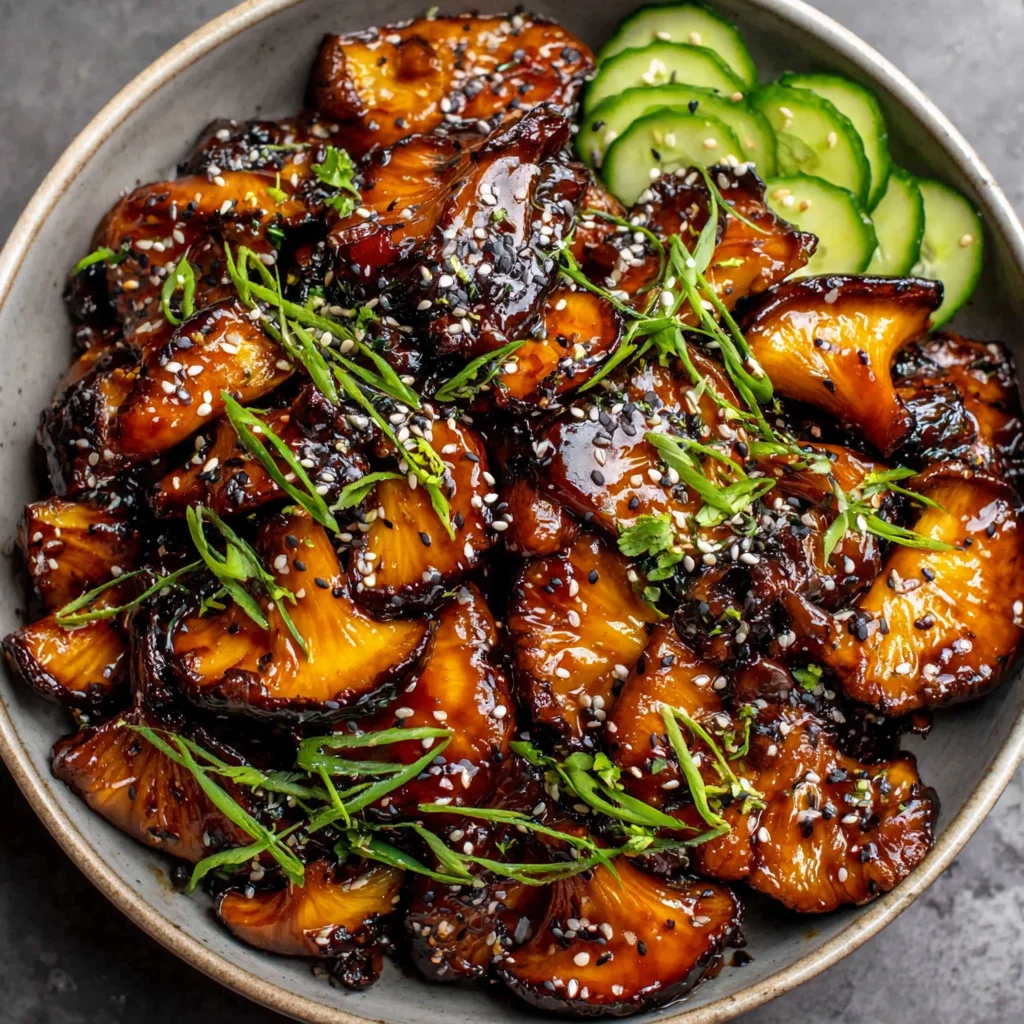
Why This Recipe Delivers
- Explosion of umami and spicy Korean flavors in every bite.
- Incredibly quick and easy to prepare, perfect for weeknight meals.
- A versatile plant-based dish that satisfies even meat-eaters.
- Customizable spice level to suit any preference.
- King oyster mushrooms offer a satisfying, meaty texture.
Ingredients
- 350 grams (12.3 ounces) Fresh King Oyster Mushrooms (use 6-8 small pieces or 2-3 extra-large ones)
- 30 ml (2 tablespoons) Neutral Oil (canola or vegetable oil is best)
- 45 ml (3 tablespoons) Soy Sauce (substitute with tamari for gluten-free)
- 30 ml (2 tablespoons) Gochujang (Korean chili paste)
- 30 ml (2 tablespoons) Mirin or Sake (can substitute with other rice wines)
- 15 grams (1 tablespoon) Sugar (adjust according to taste)
- 3 cloves Garlic (minced)
- 15 ml (1 tablespoon) Sesame Oil (essential for authentic taste)
- 15 grams (1 tablespoon) Sesame Seeds (for the marinade)
- 470 ml (2 cups) Steamed Rice (for serving)
- 240 ml (1 cup) Sliced Cucumber (for serving)
- 30 grams (2 tablespoons) Sesame Seeds (for garnish)
- 1 bunch Sliced Scallions (for serving)
Instructions
- Carefully slice the fresh king oyster mushrooms into ¼-inch (0.6 cm) thick pieces. If you are working with extra-large mushrooms, it is recommended to halve them lengthwise before proceeding with the slicing to ensure uniform pieces that cook evenly and absorb the marinade efficiently.
- In a medium-sized bowl, whisk together the ingredients for the vibrant marinade. Combine the soy sauce, gochujang, mirin (or sake), sugar, minced garlic, sesame oil, and the 15 grams (1 tablespoon) of sesame seeds until a smooth, well-emulsified sauce forms. Ensure the sugar is fully dissolved.
- Pour the prepared marinade over the sliced mushrooms, making sure each piece is thoroughly coated. Gently toss the mushrooms in the marinade. Allow them to marinate for a minimum of 20 minutes at room temperature. For a deeper, more pronounced flavor, you can marinate them for up to 1 hour in the refrigerator.
- Heat a cast-iron pan or a heavy-bottomed skillet over medium heat. Once hot, add a splash of neutral oil. Cook the marinated mushrooms in batches to avoid overcrowding the pan. Cook each batch for 2-3 minutes per side until they achieve a beautiful light golden-brown sear and begin to soften. Transfer the cooked mushrooms to a plate and repeat with remaining batches, adding more oil if needed.
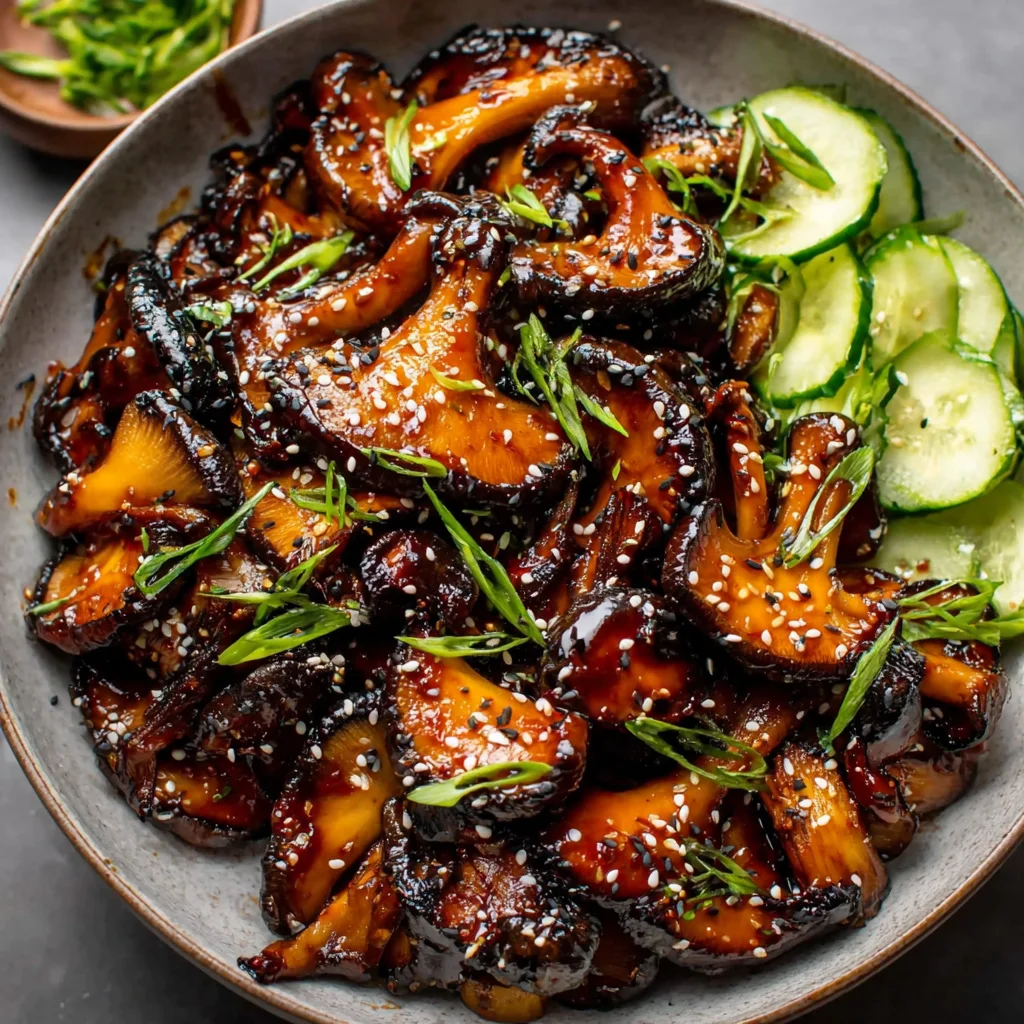
- Once all mushrooms are cooked, return them to the pan. Pour any remaining marinade from the bowl over the mushrooms. Continue to cook, stirring occasionally, until the sauce reduces and thickens, coating the mushrooms in a glossy, rich glaze. This step should take about 3-5 minutes.
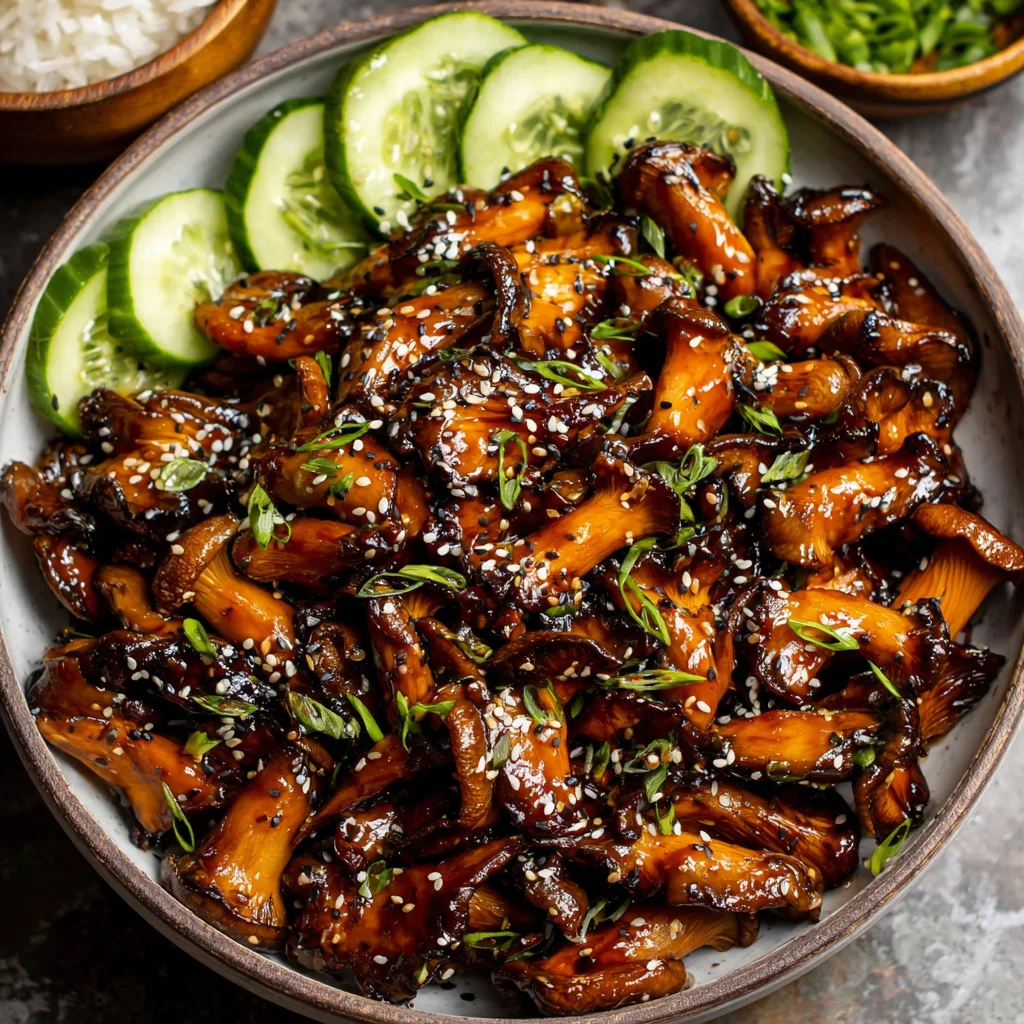
- Serve the hot, glazed gochujang mushrooms immediately. They are best enjoyed over a bed of fluffy steamed rice, complemented by fresh toppings such as crisp sliced cucumber, a generous sprinkle of the reserved 30 grams (2 tablespoons) of sesame seeds for garnish, and a scattering of fresh sliced scallions for brightness and a mild oniony crunch.
Tools You’ll Need
- Cutting board
- Sharp chef's knife
- Medium mixing bowl
- Whisk
- Cast-iron pan or large heavy-bottomed skillet
- Spatula or tongs
- Serving spoons
Essential Success Tips
- Do not overcrowd the pan when cooking mushrooms; this ensures they sear beautifully rather than steam. Cook in batches if necessary.
- Adjust the amount of sugar and gochujang in the marinade to suit your personal taste preferences for sweetness and heat.
- For the deepest flavor, allow the mushrooms to marinate for at least 30-60 minutes. Overnight marination in the refrigerator is also an option for intensified taste.
- Ensure your pan is adequately hot before adding mushrooms to achieve a good sear and prevent sticking.
- Pat the sliced mushrooms dry with a paper towel before marinating to help them absorb the flavors better and achieve a crispier texture when seared.
Professional Cooking Secrets
- To enhance the 'meaty' texture of king oyster mushrooms, try scoring a criss-cross pattern onto one side of the slices before marinating. This also increases surface area for flavor absorption and creates beautiful caramelized edges.
- When reducing the sauce, add a tiny splash of mirin or rice wine vinegar towards the very end to brighten the flavors and add a professional glaze, counteracting any potential cloying sweetness.
- Consider adding a small pat of butter or a touch of toasted sesame oil (beyond the marinade) right at the end of cooking for an extra layer of richness and aroma, amplifying the dish's complexity.
Notes
- Storage: Leftovers can be stored in an airtight container in the refrigerator for up to 3 days. Reheat gently in a pan or microwave.
- Variations: Feel free to add other quick-cooking vegetables like bell peppers, snap peas, or broccoli florets to the pan in the last few minutes of cooking for added color and nutrition. This dish also pairs wonderfully with grilled tofu or tempeh for extra protein.
- Make ahead: The marinade can be prepared up to 2 days in advance and stored in the refrigerator. The mushrooms can be sliced and kept in the fridge for a day. Combine and marinate just before cooking.
Frequently Asked Questions
Can I use other types of mushrooms?
Yes, while king oyster mushrooms offer a fantastic meaty texture, you can certainly substitute with other firm mushrooms like shiitake, cremini, or portobello. Adjust cooking times as needed for different varieties.
How can I make this dish less spicy?
To reduce the heat, simply decrease the amount of gochujang. You can replace some of the gochujang with more soy sauce or a touch of miso paste for umami without the spice. Adding a bit more sugar can also help balance the heat.
Is this recipe gluten-free and vegan?
The recipe is naturally vegan. To make it entirely gluten-free, ensure you use tamari instead of regular soy sauce and verify that your gochujang brand is certified gluten-free, as some may contain wheat.
Nutrition Facts (Per Serving)
Per serving (approx. 3 servings): Calories: 530, Protein: 14g, Fat: 23g, Carbs: 60g.
Allergy Information
Contains soy and sesame. For a gluten-free version, use tamari instead of soy sauce and ensure gochujang is gluten-free.



No comment