
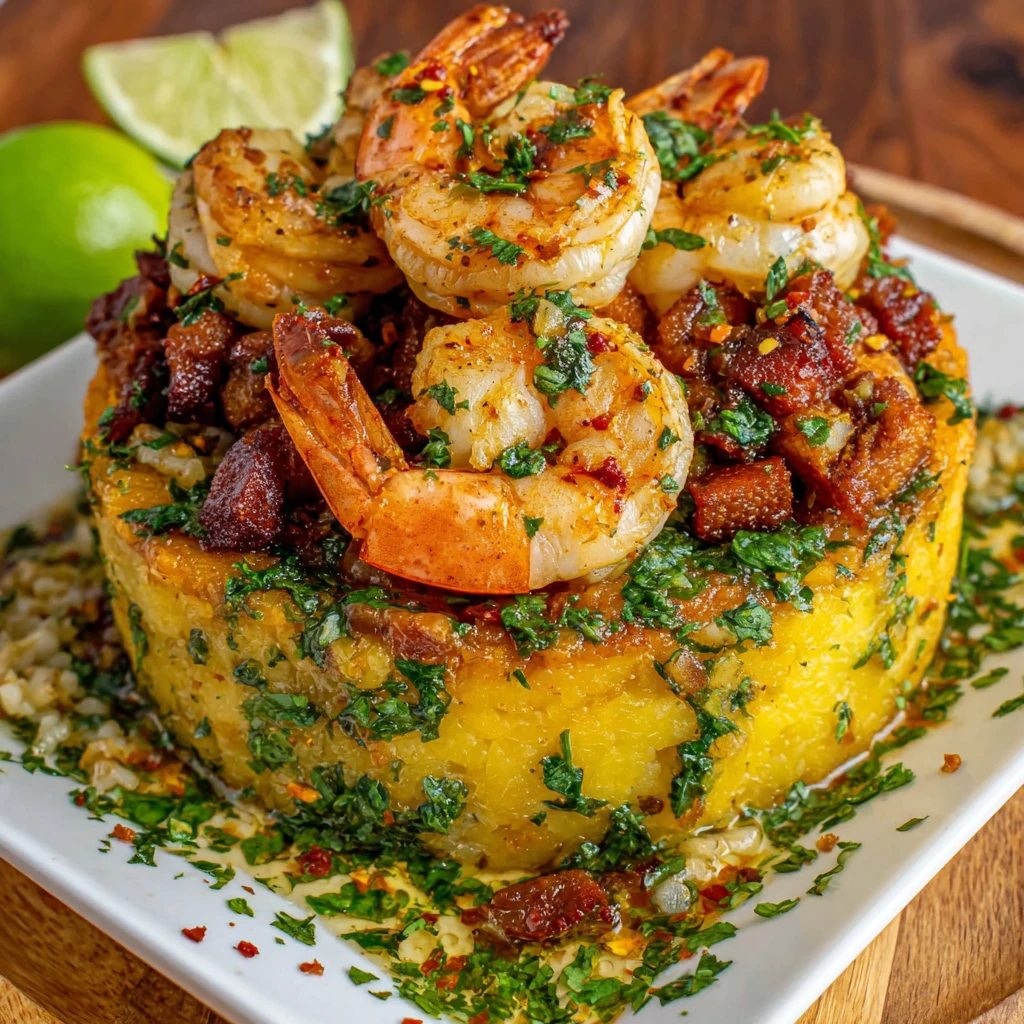
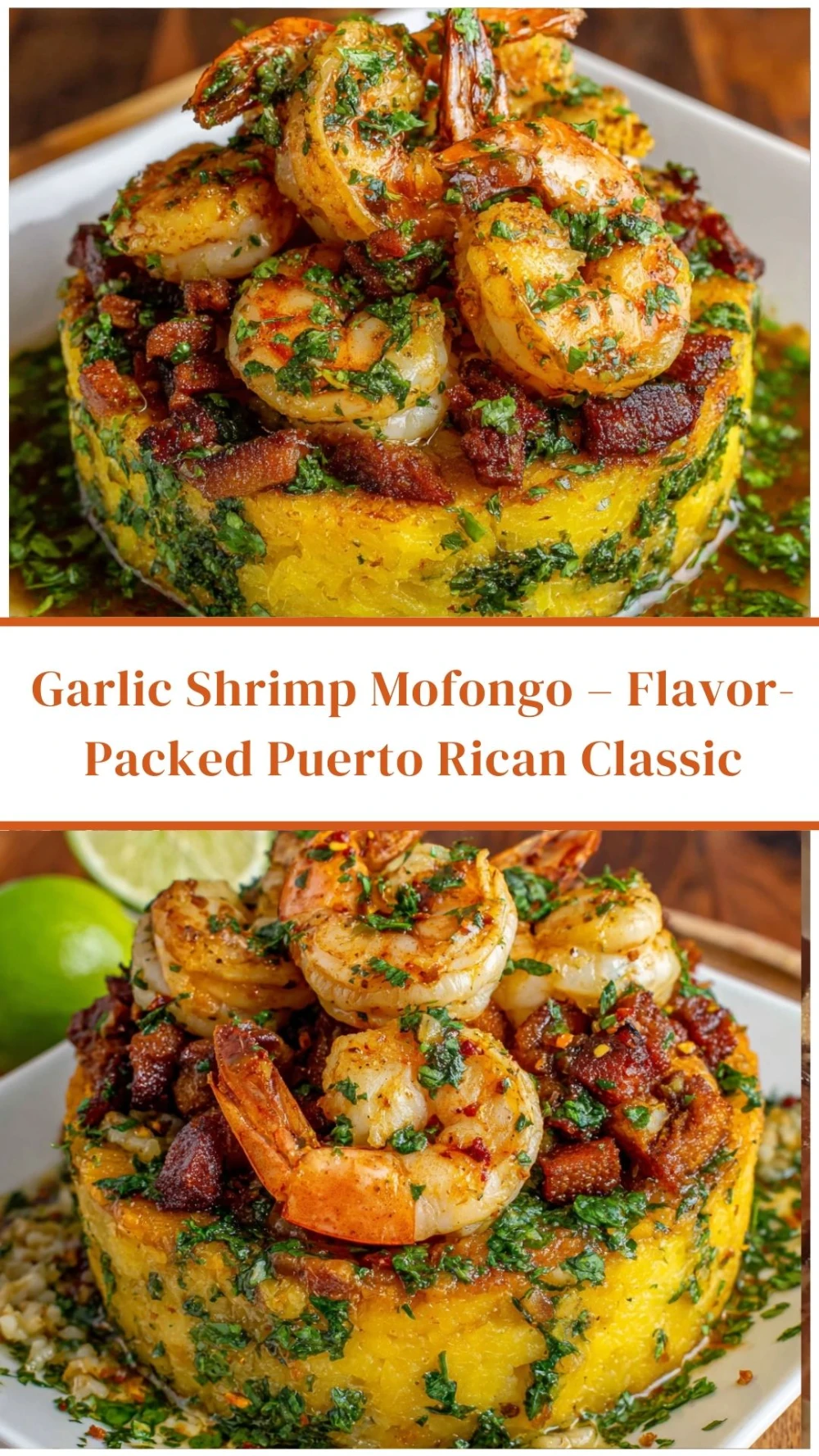
Garlic Shrimp Mofongo – Flavor-Packed Puerto Rican Classic
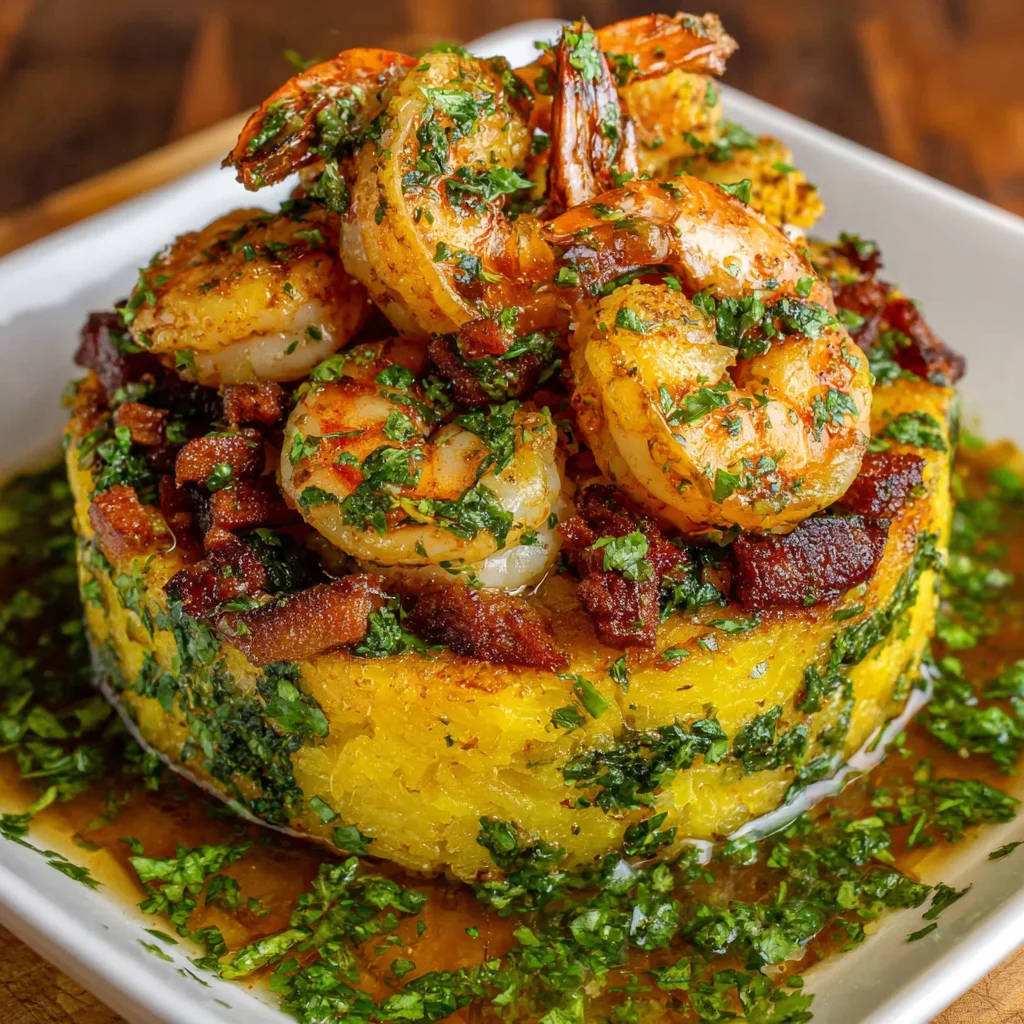
Embark on a culinary journey to Puerto Rico with this authentic Garlic Shrimp Mofongo recipe. This beloved dish features savory mashed green plantains, infused with garlic and optional chicharrón, forming a hearty base that perfectly complements succulent, butter-garlic sautéed shrimp. It's a symphony of textures and bold flavors, offering a truly satisfying and memorable dining experience.
Prep Time
25 minutes
Cook Time
20 minutes
Total Time
45 minutes
Servings
4 servings
Keywords
Why This Recipe Delivers
- Authentic Puerto Rican flavor that transports your taste buds to the Caribbean.
- A harmonious blend of savory, garlicky shrimp and rich, starchy plantain mash.
- Offers a satisfying texture contrast between tender shrimp and rustic mofongo.
- Surprisingly quick to prepare, making it perfect for weeknight meals or special occasions.
- Highly customizable with optional ingredients like chicharrón and a squeeze of lime.
Ingredients
- 4 large green or slightly yellow plantains (approximately 700-800 grams or 1.5-1.75 pounds)
- 20 grams (4 cloves) garlic, minced, for mofongo
- 30-45 milliliters (2-3 tablespoons) olive oil or unsalted butter, for mofongo
- 60 grams (1/4 cup) pork cracklings (chicharrón), crushed (optional)
- Salt, to taste
- Freshly ground black pepper, to taste
- 450 grams (1 pound) medium shrimp, peeled and deveined
- 30 milliliters (2 tablespoons) unsalted butter or olive oil, for shrimp
- 20 grams (4 cloves) garlic, minced, for shrimp
- Salt, to taste, for shrimp
- Freshly ground black pepper, to taste, for shrimp
- Optional: 5 grams (1 teaspoon) smoked paprika, for garnish
- Optional: Fresh cilantro, chopped, for garnish
- Optional: Lime wedges, for serving
Instructions
- Prepare the Plantains. Carefully peel the green plantains. Green plantains are starchy and require a firm hand to peel. Once peeled, cut each plantain into uniform 2.5-5 centimeter (1-2 inch) pieces to ensure even cooking. You have two primary options for preparation: Boiling: Place the plantain pieces in a large pot of lightly salted water and boil for 10-15 minutes, or until they are fork-tender but still firm enough to mash. Frying: For a richer flavor and slightly crispier texture, you can deep-fry the plantain pieces in a neutral oil preheated to 170°C (340°F) until golden yellow, about 5-7 minutes. Drain well on paper towels if frying.
- Create the Mofongo Base. While the plantains are still warm, transfer them to a traditional wooden mortar and pestle (pilón) if you have one, or a sturdy large mixing bowl. Add the 20 grams (4 cloves) of minced garlic, 30-45 milliliters (2-3 tablespoons) of olive oil or butter, and the optional 60 grams (1/4 cup) of crushed pork cracklings. Begin mashing vigorously, gradually incorporating all ingredients. The goal is a cohesive, rustic mash, not completely smooth. Season generously with salt and black pepper to taste as you mash, ensuring the flavor is well-distributed.
- Cook the Garlic Shrimp. Heat a large skillet or frying pan over medium-high heat. Add 30 milliliters (2 tablespoons) of unsalted butter or olive oil. Once the butter is melted and shimmering, add the 20 grams (4 cloves) of minced garlic. Sauté for about 30 seconds until fragrant, being careful not to burn the garlic. Add the peeled and deveined shrimp to the pan in a single layer. Season the shrimp with salt, black pepper, and optional smoked paprika. Cook for 1.5-2 minutes per side, or until the shrimp turn pink and opaque, indicating they are fully cooked. Avoid overcooking, as this can make the shrimp rubbery.
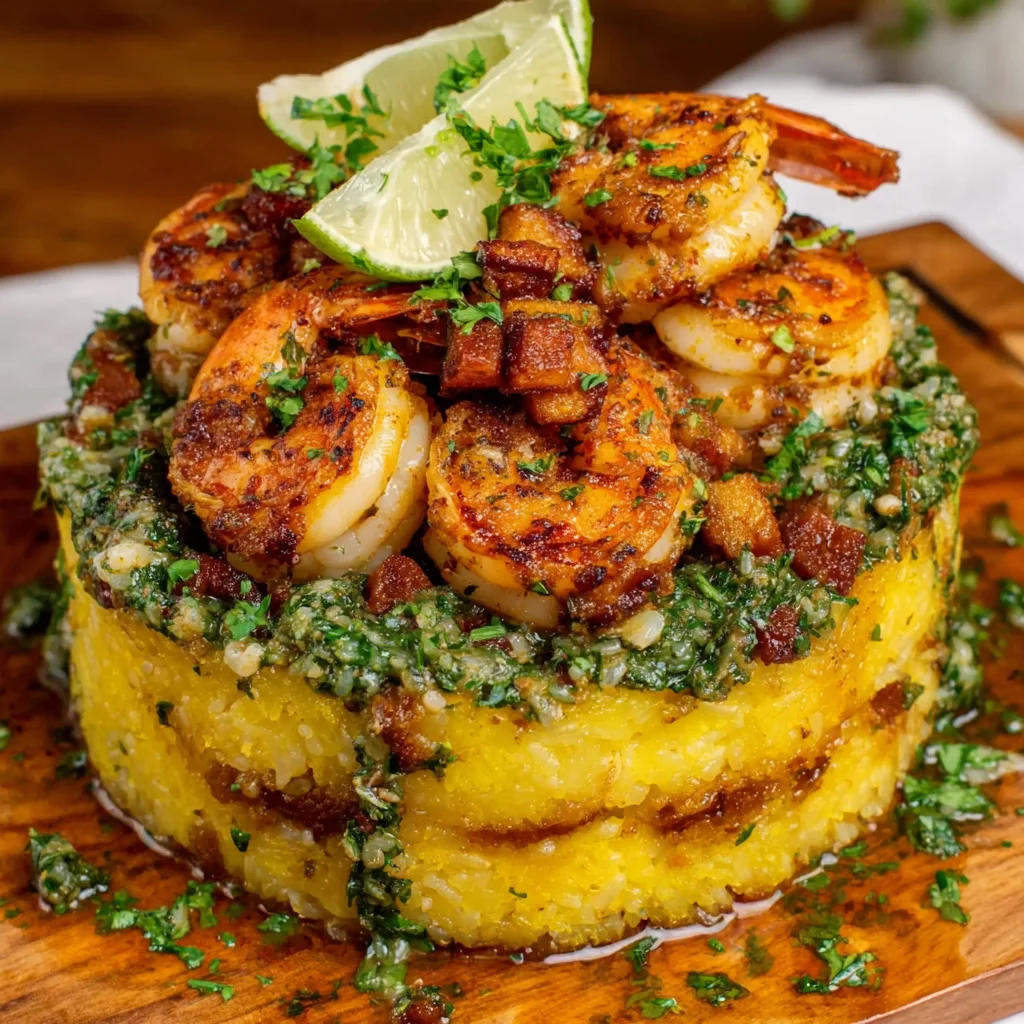
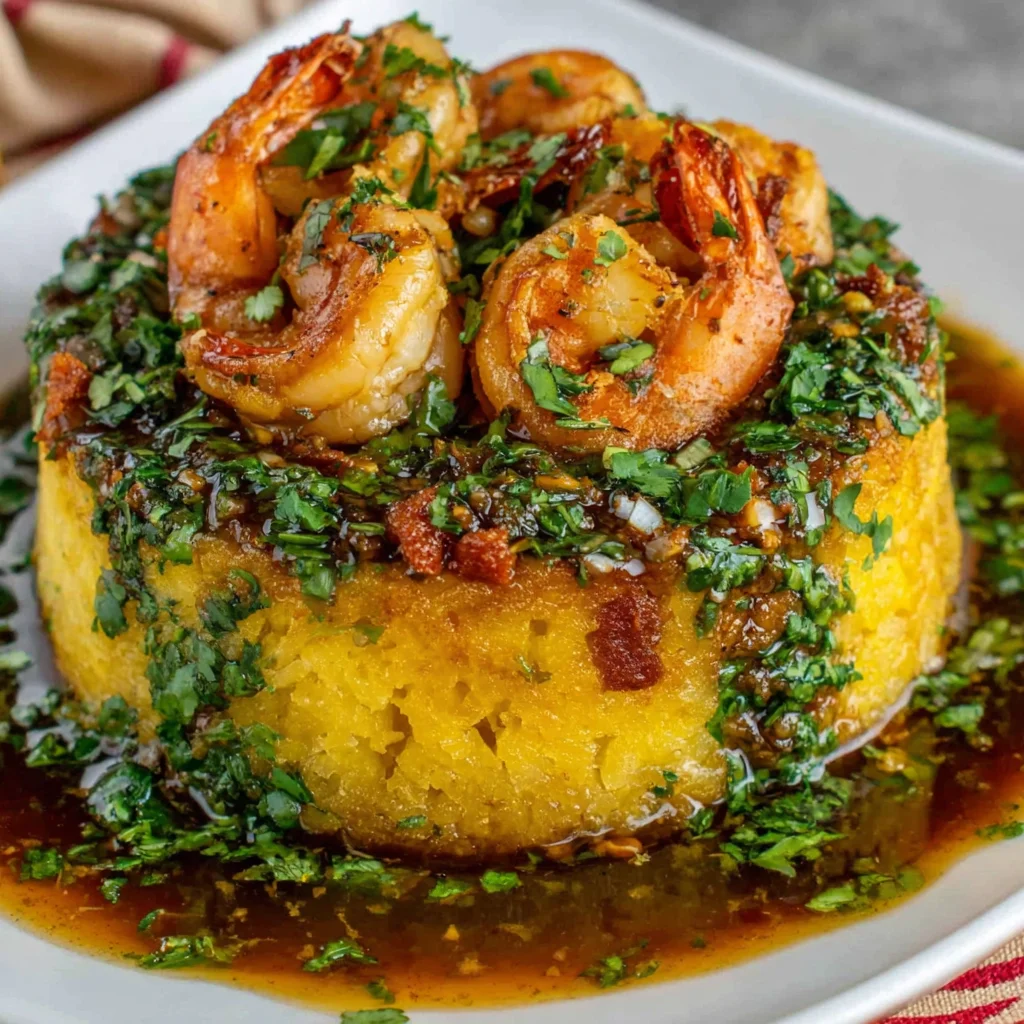
- Assemble the Dish. To serve, firmly press portions of the warm mofongo into small bowls or ramekins, then invert them onto individual plates to create an appealing mound. Alternatively, you can simply scoop the mofongo onto plates. Top each mofongo mound generously with the freshly cooked garlic shrimp. Drizzle any remaining aromatic pan juices from the skillet over the shrimp and mofongo for an extra burst of flavor.
- Serve Immediately. Garnish the Garlic Shrimp Mofongo with fresh chopped cilantro and/or a few lime wedges. The acidity from the lime brightens the rich flavors of the dish. Serve immediately while the mofongo is warm and the shrimp are tender. This dish pairs wonderfully with a side of sautéed vegetables or traditional Puerto Rican rice and beans for a complete meal.
Tools You’ll Need
- Large pot (for boiling plantains) or deep-fryer/large heavy-bottomed pan (for frying)
- Cutting board
- Sharp knife
- Mortar and pestle (pilón) or large sturdy mixing bowl with a potato masher
- Large skillet or frying pan
- Slotted spoon (if frying plantains)
- Tongs or spatula
- Small bowls or ramekins for molding mofongo (optional)
Essential Success Tips
- Use green plantains for the best mofongo texture; yellow plantains will be sweeter and softer, altering the traditional flavor profile.
- Mash the plantains while they are still warm; this makes them much easier to work with and ensures a smoother, more pliable mofongo.
- Do not overcook the shrimp. They cook very quickly, and overcooked shrimp become tough and rubbery.
- Season your mofongo generously throughout the mashing process, tasting as you go to achieve perfect balance.
- If your mofongo feels too dry, add a tiny bit more olive oil or butter, or even a splash of the reserved plantain cooking water, one spoonful at a time, until it reaches the desired consistency.
Professional Cooking Secrets
- For an extra layer of flavor in your mofongo, consider adding a tablespoon of sofrito to the plantains along with the garlic and oil during mashing. This traditional aromatic base will deepen the overall complexity.
- Infuse your mofongo oil: Before adding to the plantains, gently heat the olive oil with a few extra garlic cloves until fragrant, then strain the garlic out. This subtle garlic-infused oil elevates the mofongo's base flavor.
- To achieve perfectly tender shrimp that retain their succulence, pat them thoroughly dry before cooking. This ensures a proper sear and prevents them from steaming in the pan.
Notes
- Leftover mofongo can be stored in an airtight container in the refrigerator for up to 2 days, though it is best enjoyed fresh. Reheat gently in a microwave or skillet with a little butter or broth.
- For a vegetarian option, omit the chicharrón and shrimp. You can serve the mofongo with sautéed mushrooms, plant-based 'shrimp,' or a rich vegetable broth.
- You can make the mofongo into small, individual balls instead of a larger mound, which can be fun for appetizers.
Frequently Asked Questions
What is the difference between green and yellow plantains for mofongo?
Green plantains are unripe, starchy, and savory, which is essential for traditional mofongo's firm, slightly dense texture. Yellow plantains are riper and sweeter, with a softer texture, making them unsuitable for authentic mofongo but great for other dishes like maduros.
Can I make mofongo without a mortar and pestle (pilón)?
Yes, while a pilón is traditional, you can use a large, sturdy mixing bowl and a heavy potato masher. The key is to mash firmly and repeatedly until the plantains form a cohesive, rustic texture.
What can I serve with Garlic Shrimp Mofongo?
Garlic Shrimp Mofongo is often served as a main dish. Traditional accompaniments include a side of fresh lime wedges, a simple green salad, sautéed vegetables, or a small bowl of chicken broth to moisten the mofongo as you eat it.
Nutrition Facts (Per Serving)
Calories: 550, Protein: 35g, Fat: 28g, Carbs: 45g (per serving, approximate, without optional chicharrón and based on olive oil for mofongo and butter for shrimp)
Allergy Information
Contains shellfish (shrimp) and dairy (butter, if used). For a dairy-free version, use olive oil instead of butter for both the mofongo and shrimp. This dish is naturally gluten-free if no cross-contamination occurs.

No comment