
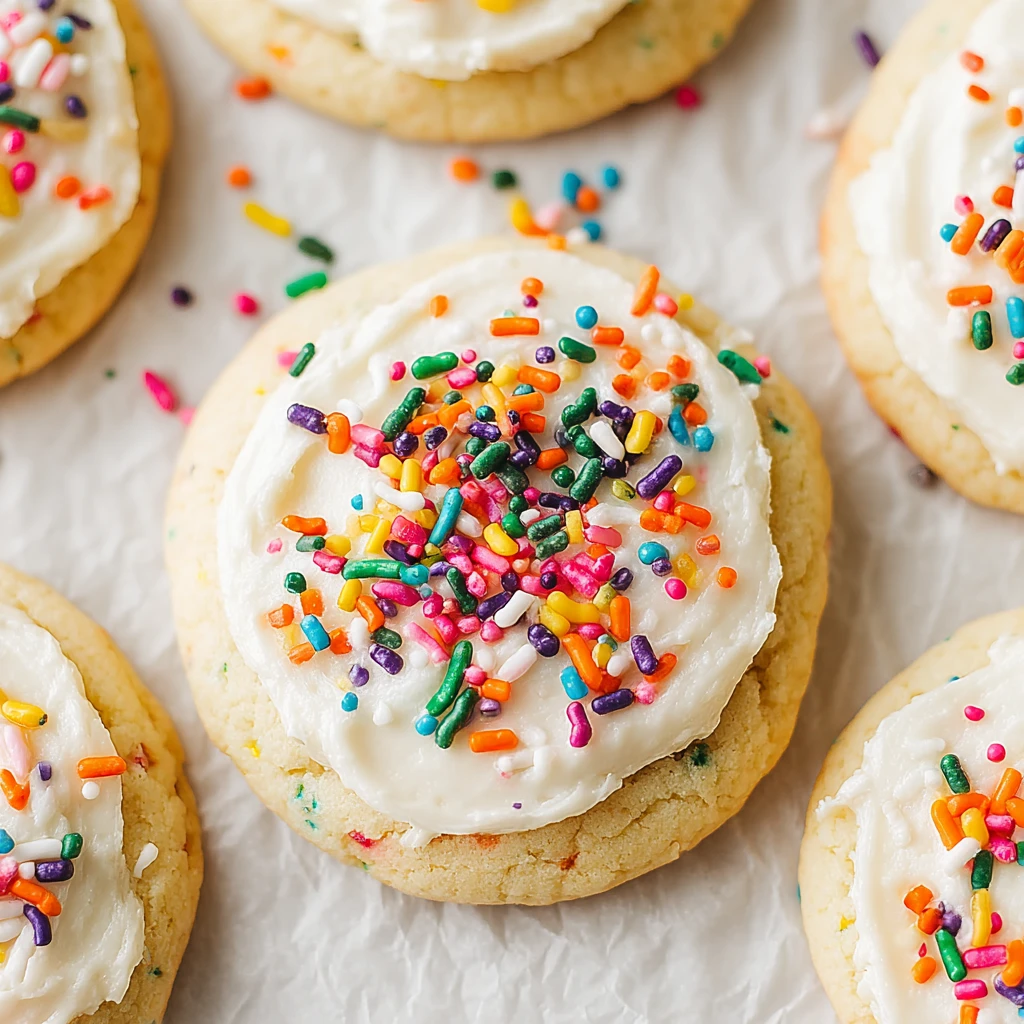
Lofthouse Cookies
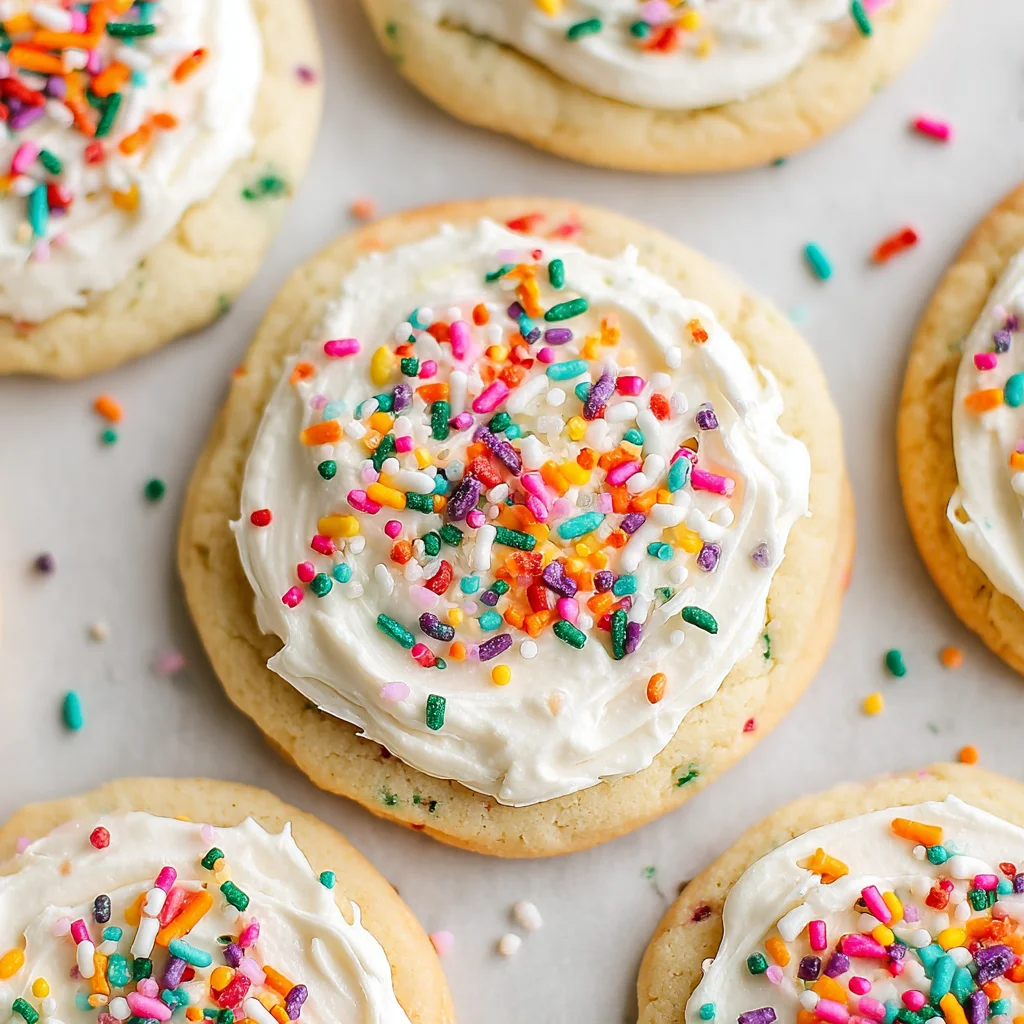
Indulge in the nostalgia of perfectly soft, cake-like Lofthouse-style cookies right from your own kitchen. These delightful treats feature a tender, subtly sweet base crowned with a lusciously smooth, creamy vanilla frosting and a sprinkle of colorful joy. They are surprisingly easy to make and guaranteed to bring a smile to anyone's face.
Prep Time
45 minutes active, plus overnight chilling
Cook Time
40-50 minutes (total baking time)
Total Time
Approximately 1 hour 30 minutes active, plus overnight chilling
Servings
Makes approximately 36-40 cookies
Keywords

Why This Recipe Delivers
- Achieves the signature soft, cake-like texture of beloved bakery cookies.
- Features a perfectly balanced, not-too-sweet cookie base.
- Topped with a wonderfully fluffy and creamy vanilla buttercream frosting.
- Customizable with your favorite sprinkles for any occasion.
- The overnight chilling develops deeper flavors and ensures perfect rolling consistency.
Ingredients
- 720 grams (6 cups) all-purpose flour, divided
- 5 grams (1 teaspoon) baking soda
- 4 grams (1 teaspoon) baking powder
- 227 grams (1 cup) unsalted butter, at room temperature
- 400 grams (2 cups) granulated sugar
- 3 large eggs
- 5 milliliters (1 teaspoon) vanilla extract
- 360 milliliters (1 ½ cups) light sour cream
- For the Frosting:
- 227 grams (1 cup) unsalted butter, at room temperature
- 5 milliliters (1 teaspoon) vanilla extract
- 480-500 grams (4 cups) powdered sugar, sifted if clumpy
- 90 milliliters (6 tablespoons) heavy cream, or more as needed
- Sprinkles, for garnish
Instructions
- In a medium-sized bowl, thoroughly whisk together 600 grams (5 cups) of the all-purpose flour, the baking soda, and the baking powder. Set this mixture aside.
- Using a stand mixer fitted with the paddle attachment, cream the softened butter and granulated sugar together at medium speed. Continue mixing until the mixture becomes light, fluffy, and noticeably pale, which should take about 3 minutes. Stop periodically to scrape down the sides of the bowl with a rubber spatula to ensure even mixing.
- Add the eggs to the butter and sugar mixture, one at a time, beating well after each addition until fully incorporated before adding the next. Once all eggs are in, add the vanilla extract and light sour cream. Beat on low speed until these ingredients are just combined.
- Gradually add the dry ingredients (the flour mixture from the first step) to the wet ingredients in the mixer. Beat on low speed for approximately 30 seconds, or until just combined. Be careful not to overmix; a few streaks of flour are acceptable. Scrape down the bowl as needed.
- Assess the dough's consistency for rolling. If the dough is too sticky or soft, add the remaining flour, 30 grams (1/4 cup) at a time, beating until just incorporated after each addition. The goal is to achieve a soft, pliable dough that is firm enough to roll without sticking excessively, using up to the full 120 grams (1 cup) of additional flour.
- Divide the prepared dough into two equal sections. Gently flatten each section into a rectangular shape, about 4 centimeters (1 ½ inches) thick. Wrap each dough rectangle tightly in plastic wrap and place them in the refrigerator. Chill the dough overnight, or for a minimum of 8 hours, to allow it to firm up and the flavors to meld beautifully.
- The next day, preheat your oven to 220 degrees Celsius (425 degrees Fahrenheit). Line two large baking sheets with parchment paper or lightly spray them with nonstick cooking spray. Set these prepared sheets aside.
- Liberally flour a clean work surface and your rolling pin. Take one section of chilled dough from the refrigerator. With the rolling pin, roll the dough out evenly to a thickness of approximately 6 millimeters (1/4 inch). Consistent thickness is key for even baking.
- Using a 6.5-centimeter (2 ½-inch) round cookie cutter, cut out as many circles as possible from the rolled dough. Carefully transfer the cut cookie circles to your prepared baking sheets, leaving a small space between each cookie. Re-roll any dough scraps as needed to cut more cookies.
- Bake the cookies in the preheated oven for 7-8 minutes, or until the edges appear very pale golden and the centers are just set. Avoid overbaking, as this will result in a drier cookie. Immediately transfer the baked cookies to a wire rack to cool completely before frosting.
- To prepare the frosting, in the bowl of a stand mixer fitted with the paddle attachment, cream together the room temperature butter and vanilla extract until smooth. Gradually, and slowly, beat in the sifted powdered sugar. Start on low speed to prevent a sugar cloud, then increase speed as the sugar incorporates.
- Once the frosting is smooth and creamy, begin adding the heavy cream, 15 milliliters (1 tablespoon) at a time. Beat until your desired spreading consistency is achieved. You may need slightly more or less cream depending on your butter and powdered sugar.
- Thirteenth Step: Once the cookies have cooled completely to room temperature, generously frost each cookie with the fluffy vanilla frosting. Immediately adorn them with your chosen sprinkles.
- Fourteenth Step: Allow the frosting to set slightly, then store the frosted cookies in an airtight container at room temperature. For the best flavor and texture, allow the cookies to sit overnight before serving; this allows the flavors to fully develop and the cookies to soften further.
Tools You’ll Need
- Large mixing bowls
- Stand mixer with paddle attachment
- Rubber spatula
- Measuring cups and spoons
- Plastic wrap
- Rolling pin
- 2.5-inch (6.5 cm) round cookie cutter
- Parchment paper or nonstick cooking spray
- Large baking sheets
- Wire cooling racks
Essential Success Tips
- Ensure your butter and sour cream are truly at room temperature for a smooth, emulsified dough and creamy frosting.
- Do not overmix the dough after adding the flour; mixing just until combined prevents gluten overdevelopment, keeping the cookies tender.
- Chill the dough overnight: This is crucial for flavor development and prevents the cookies from spreading too much during baking.
- Roll the dough to an even 6mm (1/4-inch) thickness. Inconsistent thickness leads to uneven baking, with some cookies potentially overdone while others are underbaked.
- Do not overbake! Lofthouse cookies should remain pale and soft. They will firm up as they cool. Overbaking leads to dry, crumbly cookies.
- Sift your powdered sugar for the frosting if it's lumpy; this ensures a silky-smooth, lump-free buttercream.
Professional Cooking Secrets
- For an extra tender crumb, replace up to 1/4 of the all-purpose flour with cake flour. This reduces gluten formation, yielding an even softer cookie.
- To achieve truly vibrant frosting colors with food coloring, add gel food coloring to the heavy cream before mixing it into the buttercream. This helps disperse the color evenly without overworking the frosting.
- A touch of almond extract (1/4 teaspoon) alongside the vanilla in both the cookie dough and frosting can elevate the flavor profile, adding a subtle, sophisticated depth without overwhelming the classic taste.

Notes
- Storage: Store frosted cookies in an airtight container at room temperature for up to 3-4 days. For longer storage, freeze unfrosted cookies for up to 2 months. Thaw before frosting.
- Flavor Development: Allowing the cookies to sit overnight after frosting truly enhances their signature soft texture and allows the flavors to meld beautifully.
- Variations: Experiment with different extracts like lemon or almond for a flavor twist. You can also vary the sprinkles for seasonal or holiday themes.
Frequently Asked Questions
Why do I need to chill the cookie dough overnight?
Chilling the dough overnight is critical for several reasons: it allows the flour to fully hydrate, resulting in a more tender cookie; it prevents the cookies from spreading too much in the oven; and it deepens the flavor, giving you that authentic Lofthouse taste and texture.
My cookies are spreading too much. What went wrong?
Cookies typically spread if the butter was too warm, the dough wasn't chilled long enough, or too little flour was incorporated, making the dough too soft. Ensure your butter is room temperature, not melted, and always chill the dough for the recommended time.
Can I make these cookies gluten-free?
While not tested with this specific recipe, you can generally substitute the all-purpose flour with a 1:1 gluten-free baking flour blend that contains xanthan gum. You might need to adjust the amount of liquid slightly, as gluten-free flours can absorb differently. Always ensure your other ingredients are also gluten-free.
Nutrition Facts (Per Serving)
Calories: Approximately 280-300 per cookie, Protein: 3g, Fat: 15g, Carbs: 35g. (Estimates can vary based on exact ingredients and portion size.)
Allergy Information
Contains dairy (butter, sour cream, heavy cream) and gluten (wheat flour), eggs. For a dairy-free version, use plant-based butter, sour cream, and heavy cream substitutes. For a gluten-free option, use a 1:1 gluten-free flour blend.





No comment