
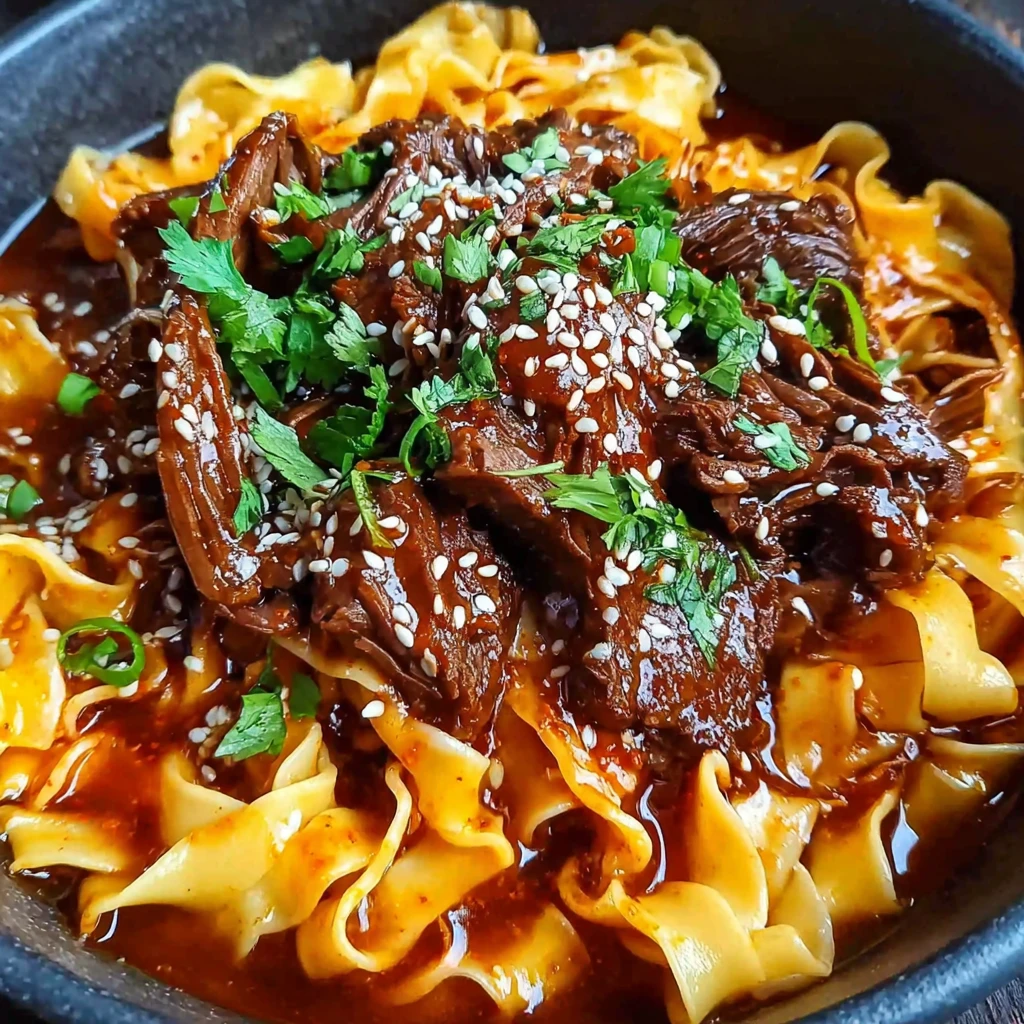
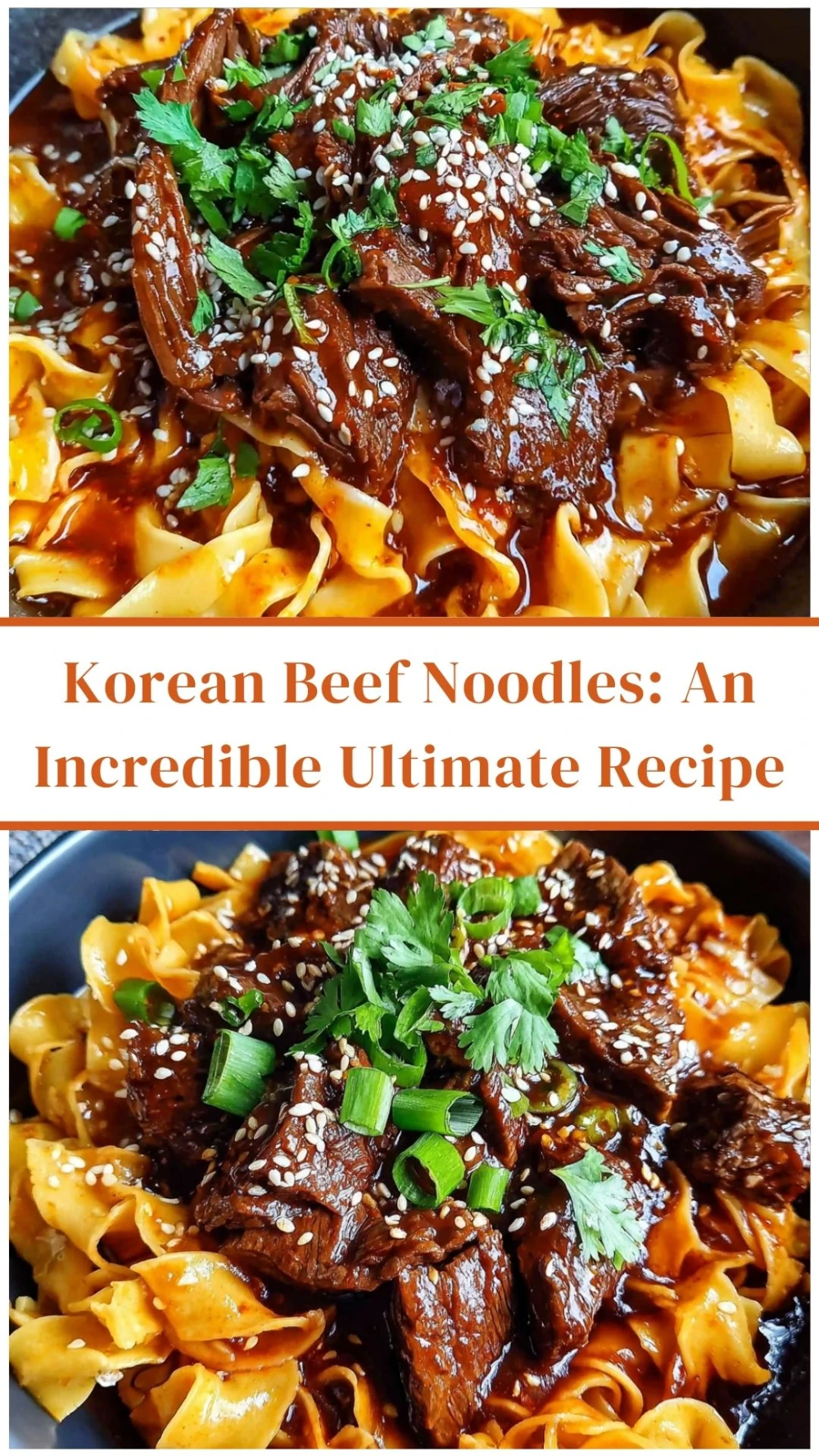
Korean Beef Noodles: An Incredible Ultimate Recipe
Embark on a culinary journey with this incredibly flavorful and comforting Korean Beef Noodle dish. Tender, melt-in-your-mouth beef is slow-cooked to perfection in a rich, savory, slightly sweet, and spicy gochujang-infused broth, then tossed with hearty noodles. This ultimate recipe promises a deeply satisfying meal with minimal effort, making it perfect for a cozy weeknight dinner or a special gathering.
Prep Time
20 minutes
Cook Time
6-8 hours on low (slow cooker) or 3-4 hours on high, plus 15-20 minutes for noodles
Total Time
Approximately 6 hours 35 minutes to 8 hours 20 minutes
Servings
6-8 servings
Keywords
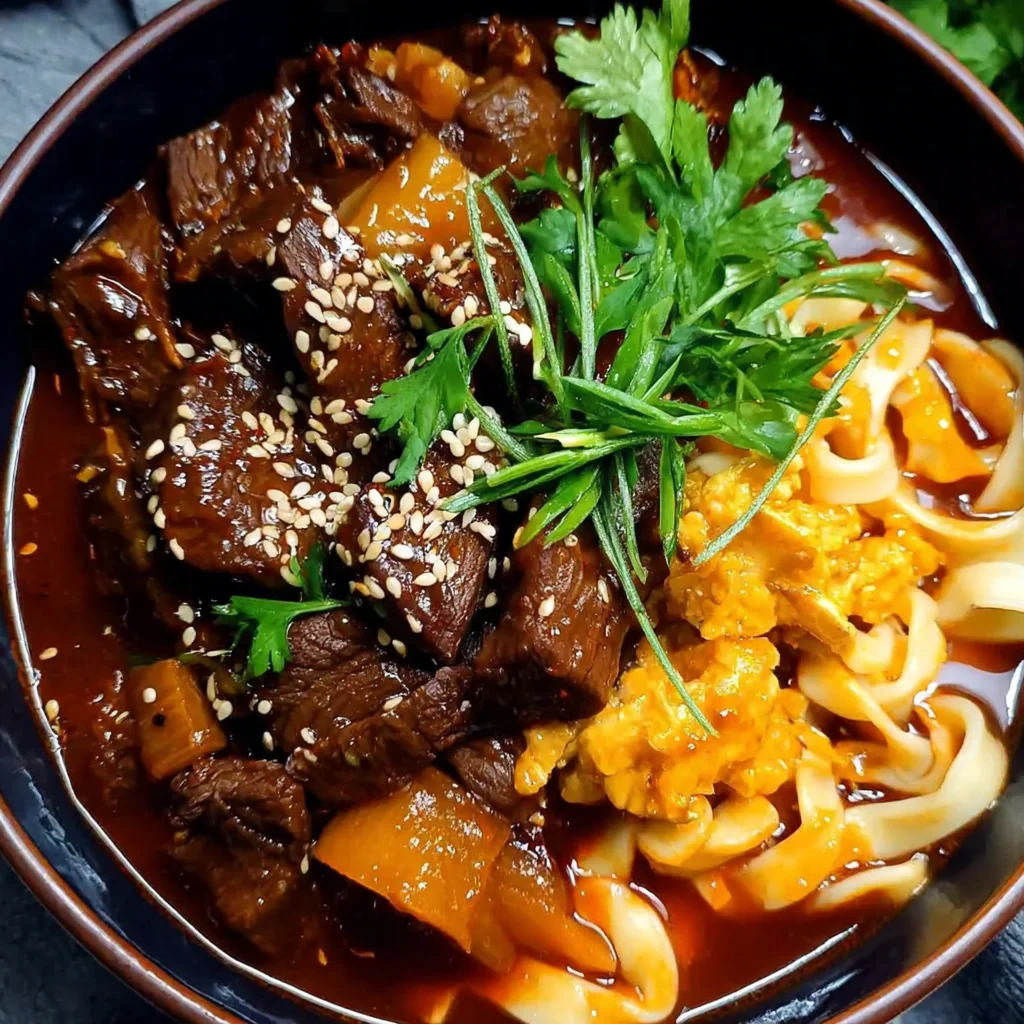
Why This Recipe Delivers
- Delivers fall-apart tender beef infused with an irresistible savory, sweet, and subtly spicy Korean-inspired sauce.
- Utilizes the convenience of a slow cooker, making it a perfect set-it-and-forget-it meal with minimal active cooking time.
- Offers a harmonious blend of flavors that are deeply comforting and satisfying, pleasing a wide range of palates.
- Highly versatile, allowing for customization with different noodle types and optional vegetable additions.
- An excellent dish for meal prepping or feeding a crowd, as the flavors only deepen over time.
Ingredients
- 900 g (2 pounds) beef chuck, cut into 2.5 cm (1-inch) pieces
- 950 ml (4 cups) beef broth
- 470 ml (2 cups) water
- 240 ml (1 cup) soy sauce (use tamari for gluten-free option)
- 50 g (¼ cup) packed brown sugar
- 30 ml (2 tablespoons) fresh ginger, minced
- 4 cloves garlic, minced (approximately 20 g)
- 15 ml (1 tablespoon) sesame oil
- 5 ml (1 teaspoon) freshly ground black pepper
- 15 ml (1 tablespoon) gochujang (Korean chili paste), adjust to taste
- 450 g (1 pound) fresh or dried noodles (such as udon or ramen)
- 3 green onions, thinly sliced for garnish
- Sesame seeds for topping (optional)
- Fresh cilantro for garnish (optional)
Instructions
- Thoroughly prepare the beef by trimming any excess fat if desired, then cutting the beef chuck into uniform 2.5 cm (1-inch) pieces. Season these beef chunks generously with the black pepper, ensuring each piece is lightly coated to enhance its inherent flavor during the slow cooking process.
- In a large mixing bowl, combine the beef broth, water, soy sauce, brown sugar, minced ginger, minced garlic, sesame oil, and gochujang. Whisk the mixture vigorously until the brown sugar has completely dissolved and all the ingredients are well incorporated, creating a cohesive and flavorful sauce base.
- Carefully place the seasoned beef chunks into the basin of your slow cooker. Evenly pour the prepared sauce mixture over the beef, ensuring the liquid substantially covers the meat pieces. Give it a gentle stir to ensure everything is submerged.
- Secure the lid on the slow cooker. Set the appliance to cook on the low setting for 6-8 hours, or on the high setting for 3-4 hours. The goal is for the beef to become incredibly tender and easily shreddable with a fork, indicating it has absorbed maximum flavor and reached the perfect texture.
- Approximately 15-20 minutes before you plan to serve the dish, prepare the noodles. Cook them according to the specific package instructions for your chosen type of noodles (udon or ramen) until they are al dente. Once cooked, drain the noodles thoroughly and set them aside briefly.
- Once the beef has reached its desired tenderness, add the cooked and drained noodles directly into the slow cooker with the beef and sauce. Gently stir the mixture to combine, allowing the noodles a few minutes to absorb some of the rich, aromatic broth and meld with the savory beef.
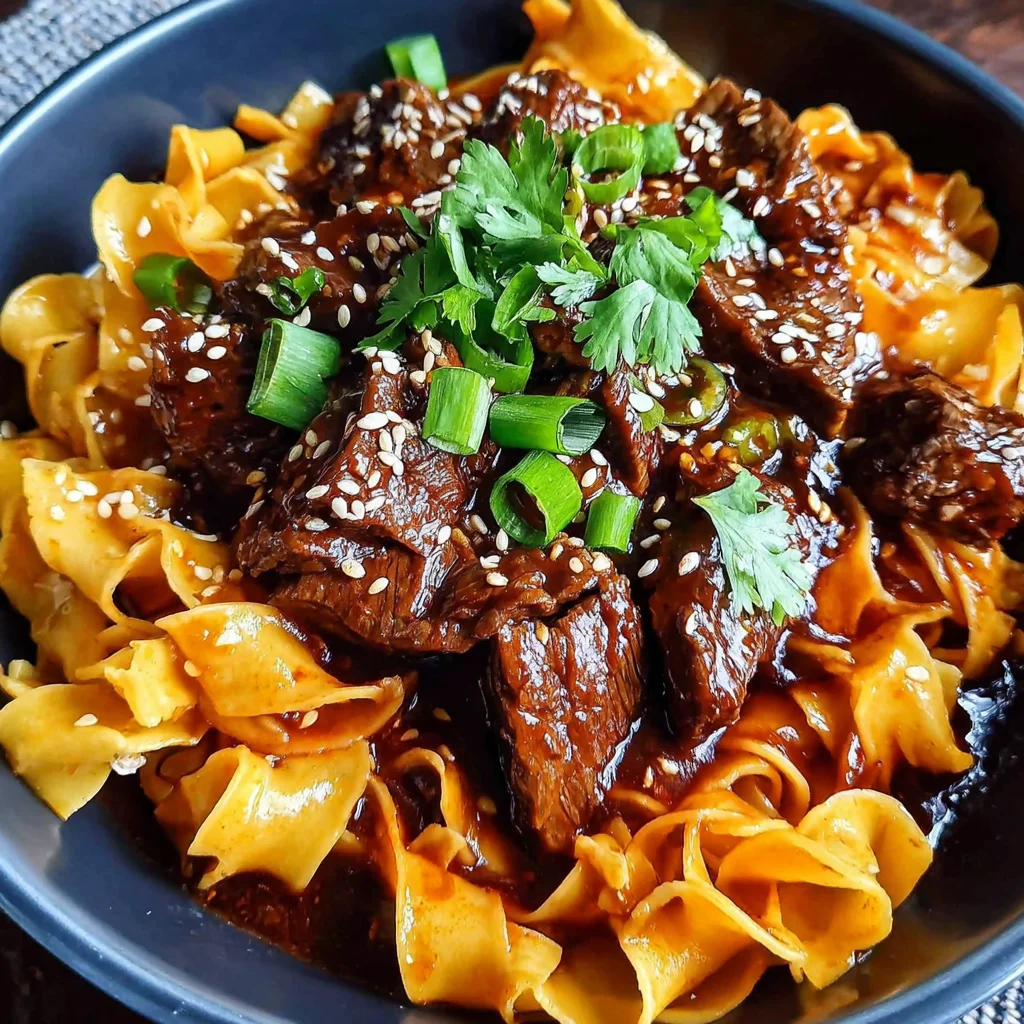
- Ladle generous portions of the Korean beef and noodle mixture into individual serving bowls. Garnish each bowl generously with freshly sliced green onions, a sprinkle of toasted sesame seeds, and fresh cilantro, if desired, before serving hot.
Tools You’ll Need
- Slow cooker (or Dutch oven)
- Large mixing bowl
- Whisk
- Sharp knife
- Cutting board
- Large pot (for cooking noodles)
- Colander
- Serving spoons
Essential Success Tips
- To achieve the most tender beef, ensure you allow the full cooking time specified for your slow cooker setting. Rushing the process can result in tougher meat.
- For an extra layer of flavor and to create a beautiful crust, quickly sear the beef chunks in a hot pan with a little oil before adding them to the slow cooker.
- Always taste the sauce before adding the noodles and adjust the gochujang or brown sugar to match your preferred level of spice and sweetness.
- Do not overcook the noodles in their initial boiling stage; they will continue to absorb some liquid and soften slightly when added to the slow cooker.
- For the freshest taste, add garnishes like green onions, sesame seeds, and cilantro just before serving to maintain their vibrant color and texture.
Professional Cooking Secrets
- To elevate the depth of flavor, consider using homemade beef broth or a high-quality, low-sodium store-bought variety. A rich broth forms the foundation of this incredible dish.
- Allow the slow-cooked beef to rest in the sauce for about 10-15 minutes after the cooking cycle is complete before adding the noodles. This resting period allows the juices to redistribute, ensuring even more tender and succulent beef.
- For a bright finish, stir in a teaspoon of rice vinegar into the slow cooker just before serving. The slight acidity will cut through the richness and enhance the overall complexity of the dish.
Notes
- Storage: Leftovers can be stored in an airtight container in the refrigerator for up to 3 days. The noodles will continue to absorb liquid, so you may wish to add a splash of water or broth when reheating.
- Freezing: This dish freezes well! Store portions in freezer-safe containers for up to 2-3 months. Thaw overnight in the refrigerator and reheat gently on the stovetop or microwave, adding liquid as needed.
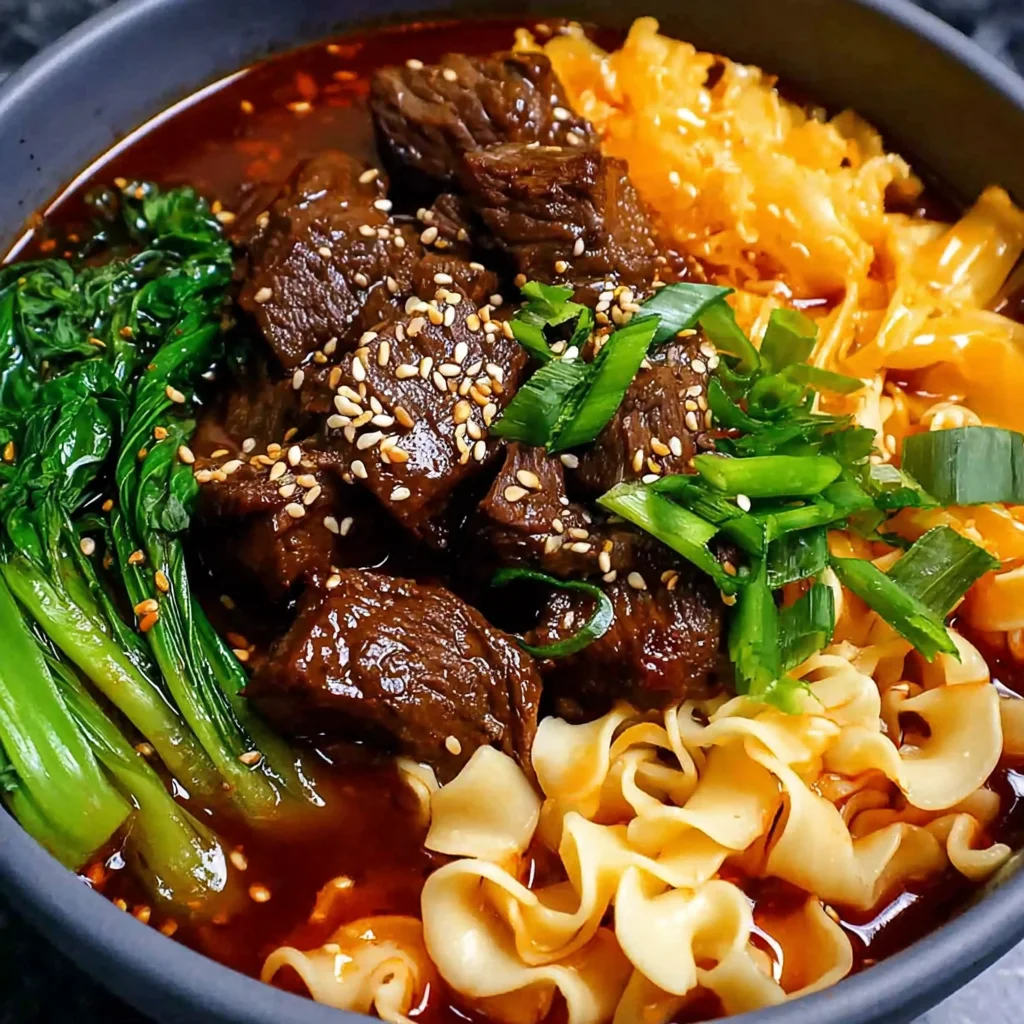
- Variations: Feel free to add vegetables such as sliced mushrooms, bok choy, or julienned carrots during the last hour of cooking for added nutrition and texture.
Frequently Asked Questions
Can I use a different cut of beef for this recipe?
Yes, while beef chuck is excellent for slow cooking due to its marbling and ability to become very tender, you could also use beef short ribs or brisket. Adjust cooking times as needed, as thicker cuts may require slightly longer to reach optimal tenderness.
How can I adjust the spice level of the Korean Beef Noodles?
The spice comes primarily from the gochujang. To make it spicier, you can increase the amount of gochujang to 1.5 or 2 tablespoons, or add a pinch of gochugaru (Korean chili powder) along with the other spices. For a milder version, reduce the gochujang to half a tablespoon or omit it entirely and add a touch more brown sugar for sweetness.
Is it possible to make this dish without a slow cooker?
Absolutely! You can braise the beef in a heavy-bottomed pot or Dutch oven. After combining all ingredients as instructed, bring the mixture to a simmer on the stovetop, then cover tightly and transfer to a preheated oven at 150°C (300°F) for 3-4 hours, or until the beef is fork-tender. Check periodically to ensure liquid levels are adequate.
Nutrition Facts (Per Serving)
Calories: Approximately 550-650 per serving, Protein: 40-50g, Fat: 25-35g, Carbs: 50-60g. (Nutritional values are estimates and may vary based on specific ingredients and portion sizes.)
Allergy Information
Contains soy and sesame. Many traditional soy sauces contain wheat (gluten); for a gluten-free option, use tamari or certified gluten-free soy sauce. Always check noodle packaging for gluten content as well, especially if serving to individuals with gluten sensitivities.


No comment