
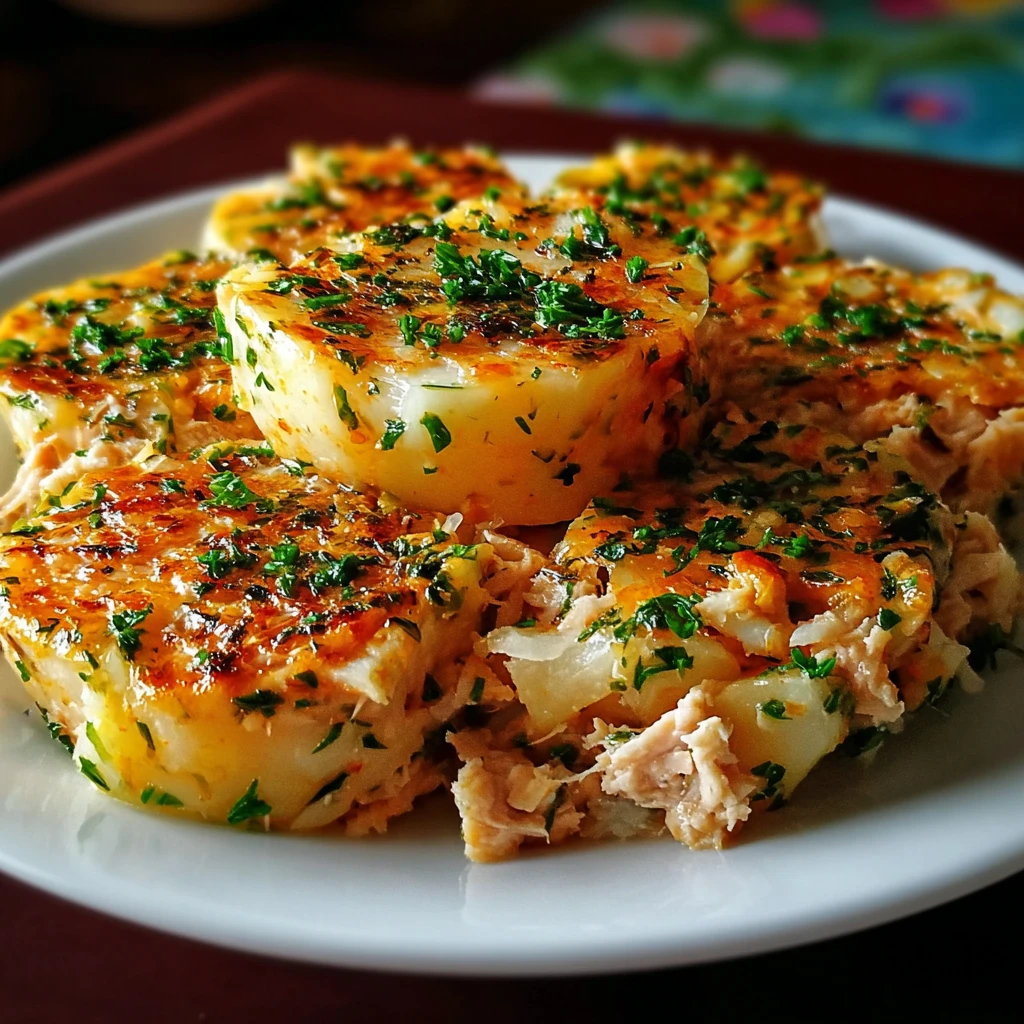
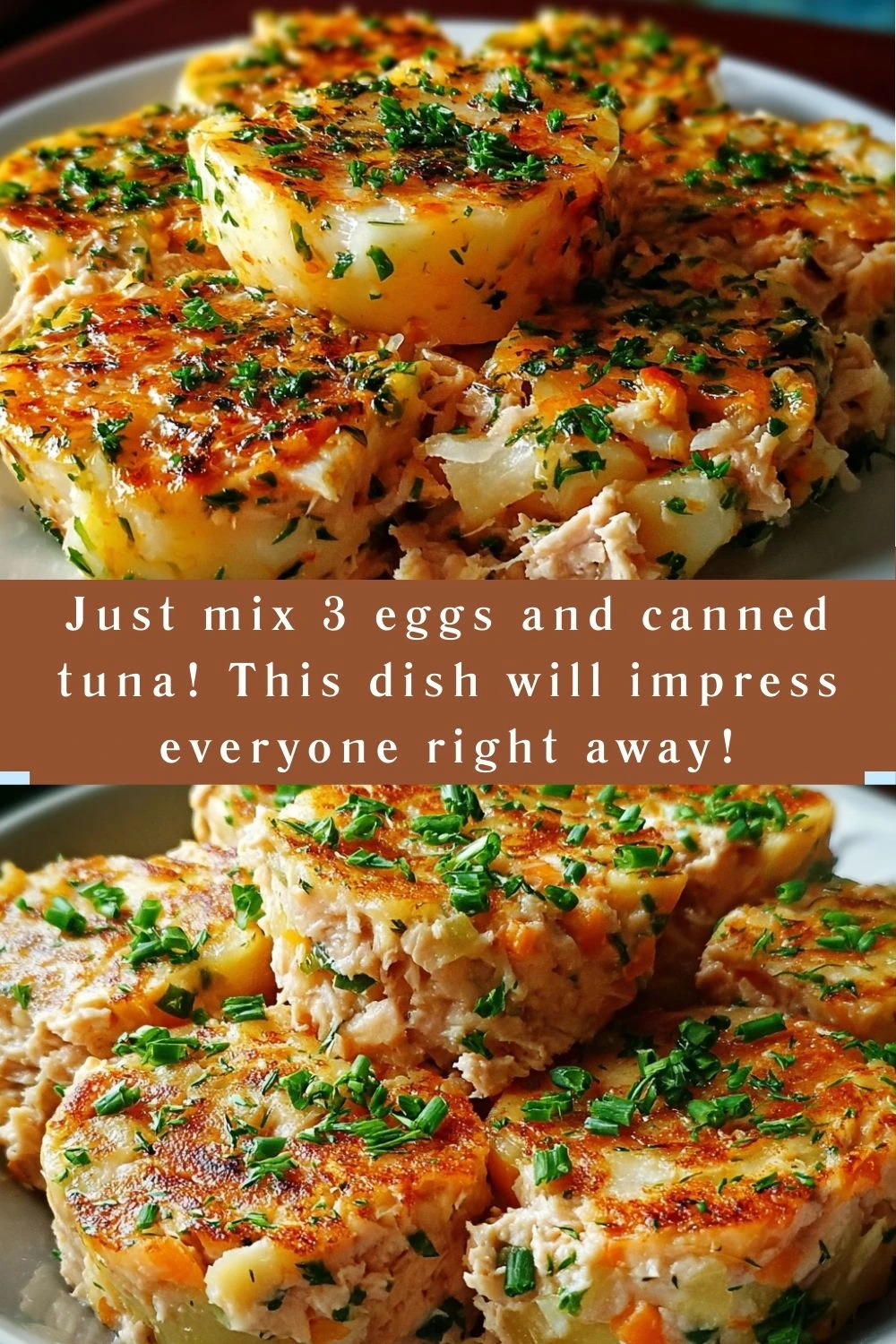
Just mix 3 eggs and canned tuna! This dish will impress everyone right away!
Inspired by generations of village cooking, this heartwarming dish transforms humble canned tuna and potatoes into a delightful, family-friendly meal. These crispy, flavorful patties are made with simple, affordable ingredients, offering a unique taste that truly embodies comfort and tradition. Paired with a vibrant, tangy dill pickle sauce, this recipe is sure to become a cherished tradition in your own home.
Prep Time
25 minutes
Cook Time
35 minutes
Total Time
1 hour
Servings
4-6 servings
Keywords
Why This Recipe Delivers
- A truly comforting and satisfying meal, perfect for any family dinner.
- Utilizes simple, affordable pantry staples, making it economical and accessible.
- The combination of savory tuna and fluffy potato creates a wonderfully balanced flavor and texture.
- Quick and straightforward preparation, ideal for busy weeknights.
- The tangy, creamy dill pickle sauce elevates the entire dish with a burst of freshness.
Ingredients
- 3 large eggs
- 2 cans (approx. 140 g / 5 oz each) tuna in oil or water, drained
- 4-5 medium potatoes (approx. 600-750 g / 1.3-1.6 lbs), peeled
- 30 g (1/4 cup) fresh parsley, finely chopped
- 2-3 spring onions (approx. 30 g / 1/4 cup), finely chopped
- 1 medium carrot (approx. 100 g / 3.5 oz), grated
- 100-150 ml (1/3 to 1/2 cup) vegetable oil, for frying
- 5 g (1 teaspoon) sweet paprika
- 1 clove garlic (approx. 5 g), minced, for patties
- Salt, to taste
- Freshly ground black pepper, to taste
- 4 tablespoons (approx. 40 g / 1.4 oz) all-purpose flour
- For the Creamy Dill Pickle Sauce:
- 3 tablespoons (approx. 45 g / 1.6 oz) sour cream
- 1 tablespoon (approx. 15 g / 0.5 oz) mayonnaise
- 2 medium pickles (approx. 100 g / 3.5 oz), finely diced
- 15 g (2 tablespoons) fresh dill, finely chopped
- 1 small clove garlic (approx. 3 g), minced
Instructions
- Begin by preparing the potatoes. Peel the potatoes and cut them into evenly sized pieces to ensure uniform cooking. Place them in a large pot, cover with cold water, add a generous pinch of salt, and bring to a boil. Reduce the heat and simmer until the potatoes are fork-tender, which typically takes about 20-25 minutes depending on their size. Once cooked, drain them thoroughly.
- While the potatoes are boiling, prepare the remaining patty ingredients. Finely chop the fresh parsley and spring onions. Grate the carrot using a fine grater. Mince one clove of garlic very finely. Open the cans of tuna and drain any excess liquid thoroughly, pressing down to remove as much moisture as possible. This step is crucial for preventing soggy patties.
- Once the potatoes are cooked and drained, transfer them to a large mixing bowl. Using a potato masher, thoroughly mash the potatoes until smooth, ensuring no large lumps remain. Allow them to cool slightly to room temperature; this helps the mixture bind better.
- To the mashed potatoes, add the drained tuna, three eggs, chopped parsley, chopped spring onions, grated carrot, minced garlic (for the patties), sweet paprika, and salt and freshly ground black pepper to taste. Incorporate the four tablespoons of all-purpose flour. Mix all ingredients thoroughly until well combined and a cohesive mixture forms. The flour acts as a binder, helping the patties hold their shape.
- With clean hands, take approximately 50-60 g (about 2-3 tablespoons) of the mixture and form it into a patty. Aim for a disc shape, about 1.5-2 cm (0.6-0.8 inches) thick and 6-7 cm (2.4-2.8 inches) in diameter. Repeat this process until all the mixture has been used, yielding approximately 10-12 patties.
- Heat the vegetable oil in a large frying pan or skillet over medium heat. Ensure the oil is hot enough before adding the patties; a drop of the mixture should sizzle gently. Carefully place the formed patties into the hot oil, making sure not to overcrowd the pan. Cook in batches if necessary to maintain even frying temperature.
- Fry the patties for 3-5 minutes on each side, or until they are golden brown and crispy on the exterior and heated through. Adjust the heat as needed to prevent burning. Once cooked, transfer the patties to a plate lined with paper towels to absorb any excess oil.
- While the patties are frying, prepare the creamy dill pickle sauce. In a small bowl, combine the sour cream and mayonnaise. Finely dice the pickles and chop the fresh dill. Mince the remaining small clove of garlic.
- Add the finely diced pickles, chopped fresh dill, and minced garlic to the sour cream and mayonnaise mixture. Stir well to combine all the ingredients thoroughly. Taste and adjust seasoning if necessary.
- Serve the hot tuna and potato patties immediately, accompanied by a generous dollop of the creamy dill pickle sauce. This dish is wonderful on its own or served alongside a simple green salad.
Tools You’ll Need
- Large pot
- Potato masher
- Large mixing bowl
- Cutting board
- Chef's knife
- Grater
- Measuring spoons and cups
- Large frying pan or skillet
- Spatula or tongs
- Small bowl for sauce
- Paper towels
Essential Success Tips
- Ensure your potatoes are thoroughly drained and slightly cooled before mixing; excess moisture can lead to soggy patties that don't hold their shape.
- Don't overcrowd the pan when frying. Frying in batches ensures even browning and a crispy texture.
- For the best flavor, use high-quality canned tuna. If using tuna in water, a little extra oil in the mixture can add richness.
- Adjust the binding agents (flour or a tiny bit more egg) if your mixture feels too wet or too dry, ensuring it's pliable enough to form patties easily.
- Taste the patty mixture before frying a batch and adjust seasoning as needed, especially for salt and pepper.
Professional Cooking Secrets
- To achieve an extra crispy exterior, lightly dredge the formed patties in a small amount of extra flour just before frying. This creates a thin, golden crust.
- For a deeper flavor profile in the patties, consider sautéing the minced garlic and grated carrot briefly before adding them to the potato mixture. This mellows the garlic and sweetens the carrot.
- The sauce can be made an hour or two in advance and refrigerated. This allows the flavors to meld beautifully, enhancing its tang and complexity.
Notes
- Leftover patties can be stored in an airtight container in the refrigerator for up to 3 days. Reheat gently in a pan or oven for best results.
- For a slight variation, you can add a pinch of chili flakes to the patty mixture for a subtle kick, or a squeeze of lemon juice to the sauce for extra brightness.
- These patties are also delicious served cold with the sauce, making them perfect for a packed lunch or a picnic.
Frequently Asked Questions
Can I use fresh fish instead of canned tuna?
While canned tuna is central to the traditional simplicity of this dish, you can certainly experiment with cooked and flaked fresh fish like salmon or cod. Ensure it's fully cooked and well-flaked before mixing.
How can I make the patties gluten-free?
To make this dish gluten-free, substitute the all-purpose flour with a gluten-free all-purpose flour blend or an equal amount of chickpea flour or cornstarch. Ensure all other ingredients are naturally gluten-free.
Can I bake the patties instead of frying them?
Yes, you can bake the patties for a lighter option. Preheat your oven to 190°C (375°F). Place the patties on a greased baking sheet and bake for 20-25 minutes, flipping halfway through, until golden brown and firm.
Nutrition Facts (Per Serving)
Estimated per serving (1-2 patties with sauce): Calories: 400-480, Protein: 25-30g, Fat: 20-28g, Carbohydrates: 30-40g, Fiber: 4-6g. (These values are approximate and can vary based on specific ingredient brands and preparation methods.)
Allergy Information
Contains fish (tuna), eggs, and gluten (flour). For a gluten-free version, use a gluten-free flour alternative. For a dairy-free sauce, use plant-based sour cream and mayonnaise.
Recipe Video
Please Note:
The recipe in this article is our most up-to-date version. You may notice some differences from the video, as we continuously refine our recipes with improved techniques and ingredient adjustments whenever we discover a better way.


No comment