
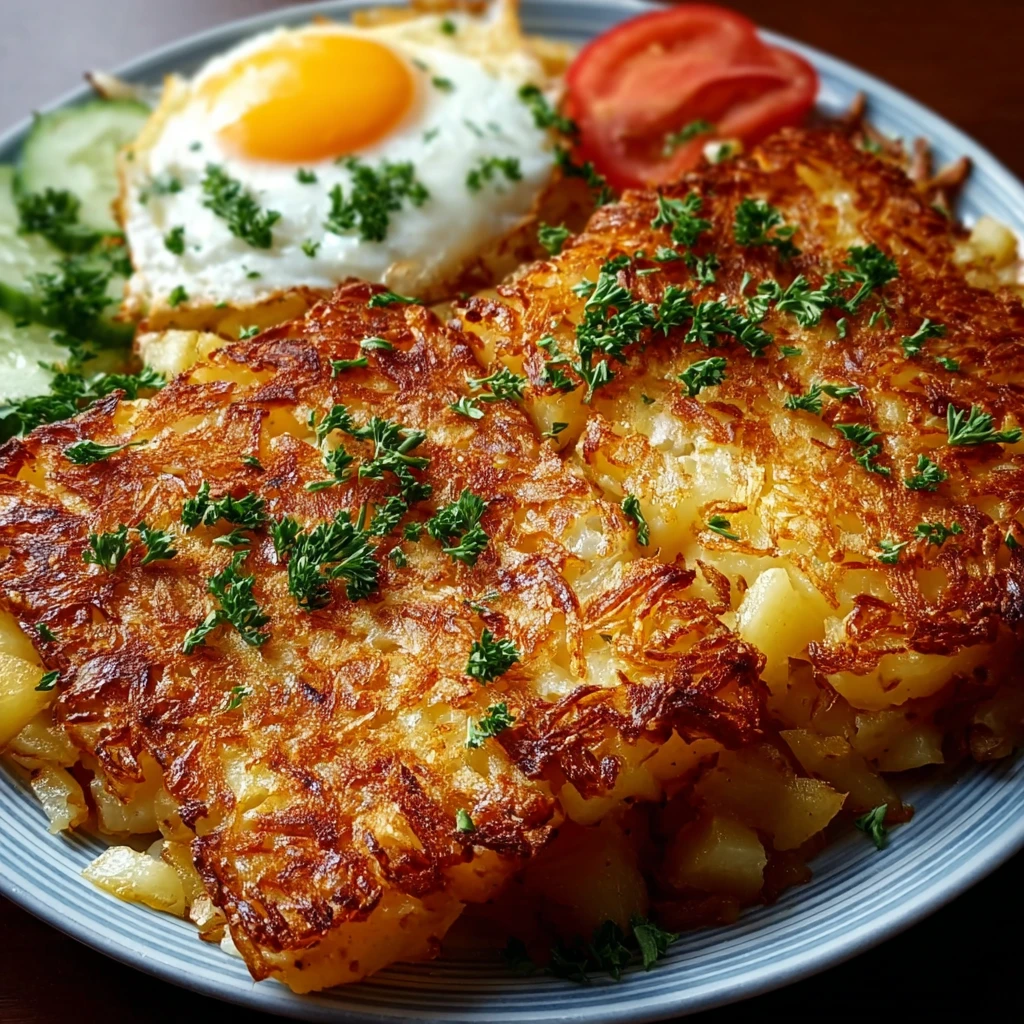
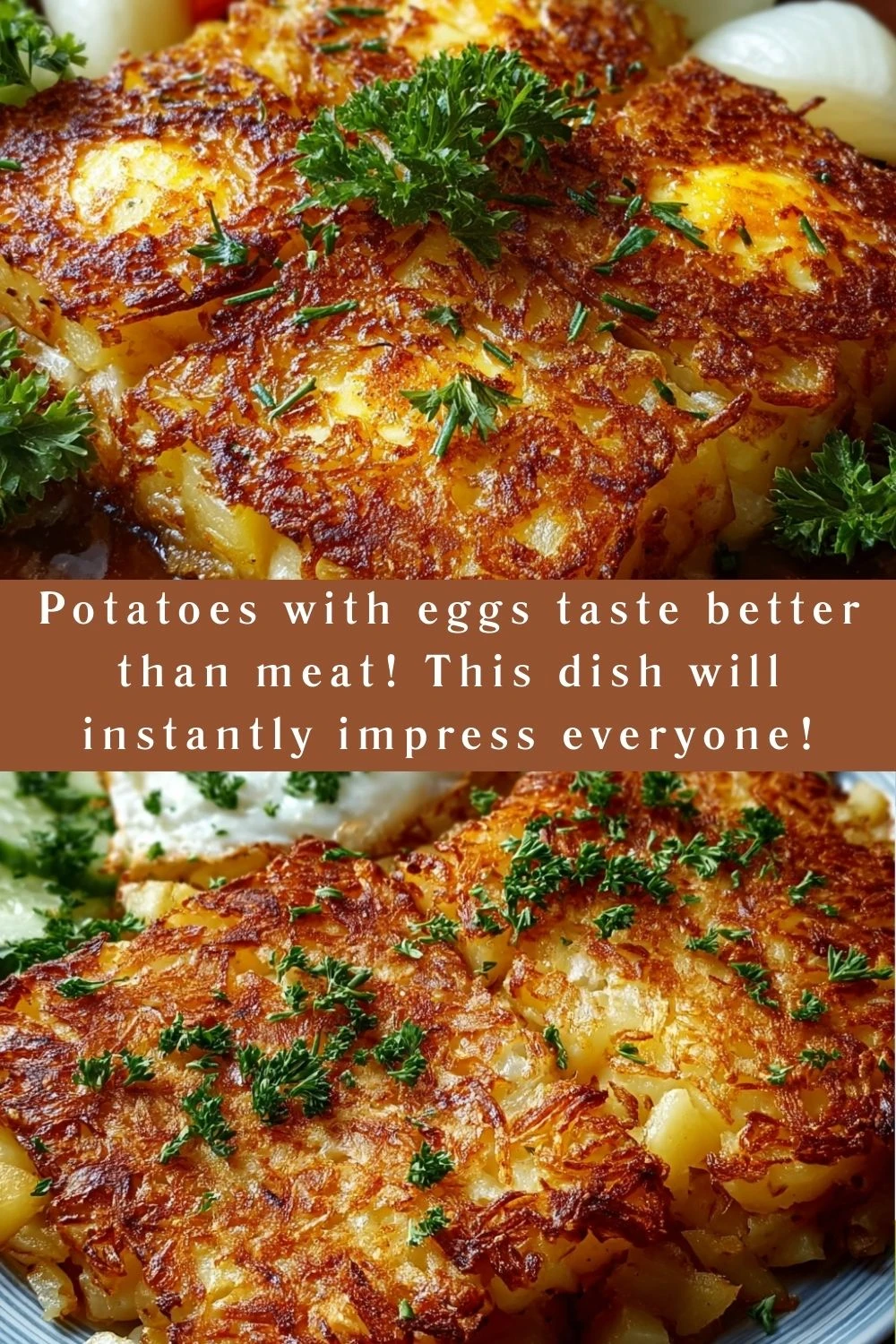
Potatoes with eggs taste better than meat! This dish will instantly impress everyone!
Inspired by treasured family recipes, this hearty potato and egg skillet is a testament to the comforting power of simple, wholesome ingredients. Elevating humble potatoes and eggs, this dish creates a satisfying and flavorful experience, perfectly complemented by a vibrant fresh salad and a tangy, herby sauce.
Prep Time
30 minutes
Cook Time
25 minutes
Total Time
55 minutes
Servings
3-4 servings
Keywords
Why This Recipe Delivers
- A heartwarming, rustic dish reminiscent of comforting home cooking.
- Utilizes simple, affordable ingredients, making it accessible to everyone.
- Impressively flavorful, showcasing the humble potato and egg in a new light.
- Versatile for any meal of the day, from a robust breakfast to a satisfying dinner.
- The inclusion of fresh salad and a creamy sauce elevates the entire dining experience.
Ingredients
- 2 large potatoes (approximately 500 g / 1.1 lb), peeled and grated
- 2 large eggs
- 1/2 small cabbage (approximately 350 g / 12 oz), finely shredded
- 1 medium onion (approximately 150 g / 5.3 oz), finely diced
- 1 medium carrot (approximately 120 g / 4.2 oz), grated
- 1 medium bell pepper (any color, approximately 150 g / 5.3 oz), finely diced
- 1 clove garlic, minced (for the main dish)
- 150 g (5.3 oz) hard cheese, grated (e.g., Cheddar, Gouda)
- 4 tablespoons (approximately 60 g / 2.1 oz) all-purpose flour
- 30-50 ml (2-3 tablespoons) vegetable oil, plus more for cooking
- 1 teaspoon salt, or to taste
- 1/2 teaspoon freshly ground black pepper, or to taste
- 1 teaspoon sweet paprika
- 1/2 teaspoon Italian herb blend
- Fresh parsley, chopped, for garnish
- For the Fresh Salad:
- 2 medium cucumbers (approximately 300 g / 10.6 oz), diced
- 3 medium tomatoes (approximately 450 g / 15.9 oz), diced
- 2 spring onions (approximately 30 g / 1 oz), thinly sliced
- 30 g (1 oz) fresh parsley, chopped
- 30 ml (2 tablespoons) extra virgin olive oil
- Juice of 1/2 lemon (approximately 15 ml / 1 tablespoon)
- Pinch of salt
- Pinch of freshly ground black pepper
- For the Creamy Dill Sauce:
- 3 tablespoons (approximately 45 g / 1.6 oz) sour cream
- 1 tablespoon (approximately 15 g / 0.5 oz) mayonnaise
- 1 clove garlic, minced (for the sauce)
- 15 g (0.5 oz) fresh dill, finely chopped
Instructions
- Prepare the main dish vegetables. Peel and grate the potatoes, then squeeze out as much excess liquid as possible using a clean kitchen towel. This crucial step prevents the skillet from becoming watery and ensures a crispier texture. Finely shred the cabbage, dice the onion and bell pepper, and grate the carrot. Mince one clove of garlic.
- In a large mixing bowl, combine the squeezed grated potatoes, two eggs, 4 tablespoons of flour, 1 teaspoon of salt, 1/2 teaspoon of black pepper, 1 teaspoon of sweet paprika, and 1/2 teaspoon of Italian herb blend. Mix thoroughly until all ingredients are well combined into a cohesive batter. The flour acts as a binder, helping the potatoes and eggs hold together during cooking.
- Sauté the aromatics and vegetables. Heat 30-50 ml (2-3 tablespoons) of vegetable oil in a large, oven-safe skillet over medium heat. Add the diced onion, grated carrot, finely diced bell pepper, and minced garlic. Sauté for 5-7 minutes, or until the vegetables are softened and fragrant. This pre-cooking step builds a foundational layer of flavor for the entire dish.
- Combine and cook the skillet base. Add the sautéed vegetables to the potato and egg mixture. Stir well to ensure even distribution. Return the mixture to the same skillet, spreading it evenly across the bottom. Press down gently to form a uniform layer, similar to a thick pancake or frittata. Cook over medium heat for about 10-12 minutes, or until the bottom is golden brown and crispy. Covering the pan for a few minutes can help the internal mixture cook through.
- Finish the skillet with cheese. Once the bottom is golden, carefully flip the potato skillet if comfortable, or if your skillet is oven-safe, proceed without flipping. Sprinkle the grated cheese evenly over the top. If not flipping, you can transfer the skillet to a preheated oven at 180°C (350°F) for 5-7 minutes, or simply cover the pan on the stovetop until the cheese is melted and bubbly. This creates a delicious, savory crust.
- Prepare the fresh salad. While the skillet cooks, dice the cucumbers and tomatoes. Thinly slice the spring onions and finely chop the fresh parsley. In a medium bowl, combine the diced cucumbers, tomatoes, spring onions, and chopped parsley. Drizzle with 30 ml (2 tablespoons) of extra virgin olive oil and the juice of 1/2 lemon. Season with a pinch of salt and black pepper, then toss gently to combine. The acidity from the lemon brightens the fresh flavors.
- Prepare the creamy dill sauce. In a small bowl, combine 3 tablespoons of sour cream, 1 tablespoon of mayonnaise, one minced clove of garlic, and the finely chopped fresh dill. Stir well until smooth and thoroughly combined. Taste and adjust seasoning if necessary. This sauce provides a delightful creamy and aromatic counterpoint to the savory skillet.
- Serve the dish. Once the potato and egg skillet is golden and the cheese is melted, carefully slide it onto a large serving plate or cut it directly in the pan. Garnish generously with fresh chopped parsley. Serve immediately with the vibrant fresh salad and the creamy dill sauce on the side. Enjoy the harmonious blend of textures and flavors.
Tools You’ll Need
- Large mixing bowls
- Box grater or food processor with grating attachment
- Sharp knife
- Cutting board
- Large, oven-safe skillet (cast iron recommended)
- Spatula or flipper
- Measuring spoons and cups
- Whisk or fork
- Clean kitchen towel
Essential Success Tips
- Thoroughly squeeze out excess moisture from the grated potatoes. This is paramount for achieving a crispy crust and preventing a soggy skillet. If potatoes are too wet, the dish won't set properly.
- Ensure your skillet is adequately preheated and has enough oil. This creates a non-stick surface and helps develop that beautiful golden-brown crust on the potato mixture.
- Cook the skillet over medium heat. Too high, and it will burn on the outside before cooking through; too low, and it may not crisp up effectively.
- Don't overcrowd the skillet with the initial sautéed vegetables; if your pan is too small, cook them in batches to allow them to caramelize properly instead of steaming.
- For an extra layer of flavor, consider browning the grated potatoes slightly in the pan before adding the eggs and flour, then spreading them out to cook evenly.
Professional Cooking Secrets
- To achieve an exceptionally crispy exterior, once the skillet has cooked through on the stovetop, transfer it to a preheated oven under the broiler for 2-3 minutes until the cheese is deeply golden and bubbly. Watch it closely to prevent burning.
- Experiment with different cheeses beyond traditional hard cheese; a smoked gouda or a sharp provolone could introduce intriguing flavor nuances.
- For an added textural element and depth of flavor, roast the bell peppers and onions briefly before adding them to the potato mixture. This intensifies their sweetness and adds a subtle smoky note.
Notes
- Storage: Leftovers can be stored in an airtight container in the refrigerator for up to 2-3 days. Reheat gently in a skillet or oven to maintain crispness.
- Variations: Feel free to add other finely diced vegetables to the skillet mixture, such as zucchini or mushrooms. For a non-vegetarian option, small pieces of cooked bacon or ham could be folded into the potato mixture.
- The fresh salad and creamy sauce are integral components of this dish, offering balance and freshness that cut through the richness of the skillet. Do not skip them for the full experience!
Frequently Asked Questions
Can I prepare the potato mixture ahead of time?
While the potato mixture is best cooked immediately after grating to prevent oxidation and maintain texture, you can prep the other vegetables (shredding cabbage, dicing onions, carrots, and peppers) a day in advance and store them separately in the refrigerator.
What kind of potatoes work best for this recipe?
Starchy potatoes like Russets (Idaho) or baking potatoes are ideal as they grate easily and contribute to a good texture when cooked. However, all-purpose potatoes like Yukon Golds would also work well, just ensure to squeeze out excess moisture.
Can I make this dish without an oven-safe skillet?
Yes, if your skillet isn't oven-safe, you can cover the pan with a lid after adding the cheese and continue cooking on low heat until the cheese is melted. Alternatively, you can carefully flip the cooked potato base onto a plate, top with cheese, and then slide it back into the pan (cheese side up) to melt.
Nutrition Facts (Per Serving)
Per serving (estimated for 4 servings): Calories: 480-550, Protein: 20-25g, Fat: 30-38g, Carbohydrates: 35-42g (Note: Nutritional values are estimates and can vary based on specific ingredient brands and preparation methods, especially the amount of oil used.)
Allergy Information
Contains eggs, dairy (cheese, sour cream), and gluten (flour). For a gluten-free version, substitute the all-purpose flour with a gluten-free flour blend. For a dairy-free option, use plant-based sour cream and cheese alternatives.
Recipe Video
Please Note:
The recipe in this article is our most up-to-date version. You may notice some differences from the video, as we continuously refine our recipes with improved techniques and ingredient adjustments whenever we discover a better way.

No comment