
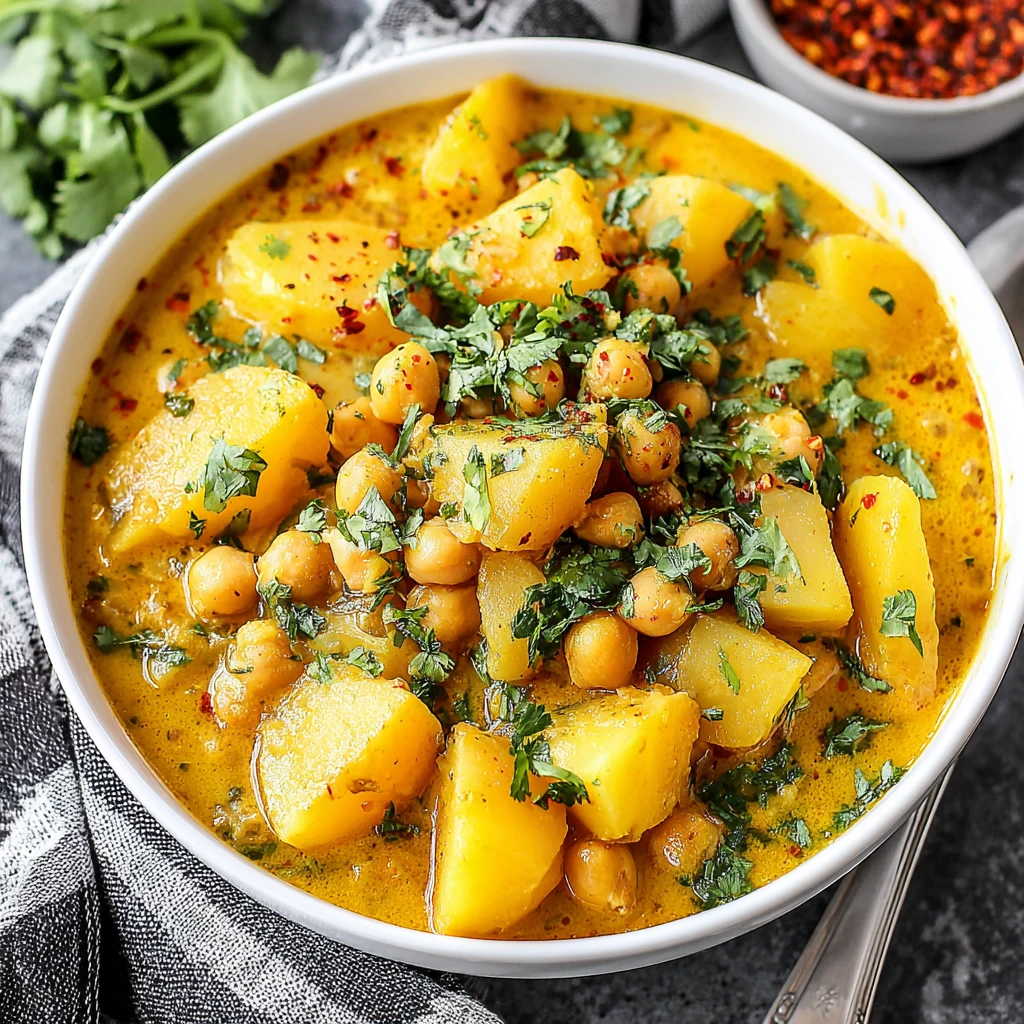
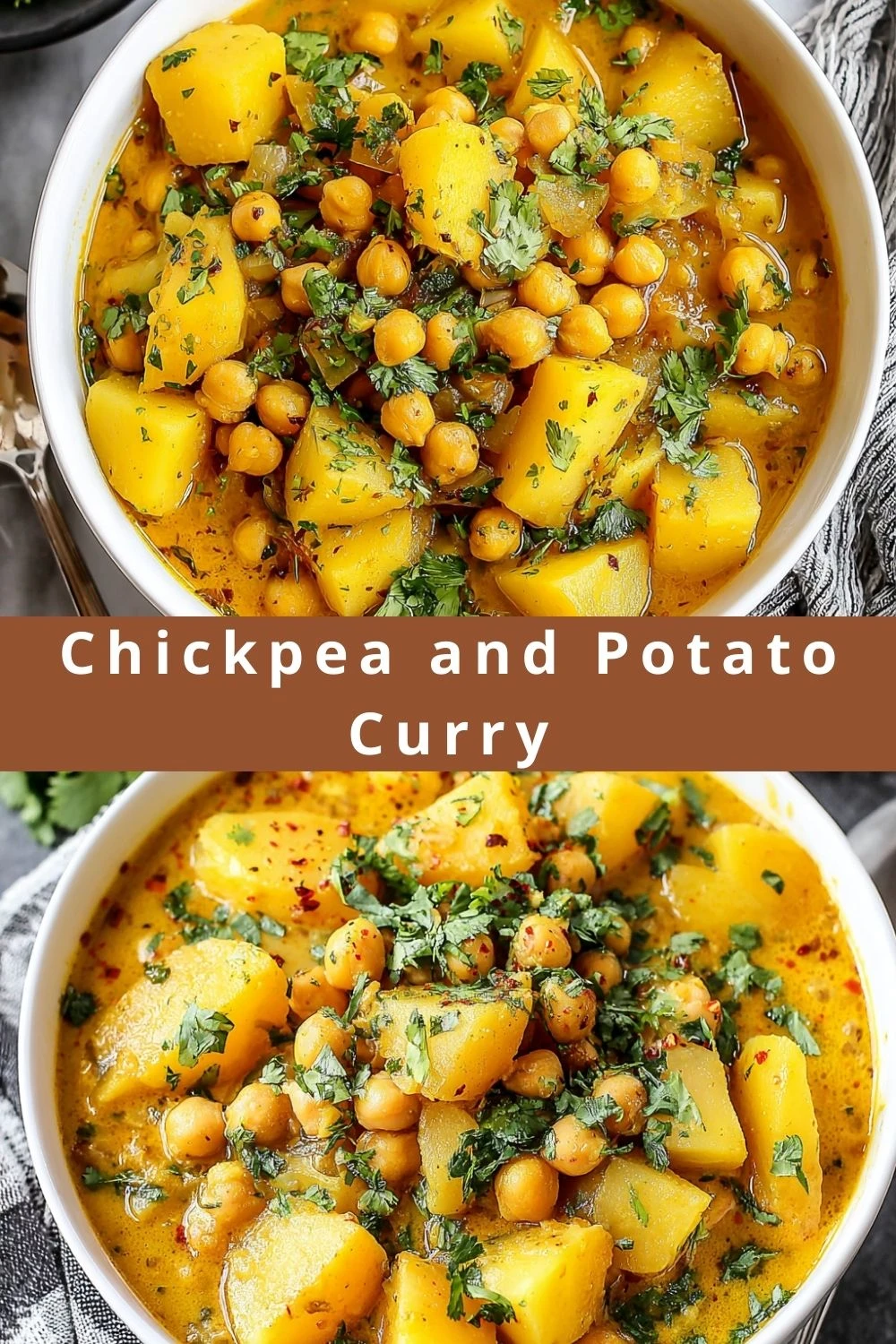
Chickpea and Potato Curry
Indulge in the rich, comforting flavors of this Hearty Chickpea and Potato Curry. This vegan-friendly dish combines tender potatoes and protein-packed chickpeas in a creamy, aromatic coconut sauce, making it a perfect, satisfying meal for any day of the week. Its vibrant spices and hearty texture promise a delightful culinary experience.
Prep Time
20 minutes
Cook Time
25 minutes
Total Time
45 minutes
Servings
4 generous servings
Keywords
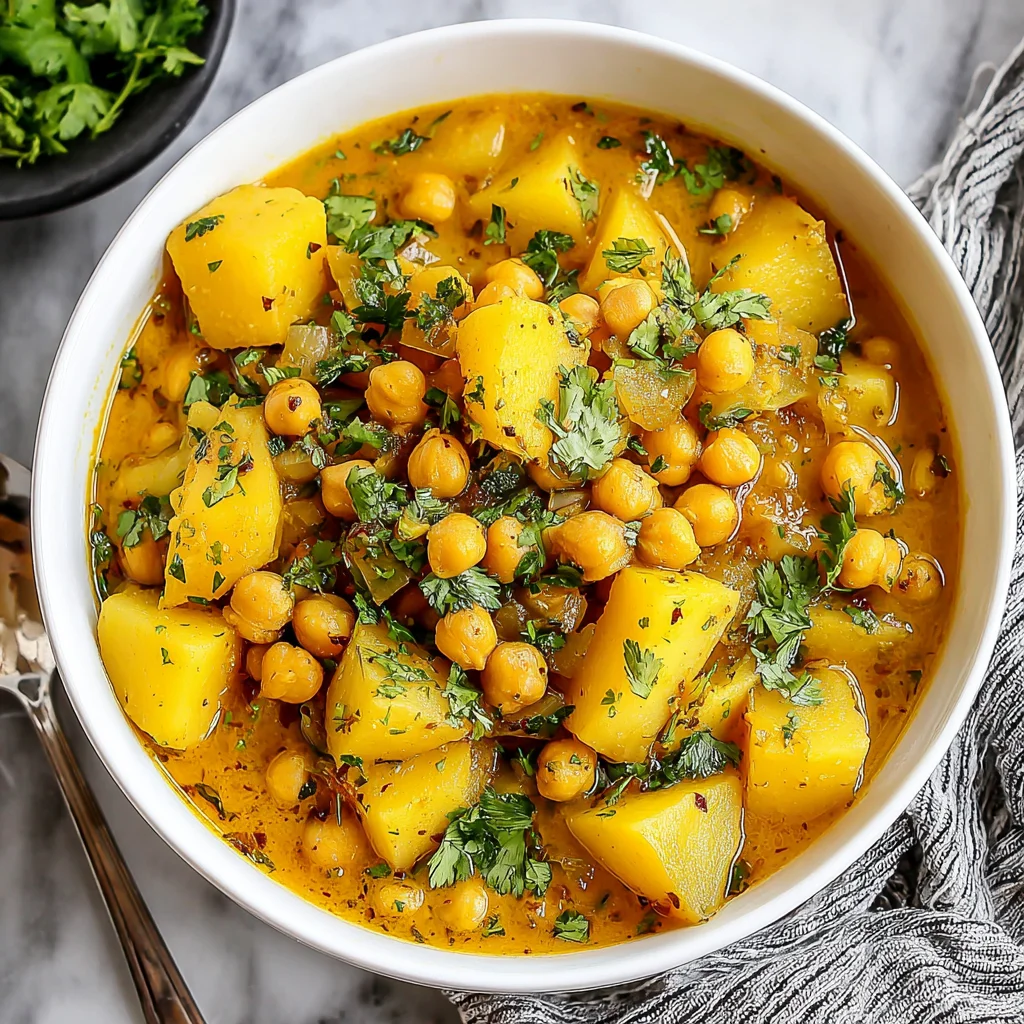
Why This Recipe Delivers
- Wholesome and incredibly satisfying, perfect for a hearty meal.
- Packed with aromatic spices and creamy coconut milk for rich flavor.
- A quick and straightforward recipe, ideal for busy weeknights.
- Naturally plant-based and gluten-free, catering to various dietary needs.
- Uses budget-friendly ingredients without compromising on taste.
Ingredients
- 15 ml (1 tablespoon) coconut oil
- 1 medium onion (about 150 g / 5 oz), finely chopped
- 2-3 garlic cloves, minced
- 15 g (1 tablespoon) curry powder (mild or medium)
- 5 g (1 teaspoon) ground turmeric
- 400 g (2 cups) potatoes (such as Yukon Gold or Russet), peeled and diced into 2 cm (3/4 inch) cubes
- 400 ml (14 oz) full-fat coconut milk
- 240 ml (1 cup) vegetable broth
- 240 g (1 cup) cooked chickpeas (from 1 can, rinsed and drained)
- Salt to taste
- Freshly ground black pepper to taste
- Fresh cilantro, chopped (for garnish, optional)
Instructions
- Begin by heating the coconut oil in a large pot or Dutch oven over medium heat. Allow the oil to melt completely before adding the aromatics.
- Once the oil is shimmering, add the finely chopped onion and minced garlic to the pot. Sauté for approximately 2-3 minutes, stirring occasionally, until the onions soften and become translucent and the garlic releases its fragrant aroma. Do not let them brown excessively, as this can impart a bitter flavor.
- Carefully sprinkle in the curry powder and ground turmeric over the softened onions and garlic. Stir thoroughly to coat all the aromatics, allowing the spices to cook for about 30 seconds. This crucial step, known as blooming the spices, helps to deepen their flavor and release their full aroma.
- Add the diced potatoes to the pot, followed by the full-fat coconut milk and vegetable broth. Stir all the ingredients together, ensuring the potatoes are mostly submerged in the liquid. Bring the mixture to a gentle boil, then reduce the heat to low, cover the pot, and let it simmer for around 15 minutes, or until the potatoes are fork-tender. Check for tenderness by piercing a potato cube with a fork.
- Gently stir in the cooked chickpeas. Continue to simmer the curry for an additional 5 minutes, allowing the chickpeas to heat through and absorb the delicious flavors of the sauce. This final simmering helps to meld all the components of the dish beautifully.
- Remove the pot from the heat. Taste the curry and adjust seasoning with salt and freshly ground black pepper as needed. Serve the curry warm, garnished with a sprinkle of fresh chopped cilantro if desired, and pair it with fluffy basmati rice or warm naan bread for a complete and satisfying meal.
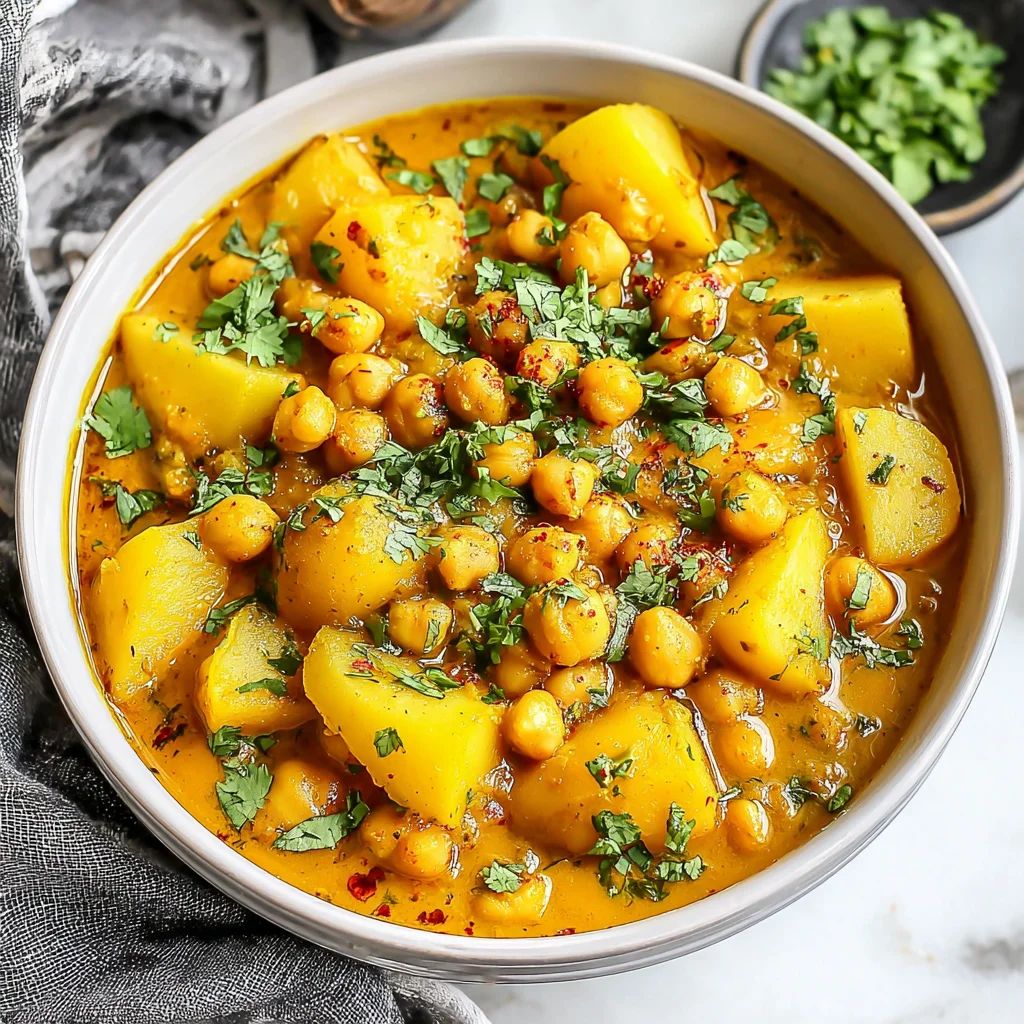
Tools You’ll Need
- Large pot or Dutch oven (minimum 4-liter / 4-quart capacity)
- Cutting board
- Chef's knife
- Wooden spoon or heat-resistant spatula
- Measuring cups and spoons
Essential Success Tips
- Don't rush the aromatics: Sautéing onions and garlic until truly softened builds a strong, flavorful base for your curry.
- Toast your spices: Cooking the curry powder and turmeric briefly in oil before adding liquids enhances their fragrance and deepens the curry's overall flavor profile.
- Potato consistency is key: Ensure your potato cubes are roughly the same size for even cooking. Overcooked potatoes will become mushy.
- Adjust seasoning at the end: The flavors will concentrate as the curry simmers, so do a final taste test and adjust salt and pepper just before serving.
- Garnish for freshness: A sprinkle of fresh cilantro not only adds a beautiful pop of color but also a bright, fresh counterpoint to the rich curry.
Professional Cooking Secrets
- Bloom your spices in oil: For an even richer flavor, consider adding a pinch of fresh grated ginger along with your garlic. Cooking these aromatic elements gently in oil allows their fat-soluble flavor compounds to fully develop before liquids are introduced.
- A touch of acid for brightness: A squeeze of fresh lime juice or a splash of apple cider vinegar at the very end can brighten the entire dish, balancing the richness of the coconut milk and enhancing the spice notes.
- Layer the heat: If you enjoy a bit of a kick, consider adding a finely minced green chili or a pinch of red chili flakes with your other spices to build a gentle, layered heat.
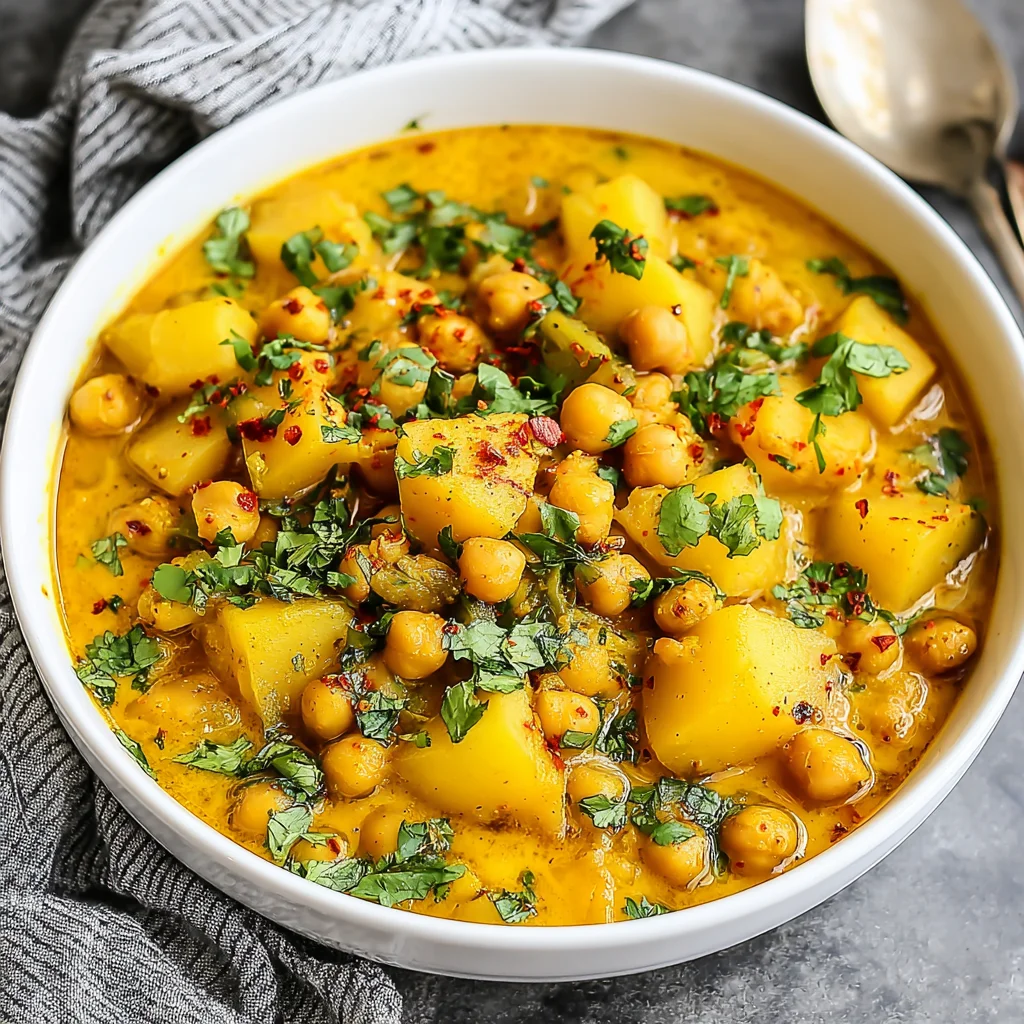
Notes
- Storage: Leftovers can be stored in an airtight container in the refrigerator for up to 3-4 days. This curry often tastes even better the next day as the flavors continue to meld.
- Freezing: This curry freezes beautifully. Allow it to cool completely before transferring to freezer-safe containers. It can be frozen for up to 3 months. Thaw overnight in the refrigerator and reheat gently on the stovetop or in the microwave.
- Variations: Feel free to add other vegetables like spinach (stir in at the very end until wilted), bell peppers (add with potatoes), or green beans (add during the last 10 minutes of simmering) for extra nutrition and texture. You can also swap out the potatoes for sweet potatoes for a different flavor profile.
Frequently Asked Questions
Can I use dried chickpeas instead of canned?
Yes, you can use dried chickpeas, but they will require pre-soaking and cooking. One cup of dried chickpeas typically yields about 2-3 cups cooked. Ensure they are fully cooked and tender before adding them to the curry in the fourth step.
What kind of potatoes are best for this curry?
Waxy potatoes like Yukon Gold or red potatoes hold their shape well and absorb flavors beautifully. Starchy potatoes like Russets can also be used but may break down more, contributing to a thicker sauce. Choose your preference based on desired texture.
How can I make this curry spicier?
To increase the heat, you can add a finely minced green chili (like a serrano or jalapeño) along with the garlic, or include a teaspoon of red chili flakes with the curry powder. You can also drizzle some chili oil over individual servings.
Nutrition Facts (Per Serving)
Calories: Approximately 470-520, Protein: 10-12g, Fat: 32-38g, Carbohydrates: 38-45g (per serving, estimates vary based on specific ingredients and brands)
Allergy Information
Contains coconut. This recipe is naturally gluten-free and dairy-free. Always check ingredient labels for specific dietary needs.

No comment