
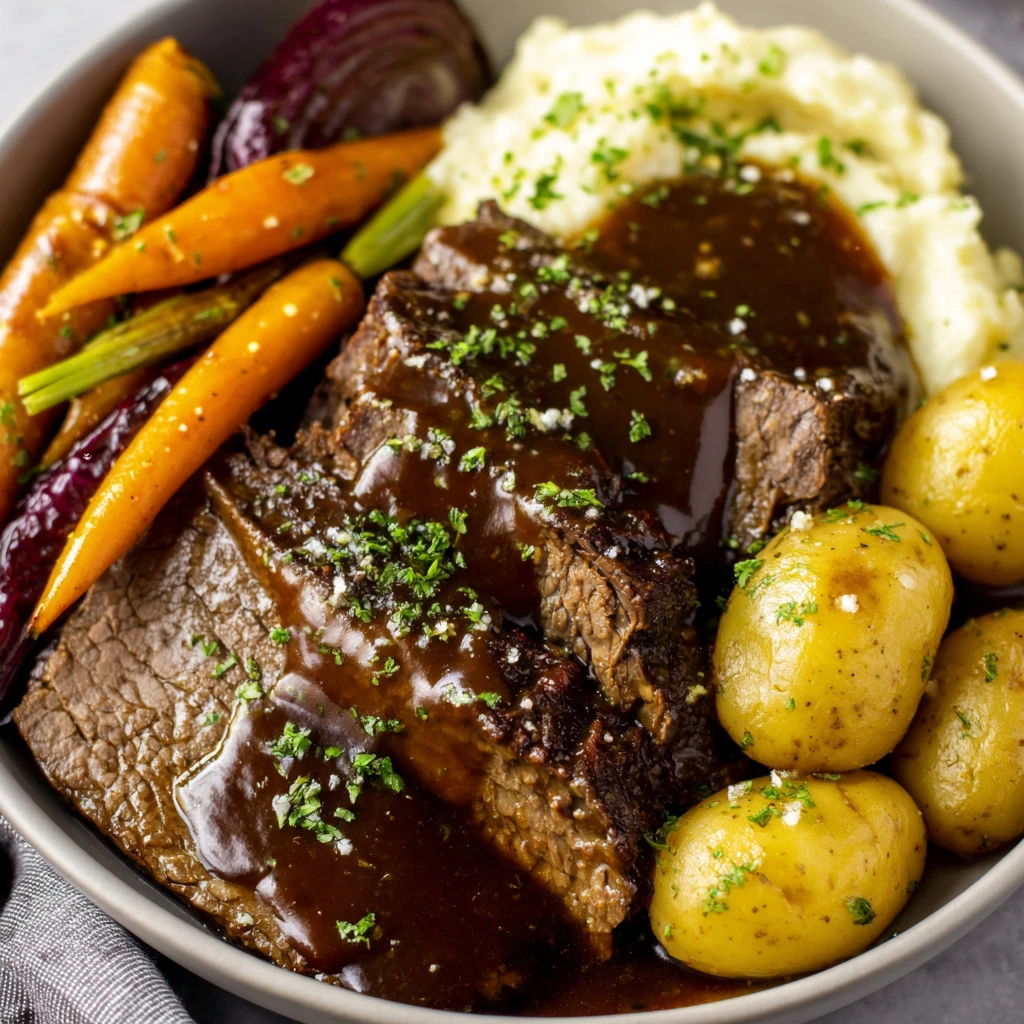
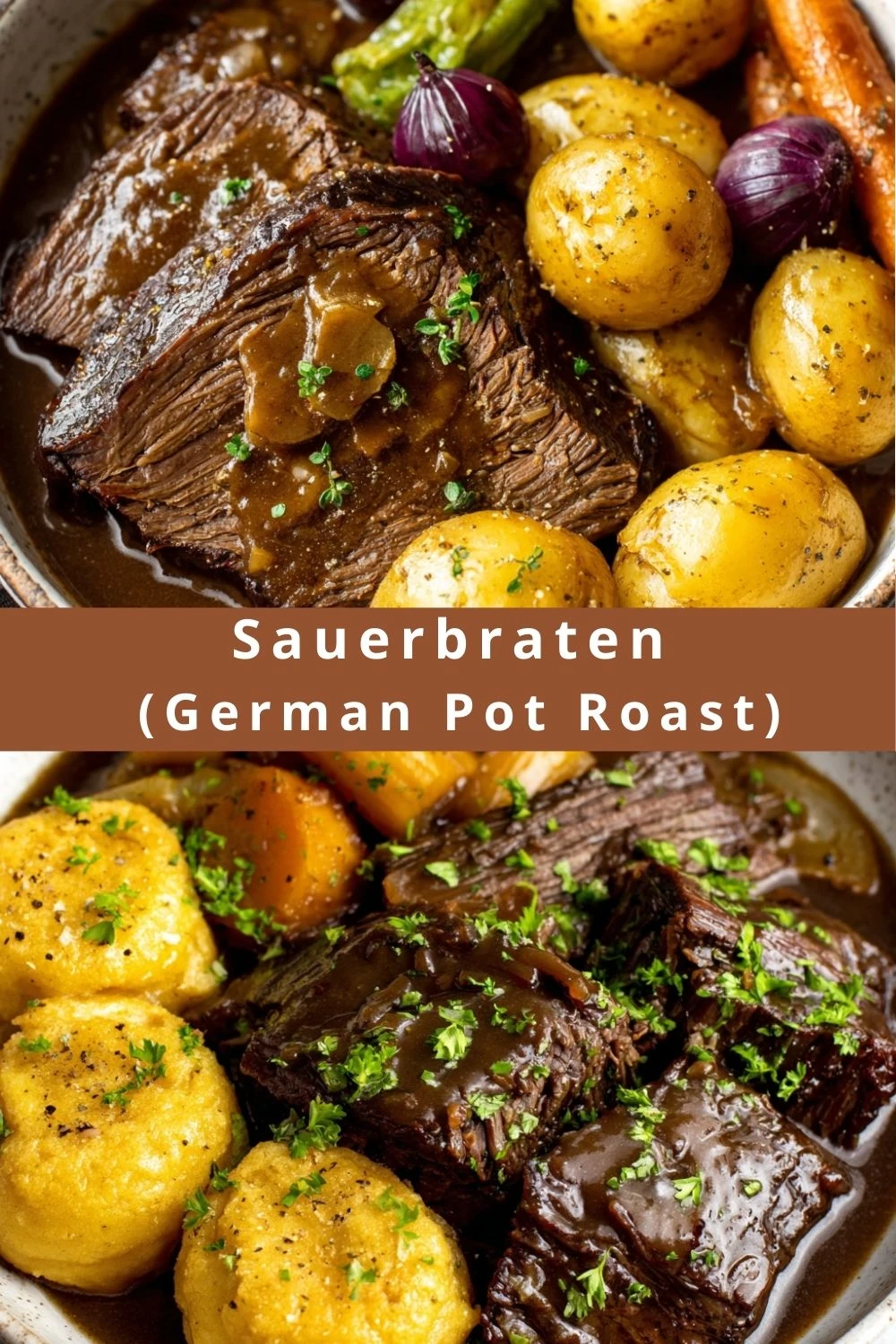
Sauerbraten (German Pot Roast)
Journey to the heart of German culinary tradition with this magnificent Sauerbraten, a classic pot roast marinated for days in a tangy, aromatic bath. The slow cooking process tenderizes the beef to perfection, resulting in a dish that is both deeply flavorful and wonderfully succulent. Served with its characteristic sweet and sour gingersnap gravy, this Sauerbraten is a true testament to slow-cooked comfort and heritage.
Prep Time
45 minutes active preparation, plus 2-3 days marinating
Cook Time
2.5 to 3 hours
Total Time
Approximately 3.5 hours active time, plus 2-3 days marinating
Servings
6-8 servings
Keywords
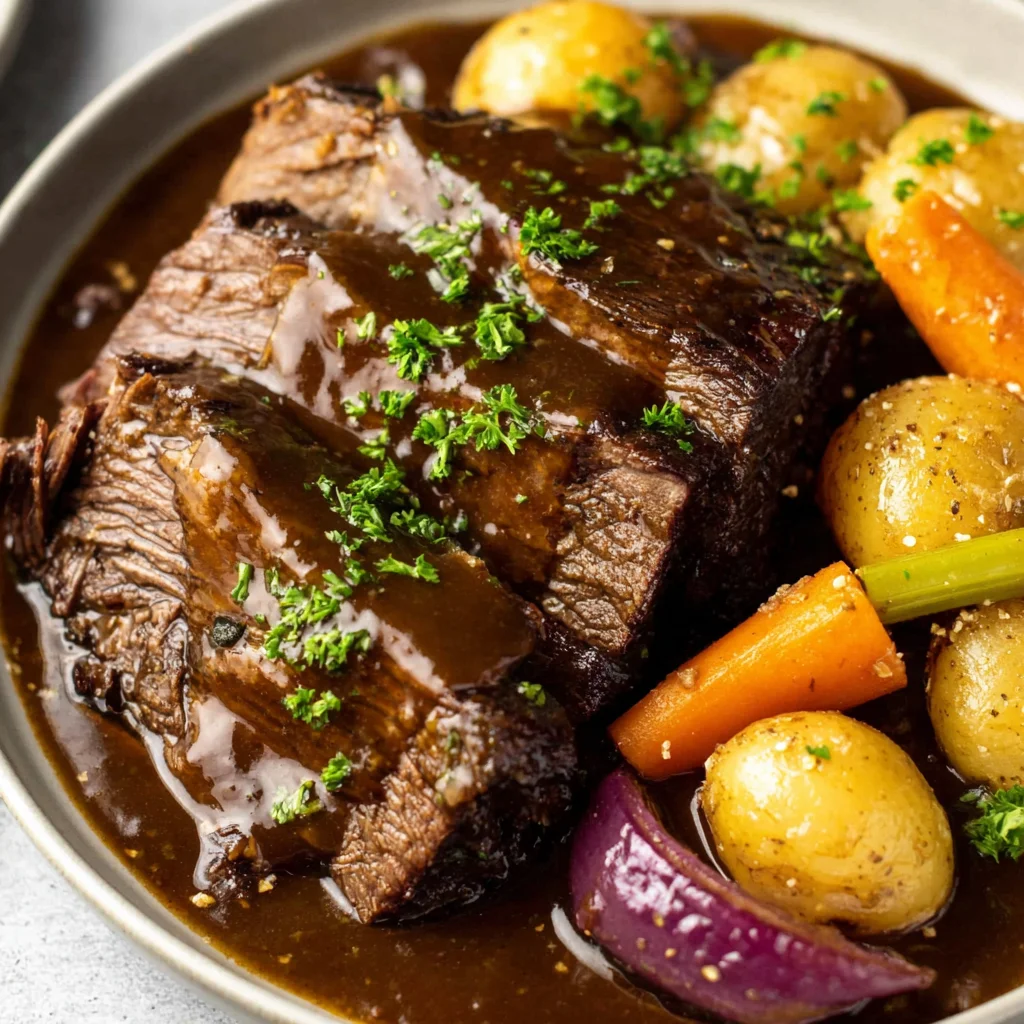
Why This Recipe Delivers
- A true culinary masterpiece, offering a complex blend of tangy, sweet, and savory flavors.
- The slow marination and cooking process results in unbelievably tender, melt-in-your-mouth beef.
- Features a unique gingersnap gravy that provides a delightful sweet-spicy counterpoint to the rich meat.
- Perfect for special occasions or a hearty family meal, embodying deep comfort and tradition.
Ingredients
- For the Marinade:
- 470 milliliters (2 cups) red wine vinegar (or a mix of red wine and vinegar)
- 470 milliliters (2 cups) water
- 1 large onion, sliced (approximately 200 grams)
- 2 medium carrots, chopped (approximately 150 grams)
- 2 celery stalks, chopped (approximately 100 grams)
- 2 cloves garlic, smashed
- 10 whole black peppercorns
- 4 whole cloves
- 2 bay leaves
- 5 milliliters (1 teaspoon) mustard seeds (optional)
- 15 grams (1 tablespoon) granulated sugar or brown sugar
- For the Roast:
- 1.4 – 1.8 kilograms (3–4 lb) beef roast (bottom round or chuck)
- Salt and freshly ground black pepper, to taste
- 30 milliliters (2 tablespoons) cooking oil or butter for searing
- 15-30 milliliters (1–2 tablespoons) all-purpose flour (optional, for thickening alternative)
- 8-10 gingersnap cookies, crushed (approximately 100-120 grams), for traditional thickening
Instructions
- Prepare the Marinade and Marinate the Meat. Combine all marinade ingredients (red wine vinegar, water, sliced onion, chopped carrots, chopped celery, smashed garlic, whole black peppercorns, whole cloves, bay leaves, mustard seeds, and sugar) in a large, non-reactive pot. Bring the mixture to a rolling boil over medium-high heat, then immediately remove it from the heat and allow it to cool completely to room temperature. This step infuses the liquid with the aromatics and spices. Once cooled, place the beef roast in a large glass, ceramic, or food-grade plastic dish. Pour the cooled marinade over the beef, ensuring the meat is mostly submerged. Cover the dish tightly and refrigerate for 2 to 3 days, turning the meat once daily to ensure even marination and flavor penetration.
- Remove and Sear the Beef. Carefully remove the beef roast from the marinade. Pat the beef very dry with paper towels; this is crucial for achieving a proper sear. Strain the marinade through a fine-mesh sieve, reserving both the liquid and the solids (vegetables and spices) separately. Heat the cooking oil or butter in a large, heavy-bottomed Dutch oven or oven-safe pot over medium-high heat until shimmering. Carefully place the dried beef into the hot pot and sear intensely on all sides until a rich, deep brown crust has formed. This browning develops complex flavors (Maillard reaction) that are essential for the final dish. Remove the seared beef from the pot and set it aside on a plate.
- Sauté the Marinade Vegetables. Reduce the heat to medium. Add the strained vegetables (onions, carrots, celery) from the reserved marinade to the same Dutch oven. Sauté, stirring occasionally, for 5 to 7 minutes, or until the vegetables have softened slightly and released their aromas. Scraping up any browned bits from the bottom of the pot with a wooden spoon will deglaze the pan and incorporate more flavor into your sauce base.
- Return Beef, Add Marinade, and Simmer. Return the seared beef roast to the pot, nestling it amongst the sautéed vegetables. Carefully pour the reserved marinade liquid back into the pot. The liquid should cover about two-thirds of the roast; if not, you can add a little water or beef broth. Bring the liquid to a gentle simmer over medium heat. Once simmering, cover the Dutch oven tightly with its lid and either continue to cook on very low heat on the stovetop or transfer it to a preheated oven at 165°C (325°F). Cook for 2.5 to 3 hours, or until the meat is incredibly fork-tender and pulls apart easily.
- Finish the Gravy. Carefully remove the cooked beef roast from the pot and place it on a cutting board or serving platter, tenting it loosely with foil to rest. This resting period allows the juices to redistribute, resulting in a more tender and flavorful slice. Strain the cooking liquid through a fine-mesh sieve into a clean saucepan, pressing on the solids to extract as much flavor as possible, then discard the solids. Bring the strained liquid to a simmer over medium heat. Stir in the crushed gingersnap cookies. The cookies will dissolve and thicken the sauce while adding a unique sweet-spicy depth. If you prefer a flour-thickened sauce, you can create a slurry with the flour and a small amount of cold water, then whisk it into the simmering liquid until thickened. Continue to simmer gently for 5-10 minutes, allowing the gravy to reduce and thicken to your desired consistency. Taste and adjust seasoning with additional salt, pepper, or a pinch of sugar if needed to balance the sweet and sour notes.
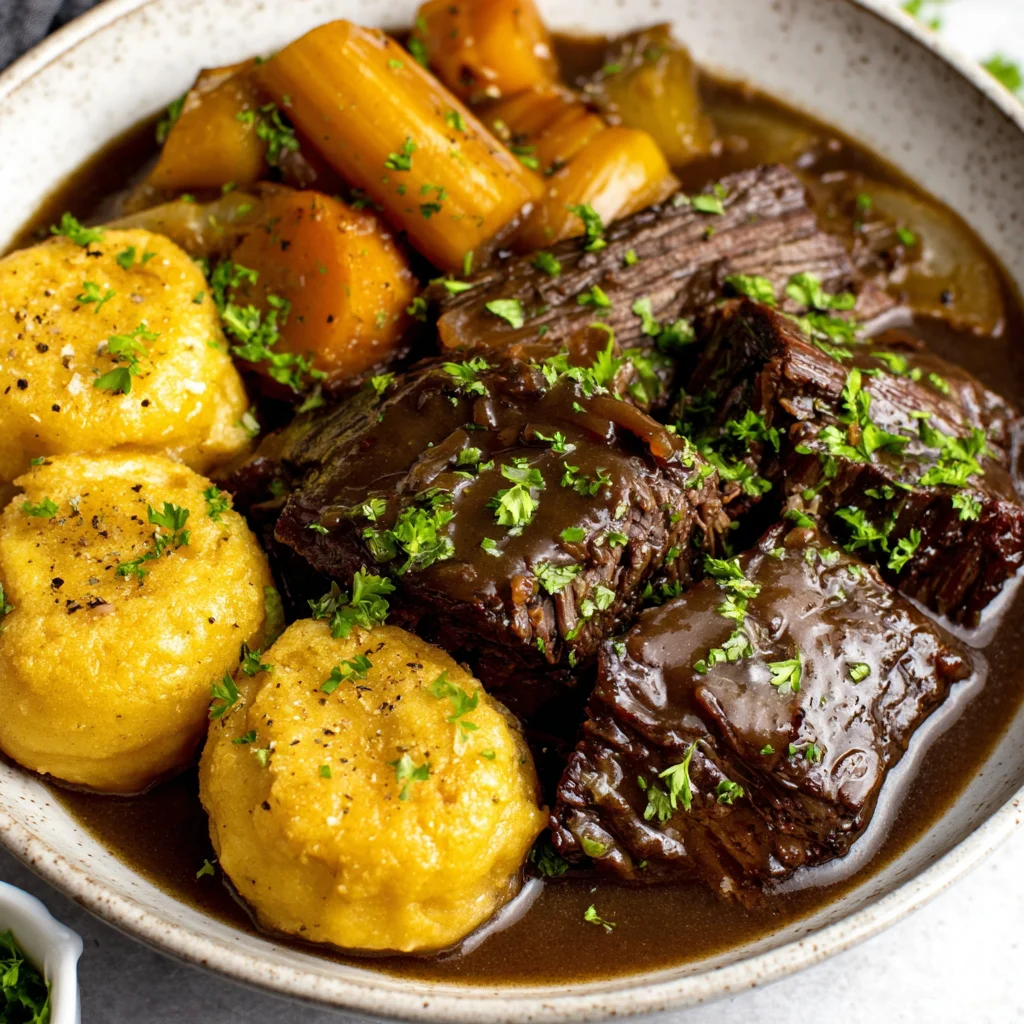
- Slice and Serve. Carefully slice the rested Sauerbraten against the grain into thick, even slices. Arrange the slices on a serving platter and generously spoon the rich, tangy gingersnap gravy over the meat. Serve immediately with traditional German accompaniments such as braised red cabbage, fluffy boiled potatoes, potato dumplings, or light and airy spaetzle.
Tools You’ll Need
- Large non-reactive pot (for marinade)
- Large glass, ceramic, or food-grade plastic dish (for marinating)
- Large Dutch oven or oven-safe pot with lid
- Fine-mesh sieve
- Wooden spoon
- Sharp chef's knife
- Cutting board
- Measuring cups and spoons
Essential Success Tips
- First Tip: Ensure the marinade is completely cool before adding the beef to prevent partial cooking.
- Second Tip: Pat the beef roast extremely dry before searing. Moisture prevents proper browning and crust development.
- Third Tip: Don't rush the marinating process; 2-3 days allows the flavors to truly penetrate and tenderize the meat.
- Fourth Tip: Allow the Sauerbraten to simmer slowly and gently; low and slow heat is key for achieving fork-tender results.
- Fifth Tip: When making the gravy, taste and adjust the seasoning carefully. The balance of sweet, sour, and savory is crucial for authentic Sauerbraten flavor.
Professional Cooking Secrets
- First Secret: For an even deeper flavor profile, toast the whole spices (peppercorns, cloves, mustard seeds) in a dry pan for a minute before adding them to the marinade pot. This releases their essential oils.
- Second Secret: Instead of just water in the marinade, consider using half good quality red wine (such as a dry Pinot Noir) and half red wine vinegar for an added layer of complexity and richness to the finished gravy.
- Third Secret: To achieve a perfectly smooth gravy, after straining, blend the liquid with an immersion blender for a few seconds before adding the gingersnaps or flour slurry. This ensures any remaining small vegetable particles are fully incorporated or removed for a refined texture.
Notes
- Storage: Leftover Sauerbraten can be stored in an airtight container in the refrigerator for up to 3-4 days. The flavors often deepen overnight.
- Freezing: The cooked Sauerbraten and gravy freeze well for up to 3 months. Thaw in the refrigerator overnight and reheat gently on the stovetop or in the oven.
- Variations: For a richer marinade, some recipes include a small amount of beef broth or even beer. You can also experiment with different vinegars, though red wine vinegar is traditional.
Frequently Asked Questions
Can I use a different cut of beef for Sauerbraten?
While bottom round or chuck are traditional choices for their ability to become tender during slow cooking, you can use other cuts like top round or even brisket. Just be aware that cooking times might vary slightly depending on the cut.
What if I don't have gingersnap cookies?
Gingersnap cookies provide a unique sweet, spicy, and tangy element to the gravy. If you don't have them, you can thicken the gravy with a flour or cornstarch slurry, but you might want to add a pinch of ground ginger and a tiny bit of molasses or brown sugar to try and replicate some of the flavor complexity.
Why is the marinating time so long?
The extended marinating period, typically 2-3 days, is crucial for two main reasons: it tenderizes the beef by breaking down tough fibers, and it infuses the meat with the distinctive tangy, spiced flavors that are characteristic of Sauerbraten.
Nutrition Facts (Per Serving)
Calories: 550, Protein: 45g, Fat: 30g, Carbs: 25g (per serving, estimated without sides, based on 8 servings)
Allergy Information
Contains gluten (from gingersnaps and optional flour). Dairy may be present if butter is used for searing. For a gluten-free version, ensure gingersnaps are gluten-free or thicken with cornstarch, and confirm all other ingredients are free from gluten cross-contamination.





)
No comment