
Easy Blueberry Scones (Gluten-Free Optional)
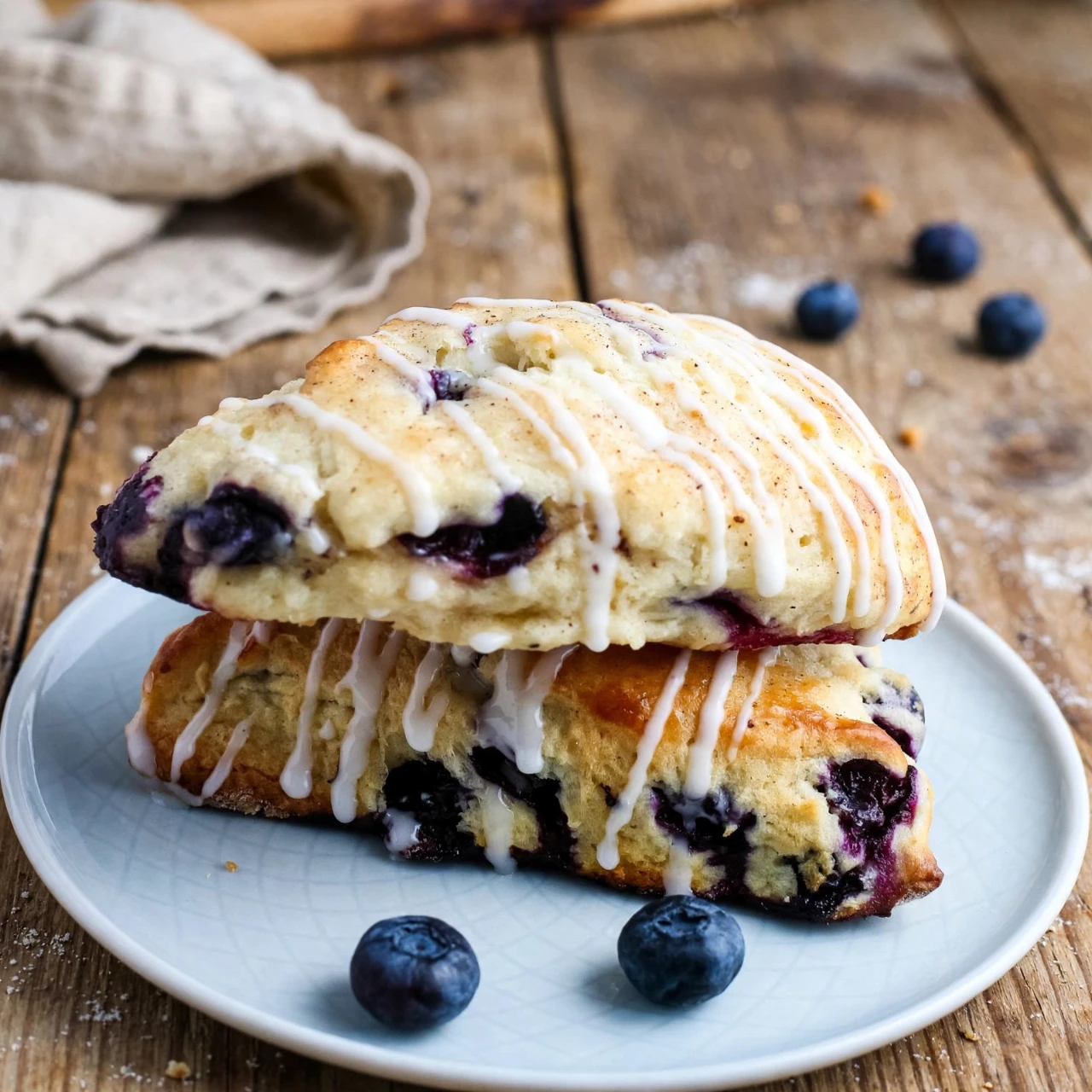
Indulge in the simple pleasure of freshly baked scones with this easy-to-follow recipe for classic blueberry scones. Flaky on the outside, tender on the inside, and bursting with juicy blueberries, these delightful treats are perfect for breakfast, brunch, or an afternoon tea. Whether you opt for the traditional version or a gluten-free alternative, these scones promise a truly satisfying experience.
Prep Time
25 minutes (plus 15-30 minutes chilling)
Cook Time
20-25 minutes
Total Time
Approximately 1 hour to 1 hour 20 minutes
Servings
Makes 8 scones
Keywords
Why This Recipe Delivers
- Achieves a perfect balance of flaky exterior and tender, moist interior.
- Can be easily adapted to be gluten-free without compromising on taste or texture.
- Ready in under an hour of active work, making it perfect for last-minute cravings.
- Bursting with fresh or frozen blueberries, providing sweet and tart notes in every bite.
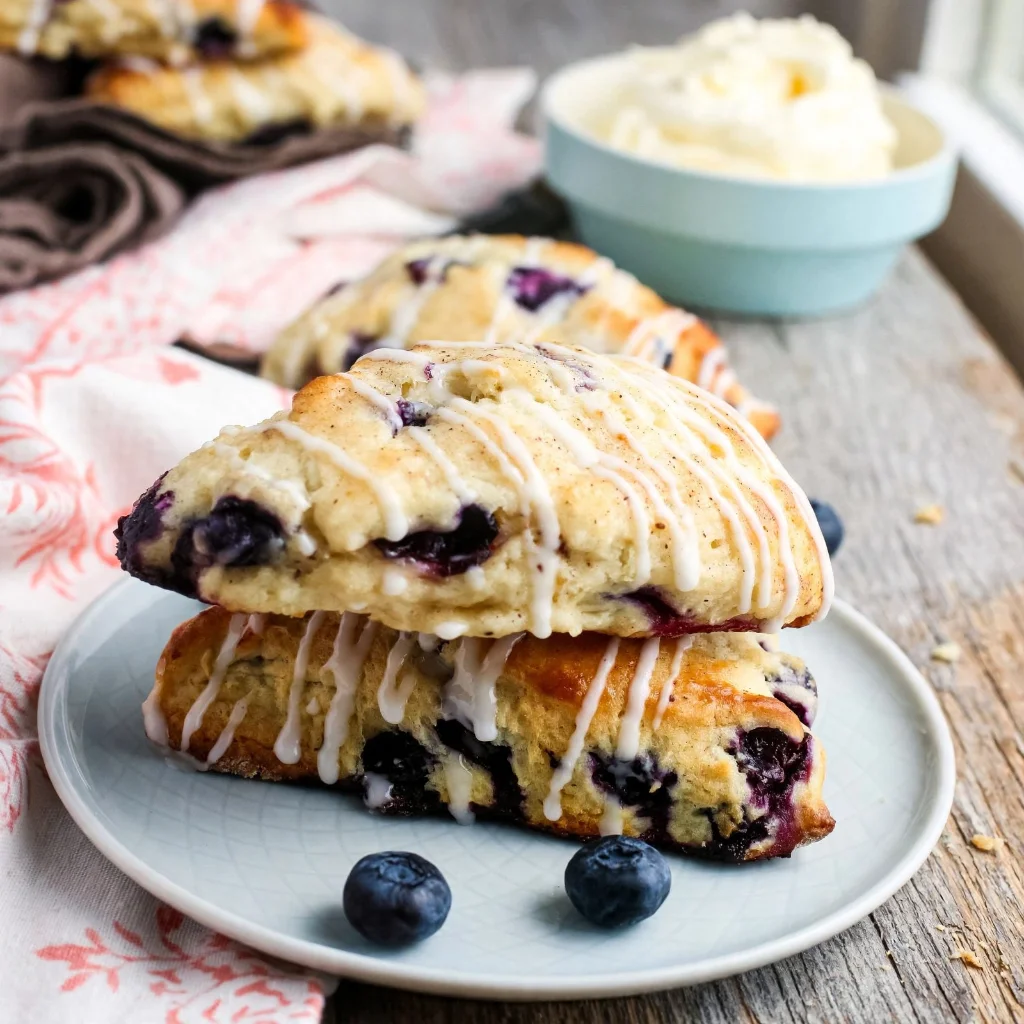
- Finished with a simple vanilla glaze, adding an extra layer of sweetness and elegance.
Ingredients
- 250 grams (2 cups) All-Purpose Flour or Gluten-Free All-Purpose Flour blend
- 67 grams (1/3 cup) Granulated Sugar
- 2.5 milliliters (1/2 teaspoon) Salt
- 15 milliliters (1 tablespoon) Baking Powder
- 113 grams (1/2 cup or 1 stick) Unsalted Butter, grated and very cold or frozen
- 120 milliliters (1/2 cup) Buttermilk or heavy cream, plus extra for brushing
- 1 Large Egg
- 10 milliliters (2 teaspoons) Vanilla Extract
- 150 grams (1 cup) Fresh or frozen blueberries (do not thaw if frozen)
- For the Vanilla Glaze:
- 120 grams (1 cup) Powdered Sugar
- 45 milliliters (3 tablespoons) Milk, plus more as needed
- 2.5 milliliters (1/2 teaspoon) Vanilla Extract
Instructions
- In a large mixing bowl, thoroughly whisk together the all-purpose flour (or gluten-free blend), granulated sugar, salt, and baking powder. This ensures all dry ingredients are evenly distributed, which is crucial for a consistent rise and flavor.
- Add the grated, very cold or frozen unsalted butter to the dry ingredients. Using a pastry blender or your fingertips, quickly cut the butter into the flour mixture until it resembles coarse crumbs with some pea-sized pieces remaining. Avoid overworking the butter, as large pieces create steam and result in a flaky texture.
- In a separate small bowl, whisk together the large egg, buttermilk or heavy cream, and vanilla extract until well combined. Ensure the liquids are fully incorporated for an even dough.
- Pour the liquid ingredients into the dry ingredients. Gently fold in the fresh or frozen blueberries. Stir until the mixture is just moistened and begins to come together. The dough should be shaggy but well combined and capable of holding together in a ball. Be careful not to overmix, which can lead to tough scones.
- Lightly sprinkle a small amount of flour onto a piece of parchment paper or directly onto a clean counter surface. Turn the dough out and gently press it into an 20-centimeter (8-inch) circle, aiming for a uniform thickness of about 2 centimeters (3/4 inch).
- Brush the top surface of the dough circle with a small amount of additional buttermilk or heavy cream. Then, lightly sprinkle a touch of granulated sugar over the brushed top. This creates a lovely golden crust and a hint of sweetness.
- Using a sharp knife or a bench scraper, cut the 20-centimeter (8-inch) dough circle into 8 equal wedges, similar to slicing a pie. For cleaner cuts, dip your knife in flour between cuts.
- Carefully transfer each scone wedge onto a baking sheet that has been greased or lined with parchment paper. Arrange the scones with a few centimeters (inches) of space between each to allow for expansion. Place the baking sheet with the scones into the refrigerator to chill for 15-30 minutes. This chilling period helps the butter solidify, preventing the scones from spreading too much during baking.
- While the scones are chilling, preheat your oven to 200°C (400°F).
- Bake the chilled scones for 20-25 minutes, or until their tops are beautifully golden brown and a wooden skewer inserted into the center comes out clean. The exact baking time may vary depending on your oven.
- Once baked, remove the scones from the oven and transfer them to a wire rack. Allow them to cool slightly before glazing. This prevents the glaze from melting completely off.
- While the scones cool, prepare the vanilla glaze. In a small bowl, combine the powdered sugar, milk, and vanilla extract. Whisk thoroughly until smooth. If the glaze is too thick, add a few more drops of milk until it reaches a drizzleable consistency. If it's too thin, add a tiny bit more powdered sugar.
- Thirteenth Step: Drizzle the vanilla glaze generously over the slightly warm or cooled scones. Serve immediately and enjoy the fresh, warm goodness. The glaze will set as it cools.
- Fourteenth Step: Store any leftover scones in an airtight container at room temperature for up to 2-3 days.
Tools You’ll Need
- Large mixing bowls
- Small mixing bowls
- Whisk
- Pastry blender or fork
- Measuring cups and spoons (or kitchen scale)
- Parchment paper
- Baking sheet
- Sharp knife or bench scraper
- Wire cooling rack
Essential Success Tips
- Always use very cold butter, or even frozen and grated. This creates pockets of steam during baking, which is essential for flaky scones.
- Do not overmix the dough. Overmixing develops gluten, leading to tough, dense scones. Mix just until the ingredients are combined.
- Chilling the dough before baking helps the butter firm up again, preventing the scones from spreading too much in the oven and ensuring a good rise.
- For perfectly golden tops, brush with extra buttermilk or cream and sprinkle with a touch of sugar before baking.
- Do not twist the knife when cutting the dough; press straight down to ensure clean edges and proper rising.
Professional Cooking Secrets
- For an extra layer of flavor and moisture, consider using heavy cream instead of buttermilk in the dough; the higher fat content contributes to a richer crumb. Adjust liquid quantity if using cream cheese.
- To achieve ultra-flaky scones, layer the dough. After gently combining the ingredients, lightly knead the dough a few times on a floured surface, then flatten, fold it in thirds like a letter, and flatten again. Repeat this 2-3 times before shaping into a circle. This creates additional layers similar to puff pastry.
- If using frozen blueberries, do not thaw them. Add them directly to the dough. Thawed blueberries can bleed color into the dough and make it too wet. If you wish to prevent color bleeding, you can toss them in a tablespoon of flour before adding to the dough.
Notes
- Leftover scones can be stored in an airtight container at room temperature for up to 2-3 days. For best results, reheat slightly in a toaster oven.
- For a lemon twist, add 10 milliliters (2 teaspoons) of lemon zest to the dry ingredients along with the blueberries. A lemon glaze can also be made by substituting lemon juice for milk in the glaze recipe.
- To prepare ahead, cut the scones and freeze them unbaked on a baking sheet until solid, then transfer to a freezer-safe bag. Bake directly from frozen, adding a few extra minutes to the baking time.
Frequently Asked Questions
Can I make these scones without buttermilk?
Yes, if you don't have buttermilk, you can easily make a substitute. Combine 110 milliliters (1/2 cup) of regular milk with 5 milliliters (1 teaspoon) of lemon juice or white vinegar. Let it sit for 5-10 minutes until it slightly curdles, then use it as directed.
What's the best way to ensure my gluten-free scones are not dry?
When using gluten-free flour, it's crucial not to overmix the dough, as many GF blends contain gums that can become gummy. Also, ensure your butter is very cold and avoid over-baking. Some gluten-free blends can absorb more liquid, so be prepared to add a tiny bit more buttermilk if the dough feels too dry.
Can I use frozen berries instead of fresh?
Absolutely! Frozen blueberries work wonderfully in this recipe. Just make sure to add them to the dough directly from the freezer without thawing. This prevents them from bleeding too much color into the dough and keeps the dough from becoming too wet.
Nutrition Facts (Per Serving)
Per scone (estimated): Calories: 380, Protein: 5g, Fat: 20g, Saturated Fat: 12g, Cholesterol: 70mg, Sodium: 280mg, Carbohydrates: 45g, Fiber: 2g, Sugars: 25g.
Allergy Information
Contains dairy (butter, buttermilk/cream, milk) and gluten (if using all-purpose flour) or corn/rice (if using gluten-free flour blend), and eggs. For a dairy-free version, use plant-based butter, non-dairy milk, and a vegan buttermilk substitute (plant milk + acid). For a gluten-free version, ensure your gluten-free flour blend is certified and suitable for baking.




)
No comment