
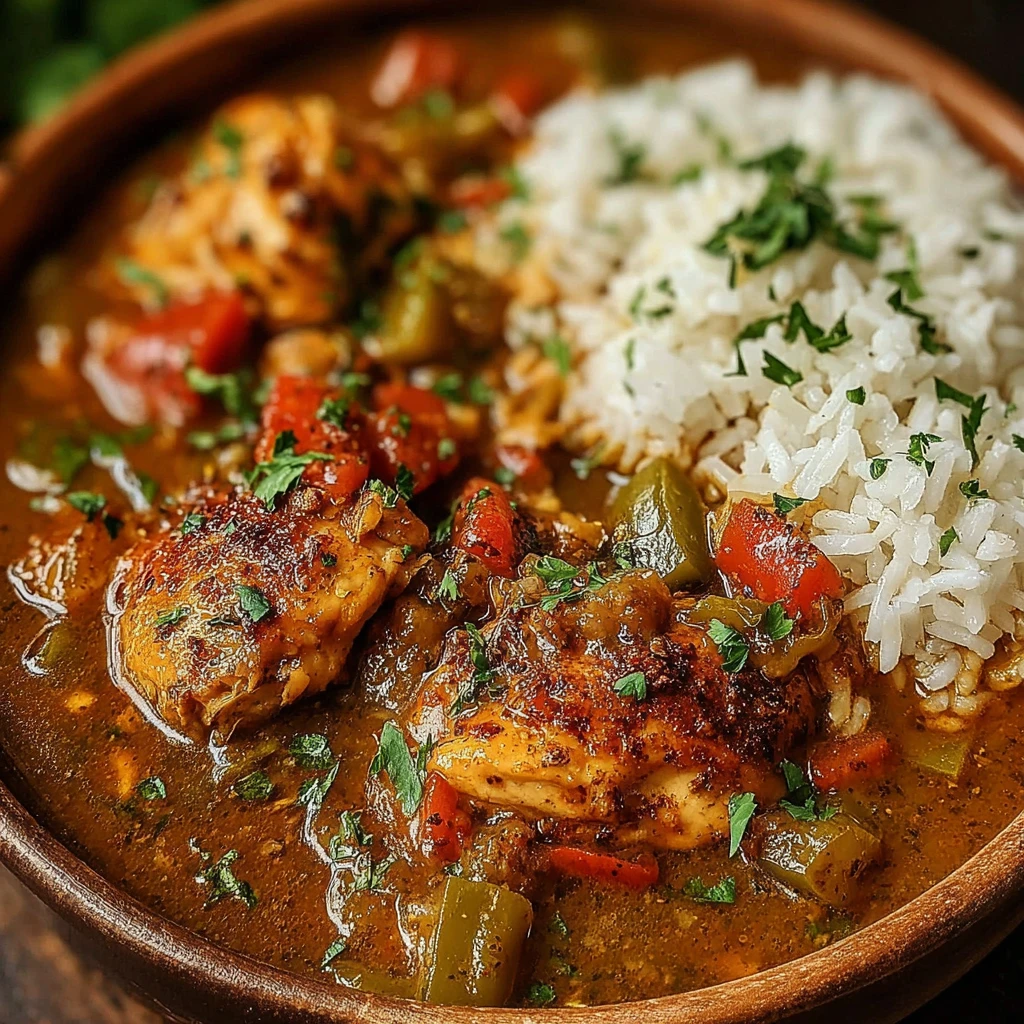
Chicken Etouffee
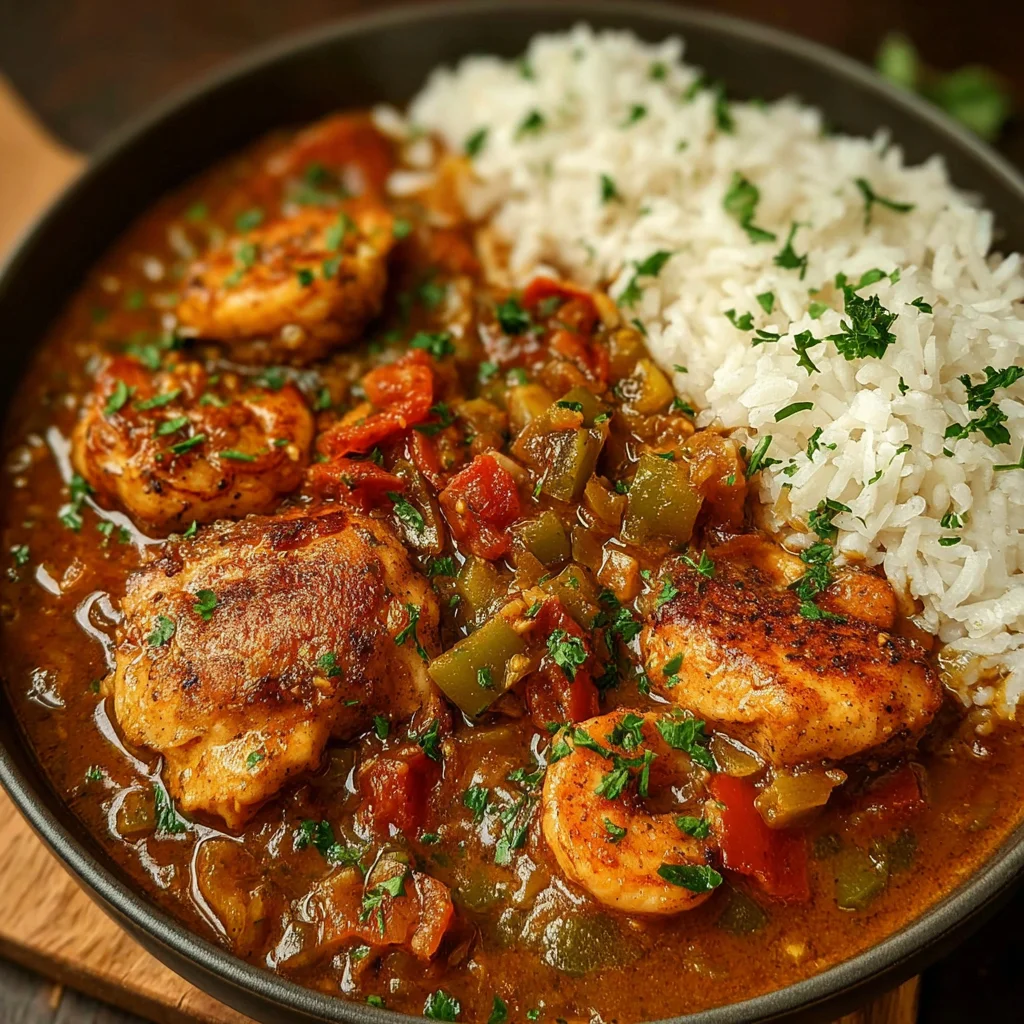
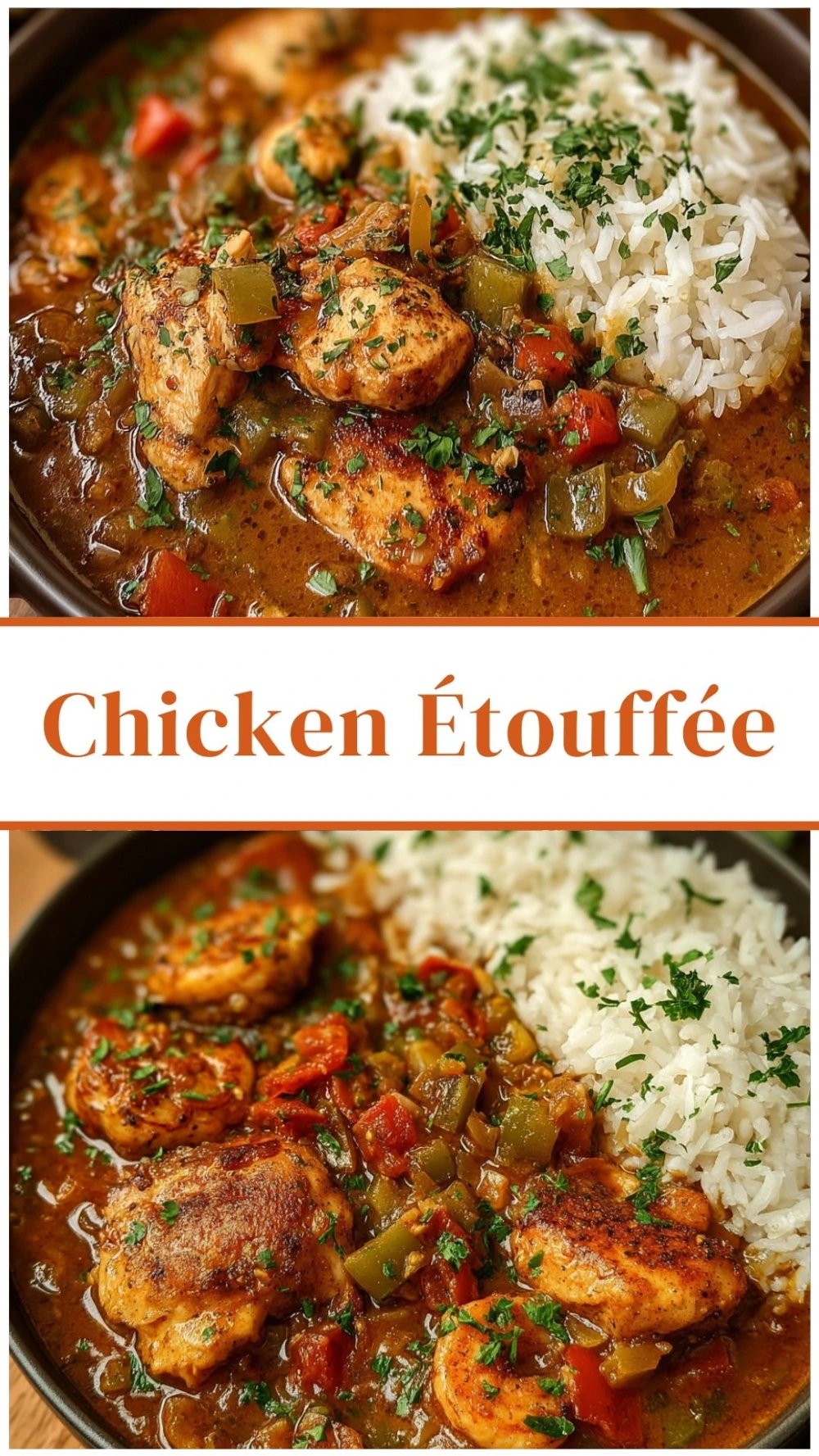
Dive into the heart of Louisiana with this robust Chicken Etouffee. A classic Cajun stew, it features tender chicken simmered in a deeply flavorful roux-based sauce, enriched with the holy trinity of vegetables and aromatic spices. Perfect for a soulful meal, this dish delivers warmth and authentic bayou taste to your table.
Prep Time
20 minutes
Cook Time
1 hour 10 minutes
Total Time
1 hour 30 minutes
Servings
6 servings
Keywords
Why This Recipe Delivers
- Rich, authentic Cajun flavor profile.
- Tender, succulent chicken in a thick, savory sauce.
- Hearty and satisfying comfort food.
- A fantastic introduction to making a classic roux.
- Perfect for weeknight dinners or special occasions.
Ingredients
- 2 pounds (approx 900 grams) chicken thighs (bone-in or boneless)
- 1/2 cup (120 grams) all-purpose flour
- 1/2 cup (115 grams) unsalted butter or 120 milliliters (1/2 cup) oil (such as vegetable or canola)
- 1 medium onion, diced (approx 150 grams)
- 1 green bell pepper, diced (approx 150 grams)
- 2 celery stalks, diced (approx 100 grams)
- 4 garlic cloves, minced (approx 20 grams)
- 3 cups (720 milliliters) chicken broth
- 2 tablespoons (30 grams) Cajun seasoning, divided
- 2 bay leaves
- 1 teaspoon (2 grams) dried thyme
- 2 tablespoons (30 grams) tomato paste
- 1 tablespoon (15 milliliters) Worcestershire sauce
- 1 teaspoon (5 milliliters) hot sauce (optional, such as Tabasco or Louisiana-style)
- 2 tablespoons (10 grams) fresh parsley, chopped, for garnish
- Salt and freshly ground black pepper, to taste
- Cooked white rice, for serving
Instructions
- Prepare the chicken. Pat the chicken thighs thoroughly dry with paper towels. Season them generously with salt, freshly ground black pepper, and 1 tablespoon (15 grams) of the Cajun seasoning. In a large Dutch oven or heavy-bottomed pot, heat the oil (or a portion of the butter if using for browning) over medium-high heat. Once hot, carefully add the seasoned chicken thighs and brown them on both sides for about 3-5 minutes per side until golden. Do not crowd the pan; work in batches if necessary. Remove the browned chicken and set it aside on a plate.
- Make the roux. Reduce the heat to medium. If using butter, add the remaining butter to the same pot. Once melted, add the 1/2 cup (120 grams) all-purpose flour. Stir constantly with a whisk or wooden spoon for 10-15 minutes, or until the roux achieves a deep golden brown color, similar to peanut butter or milk chocolate. This continuous stirring prevents burning and ensures even cooking, which is crucial for flavor and thickening.
- Sauté the Holy Trinity. Add the diced onions, green bell pepper, and celery (the "Holy Trinity") to the roux. Sauté them for 5-7 minutes, stirring occasionally, until the vegetables have softened and become translucent. Stir in the minced garlic and cook for just 1 more minute until fragrant, being careful not to burn it.
- Build the sauce. Mix in the 2 tablespoons (30 grams) of tomato paste, 1 teaspoon (2 grams) of dried thyme, and 1 tablespoon (15 milliliters) of Worcestershire sauce. Stir well to incorporate. Gradually whisk in the 3 cups (720 milliliters) of chicken broth, adding it slowly to prevent lumps from forming in the roux. Add the 2 bay leaves to the pot.
- Simmer to perfection. Return the seared chicken thighs to the pot, nestling them into the sauce. Ensure the chicken is mostly submerged. Bring the liquid to a gentle simmer, then reduce the heat to low, cover the pot, and let it cook for 30-40 minutes. The chicken should become very tender, and the sauce will have thickened considerably.
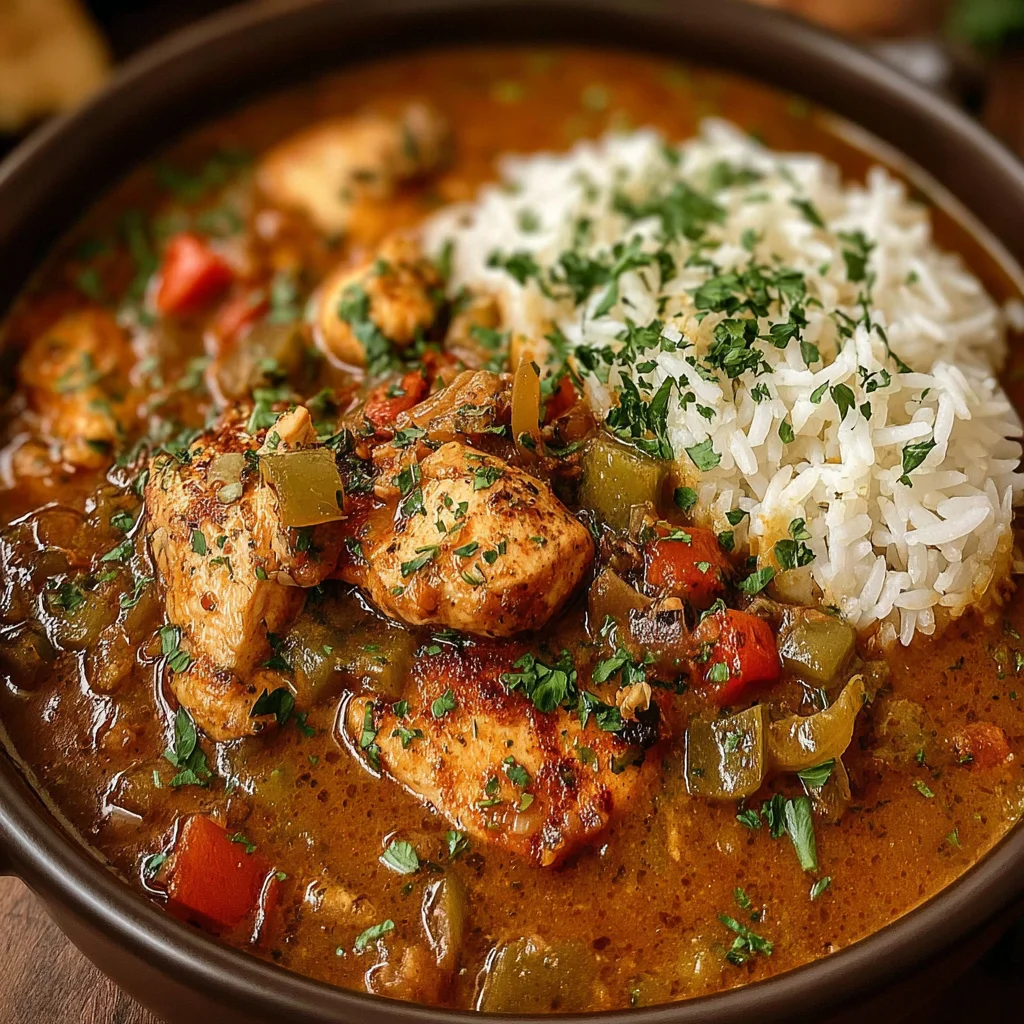
- Finish and serve. Carefully remove the chicken from the pot and shred or dice it if desired, or leave whole. Discard the bay leaves. Taste the etouffee and season with the remaining 1 tablespoon (15 grams) of Cajun seasoning, hot sauce (if using), and additional salt or freshly ground black pepper as needed. Return the chicken to the pot. Stir in the freshly chopped parsley. Serve the rich Chicken Etouffee immediately over steaming hot white rice.
Tools You’ll Need
- Large Dutch oven or heavy-bottomed pot
- Whisk
- Wooden spoon or spatula
- Cutting board
- Sharp knife
- Measuring cups and spoons
- Tongs
Essential Success Tips
- Achieve the perfect roux: Don't rush the roux-making process. Continuous stirring is key to prevent burning and develop its deep, nutty flavor. A dark roux adds significant depth to the etouffee.
- Pat chicken dry: Ensuring the chicken thighs are very dry before browning helps create a beautiful, crispy sear, locking in flavor.
- Don't skip the Holy Trinity: The combination of onion, bell pepper, and celery is fundamental to Cajun and Creole cuisine and forms the aromatic base of the dish.
- Gradually add broth: Whisking in the chicken broth slowly and gradually prevents the roux from clumping, ensuring a smooth, velvety sauce.
- Adjust seasoning at the end: Cajun seasoning blends vary in saltiness. Always taste and adjust salt, pepper, and hot sauce right before serving.
Professional Cooking Secrets
- For an even deeper flavor, brown the chicken thighs until they develop a rich, dark crust before removing them. The fond left in the pot will greatly enhance the roux.
- If you have time, making your own homemade chicken broth will elevate the etouffee to another level compared to store-bought varieties.
- Consider using a combination of butter and a neutral oil (like canola or vegetable) for the roux. The oil helps raise the smoking point, making it easier to achieve a darker roux without burning the butter.
Notes
- Storage: Leftover Chicken Etouffee can be stored in an airtight container in the refrigerator for up to 3-4 days. It freezes well for up to 3 months; thaw overnight in the refrigerator and reheat gently on the stovetop.
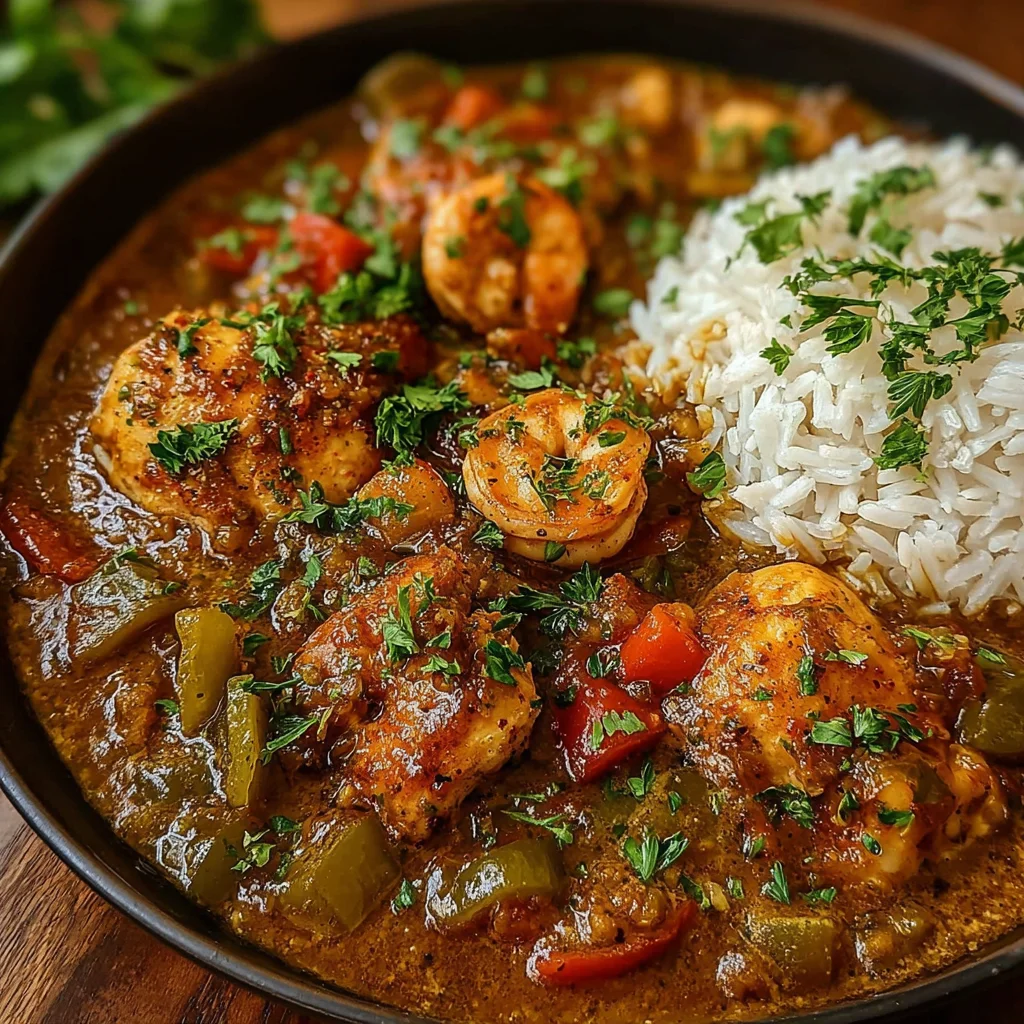
- Variations: While this recipe focuses on chicken, you can easily adapt it for shrimp etouffee by adding cooked shrimp in the last 5-10 minutes of simmering, or use a combination of chicken and smoked sausage.
- Spice Level: Adjust the amount of Cajun seasoning and hot sauce to your preference. For more heat, add a pinch of cayenne pepper with the other spices.
Frequently Asked Questions
What is the difference between etouffee and gumbo?
While both are classic Louisiana stews, etouffee typically has a thicker, richer sauce made with a lighter, blond or peanut-butter colored roux, and focuses on one main ingredient (like chicken or shrimp). Gumbo often uses a darker roux, includes more vegetables, and traditionally contains both meat and seafood, often served with a scoop of rice cooked directly into the stew.
Can I use boneless, skinless chicken breasts instead of thighs?
Yes, you can, but chicken thighs are highly recommended for etouffee due to their higher fat content, which keeps them moist and flavorful during the long simmer. If using breasts, be mindful not to overcook them; they may become dry faster than thighs.
How can I prevent my roux from burning?
The key to a successful roux is constant stirring over medium to medium-low heat. Do not leave it unattended. If you see black specks, your roux has burned and will taste bitter; it's best to discard it and start over. A heavy-bottomed pot also helps distribute heat more evenly.
Nutrition Facts (Per Serving)
Calories: 550, Protein: 45g, Fat: 30g, Carbs: 25g (per serving, approximate)
Allergy Information
Contains dairy (butter) and gluten (flour). For a gluten-free version, use gluten-free all-purpose flour blend for the roux. For a dairy-free option, use only oil instead of butter for the roux.






No comment