
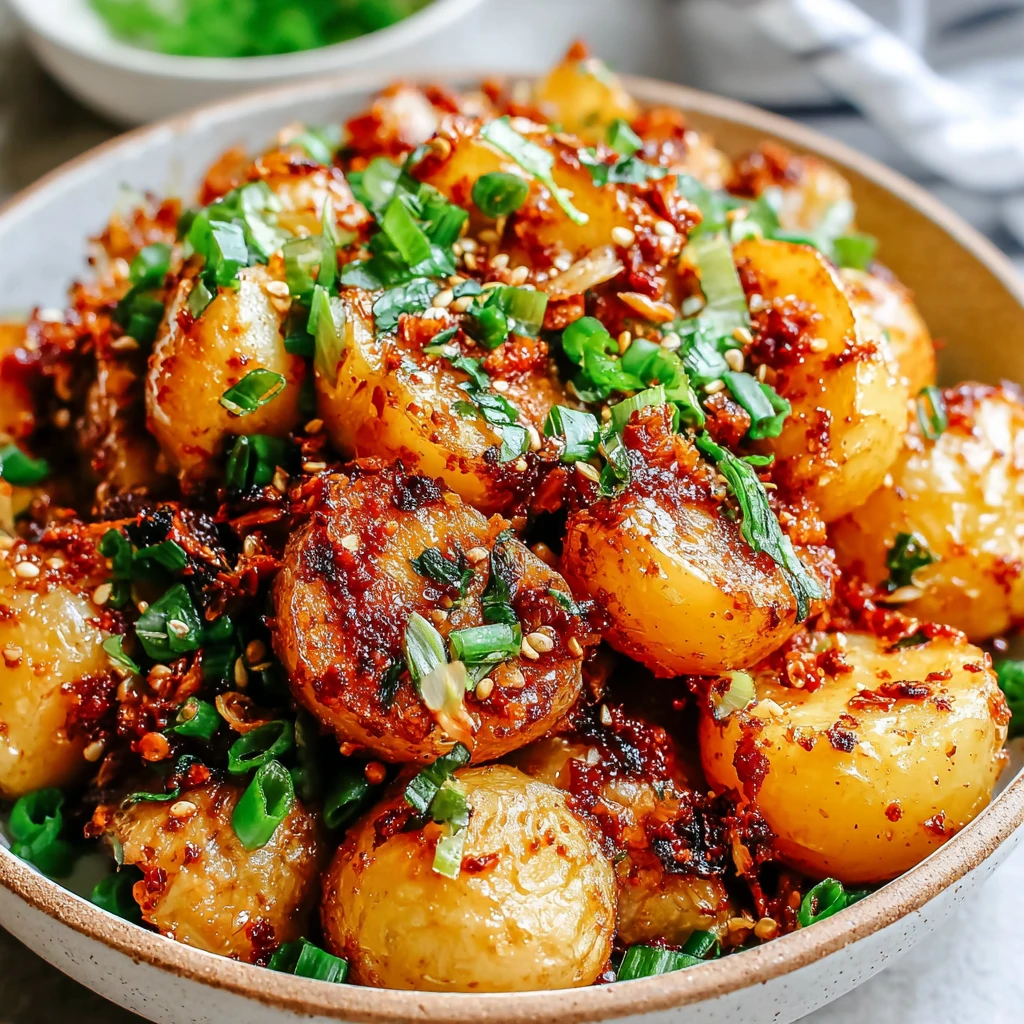
Crispy Gochujang Potato Salad That’ll Ignite Your Taste Buds
Experience a vibrant symphony of textures and flavors with this innovative potato salad. Perfectly boiled new potatoes are crushed and roasted to an irresistible crisp, then tossed in a creamy, spicy-sweet gochujang dressing. It’s a compelling fusion dish that elevates the humble potato to a show-stopping side.
Prep Time
20 minutes
Cook Time
20 minutes
Total Time
40 minutes
Servings
4 servings
Keywords
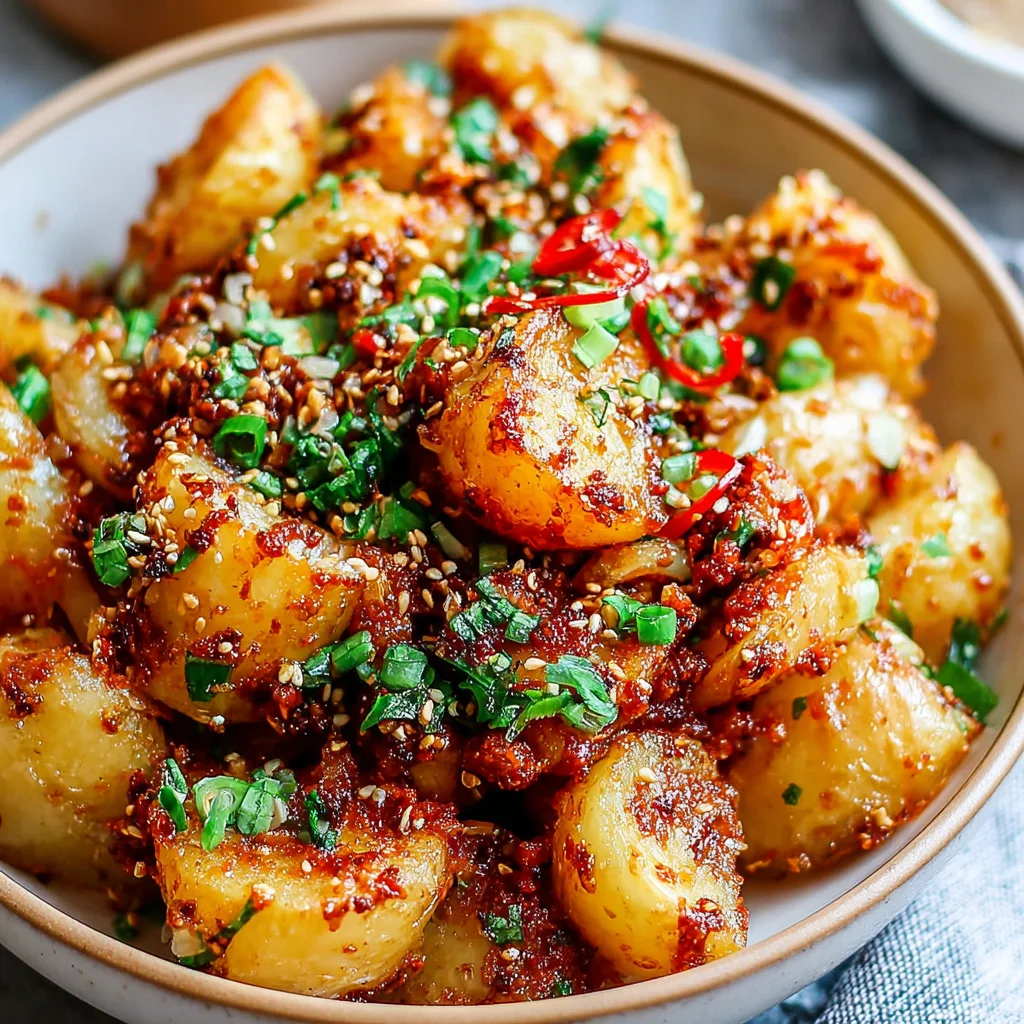
Why This Recipe Delivers
- Explosive Flavor Profile: A perfect harmony of spicy, sweet, tangy, and umami.
- Addictively Crispy Texture: Crushed and roasted potatoes offer an irresistible crunch.
- Speedy Preparation: Ready from start to finish in under an hour.
- Impressive Side Dish: Stands out as a unique and flavorful addition to any meal.
- Vegan Friendly: A delicious plant-based option that satisfies everyone.
Ingredients
- 500 g (about 1.1 lbs) new potatoes these provide a perfect creamy interior and crispy exterior when cooked
- 1 teaspoon fine sea salt enhances the natural flavor of the potatoes during cooking
- 1 tablespoon (15 mL) vegan butter adds richness and aids in achieving that golden crispiness
- ½ teaspoon garlic powder introduces a savory depth and aroma to the potatoes
- 1 teaspoon gochugaru adds a mild smoky heat that complements the gochujang nicely
- 2 eschallions (shallots), finely sliced their sweet crunch adds a delightful freshness to the dish
- Juice of ½ a lime (about 15 mL or 1 tbsp) lends a zesty brightness
- 8 tablespoons (120 mL or ½ cup) vegan kewpie mayonnaise creates a creamy base while keeping it plant-based
- 1-2 tablespoons (15-30 mL) gochujang paste brings the authentic spicy-sweet kick to the salad
- 2 teaspoons (10 mL) vegan fish sauce adds umami depth, enriching the flavor profile
- 1 small bunch fresh coriander leaves, roughly chopped for a burst of freshness
- 1 small bunch fresh chives, finely chopped adds a mild onion flavor
- 1 teaspoon toasted black sesame seeds for a nutty finish and visual contrast
Instructions
- Preheat your oven to 200 °C (400 °F) with the fan on, or set your air fryer to 180 °C (350 °F). Proper preheating ensures the potatoes begin crisping immediately upon entry.
- Thoroughly wash the new potatoes. Place them in a large pot and cover with water, then add 1 teaspoon of fine sea salt. Bring to a boil and cook until the potatoes are completely fork-tender, which typically takes about 10 minutes. This ensures a creamy interior after roasting.
- Drain the boiled potatoes thoroughly and transfer them to a mixing bowl. Add the vegan butter, garlic powder, gochugaru, and an additional pinch of sea salt. Gently toss the potatoes until they are evenly coated with the seasonings and butter.
- Spread the seasoned potatoes in a single layer on a baking sheet. Using the bottom of a sturdy glass or a potato masher, gently crush each potato until it bursts open but still holds its shape. This maximises surface area for crisping.
- Bake the crushed potatoes in the preheated oven or air fryer for approximately 20 minutes, or until they achieve a beautiful golden-brown color and a satisfying crispy texture. Keep an eye on them to prevent burning.
- While the potatoes are cooking, prepare the pickled shallots. In a small bowl, combine the finely sliced eschallions (shallots) with the juice of half a lime. Let them soak for about 5 minutes; the lime juice will subtly
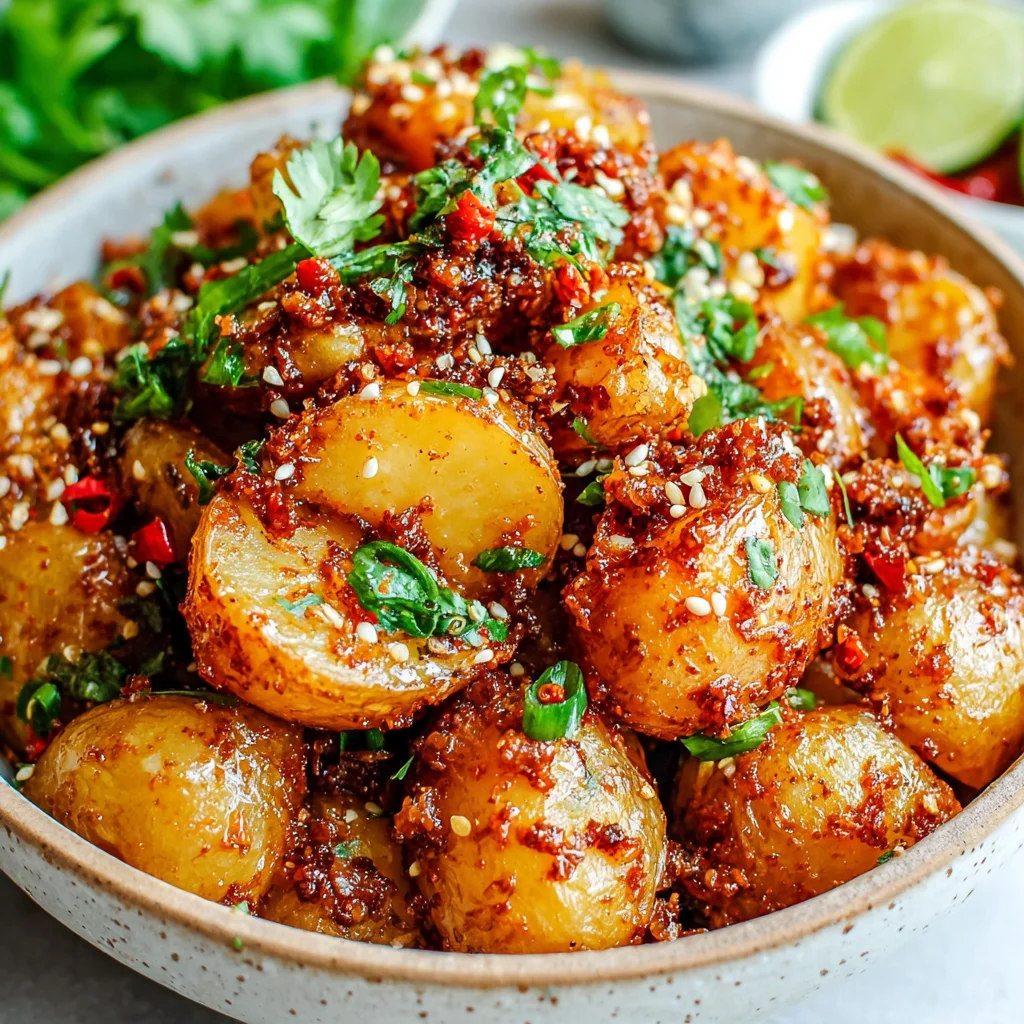
Tools You’ll Need
- Large pot
- Mixing bowls (small and medium)
- Baking sheet or air fryer basket
- Whisk
- Chef's knife
- Cutting board
- Potato masher or sturdy glass/jar
Essential Success Tips
- Do not overcrowd the baking sheet or air fryer basket; allow enough space for air to circulate around the potatoes for maximum crispness. Bake in batches if necessary.
- Ensure your new potatoes are truly fork-tender before crushing. This is key to achieving a creamy interior that contrasts beautifully with the crispy skin.
- Crush the potatoes gently but firmly. You want them to burst and flatten slightly, exposing more surface area, but not disintegrate into a mash.
- Let the potatoes cool for a few minutes after roasting before dressing. This helps them retain their crispness longer and prevents the sauce from becoming too liquidy.
- Taste the sauce before adding to the potatoes and adjust the gochujang to your preferred spice level. Start with 1 tablespoon and add more if you like extra heat.
Professional Cooking Secrets
- For an even deeper umami kick, consider roasting a few cloves of garlic with the potatoes and mashing them into the dressing. This adds a sweet, mellow garlic flavor without the raw pungency.
- If you want to prepare this dish ahead for entertaining, make the dressing up to 2 days in advance and store it in the refrigerator. Roast the potatoes just before serving to ensure peak crispiness, then combine.
- Experiment with different potato varieties like small red or yellow potatoes; their waxy texture holds up well to boiling and crushing, offering slight variations in texture and flavor.
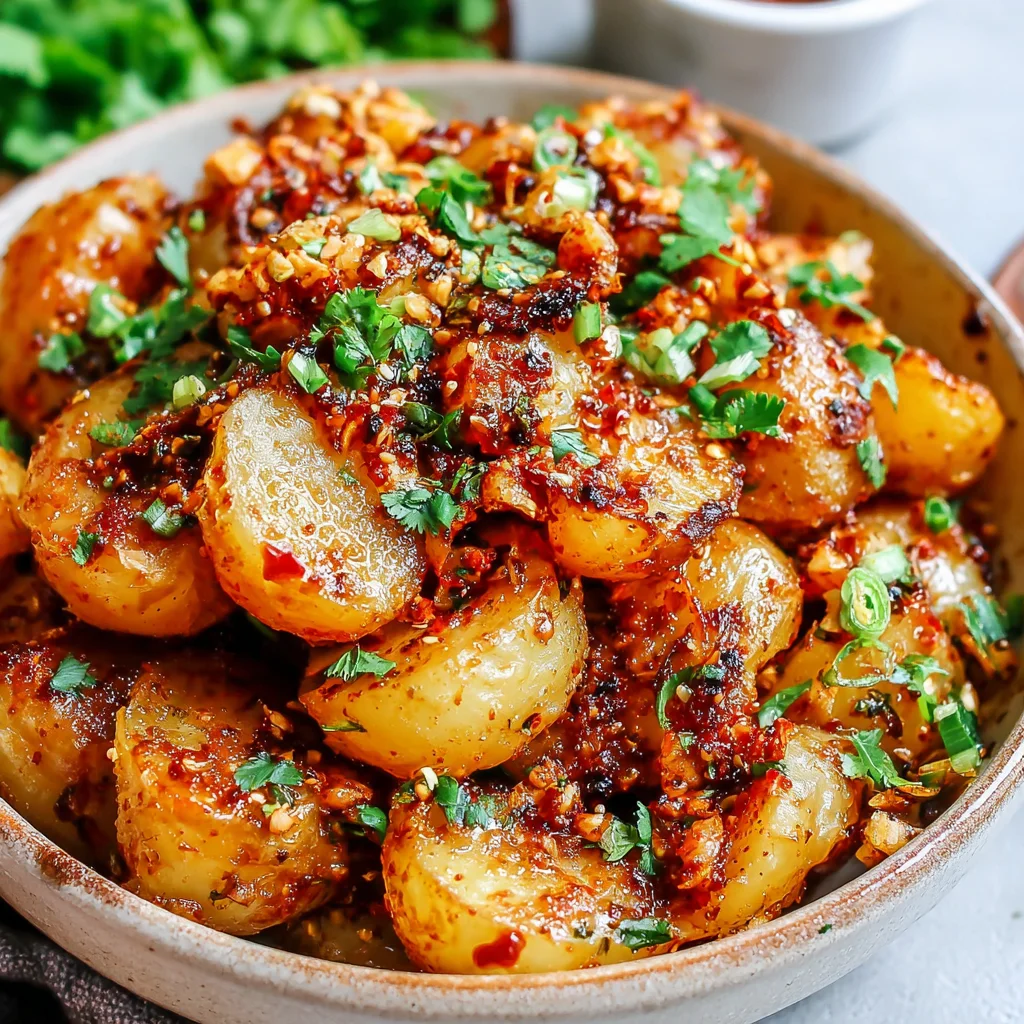
Notes
- Storage: Leftovers can be stored in an airtight container in the refrigerator for up to 2 days, though the potatoes will lose some of their crispness. Reheat gently in an oven or air fryer to regain some texture.
- Serving Suggestions: This salad is fantastic as a side for grilled proteins, a vibrant addition to a vegan BBQ spread, or even as a light lunch topped with extra greens.
- Variations: For an extra layer of flavor, consider adding a sprinkle of toasted white sesame seeds alongside the black ones, or a drizzle of sesame oil to the dressing for nuttiness.
Frequently Asked Questions
Can I make this potato salad ahead of time?
While the sauce can be made 1-2 days in advance and stored in the refrigerator, it's best to roast and dress the potatoes just before serving to maintain their crispy texture. If you must prepare them ahead, reheat the potatoes briefly in an oven or air fryer to re-crisp before combining with the sauce.
Is this dish very spicy? Can I adjust the heat?
The spice level is moderate with 1 tablespoon of gochujang and 1 teaspoon of gochugaru. You can easily adjust the heat by using less gochujang for a milder flavor, or adding a second tablespoon for a more intense kick. The vegan kewpie mayonnaise helps to balance the spice.
What if I can't find vegan kewpie mayonnaise or vegan fish sauce?
If vegan kewpie mayonnaise is unavailable, a good quality regular vegan mayonnaise will work. For vegan fish sauce, you can often find it in Asian grocery stores or online. As an alternative, a small splash of soy sauce (ensure it's gluten-free if needed) or tamari combined with a pinch of nori flakes can offer a similar umami depth, though the flavor profile will shift slightly.
Nutrition Facts (Per Serving)
Calories: Approximately 380-420 per serving, Protein: 4-6g, Fat: 28-32g, Carbs: 30-35g. (Estimates vary based on specific brands of vegan mayonnaise and gochujang used.)
Allergy Information
Contains soy (from vegan mayonnaise and vegan fish sauce) and sulfites (from lime juice). Naturally gluten-free if using certified gluten-free gochujang and vegan fish sauce. Always check product labels for specific dietary needs and allergen information.


No comment