
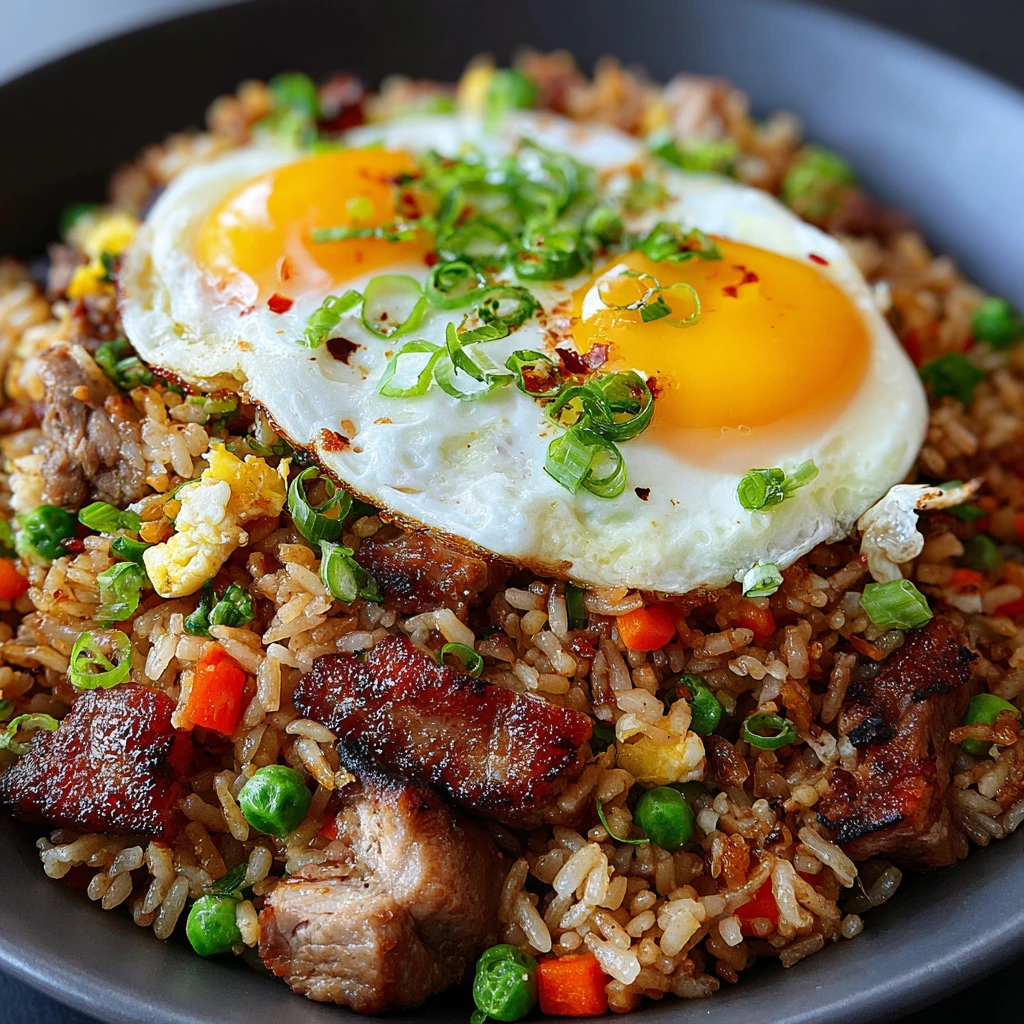
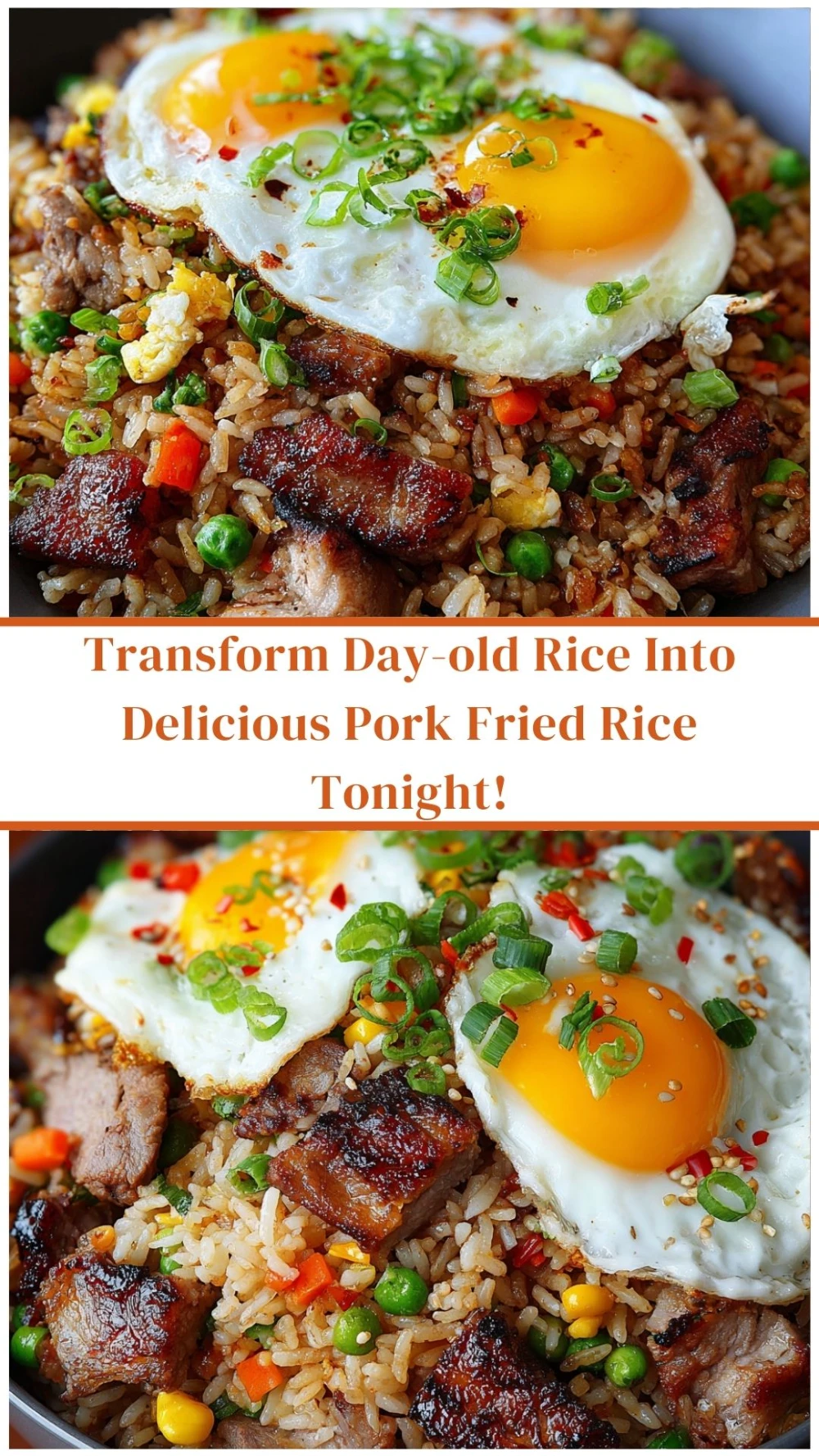
Transform Day-old Rice Into Delicious Pork Fried Rice Tonight!
Transform humble day-old rice into a vibrant, flavor-packed meal with this delectable Pork Fried Rice. This classic dish features tender slices of pork, crisp-tender mixed vegetables, fluffy scrambled eggs, and aromatic garlic, all brought together with a savory blend of soy and oyster sauces. It's an incredibly satisfying and quick dish, perfect for a weeknight dinner or an impressive weekend spread.
Prep Time
20 minutes
Cook Time
15 minutes
Total Time
35 minutes
Servings
4 servings
Keywords
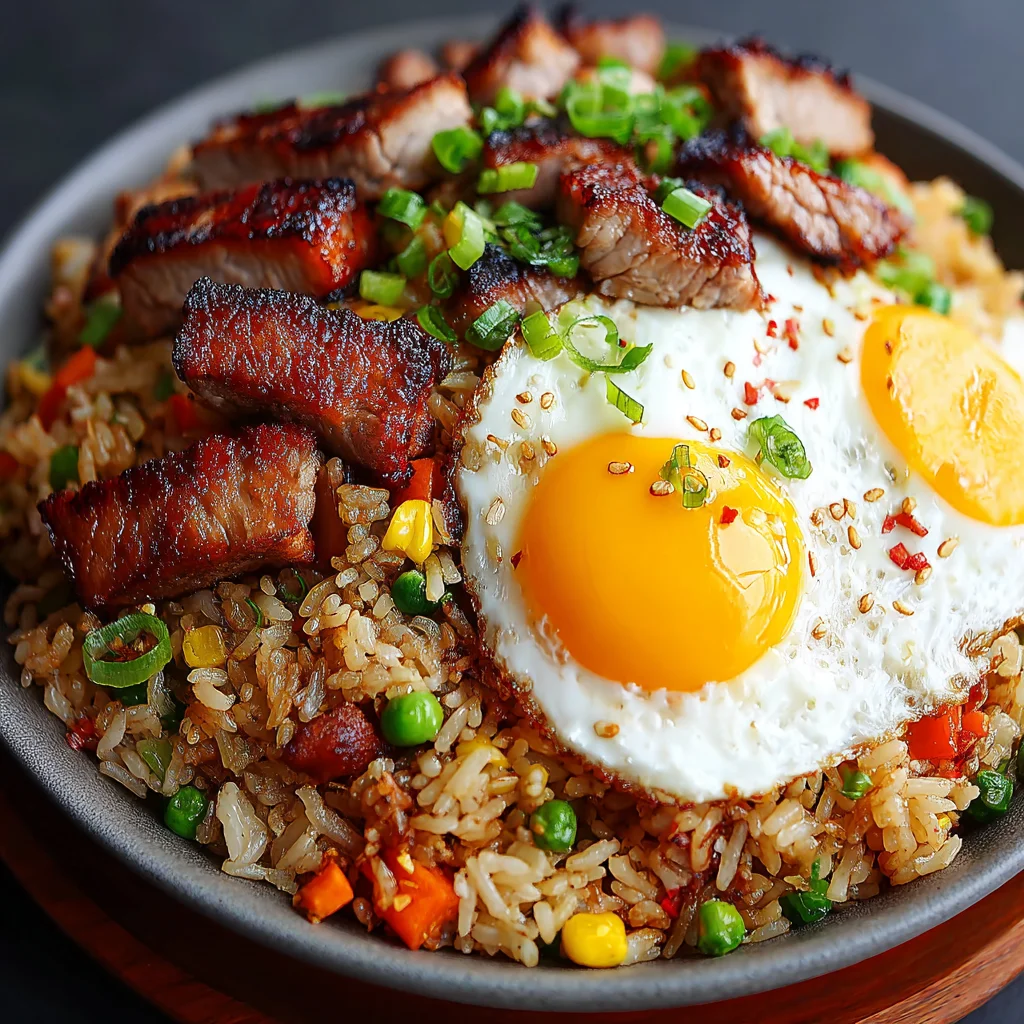
Why This Recipe Delivers
- Perfect use for day-old rice, preventing waste and ensuring ideal texture.
- Ready in under 40 minutes, making it a fantastic weeknight option.
- Loaded with savory pork, fresh vegetables, and satisfying eggs for a complete meal.
- Highly customizable – easily swap proteins or add more vegetables.
- Offers a delightful balance of umami, savory, and aromatic flavors.
Ingredients
- 2 cups (approximately 350g-400g) cooked rice, preferably day-old and chilled
- 200g (1 cup) pork tenderloin, thinly sliced against the grain
- 30ml (2 tablespoons) soy sauce (low sodium preferred)
- 15ml (1 tablespoon) oyster sauce
- 15ml (1 tablespoon) toasted sesame oil
- 150g (1 cup) mixed vegetables (such as frozen peas, diced carrots, and corn)
- 2 large green onions, thinly sliced, divided (white and green parts)
- 2 cloves garlic, minced finely
- 2.5ml (½ teaspoon) ground black pepper
- 30ml (2 tablespoons) vegetable oil, divided
- 2 large eggs, lightly beaten
- Salt, to taste
Instructions
- Begin by meticulously preparing all your ingredients. If you haven't already, ensure your rice is cooked and has been refrigerated for at least a few hours or, ideally, overnight. This drying process is crucial for achieving distinct grains and preventing a mushy fried rice. Thinly slice the pork tenderloin and mince the garlic. Have your sauces, vegetables, and beaten eggs ready for quick assembly.
- Heat a large wok or a heavy-bottomed skillet over medium-high heat. Add 15ml (1 tablespoon) of the vegetable oil. Once shimmering, add the thinly sliced pork tenderloin. Sauté the pork, stirring frequently, until it is beautifully browned and fully cooked through, which should take about 4-5 minutes. Remove the cooked pork from the skillet and set it aside on a plate, reserving any juices.
- In the same skillet, add the remaining 15ml (1 tablespoon) of vegetable oil. Reduce the heat slightly to medium. Add the minced garlic and sauté for about 30 seconds, stirring constantly, until it becomes wonderfully fragrant but not browned. Browning can make garlic bitter.
- Introduce the mixed vegetables to the skillet. If using frozen vegetables, there's no need to thaw them first. Stir-fry the vegetables for about 2-3 minutes, allowing them to heat through and become crisp-tender. Avoid overcooking to maintain their vibrant color and texture.
- Create an empty space in the skillet by pushing the vegetables to one side. Pour the lightly beaten eggs into the cleared area. Allow the eggs to set slightly, then gently scramble them until they are just cooked through and still moist. Once cooked, incorporate the scrambled eggs with the stir-fried vegetables.
- Add the cold, cooked rice to the skillet. Use your spatula or spoon to break up any clumps, ensuring the rice grains are separated. Stir everything thoroughly, combining the rice with the vegetables and eggs, and making sure it heats evenly.
- Pour the soy sauce, oyster sauce, and sesame oil over the rice mixture. Sprinkle in the ground black pepper. Continue to stir-fry everything vigorously for approximately 3-4 minutes. This step is essential for coating all the rice grains evenly with the sauces and allowing the flavors to meld beautifully. Ensure the rice is heated completely through and begins to develop a slightly toasted texture.
- Finally, return the cooked pork (and any accumulated juices) and the white parts of the chopped green onions to the skillet. Mix well, stirring for an additional 1-2 minutes until everything is thoroughly heated. Taste the fried rice and adjust the seasoning with a pinch of salt if necessary, keeping in mind that soy sauce is already quite salty.
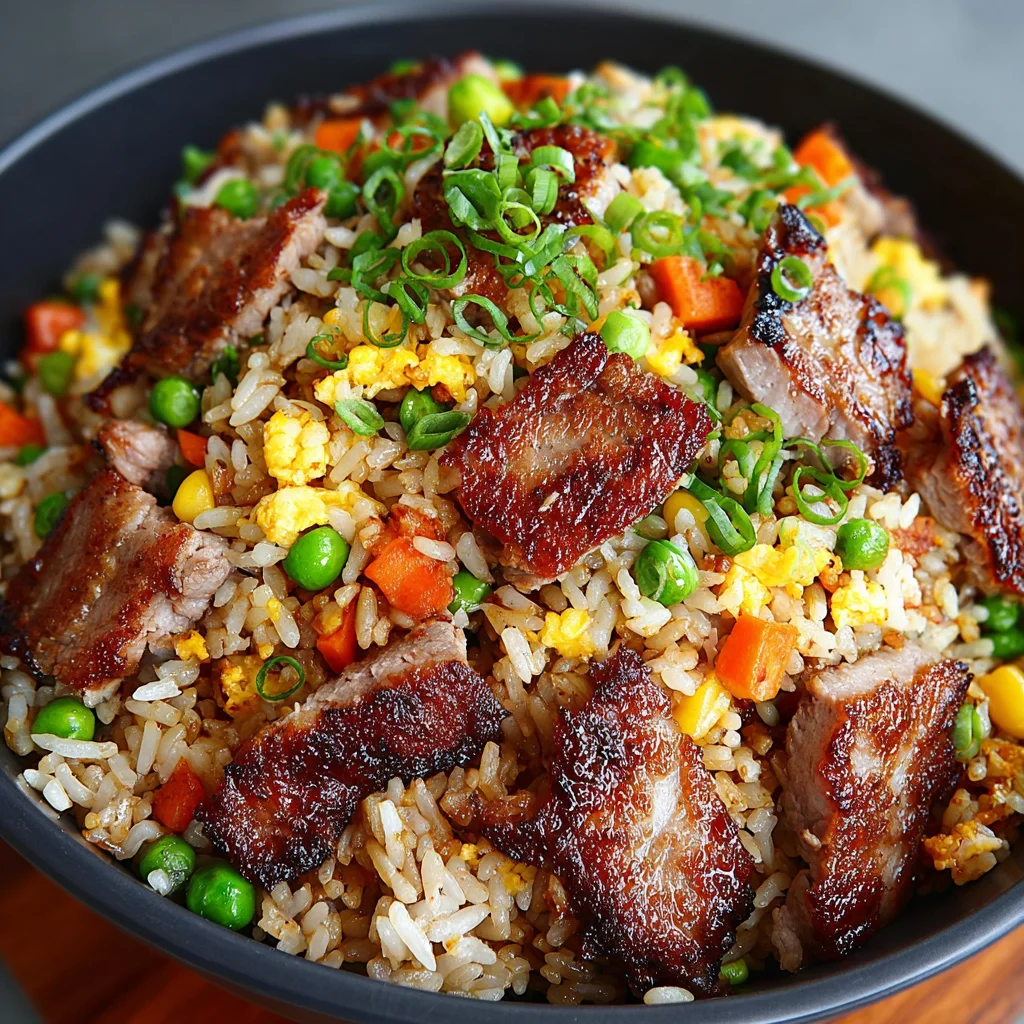
- Serve the Pork Fried Rice immediately while hot. Garnish generously with the green parts of the remaining chopped green onions for a fresh burst of color and flavor. Enjoy this comforting and flavorful dish!
Tools You’ll Need
- Large wok or large heavy-bottomed skillet
- Spatula or cooking spoon
- Cutting board
- Sharp knife
- Measuring cups and spoons
- Small bowls for mise en place
Essential Success Tips
- Always use cold, day-old rice: This is the golden rule for fried rice. Freshly cooked rice is too moist and will result in a sticky, clumpy dish. The drying effect of refrigeration helps the grains separate beautifully.
- High heat is key: For proper stir-frying, ensure your wok or skillet is very hot before adding ingredients. This creates that characteristic 'wok hei' (breath of the wok) and ensures ingredients cook quickly without stewing.
- Don't overcrowd the pan: Cook in batches if necessary, especially if you're making a larger quantity. Overcrowding lowers the pan's temperature and steams the food instead of stir-frying it, leading to a less desirable texture.
- Prepare all ingredients in advance (mise en place): Stir-frying is a rapid cooking method, so having all your ingredients chopped, measured, and ready to go before you start cooking is crucial for a smooth process.
- Season in layers: Taste and adjust seasoning throughout, especially after adding sauces. Remember that soy sauce and oyster sauce contribute significant saltiness, so add additional salt sparingly at the very end.
Professional Cooking Secrets
- Achieve restaurant-quality browning on your pork by ensuring your pan is adequately hot and not stirring the pork constantly in the first minute; let it develop a crust before tossing.
- For an extra layer of flavor, consider marinating your thinly sliced pork tenderloin for 15-20 minutes in a dash of soy sauce, a pinch of cornstarch, and a tiny bit of sesame oil before cooking. This tenderizes the meat and infuses it with flavor.
- Finish with a splash of rice vinegar (1 teaspoon) just before serving to add a subtle tang that brightens all the rich flavors of the fried rice, creating a more complex and balanced profile.
Notes
- Storage: Leftover Pork Fried Rice can be stored in an airtight container in the refrigerator for up to 3 days. Reheat gently in a skillet or microwave, adding a tiny splash of water if it seems dry.
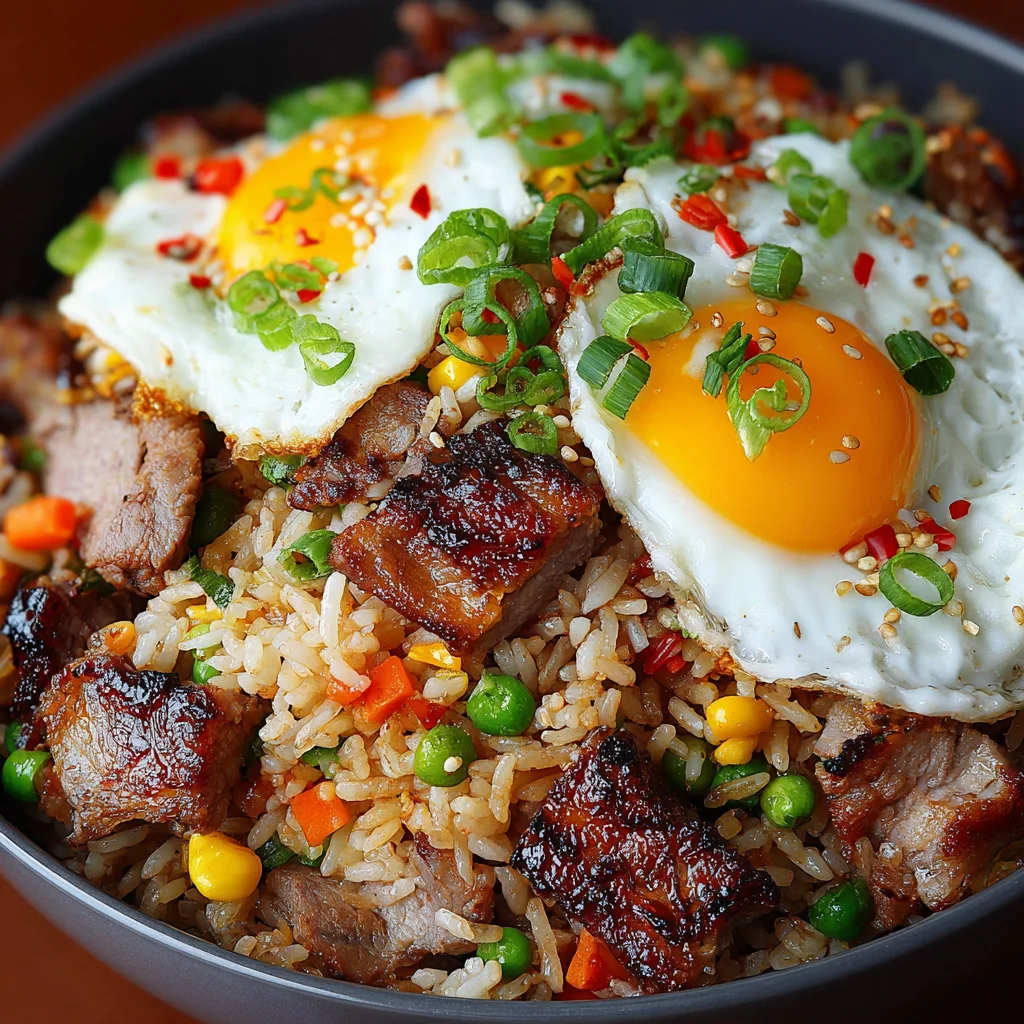
- Variations: Feel free to swap pork for chicken, shrimp, or tofu. You can also add other vegetables like thinly sliced cabbage, bell peppers, or bean sprouts. A touch of chili garlic sauce can add a delightful spicy kick.
Frequently Asked Questions
Can I use fresh rice for fried rice?
While technically possible, it is strongly recommended to use cold, day-old rice. Freshly cooked rice has too much moisture, which will make your fried rice sticky and clumpy instead of light and fluffy with distinct grains. Chilling the rice dries it out, making it ideal for stir-frying.
What kind of oil is best for fried rice?
A neutral-flavored, high smoke point oil is best for fried rice. Vegetable oil, canola oil, grapeseed oil, or peanut oil are all excellent choices. Avoid olive oil, as its flavor can be too strong and its smoke point too low for high-heat stir-frying.
How do I prevent my fried rice from getting soggy?
To prevent soggy fried rice, ensure you use day-old chilled rice, cook on high heat, and avoid overcrowding your wok or skillet. Overcrowding lowers the pan temperature and causes ingredients to steam rather than fry. Cook in batches if necessary, and ensure excess moisture from vegetables or sauces has evaporated before adding more ingredients.
Nutrition Facts (Per Serving)
Calories: approximately 480-520, Protein: 30g-35g, Fat: 20g-25g, Carbs: 45g-50g (estimates based on ingredients and quantities for 1 serving)
Allergy Information
Contains soy, sesame, and eggs. May contain gluten (depending on soy sauce used). For a gluten-free option, use tamari instead of regular soy sauce.

No comment