
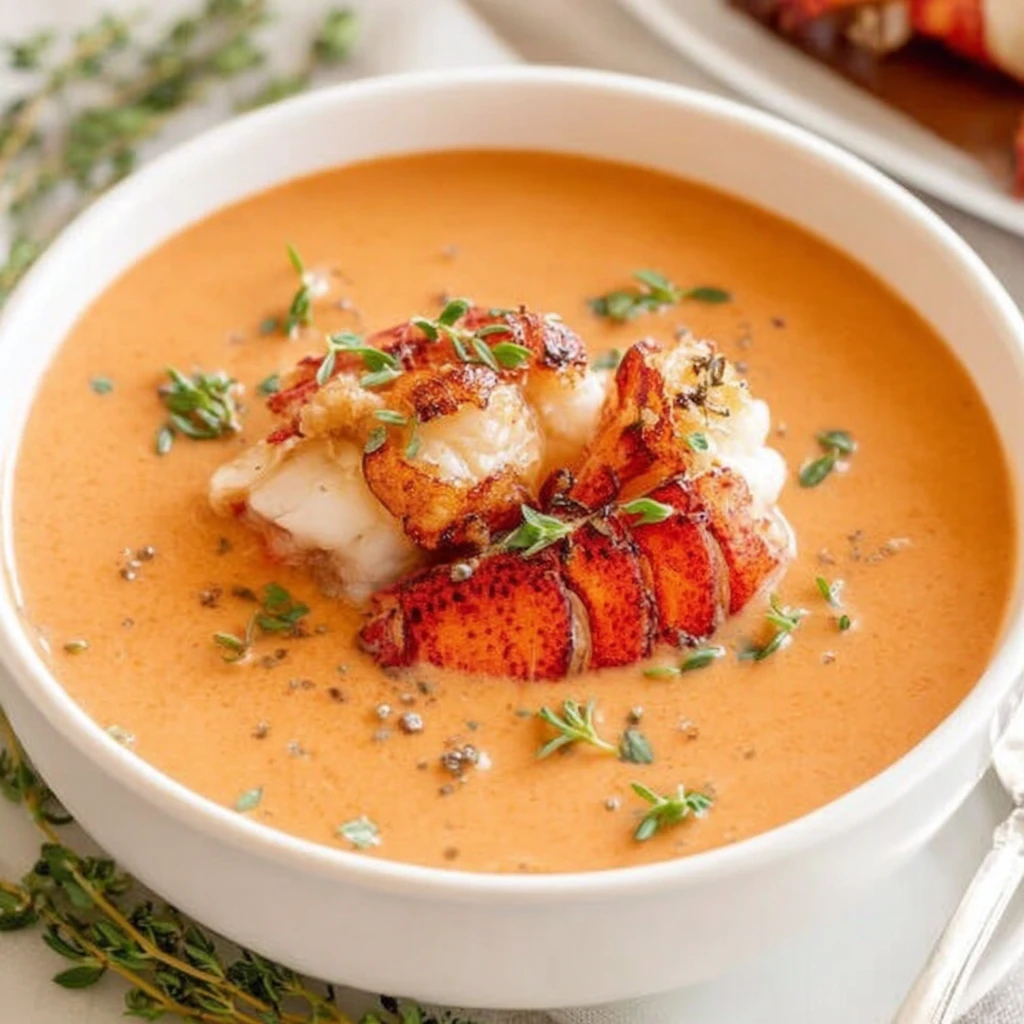
The Best Lobster Bisque (Ruth’s Chris Copycat Recipe)
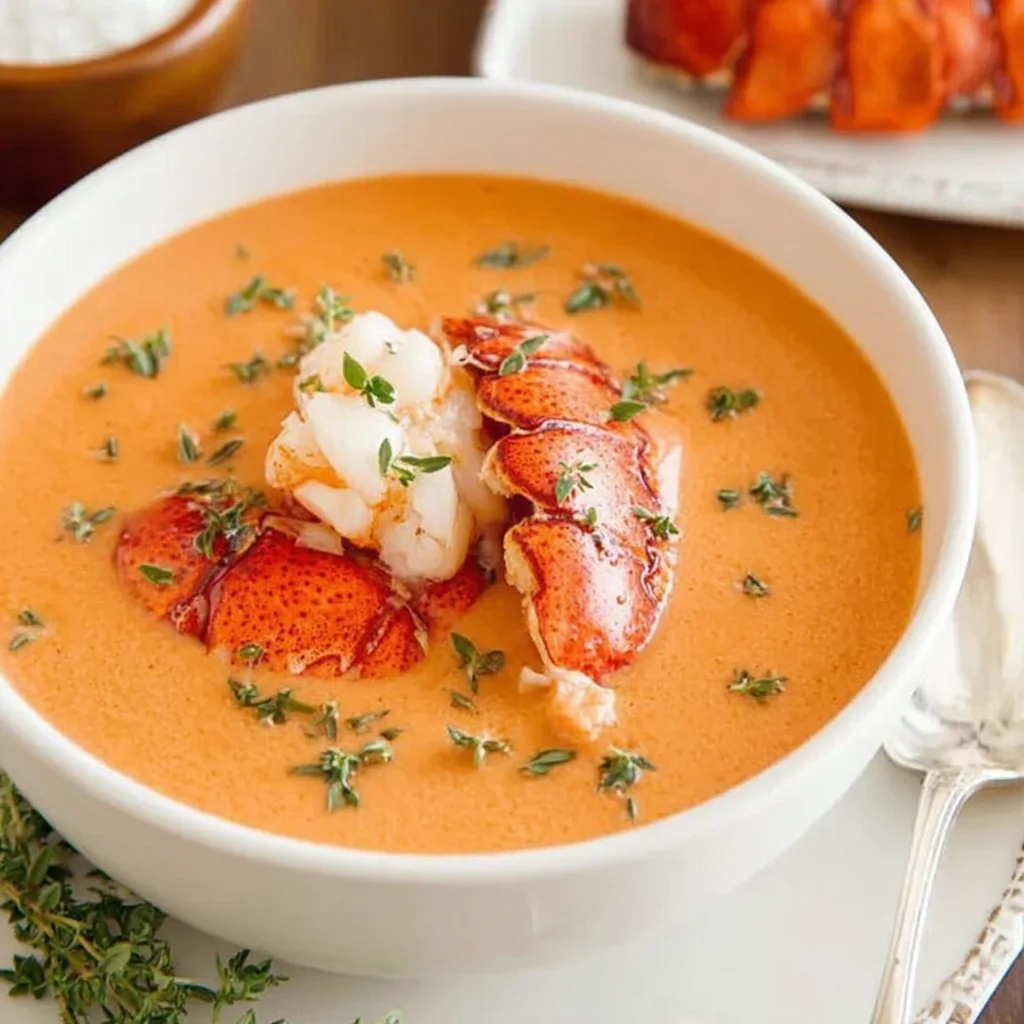
Indulge in the luxurious, creamy depths of this exquisite Lobster Bisque, a remarkably faithful copycat of the famed Ruth's Chris Steak House classic. This recipe elevates the humble bisque into a culinary masterpiece, brimming with rich lobster flavor, aromatic vegetables, and a velvety smooth texture. Perfect for special occasions or when you simply crave a taste of gourmet dining at home.
Prep Time
30 minutes
Cook Time
75 minutes
Total Time
1 hour 45 minutes
Servings
4 servings
Keywords
Why This Recipe Delivers
- Captures the iconic, rich flavor of Ruth's Chris Lobster Bisque at home.
- Features a deeply flavorful base made from real lobster shells and aromatic vegetables.
- Boasts a silky, creamy texture that feels incredibly luxurious on the palate.
- Impressive enough for entertaining, yet approachable for the home cook.
- A perfect balance of sweetness from the lobster and savory depth from the stock.
Ingredients
- 1.9 liters (8 cups) water, plus more as needed to cover lobster tails
- 3 small lobster tails or 2 large tails, approximately 340 grams (12 ounces) total
- Cool water, enough to submerge cooked lobster tails
- 30 ml (2 tablespoons) olive oil
- 1 medium onion (approx. 225 grams / 8 ounces), sliced
- 120 ml (½ cup) sliced celery (approx. 1 large stalk)
- 120 ml (½ cup) sliced carrots (approx. 1 medium carrot)
- 1 head garlic, peeled and cut in half crosswise
- 180 ml (¾ cup) chopped red tomato (approx. 1 large tomato)
- 2 sprigs fresh tarragon (optional)
- 6 sprigs fresh thyme
- 2 large bay leaves
- 2.5 ml (½ teaspoon) whole black peppercorns
- 120 ml (½ cup) good quality brandy
- 120 ml (½ cup) dry sherry
- 470 ml (2 cups) bottled clam juice
- 470 ml (2 cups) cooking liquid, reserved after boiling lobster tails
- All lobster juices, reserved after chopping lobster meat and shells
- 60 ml (¼ cup) tomato paste
- 120 ml (½ cup) heavy whipping cream, at room temperature
- 15 ml (1 tablespoon) cornstarch
- 15 ml (1 tablespoon) cold water
- 2.5 ml (½ teaspoon) fine sea salt, more or less to taste
- Freshly cracked black pepper, to taste
- Chopped fresh chives, for serving (optional)
Instructions
- Fill a large, heavy-bottomed pot with 1.9 liters (8 cups) of water and place it on the stovetop over high heat. Bring the water to a vigorous rolling boil, ensuring it's ready for the lobster tails.
- Once the water is boiling rapidly, carefully add the 3 small or 2 large lobster tails to the pot, ensuring they are completely submerged. Boil the lobster tails for exactly 5 minutes, or until their shells turn a vibrant red and the meat is opaque and cooked through.
- Using tongs, carefully transfer the fully cooked lobster tails to a large bowl. Immediately add enough cool water to the bowl to submerge the tails; this stops the cooking process and makes them easier to handle later. Set them aside to cool.
- While the lobster tails cool, transfer 470 ml (2 cups) of the hot cooking liquid from the pot to a medium bowl. Make sure to capture as much loose lobster meat or flavorful bits with the liquid as possible. Discard any remaining cooking liquid from the pot, as its flavor will have been extracted.
- Once the lobster tails are cool enough to handle comfortably, carefully crack open each tail and remove the succulent meat. Place the removed lobster meat on a chopping board. Do not discard the lobster shells; they are crucial for building the bisque's foundational flavor.
- With all the meat removed, coarsely chop the lobster meat into bite-sized pieces. Aim for pieces that will be noticeable but not overwhelming in the bisque.
- Transfer the chopped lobster meat to a small bowl, cover it with a lid or plastic wrap, and place the bowl in the refrigerator to keep it chilled until it's ready to be incorporated into the finished bisque.
- Place the shells from the lobster tails back onto the cutting board. Chop the shells into large, manageable pieces to expose more surface area for flavor extraction. Carefully transfer these shell pieces to a second small bowl and set aside.
- Transfer any remaining liquid or juices left on the cutting board after chopping the lobster meat and shells into a large measuring cup. This liquid is packed with flavor and will be added to the bisque base.
- Place a large, heavy-bottomed pot (or the same one used for boiling the lobster, cleaned) on the stovetop over medium-high heat. When the pot is warm, add 30 ml (2 tablespoons) of olive oil. Continue heating, swirling and tilting the pot to evenly distribute the oil across the bottom, until the oil is hot and shimmers slightly.
- When the oil is hot, add the chopped lobster shell pieces to the pot. Sauté the shells, stirring occasionally, for approximately 5 minutes or until they have darkened considerably. Be diligent not to burn the shells, as this can impart a bitter flavor.
- After the shells have darkened, add the sliced medium onion, 120 ml (½ cup) sliced celery, 120 ml (½ cup) sliced carrots, the halved head of garlic, 180 ml (¾ cup) chopped red tomato, the optional 2 sprigs of fresh tarragon, 6 sprigs of fresh thyme, 2 large bay leaves, and 2.5 ml (½ teaspoon) whole black peppercorns to the pot. Stir thoroughly to incorporate all the aromatic ingredients with the shells.
- Thirteenth Step: Pour 120 ml (½ cup) of brandy and 120 ml (½ cup) of dry sherry into the pot and stir to combine. Bring the mixture to a gentle boil, then allow it to boil for about 5 minutes, or until the majority of the alcohol has evaporated, concentrating the flavors.
- Fourteenth Step: Add 470 ml (2 cups) of bottled clam juice, the 470 ml (2 cups) of reserved lobster cooking liquid, and all the reserved lobster juices to the pot. Stir everything together, then reduce the heat under the pot to medium.
- Fifteenth Step: Allow the mixture to come to a strong simmer. Maintain this strong simmer for 15 minutes, letting the flavors meld and deepen.
- Sixteenth Step: After 15 minutes, carefully remove the pot from the heat. Place a large saucepan on the stovetop and fit a large sieve (or fine-mesh strainer) into the saucepan. Carefully pour the entire contents of the pot, including all solids and liquids, into the sieve.
- Seventeenth Step: Strain the soup base, firmly pressing on the solid ingredients (shells, vegetables, aromatics) with the back of a wooden spoon or ladle to express as much flavorful liquid as possible. This step is crucial for maximizing the bisque's depth. Once strained, discard all the leftover solid ingredients.
- Eighteenth Step: Add 60 ml (¼ cup) of tomato paste to the strained soup in the saucepan and whisk vigorously until the tomato paste is completely incorporated, lending color and a subtle umami depth to the bisque.
- Nineteenth Step: Simmer the soup over medium heat for approximately 15 minutes, or until the soup has reduced to approximately 710 ml (3 cups). This reduction concentrates the flavors even further, creating a rich base.
- Twentieth Step: Once the soup has reduced, remove the saucepan from the stovetop and let it cool slightly. This brief cooling period helps prevent the cream from curdling in the next step.
- Twenty-First Step: If preparing the lobster bisque in advance, this is the ideal stopping point. Transfer the soup base to an airtight container and let it cool completely before refrigerating for up to 1 day. Approximately 20 minutes prior to serving, reheat the soup on the stovetop over low heat, then continue with the subsequent instructions.
- Twenty-Second Step: Add 120 ml (½ cup) of heavy whipping cream (ensure it is at room temperature to prevent temperature shock and curdling) to the soup and whisk gently to incorporate. Return the saucepan to the stovetop and simmer the mixture for 5 minutes, allowing the cream to infuse into the bisque.
- Twenty-Third Step: While the soup simmers, combine 15 ml (1 tablespoon) of cornstarch and 15 ml (1 tablespoon) of cold water in a small mixing bowl. Whisk until the ingredients are fully combined into a smooth slurry.
- Twenty-Fourth Step: Add the prepared cornstarch slurry to the saucepan and stir continuously to incorporate it evenly. Increase the heat under the saucepan to medium-high and bring the mixture to a boil. Allow it to boil for 2 minutes, stirring, or until the bisque has noticeably thickened to a luxurious, spoon-coating consistency.
- Twenty-Fifth Step: Once the soup has thickened, taste the bisque and adjust the seasoning by adding 2.5 ml (½ teaspoon) of fine sea salt and freshly cracked black pepper to taste. Stir thoroughly to incorporate the seasonings.
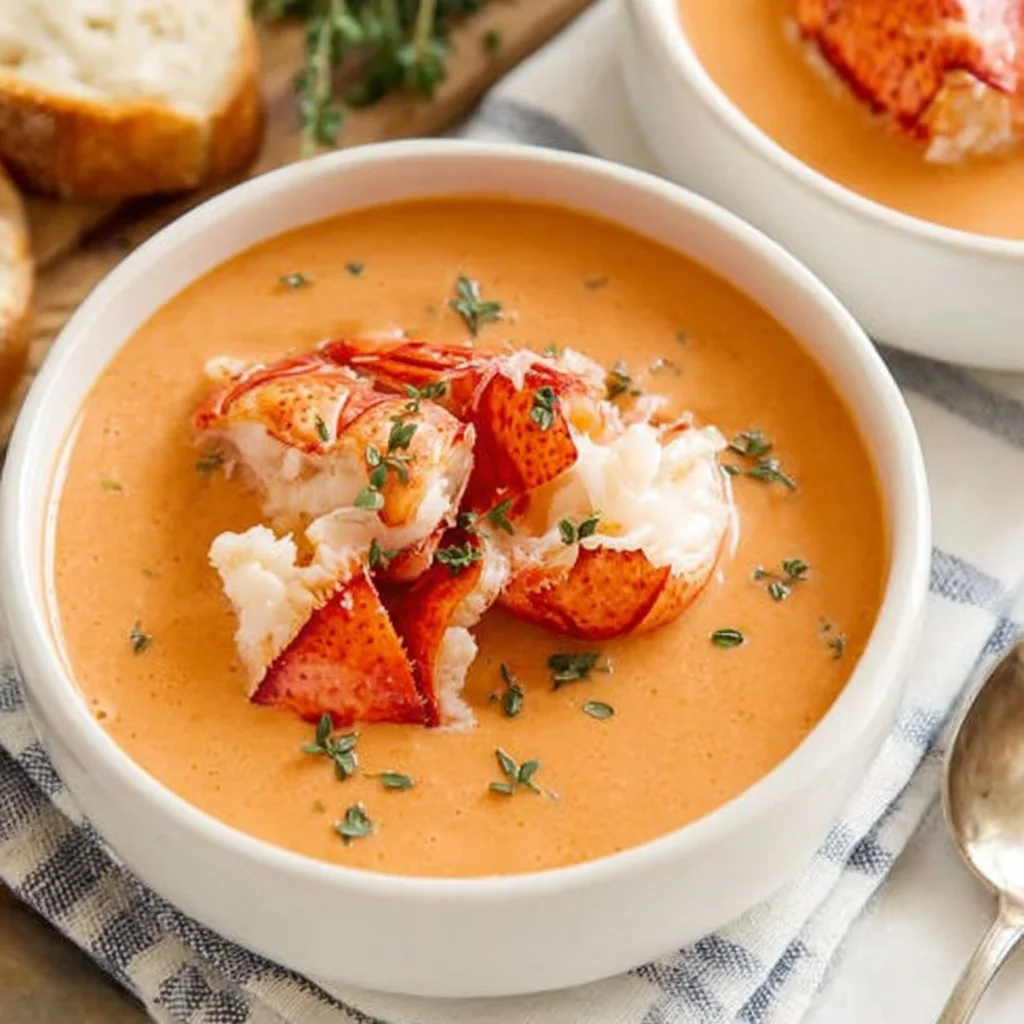
- Twenty-Sixth Step: Remove the saucepan from the heat and let it cool slightly for a moment. Then, add the reserved, chilled chopped lobster meat to the soup. Stir gently to incorporate the meat without breaking it apart.
- Twenty-Seventh Step: Return the saucepan to the heat and simmer the mixture, stirring constantly, just until the lobster meat is warmed through. Avoid overcooking the lobster at this stage to maintain its tender texture.
Tools You’ll Need
- Large, heavy-bottomed pot (5-6 liter / 5-6 quart capacity)
- Large saucepan
- Large bowl
- Medium bowl
- Small mixing bowl
- Tongs
- Chopping board
- Sharp knife
- Large sieve or fine-mesh strainer
- Wooden spoon or ladle
- Whisk
- Measuring cups and spoons
Essential Success Tips
- Do not overcook the lobster tails initially; 5 minutes is usually perfect for small to medium tails to ensure tender, not rubbery, meat.
- Press the solids firmly during straining to extract maximum flavor from the lobster shells and aromatics. This step significantly impacts the bisque's depth.
- Use good quality brandy and dry sherry; the quality of your alcohol will influence the final flavor profile.
- Ensure your heavy cream is at room temperature before adding it to the warm soup to prevent it from curdling.
- Reduce the soup to the specified volume (approx. 710 ml / 3 cups) before adding cream and thickening; this concentrates the flavors and ensures the correct consistency.
Professional Cooking Secrets
- To achieve a truly restaurant-quality silky texture, consider passing the strained bisque through a chinoise or a very fine mesh strainer lined with cheesecloth after reducing and before adding cream. This removes any tiny remaining particles.
- For an even richer flavor, roast the lobster shells in a hot oven (200°C / 400°F) for 10-15 minutes before sautéing them. This caramelization adds another layer of depth to the bisque base.
- A touch of high-quality aged balsamic vinegar (a few drops) at the very end can brighten the flavors and add a subtle complexity, balancing the richness without making the bisque taste vinegary.
Notes
- To remove lobster meat from the tails: Once cooled, twist the tail fin off. Using kitchen shears, cut along the top of the shell from the fin end to the open end. Gently pry open the shell and carefully pull out the meat in one piece.
- Optional: If making lobster bisque in advance, stop after the soup has reduced to 710 ml (3 cups) and cooled slightly. Transfer the soup to an airtight container and let cool completely, then refrigerate for up to 1 day. Reheat gently over low heat before continuing with adding the cream and thickening.
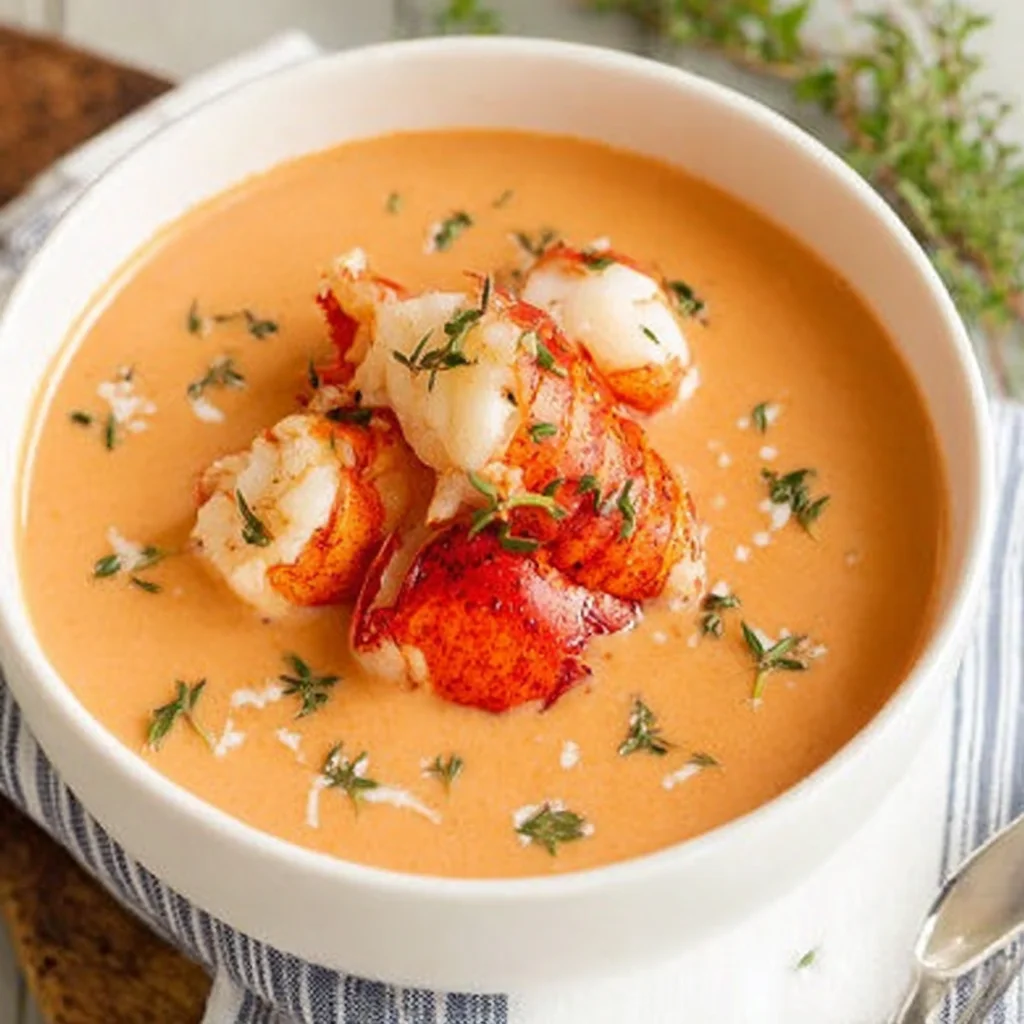
- For an extra touch of luxury, garnish with a swirl of créme fraîche or a tiny drizzle of truffle oil just before serving.
Frequently Asked Questions
Can I use frozen lobster tails for this bisque?
Yes, absolutely! Frozen lobster tails work perfectly for this recipe. Ensure they are fully thawed in the refrigerator overnight or under cold running water before cooking. Pat them dry before boiling.
What kind of sherry should I use?
For the best flavor, use a dry sherry, such as Fino or Amontillado. Avoid cooking sherries, which often contain added salt and can impart an artificial taste. A good quality dry sherry will add depth and nuance.
How can I make this bisque spicier?
If you prefer a hint of heat, you can add a pinch of cayenne pepper along with the salt and black pepper at the final seasoning stage. Start with a small amount and adjust to your taste.
Nutrition Facts (Per Serving)
Per serving (estimated): Calories: 480, Protein: 32g, Fat: 35g, Carbs: 18g, Cholesterol: 160mg, Sodium: 850mg.
Allergy Information
Contains shellfish (lobster), dairy (whipping cream), and may contain sulfites (sherry). For a dairy-free version, consider using full-fat coconut milk or a plant-based cream alternative, though the flavor and texture will be altered. Always check clam juice labels for hidden allergens.



)
No comment