
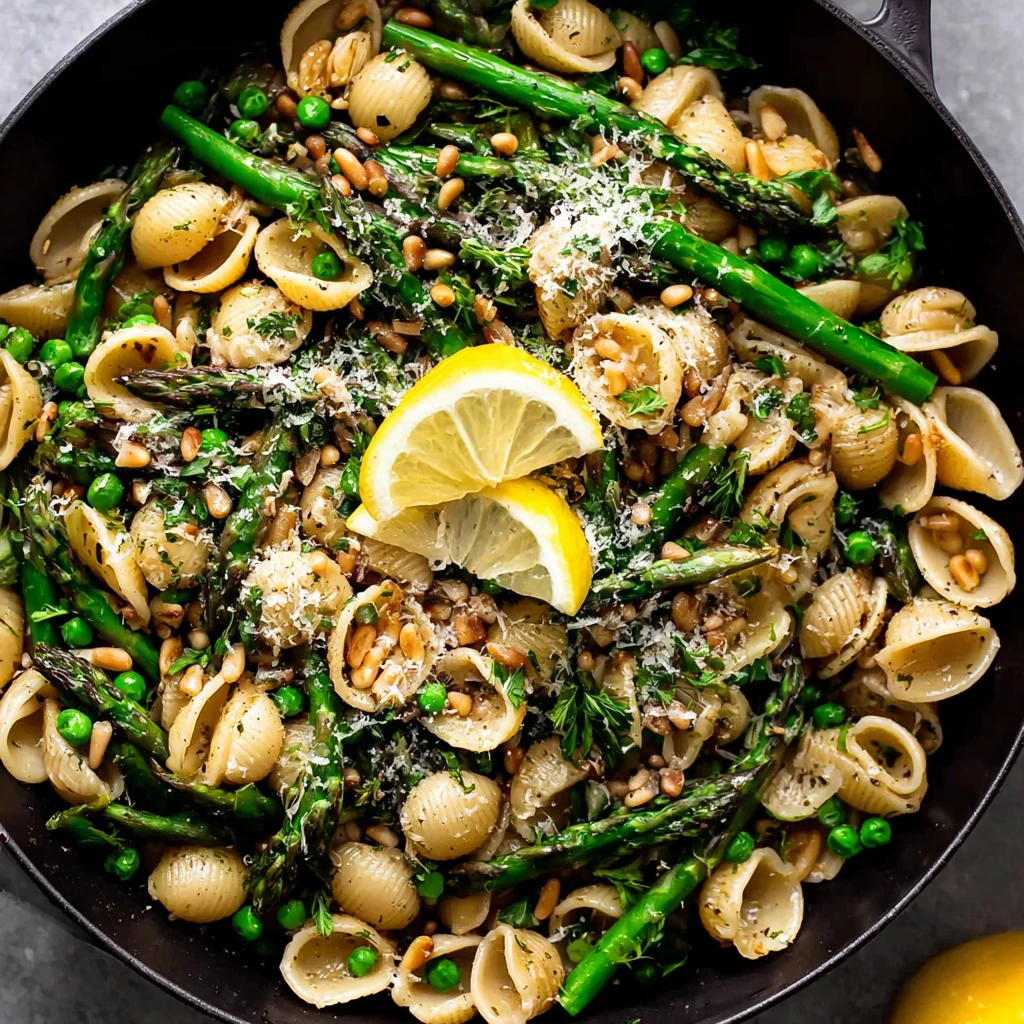
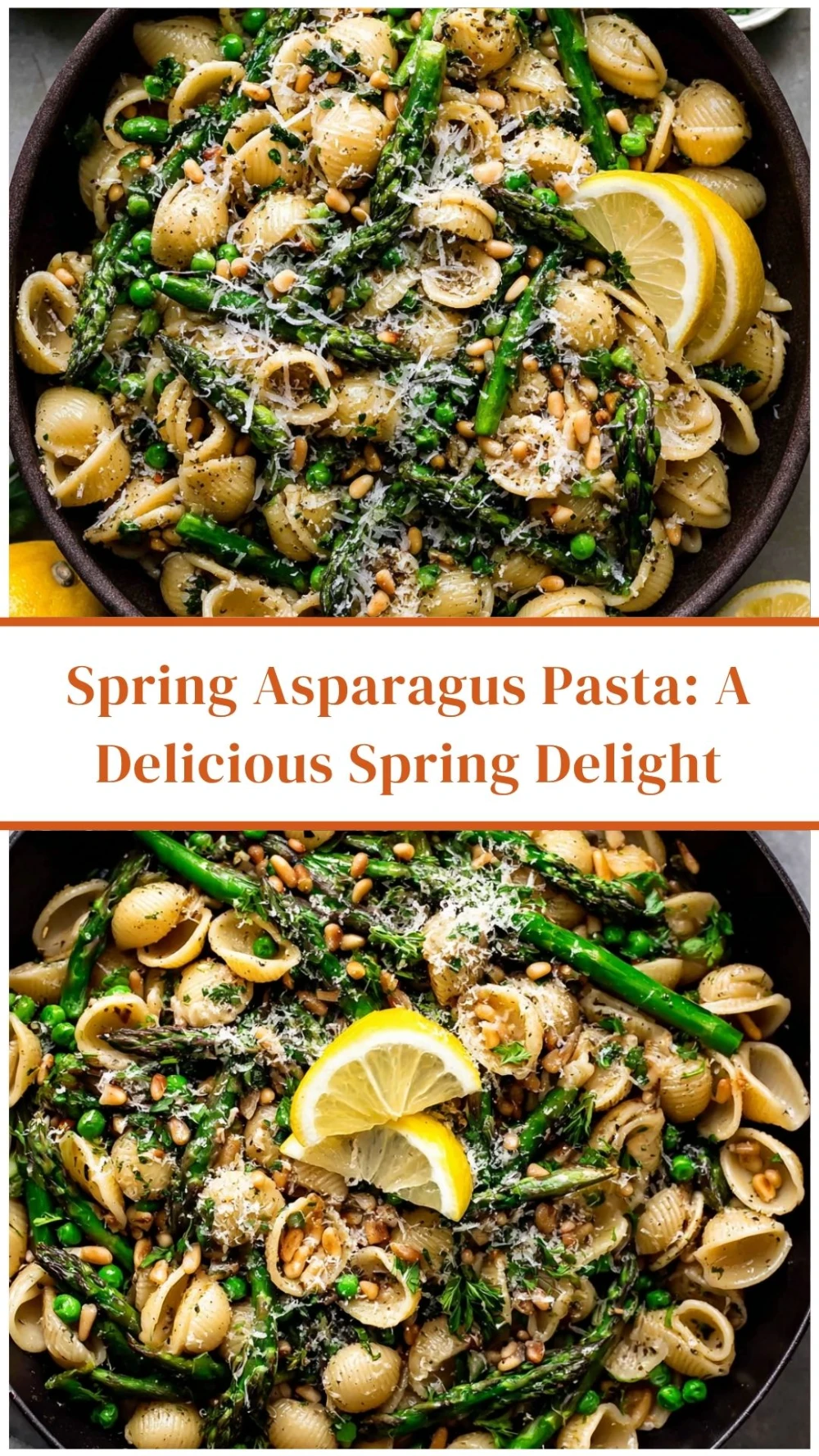
Spring Asparagus Pasta: A Delicious Spring Delight
Embrace the vibrant flavors of spring with this exquisite Asparagus Pasta. This dish is a celebration of fresh seasonal produce, combining tender asparagus and sweet English peas with a light, flavorful lemon-herb sauce and perfectly toasted pine nuts. It's an elegant yet simple meal that captures the essence of springtime in every comforting bite, perfect for a weeknight dinner or a special occasion.
Prep Time
20 minutes
Cook Time
25 minutes
Total Time
45 minutes
Servings
4 servings
Keywords
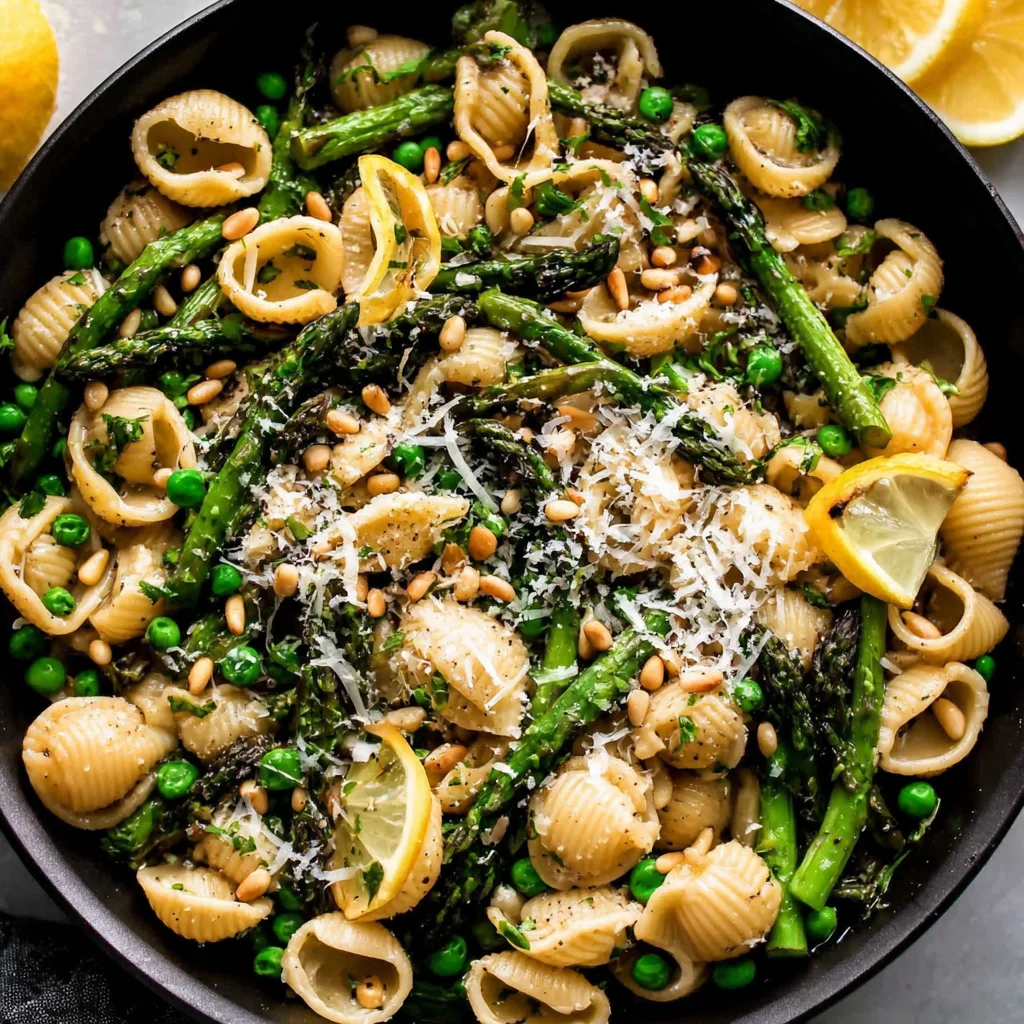
Why This Recipe Delivers
- Celebrates fresh spring produce with vibrant asparagus and sweet peas.
- Quick and easy to prepare, making it perfect for busy weeknights.
- Light, bright, and incredibly flavorful with lemon, herbs, and toasted pine nuts.
- Versatile enough to be a hearty vegetarian main or a delightful side dish.
- Offers a satisfying balance of textures and tastes in every forkful.
Ingredients
- 450 grams (1 pound/16 ounces) pasta (conchiglie, orecchiette, shells, fusilli or linguine—whole grain if desired)
- 100 grams (¾ cup) pine nuts
- 60 milliliters (¼ cup) olive oil, plus more for garnish
- 5 shallots, quartered lengthwise and sliced very thin crosswise
- 450 grams (1 pound) pencil-thin asparagus, woody ends snapped off, and cut in 1.25 centimeter (½-inch) slices on the bias
- 2 garlic cloves, minced
- 280 grams (2 cups) shelled fresh or frozen English peas (defrost peas if frozen)
- 80 grams (⅔ cup) grated Parmigiano-Reggiano cheese (or regular Parmesan), plus more for garnish
- 30 grams (2 tablespoons) unsalted butter
- 2 teaspoons grated lemon zest (from one lemon)
- 15 milliliters (1 tablespoon) lemon juice (from less than one lemon)
- 25 grams (1 cup) roughly chopped mixed herbs (such as flat-leaf Italian parsley, chives, and mint; other suggestions include chervil and tarragon)
- Fine sea salt, to taste
- Freshly ground black pepper, to taste
- Pinch of red pepper flakes (optional)
Instructions
- Begin by prepping your vegetables: thinly slice the shallots, snap the woody ends off the asparagus and slice them on the bias, mince the garlic, and roughly chop your mixed herbs. Set aside. Bring a large pot of heavily salted water to a rolling boil over high heat; the water should taste distinctly salty like the ocean to properly season the pasta from within. Add the pasta and cook for two minutes less than the package directions for an al dente finish, as it will continue to cook slightly in the sauce. Before draining, reserve 475 milliliters (2 cups) of the starchy pasta water, then drain the pasta thoroughly and set aside.
- While the pasta cooks, warm the pine nuts in a large, dry skillet over medium heat. Stir them frequently and do not leave them unattended, as they can burn very quickly. Cook until they turn a light golden brown at the edges, typically about 3 to 5 minutes. Immediately transfer the toasted pine nuts to a small bowl to cool, then return the empty skillet to the stove.
- Add 60 milliliters (¼ cup) of olive oil to the skillet and warm it over medium-high heat until it shimmers. Add the thinly sliced shallots, season with a pinch of fine sea salt and several twists of freshly ground black pepper. Sauté the shallots, stirring occasionally, until they are beautifully golden brown and softened, which usually takes about 5 minutes. The caramelization of the shallots will add a wonderful depth of flavor to the dish.
- Introduce the sliced asparagus and minced garlic to the skillet. Season with another pinch of salt. Cook, stirring often, until the asparagus is bright green and knife-tender but still has a slight bite, about 3 minutes. Stir in the shelled English peas. If using frozen peas, ensure they are defrosted first. Continue to cook until the peas are vibrant green and heated through, approximately 2 minutes. Avoid overcooking to maintain their fresh flavor and texture.
- Add the drained, slightly undercooked pasta directly to the skillet with the vegetables. Pour in 240 milliliters (1 cup) of the reserved starchy pasta water. Stir continuously, allowing the pasta to absorb the liquid and the starches from the pasta water to emulsify with the olive oil, creating a light sauce that begins to coat the pasta, about 2 minutes. Remove the pan from the heat. Carefully transfer the entire contents to a large serving bowl. Add the 80 grams (⅔ cup) of grated Parmigiano-Reggiano cheese and 30 grams (2 tablespoons) of unsalted butter. Stir vigorously until the cheese and butter melt and evenly coat the pasta, creating a luscious, creamy sauce. If the sauce appears too thick or needs more lubrication, add more splashes of the reserved pasta water, a tablespoon at a time, until the sauce beautifully clings to the pasta.
- Finally, stir in the grated lemon zest, fresh lemon juice, the roughly chopped mixed herbs, and the toasted pine nuts. Taste the dish and adjust the seasonings as required; you might want to add another pinch of fine sea salt, a generous grind of black pepper, a squeeze of additional lemon juice for brightness, or a pinch of red pepper flakes for a hint of warmth if desired. To serve, grate some extra Parmigiano-Reggiano cheese over the top, finish with another generous grind of freshly ground black pepper, and a light drizzle of high-quality olive oil. Serve immediately to enjoy the pasta at its best.
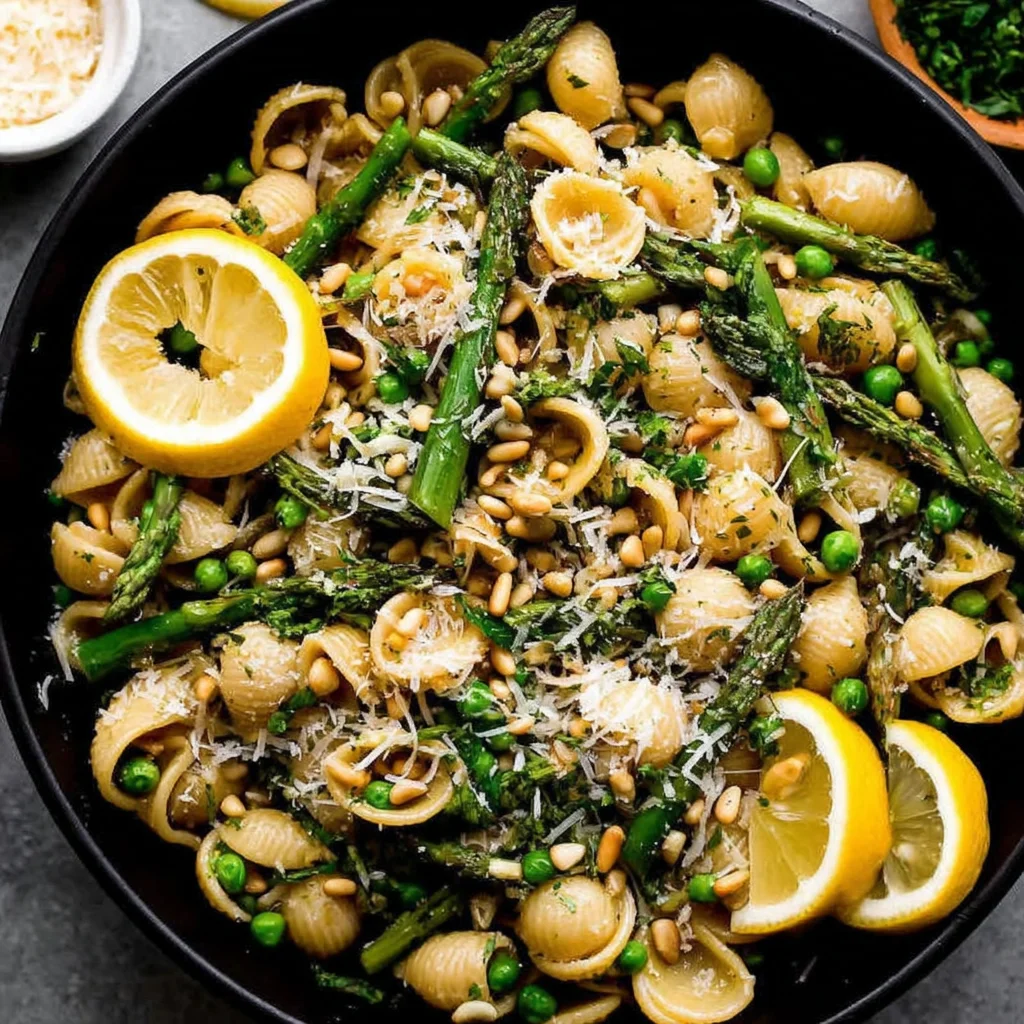
Tools You’ll Need
- Large pot for cooking pasta
- Large skillet (preferably non-stick or cast iron)
- Colander
- Large serving bowl
- Cutting board
- Sharp knife
- Microplane or fine grater for lemon zest and cheese
- Measuring cups and spoons
- Wooden spoon or tongs for stirring
Essential Success Tips
- Do not overcook the pasta initially; it should be al dente as it will finish cooking in the sauce.
- Always reserve extra pasta water. It's the secret ingredient for creating a silky, emulsified sauce.
- Watch pine nuts carefully while toasting; they can go from golden to burnt in a matter of seconds.
- Cook the asparagus until tender-crisp to retain its vibrant color and slight bite.
- Taste and adjust seasonings at the end. A little extra salt, pepper, or lemon juice can elevate the entire dish.
Professional Cooking Secrets
- The key to a truly great pasta dish is proper seasoning of the pasta water. It should be as salty as the sea to infuse flavor into the pasta from the start.
- For an extra layer of umami, consider adding a teaspoon of white miso paste to your pasta water or sauce. It dissolves seamlessly and deepens the savory notes without overpowering the spring flavors.
- When using fresh herbs, always add them at the very end, off the heat, to preserve their vibrant flavor and color. Heating them too much diminishes their aromatic compounds.
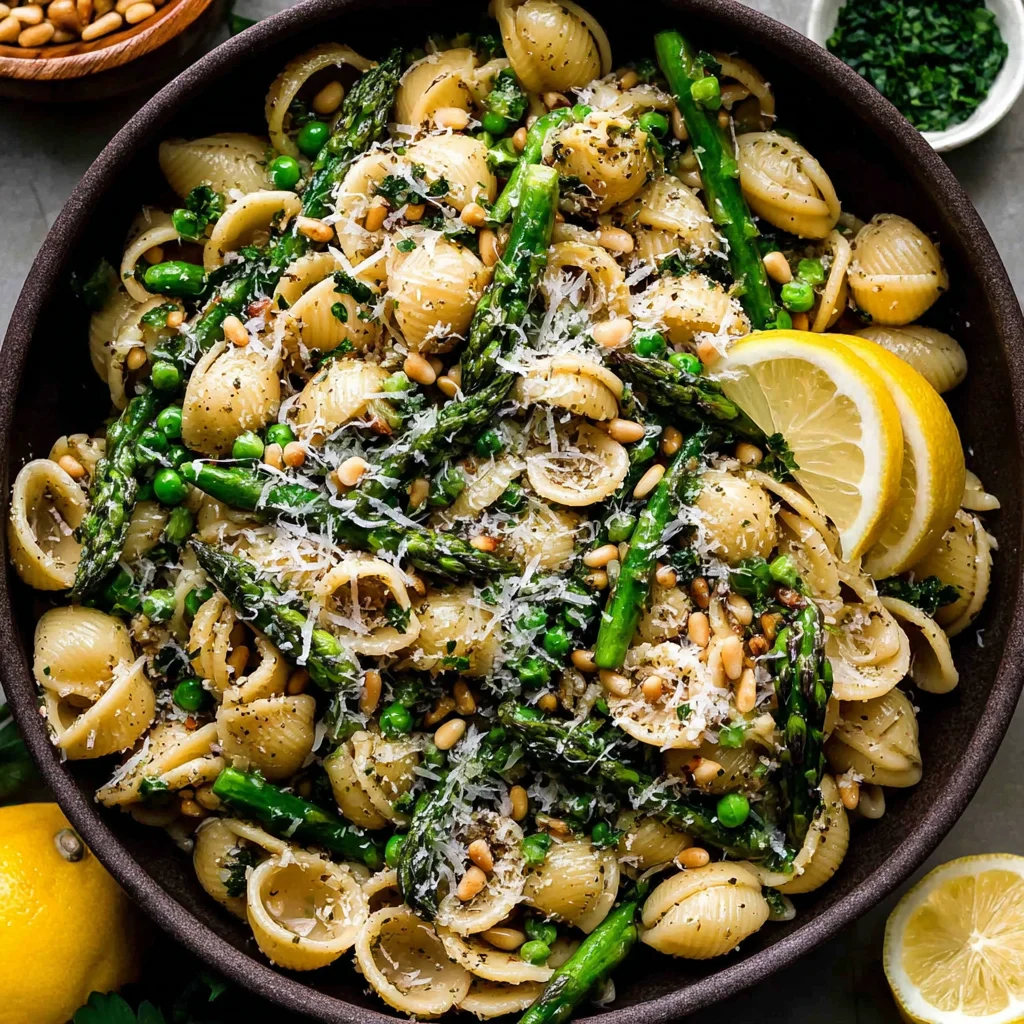
Notes
- Leftovers will keep well for up to 4 days covered in the refrigerator. Reheat gently with a splash of water or vegetable broth to loosen the sauce.
- For a richer flavor, you can add a tablespoon of crème fraîche or mascarpone along with the butter and cheese.
- To make this dish vegan, omit the Parmigiano-Reggiano and butter, and use a plant-based grated parmesan alternative. Ensure your pasta is egg-free if needed.
- Feel free to experiment with other spring vegetables like snap peas, fava beans, or thinly sliced radishes for added crunch.
Frequently Asked Questions
Can I use frozen asparagus or peas?
While fresh ingredients are always preferred for their vibrant texture and flavor, frozen asparagus and peas can certainly be used. Ensure frozen peas are defrosted before adding them to the skillet. For frozen asparagus, you might need to cook it for a minute or two less as it tends to be softer.
What kind of pasta works best for this dish?
Smaller shapes like conchiglie, orecchiette, or fusilli are excellent as they capture the sauce and small vegetables well. Linguine is also a great choice for a more traditional long pasta experience. Whole grain pasta can be used for added fiber and a nuttier flavor profile.
How can I make this dish spicier?
To add more heat, simply increase the amount of red pepper flakes when seasoning the shallots or add more at the end when adjusting seasonings. A pinch of cayenne pepper could also be used for a more intense kick.
Nutrition Facts (Per Serving)
Calories: 520, Protein: 25g, Fat: 28g, Carbs: 50g, Fiber: 8g (estimated per serving)
Allergy Information
Contains wheat (pasta) and dairy (Parmigiano-Reggiano, butter). May contain tree nuts (pine nuts). For a gluten-free version, use certified gluten-free pasta. For a dairy-free option, use a plant-based butter alternative and a vegan parmesan substitute.

No comment