
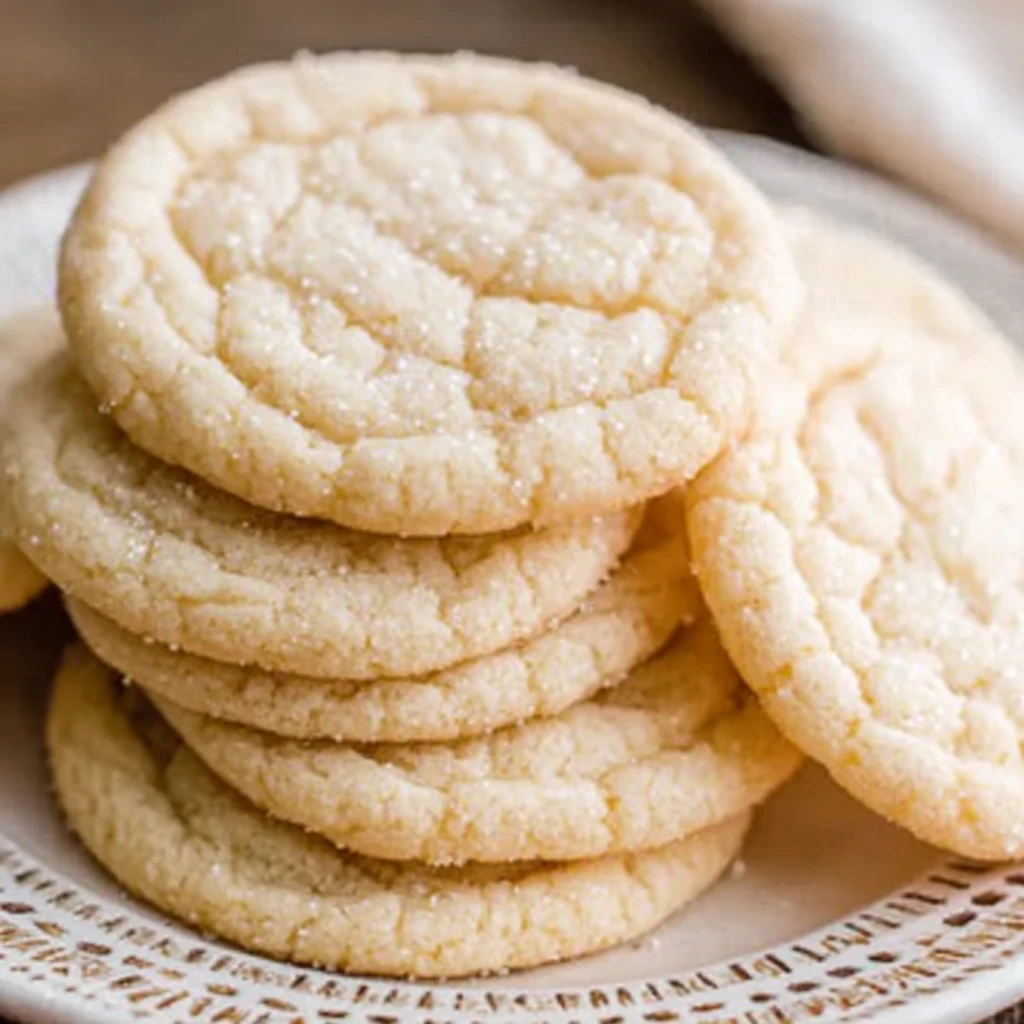
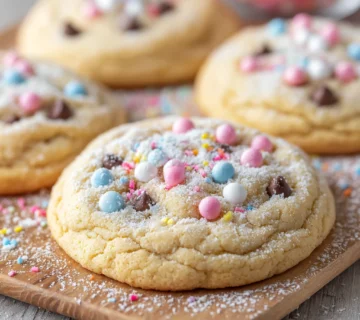
Soft and Chewy Sugar Cookies
Indulge in the nostalgic comfort of perfectly Soft and Chewy Sugar Cookies, a classic treat that promises a delightful texture and timeless flavor. These cookies boast a delicate crisp edge, a wonderfully soft interior, and a delightful sweetness, making them an irresistible choice for any occasion. Simple to master, this recipe is a cherished favorite that will bring a smile to every face.
Prep Time
20 minutes
Cook Time
8-10 minutes
Total Time
40 minutes (including cooling)
Servings
Makes about 36 cookies
Keywords
Why This Recipe Delivers
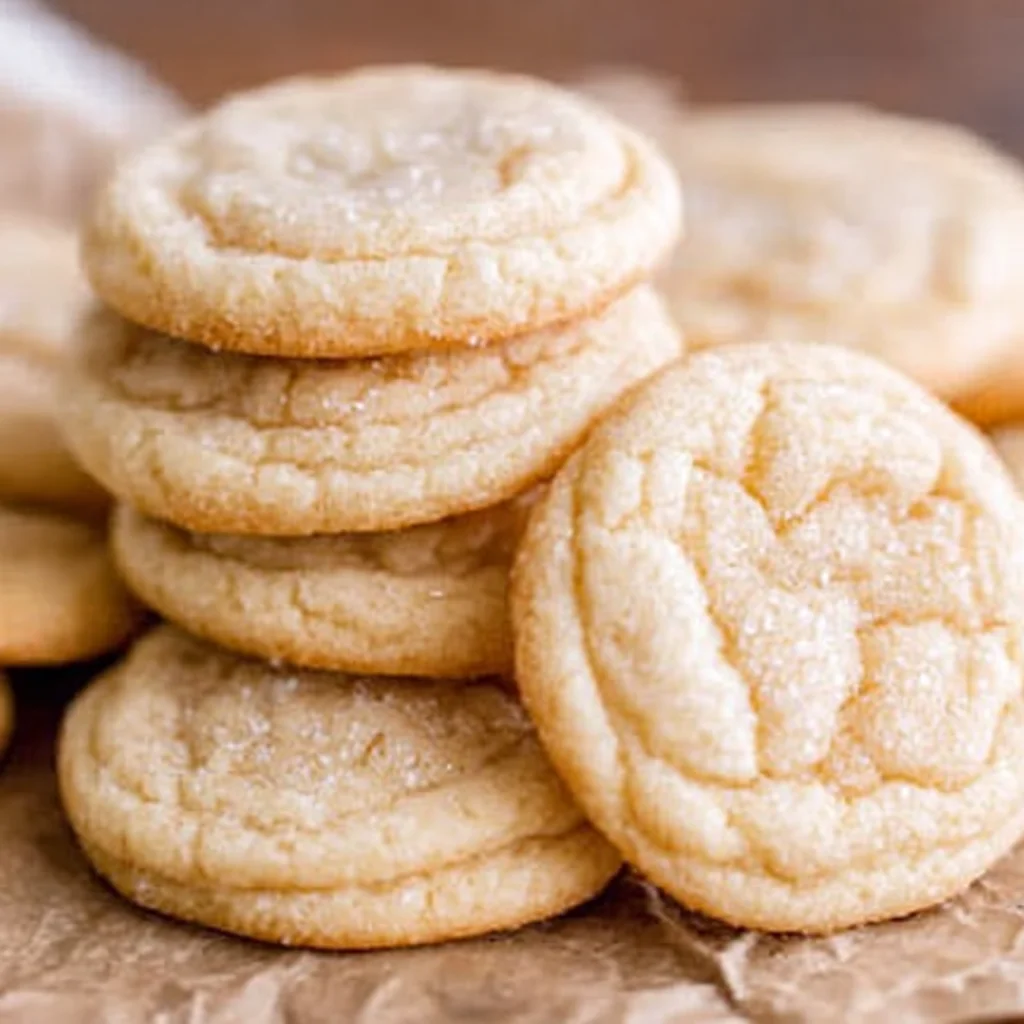
- Achieves the perfect balance of soft, chewy, and slightly crisp texture.
- A timeless, comforting classic that appeals to all ages.
- Remarkably easy to make, even for novice bakers.
- Versatile for any occasion, from everyday treats to festive gatherings.
- Infused with a rich vanilla flavor that shines through.
Ingredients
- 300g (2 ½ cups) all-purpose flour
- 2.5g (½ teaspoon) baking powder
- 2.5g (½ teaspoon) baking soda
- 2.5g (½ teaspoon) salt
- 170g (¾ cup / 1 ½ sticks) unsalted butter, softened at room temperature but still slightly cool
- 250g (1 ¼ cups) granulated sugar
- 1 large egg
- 1 egg yolk
- 10ml (2 teaspoons) vanilla extract
- 50g (¼ cup) granulated sugar, for rolling
Instructions
- Preheat your oven to 175°C (350°F). Line several baking sheets with high-quality parchment paper to prevent sticking and ensure even baking. This preparation ensures your cookies cook consistently without scorching on the bottom.
- In a medium mixing bowl, thoroughly whisk together the all-purpose flour, baking powder, baking soda, and salt. This dry ingredient blend is crucial for evenly distributing the leavening agents and salt, which are key to achieving a consistent texture and balanced flavor in every cookie.
- Using a stand mixer fitted with the paddle attachment, or a hand mixer, beat together the softened unsalted butter and granulated sugar until the mixture becomes light and creamy. Start on a low speed to incorporate the ingredients, then increase to medium-high speed. This creaming process incorporates air, which contributes to the cookies' soft texture. Next, add the large egg, egg yolk, and vanilla extract, mixing on medium speed until they are fully incorporated. Remember to scrape down the sides of the bowl as needed to ensure all ingredients are thoroughly combined.
- Gradually add the whisked dry ingredients to the wet mixture in the mixer bowl. Mix on low speed just until combined. Be careful not to overmix at this stage, as overworking the gluten in the flour can lead to tough cookies. The dough will be fairly firm and pliable.
- Roll the dough into uniform 2.5 cm (1-inch) balls. If desired, gently roll each dough ball in granulated sugar for an extra sparkle and a slight crunch on the exterior. Place these sugared dough balls on your parchment-lined baking sheets, ensuring they are spaced about 7.5 cm (3 inches) apart to allow for spreading during baking. Bake one pan of cookies at a time for 8-10 minutes, or until the tops are almost set and the bottoms are just lightly golden brown. For the signature soft and chewy texture, it is critical not to overbake; the cookies may still appear slightly puffy when removed from the oven but will flatten and set as they cool on the baking sheet.
Tools You’ll Need
- Stand mixer with paddle attachment (or hand mixer)
- Medium mixing bowls
- Measuring cups and spoons
- Parchment paper
- Baking sheets
- Whisk
- Rubber spatula
Essential Success Tips
- Ensure your butter is at the correct room temperature – soft enough to indent with a finger, but still slightly cool to the touch. This affects the creaming process and cookie spread.
- Measure your flour accurately by spooning it into a measuring cup and then leveling off, rather than scooping directly from the bag, which can compact it and lead to dry cookies.
- Do not overbake the cookies. For soft and chewy results, pull them from the oven when the edges are just set and lightly golden, even if the centers look slightly underdone. They will continue to set as they cool.
- Use parchment paper for easy cleanup and to prevent sticking. It also helps in achieving even browning on the bottoms of the cookies.
- Space cookies adequately on the baking sheet (at least 7.5 cm / 3 inches apart) to prevent them from merging as they spread during baking.
Professional Cooking Secrets
- For an even richer flavor and enhanced chewiness, consider substituting a small portion (about 25g / 2 tablespoons) of the granulated sugar with light brown sugar.
- Chilling the dough for at least 30 minutes, or even an hour, can significantly reduce cookie spread, resulting in thicker, chewier cookies and making the dough easier to handle, especially in warmer kitchens.
- Invest in a high-quality vanilla extract. The prominent vanilla flavor is key to these cookies, and a good extract will elevate the taste considerably compared to artificial alternatives.
Notes
- Storage: Store cooled cookies in an airtight container at room temperature for up to 5 days. For longer storage, freeze baked cookies in a freezer-safe bag or container for up to 2 months.
- Dough can be made ahead: The cookie dough can be prepared and stored, tightly wrapped, in the refrigerator for up to 3 days. Allow it to come closer to room temperature for easier rolling.
- Variations: Before baking, gently press the tops of the dough balls with the bottom of a glass for a flatter cookie, or add a pinch of flaky sea salt for a sweet and salty twist.
Frequently Asked Questions
Why did my sugar cookies spread too much?
Excessive spreading is often due to butter being too warm or over-creamed, too little flour, or not chilling the dough. Ensure your butter is slightly cool to the touch, and consider chilling the dough for at least 30 minutes before baking.
Can I use powdered sugar instead of granulated sugar?
While both are sugar, they have different properties. Powdered sugar contains cornstarch, which will result in a softer, more delicate cookie that may not hold its shape as well or brown the same way. For this recipe, granulated sugar is essential for the desired texture.
How do I make my sugar cookies stay soft?
The key to soft sugar cookies is to avoid overbaking. Take them out of the oven when the edges are just set and lightly golden, even if the centers look slightly underdone. They will firm up as they cool. Storing them in an airtight container also helps retain moisture.
Nutrition Facts (Per Serving)
Per cookie (estimated): Calories: ~100-120, Protein: 1-2g, Fat: 5-7g, Carbs: 12-15g. (These values are estimates and can vary based on specific ingredient brands and preparation.)
Allergy Information
Contains dairy (butter), eggs, and gluten (all-purpose flour). For a gluten-free option, use a 1:1 gluten-free all-purpose flour blend. Always check ingredient labels for cross-contamination if allergies are severe.



No comment