
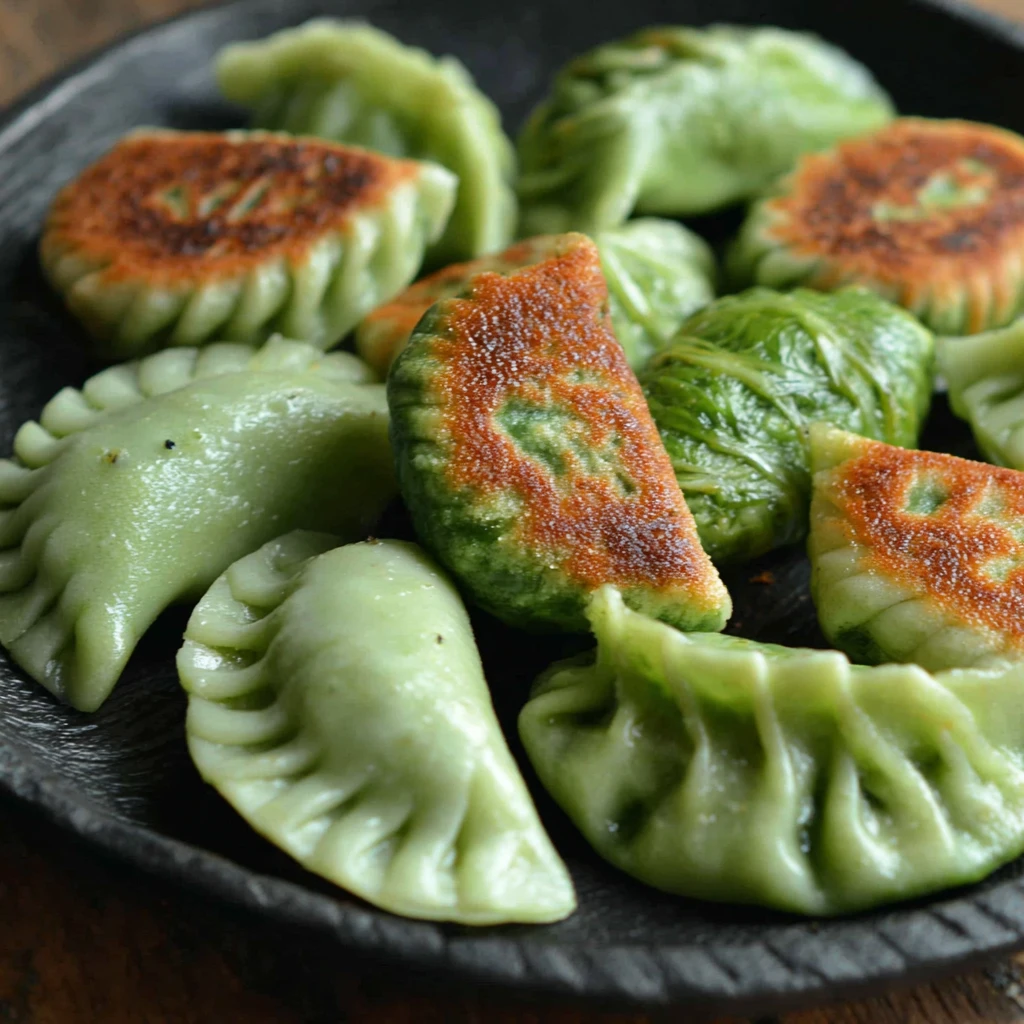
Pan-fried vegetarian dumplings / potstickers
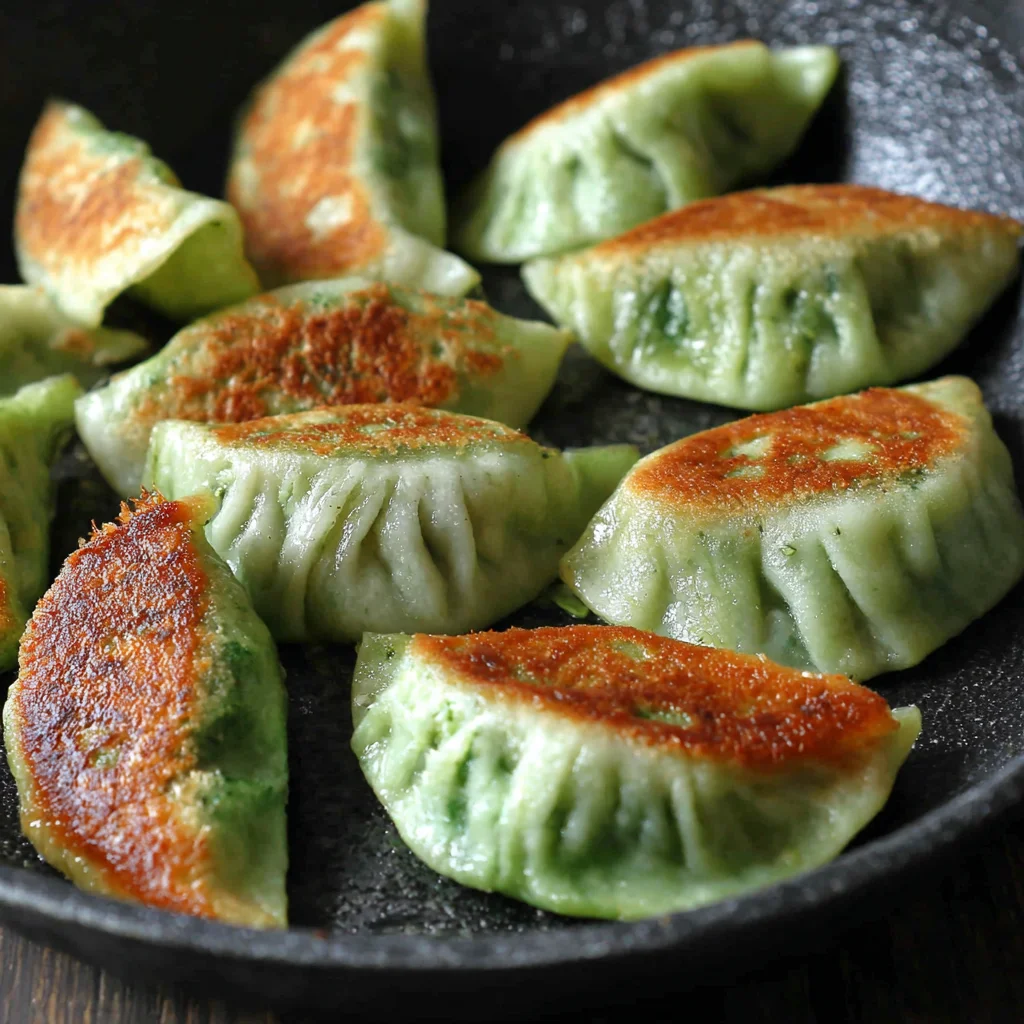
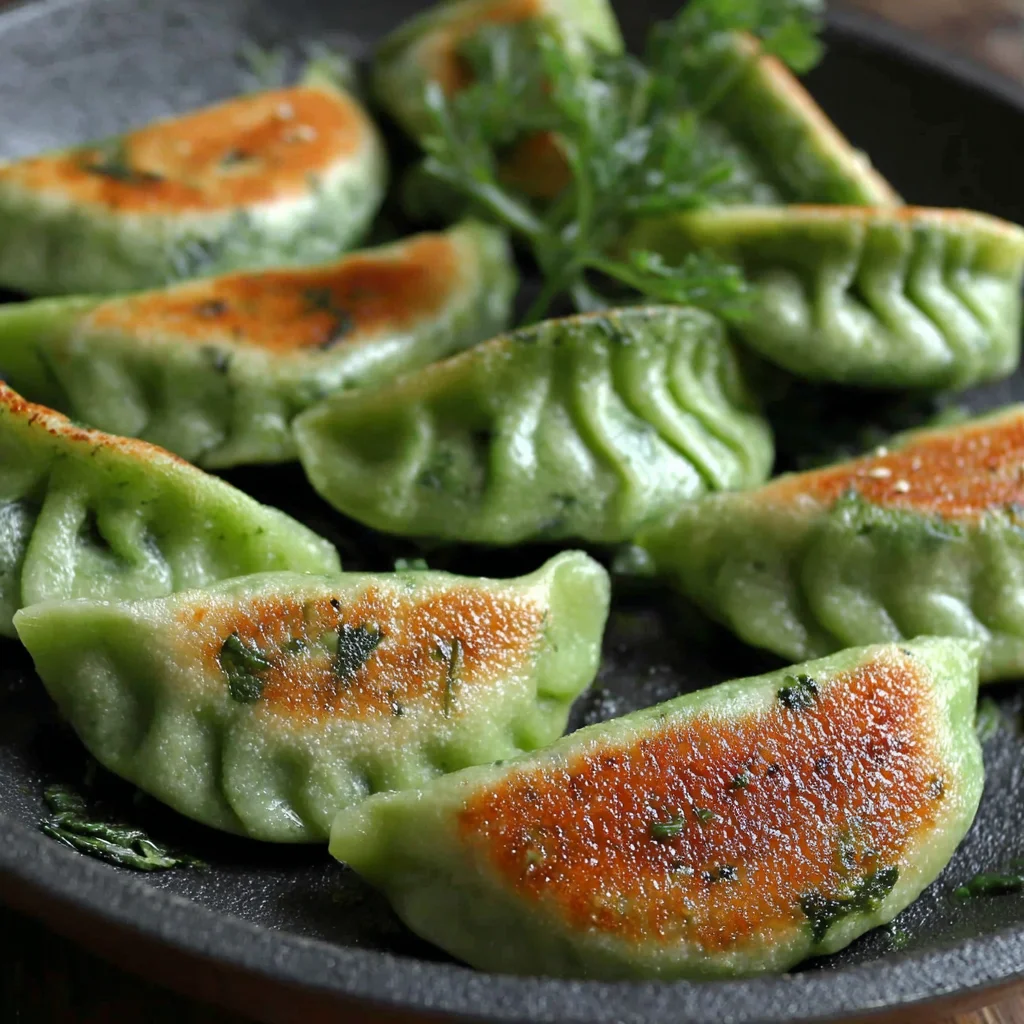
Uncover the magic of homemade, pan-fried vegetarian potstickers, boasting a striking two-tone green and white wrapper. These delightful dumplings are filled with a savory medley of fresh vegetables and aromatic spices, offering a burst of flavor in every bite. Perfectly crispy on the bottom and tender on top, they are an impressive yet approachable dish for any occasion.
Prep Time
1 hour 30 minutes
Cook Time
20 minutes
Total Time
1 hour 50 minutes
Servings
4-6 servings (approximately 25-30 dumplings)
Keywords

Why This Recipe Delivers
- Visually stunning with vibrant two-tone wrappers.
- Packed with fresh vegetables and rich, savory flavors.
- Offers a delightful contrast of crispy bottom and tender top textures.
- A healthier and incredibly satisfying vegetarian meal option.
- Perfect for meal prep or a fun cooking project with friends and family.
Ingredients
- 150 g (5 oz) fresh spinach
- 300 g (2 1/3 cups) all-purpose flour, plus extra for dusting
- Approximately 75 ml (5 tablespoons) water (for white dough)
- 200 g Pak Choi, or Chinese cabbage
- 60 g carrot
- 5 dried Shiitake mushrooms, pre-soaked until tender (see note 1)
- 30 g dried mung bean vermicelli noodles, pre-soaked until soft
- 1 large egg, beaten
- 1 stalk spring onion, finely chopped
- 1/2 teaspoon minced fresh ginger
- 1 pinch ground Sichuan pepper
- 1 tablespoon cooking oil (for filling)
- 1 teaspoon salt
- Cooking oil, for pan-frying
Instructions
- Prepare the spinach juice. Briefly blanch the fresh spinach in boiling water for about 30 seconds until just wilted. Immediately transfer it to an ice bath to stop cooking, then drain well. Transfer the blanched spinach to a food processor and puree until smooth. Use a fine sieve to extract approximately 75 ml (5 tablespoons) of spinach juice from the puree. If you don't yield enough juice, add a small amount of water to reach the desired volume. Set both the spinach juice and the remaining spinach puree aside separately; the puree will be used in the filling.
- Make the dough in two colours. Divide the 300 g of all-purpose flour into two equal portions, approximately 150 g each. To one portion of flour, gradually add about 75 ml (5 tablespoons) of water, mixing until a shaggy dough forms, then knead on a lightly floured surface for 5-7 minutes until it becomes a smooth, elastic white dough. To the second portion of flour, gradually add the reserved spinach juice, mixing and kneading in the same manner until a smooth, vibrant green dough forms.
- Rest the dough. Place both the white and green doughs in separate bowls, cover them with a damp cloth or plastic wrap to prevent drying, and let them rest at room temperature for at least 30 minutes. This resting period allows the gluten to relax, making the dough easier to roll and more pliable (see note 2).
- Mince the filling vegetables. While the dough is resting, prepare the filling. Finely mince the Pak Choi (or Chinese cabbage), carrot, pre-soaked Shiitake mushrooms, and pre-soaked mung bean vermicelli noodles. You can chop them with a sharp knife or use a food processor for a finer texture.
- Squeeze out excess water. It is crucial to firmly squeeze out any excess water from the minced vegetables using your hands. This step prevents the filling from becoming watery, which can lead to soggy dumplings and difficulty in sealing. Place the squeezed vegetables in a large mixing bowl.
- Combine the filling ingredients. To the squeezed vegetables, add the reserved spinach puree and the beaten egg. Next, arrange the finely chopped spring onion, minced ginger, and a pinch of ground Sichuan pepper on top of the vegetable mixture. Heat 1 tablespoon of cooking oil in a small pan until it is shimmering hot, then carefully pour the hot oil directly over the spring onion, ginger, and Sichuan pepper. This technique helps to bloom their aromatic flavors. Finally, add the salt and thoroughly mix all the ingredients together until well combined and evenly distributed (see note 3).
- Roll the wrappers. Once the dough has rested, divide each colored dough into two equal portions. Take one portion of the white dough and roll it into a long, uniform rope, approximately 2 cm in diameter. Take one portion of the green dough and flatten it into a rectangular piece that is roughly the same length as the white dough rope and wide enough to completely wrap around it. Carefully place the white dough rope onto the green dough rectangle, wrap the green dough around the white, and pinch the seam to seal it completely. Gently roll the combined dough rope to ensure a smooth, secure bond and an even thickness. Repeat with the remaining dough portions. Slice the combined dough ropes into small, uniform pieces, each weighing approximately 10-12 grams. Lightly dust your work surface with flour. Flatten each dough piece with the palm of your hand, then use a small rolling pin to roll it into a thin, circular wrapper, about 7-8 cm (3 inches) in diameter. Aim for edges that are slightly thinner than the center for easier pleating.
- Fill and fold the dumplings. Hold a wrapper in the palm of your hand. Place about 1 teaspoon of the prepared filling in the center of the wrapper. Moisten the edges of the wrapper lightly with water. Fold the wrapper in half to create a crescent shape, bringing the edges together. Starting from one end, create small, decorative pleats along the curved edge, pressing firmly to seal each pleat and ensure no gaps remain. Ensure the dumpling is tightly sealed to prevent the filling from escaping during cooking. Repeat this process with the remaining wrappers and filling, placing the finished dumplings on a lightly floured tray, ensuring they do not touch.
- Pan-fry the dumplings. Heat a large non-stick frying pan over medium-high heat and add 1-2 tablespoons of cooking oil. Once the oil is hot, carefully arrange the dumplings in a single layer in the pan, ensuring they do not touch each other. Sear the dumplings for 2-3 minutes until their bottoms are golden brown and beautifully crispy. Carefully pour about 120 ml (1/2 cup) of water into the pan, immediately cover it with a tight-fitting lid, and reduce the heat to medium-low. Steam the dumplings for 8-10 minutes, or until the water has evaporated and the filling is cooked through. Remove the lid and continue to cook for another 1-2 minutes if needed, allowing the bottoms to crisp up again. Serve hot with your favorite dipping sauce.
Tools You’ll Need
- Food processor (optional, for spinach and vegetables)
- Fine mesh sieve
- Large mixing bowls
- Rolling pin
- Sharp knife or chopping board
- Measuring cups and spoons
- Large non-stick frying pan with lid
- Damp cloth or plastic wrap
Essential Success Tips
- Do not over-blanch the spinach; a quick dip is enough to preserve its color and nutrients for the juice.
- When kneading, ensure both doughs are smooth and elastic. If too sticky, add a tiny bit more flour; if too dry, add a few drops of water.
- Always squeeze excess water from the filling vegetables to prevent soggy wrappers and ensure a firm filling.
- Roll wrappers with slightly thinner edges than the center; this makes folding easier and prevents thick, doughy edges.
- Ensure your pan-frying oil is hot enough before adding dumplings to achieve a truly crispy bottom.
Professional Cooking Secrets
- For an extra layer of flavor in your filling, consider briefly toasting the mung bean vermicelli before soaking to bring out a nutty aroma.
- Achieve perfect pleats by lightly moistening the wrapper edge with water, then firmly pressing each pleat together to create a strong seal that won't burst during cooking.
- Experiment with different dipping sauces; a classic soy-ginger-rice vinegar blend works beautifully, but a spicy chili oil or a nutty sesame sauce can elevate the experience.
Notes
- Note 1: To pre-soak dried Shiitake mushrooms, place them in a bowl and cover with hot water for at least 30 minutes, or until fully rehydrated and soft. Squeeze out excess water before mincing. You can reserve the soaking liquid for other recipes like broths.
- Note 2: The dough resting period is crucial for gluten development and relaxation. If you skip this step, the dough will be tough and difficult to roll thinly.
- Note 3: Pouring hot oil over the aromatics (spring onion, ginger, Sichuan pepper) in the filling helps to 'bloom' their flavors, infusing the entire mixture with a more intense and complex aroma.
- Storage: Uncooked dumplings can be frozen on a lightly floured baking sheet until solid, then transferred to an airtight container or freezer bag for up to 2-3 months. Cook from frozen, adding a few extra minutes to the steaming time. Cooked dumplings can be stored in the refrigerator for 2-3 days and reheated in a pan or steamer.
Frequently Asked Questions
Can I make these dumplings gluten-free?
While the recipe uses all-purpose flour, you can experiment with a gluten-free all-purpose flour blend specifically designed for pasta or dumplings. Be aware that the texture and elasticity might differ slightly, and you may need to adjust the water content.
What kind of dipping sauce pairs best with these potstickers?
A classic dipping sauce includes soy sauce, rice vinegar, a touch of sesame oil, and minced ginger. For a spicier kick, add chili garlic sauce or red pepper flakes. A simple blend of soy sauce and black vinegar is also a popular choice.
Can I use fresh mushrooms instead of dried Shiitake?
Yes, you can use fresh Shiitake mushrooms or other fresh mushrooms like cremini. However, dried Shiitake mushrooms offer a more intense, umami flavor profile after rehydration. If using fresh, make sure to sauté them lightly first to release their moisture and enhance their flavor before adding to the filling.
Nutrition Facts (Per Serving)
Per serving (approximately 5-6 dumplings): Calories: 380, Protein: 12g, Fat: 15g, Carbs: 48g, Fiber: 6g.
Allergy Information
Contains gluten (from flour) and egg. This recipe is suitable for vegetarians. For a vegan version, omit the egg and use a flax egg or other binder, and ensure all oil is plant-based.


No comment