
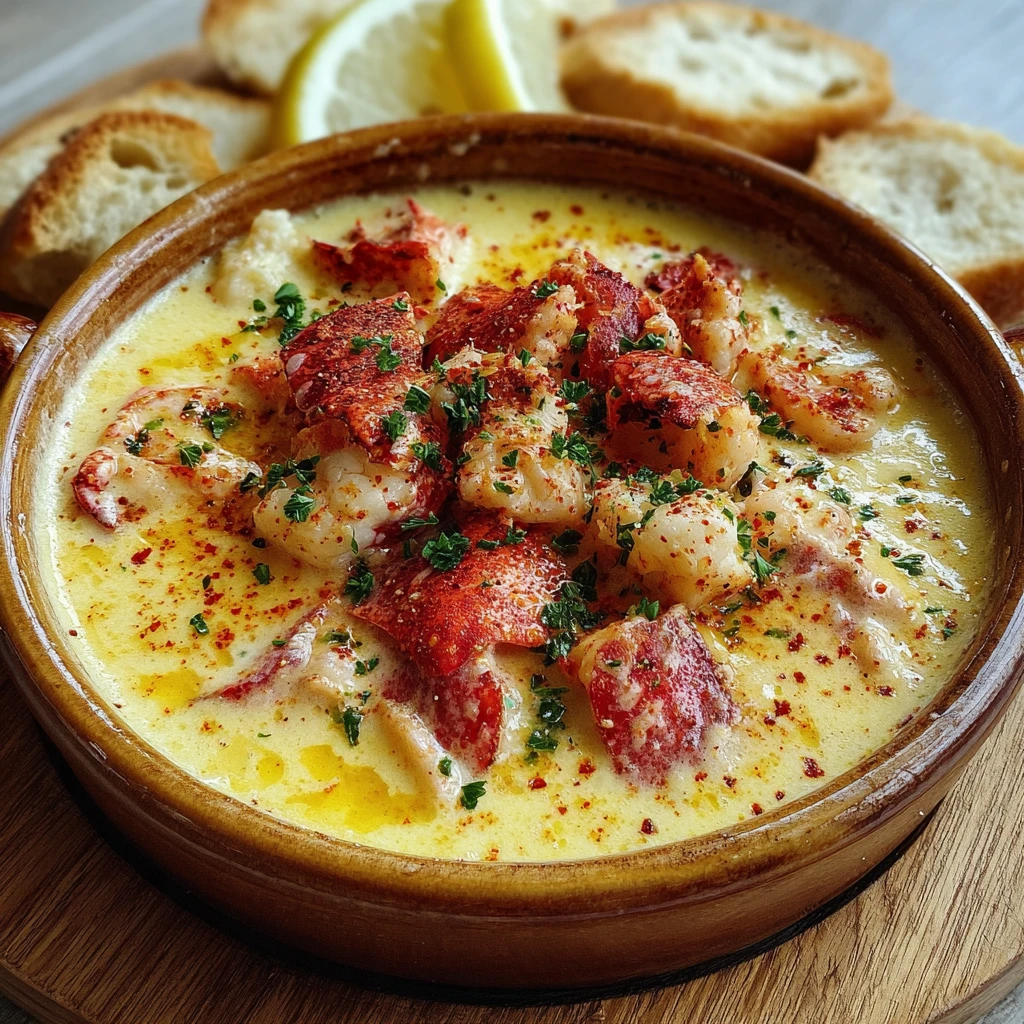
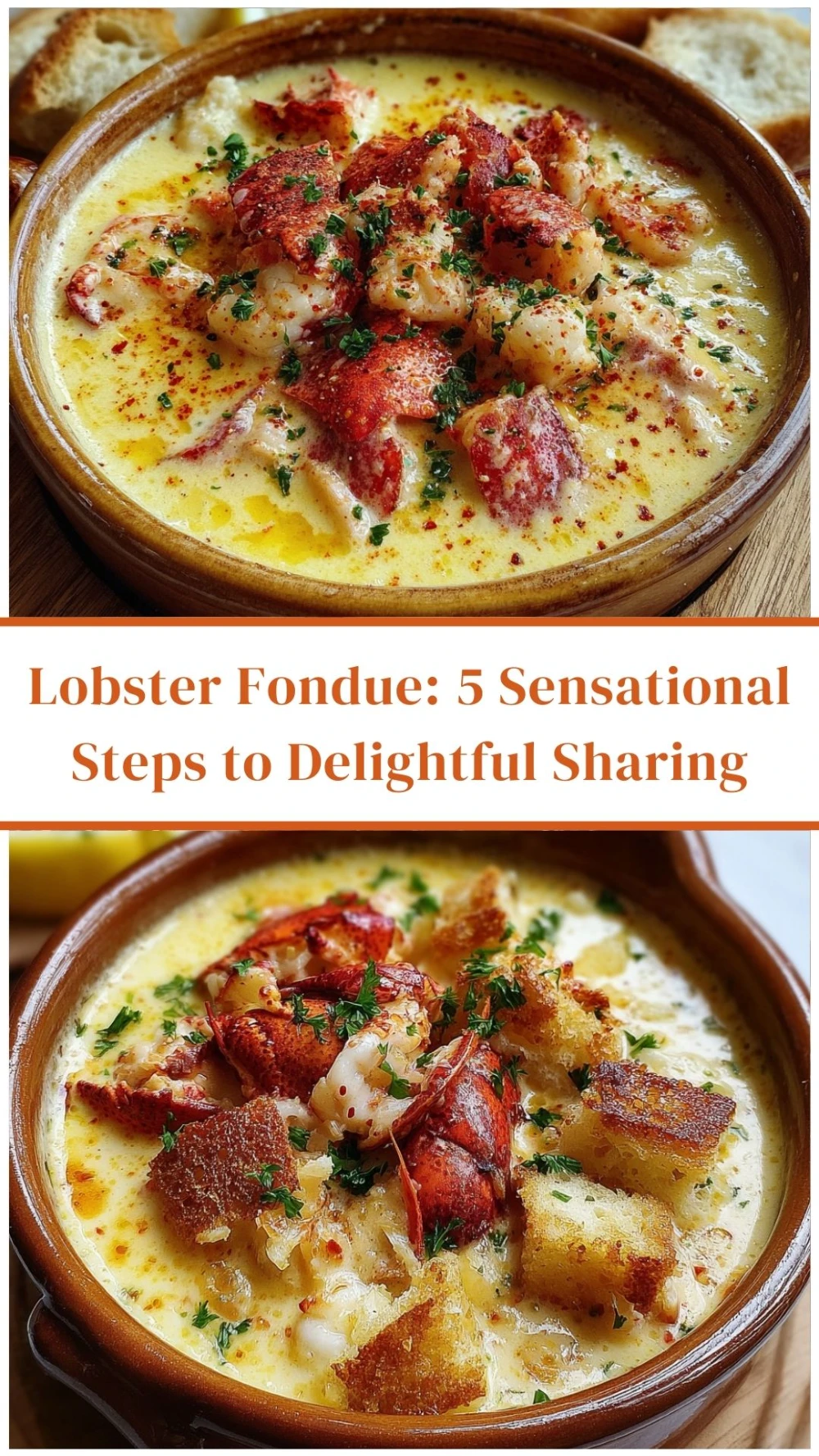
Lobster Fondue: 5 Sensational Steps to Delightful Sharing
Elevate your entertaining with this exquisite Lobster Fondue, a dish that combines the rich sweetness of succulent lobster with the creamy indulgence of melted Gruyere. Crafted in just 5 simple steps, this recipe transforms a classic appetizer into a gourmet experience, perfect for intimate gatherings or special occasions. Its velvety texture and delicate flavors promise a truly delightful culinary adventure.
Prep Time
20 minutes
Cook Time
15 minutes
Total Time
35 minutes
Servings
4-6 generous servings
Keywords
Why This Recipe Delivers
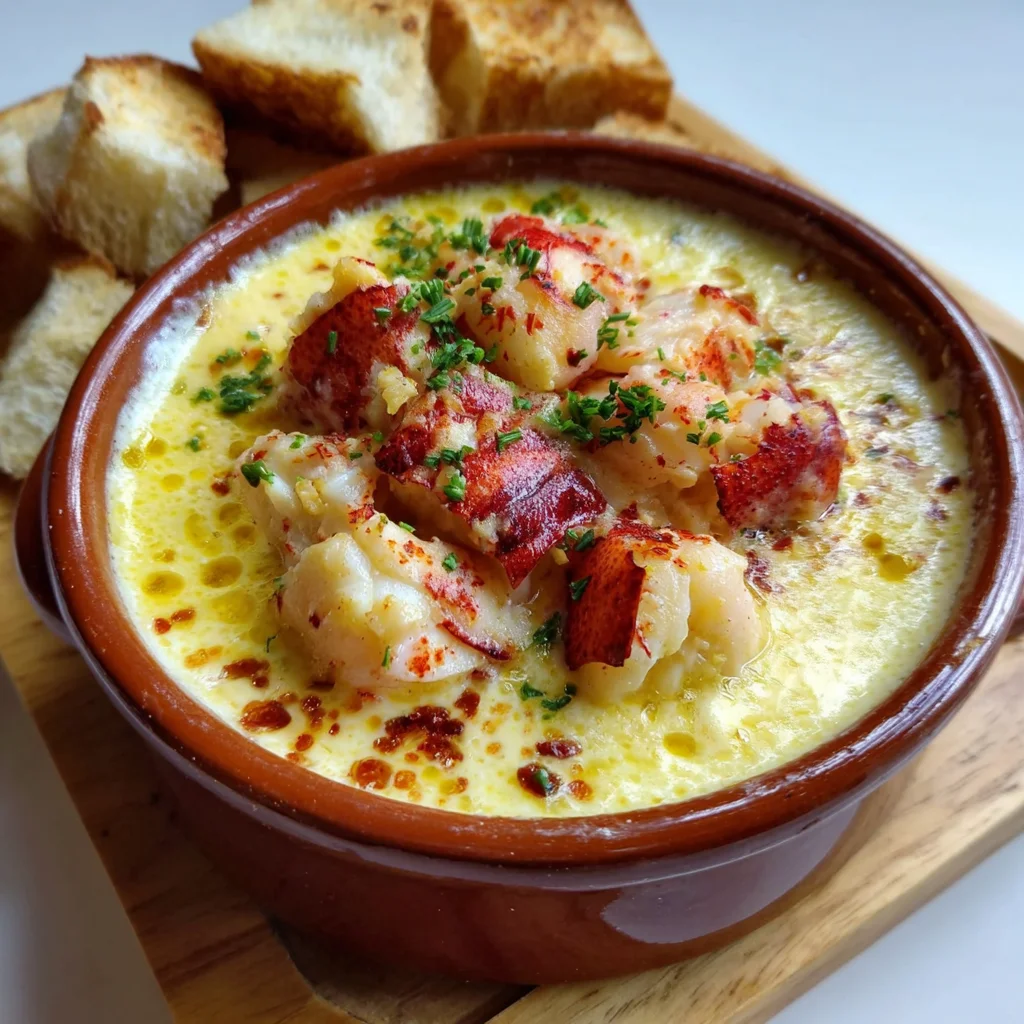
- Luxurious Flavor Profile: Combines the sweet, delicate taste of lobster with the nutty, creamy richness of Gruyere cheese for an unforgettable experience.
- Effortlessly Elegant: Looks incredibly impressive and sophisticated, yet is surprisingly simple to prepare in minutes.
- Perfect for Sharing: An interactive and convivial dish ideal for intimate gatherings, dinner parties, or any special occasion.
- Versatile Dipping Options: Pairs beautifully with a wide range of dippers, from crusty bread and roasted vegetables to fresh fruit.
- Quick Gourmet Experience: Delivers a high-end restaurant feel with minimal fuss and a relatively short cooking time.
Ingredients
- 450 grams (1 pound) cooked lobster meat, roughly chopped into bite-sized pieces
- 200 grams (2 cups) Gruyere cheese, freshly shredded
- 240 milliliters (1 cup) heavy cream (35% fat)
- 120 milliliters (1/2 cup) dry white wine, such as Sauvignon Blanc or Pinot Grigio
- 30 milliliters (2 tablespoons) fresh lemon juice
- 15 grams (1 tablespoon) garlic, very finely minced
- 2 grams (1 teaspoon) sweet paprika
- Fine sea salt and freshly ground black pepper, to taste
- 1 large crusty baguette, cut into 2.5 cm (1-inch) cubes, or an assortment of dippers like roasted potatoes or blanched asparagus
Instructions
- In a medium-sized, heavy-bottomed saucepan or Dutch oven, combine the heavy cream, dry white wine, fresh lemon juice, and minced garlic. Stir gently to integrate these foundational liquids and aromatics, ensuring they are well mixed before heating.
- Place the saucepan over medium heat, allowing the mixture to warm gradually. Bring it to a gentle simmer, just until small bubbles begin to form around the edges. It is crucial not to let it boil vigorously, as this intense heat can negatively affect the cheese texture later. Warming it sufficiently now ensures the cheese will melt smoothly and without clumping.
- Reduce the heat to low and begin adding the freshly shredded Gruyere cheese in small handfuls, stirring continuously with a wooden spoon or silicone spatula. Wait for each addition to almost fully melt and incorporate into the liquid before adding the next portion. This gradual process is key to preventing the cheese from clumping and ensures a silky, homogenous fondue texture. Continue stirring until all the cheese is melted and the fondue is smooth, glossy, and beautifully emulsified.
- Gently fold in the chopped cooked lobster meat and the sweet paprika into the melted cheese mixture. Stir just enough to distribute the lobster and paprika evenly throughout the fondue, being careful not to overmix, which could break down the delicate lobster pieces. The goal here is primarily to warm the lobster through while infusing it with the fondue's rich flavors.
- Taste the fondue and season generously with fine sea salt and freshly ground black pepper. Remember that cheese itself can contribute saltiness, so add salt incrementally, tasting after each addition. Adjust seasonings as needed to achieve a perfectly balanced, savory profile that highlights both the sweetness of the lobster and the nutty depth of the cheese.
- Carefully transfer the luxurious lobster fondue to a preheated fondue pot. Light the burner underneath to keep the fondue warm and perfectly dippable throughout your meal. Maintaining a constant, gentle heat is crucial to prevent the fondue from solidifying or separating, ensuring its creamy consistency endures.
- Serve the warm lobster fondue immediately with an array of complementary dippers. Crusty bread cubes are a traditional and excellent choice, but consider offering blanched asparagus spears, roasted new potatoes, or even crisp apple slices for varied textures and flavors that enhance the experience.
Tools You’ll Need
- Heavy-bottomed saucepan or Dutch oven
- Wooden spoon or silicone spatula
- Measuring cups and spoons
- Grater for cheese (if using a block of Gruyere)
- Fondue pot with burner (chafing dish alternative if fondue pot is unavailable)
- Sharp knife and cutting board
Essential Success Tips
- Use freshly shredded cheese: Pre-shredded cheeses often contain anti-caking agents that can make your fondue grainy or inhibit smooth melting. Freshly shredded Gruyere will melt into a much silkier, more consistent fondue.
- Gradual cheese addition is key: Always add the cheese a little at a time, stirring constantly until each batch is fully melted and incorporated before adding more. This technique is vital for achieving a perfectly smooth, stable, and emulsified fondue.
- Maintain low heat throughout: Never allow the fondue to come to a rapid boil once the cheese has been added, as high heat can cause the cheese to separate and become oily or rubbery. Keep the heat at a gentle simmer or very low once the cheese is melted.
- Prepare your dippers well: Ensure all your chosen dippers are bite-sized and sturdy enough to hold up in the rich fondue without breaking apart. Toasting bread cubes lightly can add extra texture and prevent them from getting soggy too quickly.
- Do not overmix the lobster: Once the cooked lobster meat is added, stir it in gently just enough to combine and warm through. Overmixing can break down the delicate texture of the lobster meat, diminishing its appeal.
Professional Cooking Secrets
- To guarantee against separation and achieve an exceptionally silky texture, whisk a teaspoon of cornstarch (mixed with a tablespoon of cold water) into the cold cream and wine mixture before you begin heating. This acts as a powerful stabilizer, ensuring a robust emulsion that holds beautifully, especially when kept warm in a fondue pot for an extended period.
- For an added layer of nuanced complexity, briefly infuse your dry white wine with a small bay leaf and a few black peppercorns over low heat for about 10 minutes, then strain before adding it to the cream mixture. This subtle aromatic background will elevate the overall flavor profile without overpowering the star ingredients.
- Consider a subtle splash of high-quality dry sherry or a good brandy (approximately 15 milliliters or 1 tablespoon) along with the white wine. This addition introduces a deeper, more sophisticated boozy note that perfectly complements the rich, nutty cheese and the sweet essence of the lobster.
Notes
- Storage: Leftover fondue can be stored in an airtight container in the refrigerator for up to 2 days. To reheat, gently warm over very low heat on the stovetop, stirring constantly. If it appears too thick, add a small splash of milk or white wine (about 15-30ml / 1-2 tablespoons) until the desired consistency is achieved.
- Variations: For an even richer, deeper umami flavor, consider adding a tiny pinch of freshly grated nutmeg or a dash of white truffle oil (use sparingly) to the fondue. If Gruyere cheese is unavailable, high-quality Emmental or a blend of Fontina and Comté can be substituted for similar melting characteristics and flavor profiles.
- Make-ahead tip: You can prep and chop the cooked lobster, shred the cheese, and mince the garlic a day in advance. Store each component separately in airtight containers in the refrigerator to streamline your cooking process on the day of serving.
Frequently Asked Questions
Can I use frozen lobster meat for this fondue, and if so, how should I prepare it?
Yes, you can absolutely use frozen lobster meat. Ensure it is fully thawed in the refrigerator overnight and thoroughly drained of any excess moisture before chopping and adding it to the fondue. Patting the thawed lobster dry with paper towels will help prevent watering down the rich fondue consistency.
What kind of white wine is best for lobster fondue to achieve the desired flavor?
A dry, crisp white wine is ideal for this lobster fondue. Excellent choices include Sauvignon Blanc, Pinot Grigio, or even an unoaked Chardonnay. It's important to avoid sweet or heavily oaked wines, as they will alter the delicate savory balance and potentially clash with the natural sweetness of the lobster.
My fondue is separating or appears lumpy. What might have gone wrong, and can I fix it?
Separation or lumpiness most commonly occurs from heating the cheese too quickly, at too high a temperature, or from not adding it gradually enough. If your fondue separates, try whisking in a very small amount of warm milk or white wine (about 15-30ml / 1-2 tablespoons) very slowly over extremely low heat. This can sometimes help re-emulsify the mixture. Ensure you maintain gentle heat and continuous stirring going forward.
Nutrition Facts (Per Serving)
Calories: Approximately 480 per serving, Protein: 35g, Fat: 35g, Carbohydrates: 10g, Sodium: 650mg. (These are estimated values for one of 6 servings and do not include the nutritional content of dippers.)
Allergy Information
This dish contains common allergens: dairy (from the Gruyere cheese and heavy cream) and shellfish (from the lobster). For individuals with gluten sensitivities, the fondue itself is naturally gluten-free; ensure to serve with appropriate gluten-free dippers. There are no practical dairy-free alternatives that would replicate the flavor and texture of this specific recipe without significant modification.



No comment