
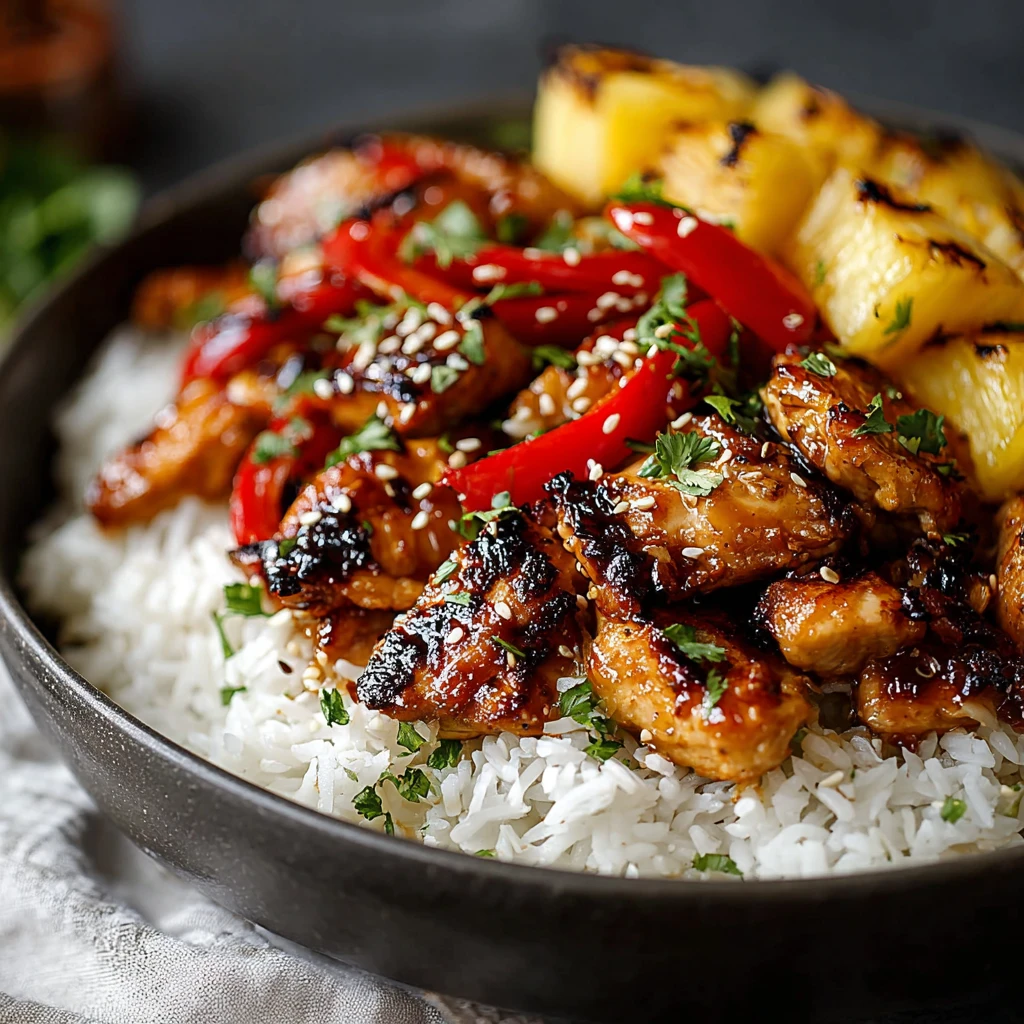
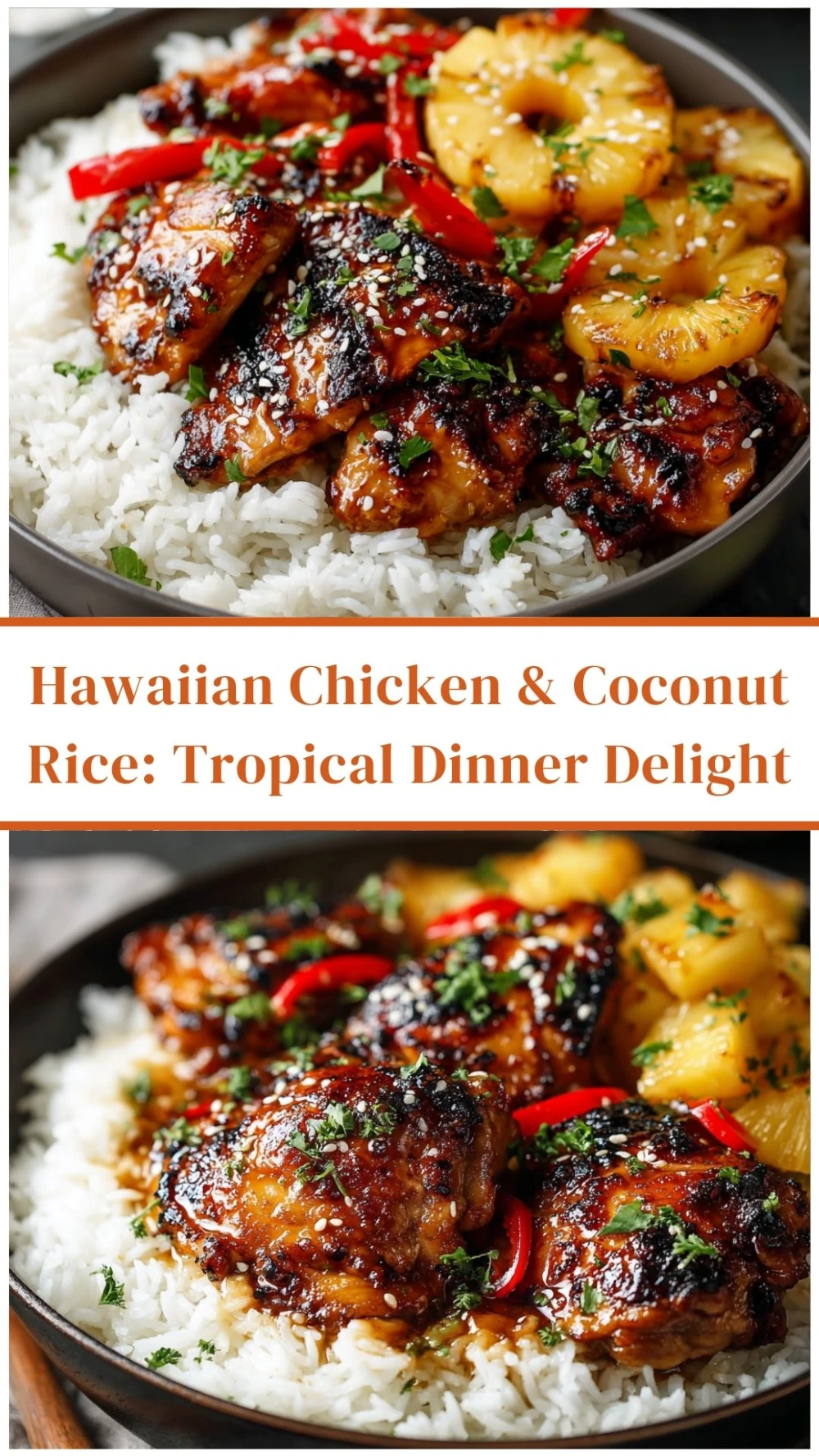
Hawaiian Chicken & Coconut Rice: Tropical Dinner Delight
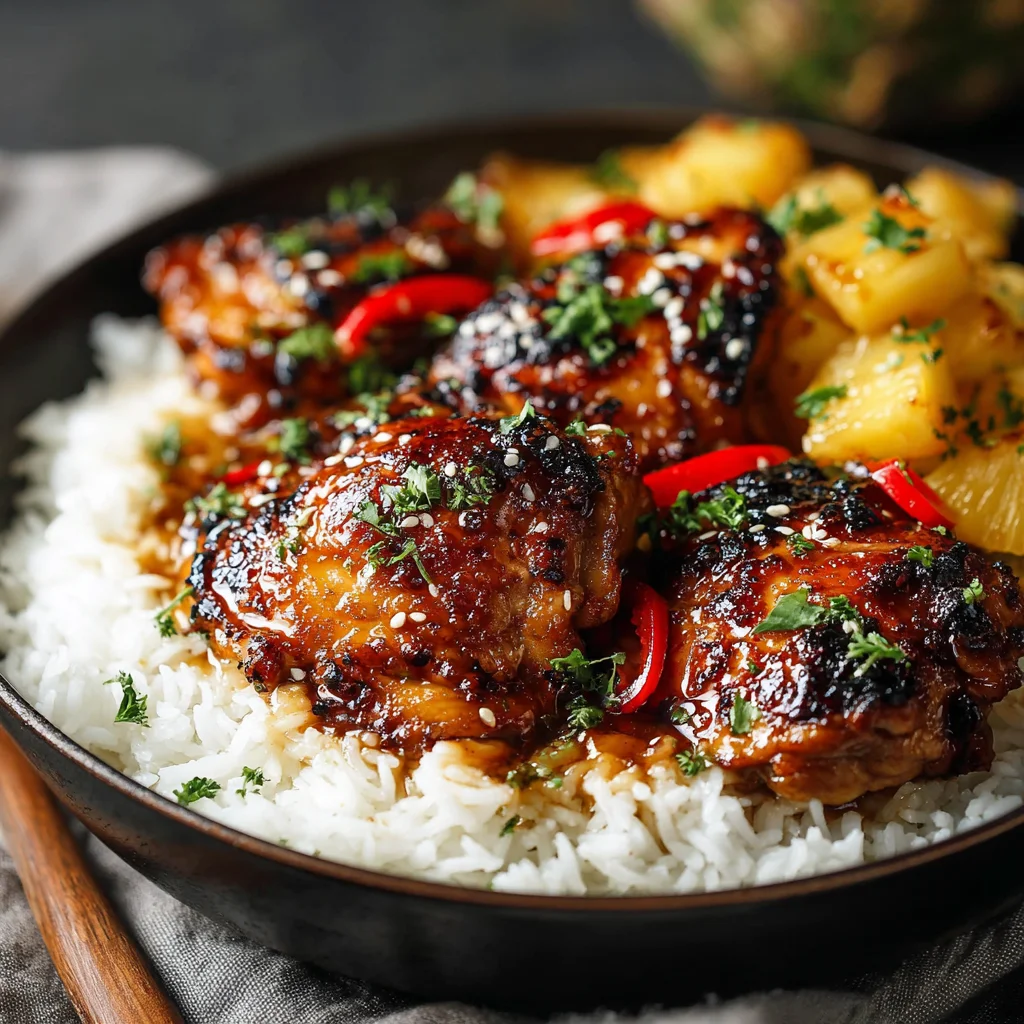
Escape to the tropics with this vibrant Hawaiian Chicken and Coconut Rice. Succulent chicken pieces are marinated in a sweet and savory pineapple-soy blend, then stir-fried with colorful bell peppers and red onion, all brought together with a luscious, thickened glaze. Served alongside fragrant, creamy coconut rice, this dish is a symphony of island flavors that promises a delightful culinary escape for your weeknight dinner or special gathering.
Prep Time
30 minutes
Cook Time
35 minutes
Total Time
Approximately 1 hour (plus 30 minutes to 4 hours marinating time)
Servings
4 servings
Keywords
Why This Recipe Delivers
- A vibrant fusion of sweet, savory, and tangy tropical flavors.
- Offers a complete meal with protein, vegetables, and fragrant rice.
- Surprisingly simple to prepare, making it perfect for weeknights.
- Customizable with your favorite vegetables or a touch of spice.
- Brings the taste of a Hawaiian getaway right to your dinner table.
Ingredients
- 900g (2 lbs) boneless, skinless chicken thighs, cut into 2.5 cm (1-inch) pieces
- 120ml (1/2 cup) low-sodium soy sauce
- 120ml (1/2 cup) pineapple juice
- 50g (1/4 cup) light brown sugar, packed
- 30ml (2 tbsp) rice vinegar
- 15ml (1 tbsp) sesame oil
- 4 cloves garlic, minced (approximately 20g)
- 15g (1 tbsp) fresh ginger, grated
- 15g (1 tbsp) cornstarch, dissolved in 30ml (2 tbsp) cold water (for slurry)
- 30ml (2 tbsp) olive oil, divided
- 1 (567g / 20-oz) can pineapple chunks, drained (reserve 60ml / 1/4 cup juice)
- 1 large red bell pepper (approximately 200g), cut into 2.5 cm (1-inch) pieces
- 1 large yellow bell pepper (approximately 200g), cut into 2.5 cm (1-inch) pieces
- 1 medium red onion (approximately 150g), cut into 2.5 cm (1-inch) wedges
- Sea salt and freshly ground black pepper, to taste
- 400g (2 cups) jasmine rice
- 1 (400ml / 13.5-oz) can full-fat coconut milk
- 300ml (1 1/4 cups) water
- 5g (1 tsp) fine sea salt (for rice)
- 15g (1 tbsp) granulated sugar (for rice)
- 10g (1/4 cup) fresh cilantro, chopped (for garnish)
- 10g (2 tbsp) toasted sesame seeds (for garnish)
- 2 green onions, thinly sliced (for garnish)
Instructions
- Prepare the chicken marinade. Cut the boneless, skinless chicken thighs into uniform 2.5 cm (1-inch) pieces for even cooking. Pat them thoroughly dry with paper towels to ensure the marinade adheres well and the chicken browns beautifully later. Place the chicken in a large, non-reactive bowl. In a separate medium bowl, whisk together the 120ml (1/2 cup) soy sauce, 120ml (1/2 cup) pineapple juice, 50g (1/4 cup) brown sugar, 30ml (2 tbsp) rice vinegar, 15ml (1 tbsp) sesame oil, minced garlic, and grated ginger until well combined and the sugar is dissolved. This aromatic blend will infuse the chicken with tropical-savory notes. Pour two-thirds of this marinade over the chicken, tossing gently to coat every piece. Cover the bowl and refrigerate for a minimum of 30 minutes to a maximum of 4 hours to allow the flavors to penetrate. Reserve the remaining one-third of the marinade for crafting the glossy glaze.
- Create the Hawaiian glaze. Transfer the reserved marinade to a small saucepan. If it seems a bit low from tasting or evaporation, add the 60ml (1/4 cup) of reserved pineapple juice from the canned pineapple. Bring the mixture to a gentle simmer over medium heat, then reduce the heat to low to maintain a steady, gentle bubble. In a small separate bowl, whisk together 15g (1 tbsp) cornstarch with 30ml (2 tbsp) cold water until completely smooth, forming a slurry. This slurry is crucial for thickening the sauce. Gradually whisk the cornstarch slurry into the simmering marinade, stirring continuously for 1-2 minutes, until the sauce thickens to a glossy, syrupy consistency that coats the back of a spoon. Remove the thickened glaze from the heat and set aside.
- Cook the aromatic coconut rice. Rinse the 400g (2 cups) jasmine rice under cold running water in a fine-mesh sieve until the water runs clear. This removes excess starch, preventing the rice from becoming gummy. In a heavy-bottomed pot or saucepan with a tight-fitting lid, combine the rinsed rice, 1 (400ml / 13.5-oz) can full-fat coconut milk, 300ml (1 1/4 cups) water, 5g (1 tsp) fine sea salt, and 15g (1 tbsp) granulated sugar. Give it one gentle stir to combine. Bring the mixture to a rolling boil over medium-high heat. Once boiling, stir it once more, then immediately reduce the heat to the lowest setting, cover the pot tightly, and let it simmer undisturbed for 18 minutes. The tight lid is essential to trap steam and cook the rice evenly. After 18 minutes, remove the pot from the heat but keep it covered for an additional 10 minutes. This resting period allows the steam to redistribute, resulting in perfectly fluffy grains. Finally, fluff the rice gently with a fork and keep it covered until ready to serve to maintain warmth and texture.
- Sauté vegetables and sear the chicken. Drain the canned pineapple thoroughly. Prepare your vegetables by cutting the red and yellow bell peppers and red onion into uniform 2.5 cm (1-inch) pieces or wedges. Heat 15ml (1 tbsp) of olive oil in a large skillet or wok over medium-high heat until shimmering. Add the prepared bell peppers and red onion to the hot skillet. Sauté them for 3-5 minutes, tossing occasionally, until they are tender-crisp but still retain a slight bite and vibrant color. Remove the sautéed vegetables from the skillet and set them aside. Add the remaining 15ml (1 tbsp) of olive oil to the same skillet. Remove the chicken pieces from the marinade, allowing any excess marinade to drip off (discard the used marinade). Arrange the chicken in a single layer in the hot skillet, cooking in batches if necessary to avoid overcrowding, which would steam the chicken instead of searing it. Cook for 4-6 minutes, flipping halfway through, until the chicken is golden brown on all sides and cooked through, reaching an internal temperature of 74°C (165°F).
- Combine and glaze the Hawaiian chicken. Return the sautéed bell peppers, red onion, and the drained pineapple chunks to the skillet with the cooked chicken. Pour the previously prepared thickened Hawaiian glaze evenly over all the ingredients. Gently toss everything together to ensure every piece of chicken and vegetable is beautifully coated in the glossy, flavorful sauce. Allow it to simmer for 1-2 minutes, stirring occasionally, to meld all the flavors together and ensure the glaze is perfectly warm and adhering. Taste and season with additional sea salt and freshly ground black pepper as needed, adjusting to your preference.
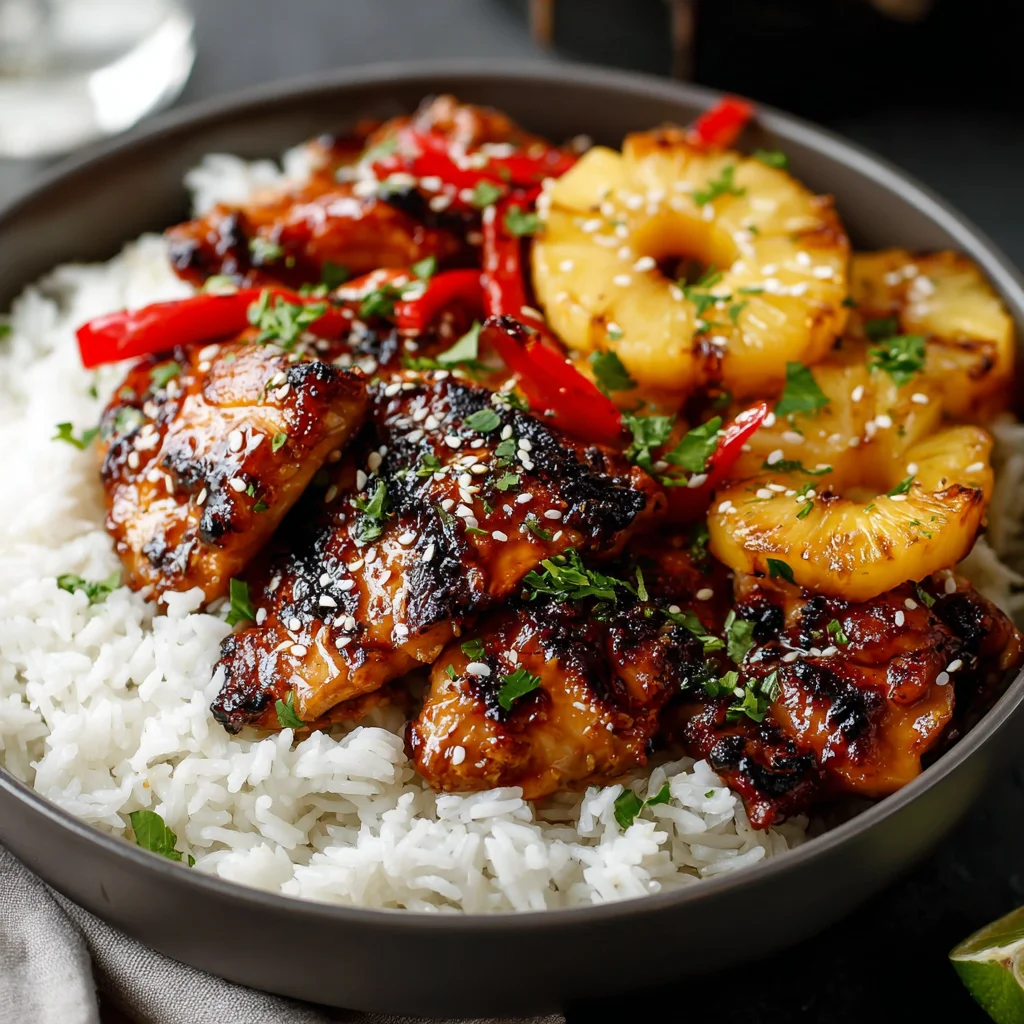
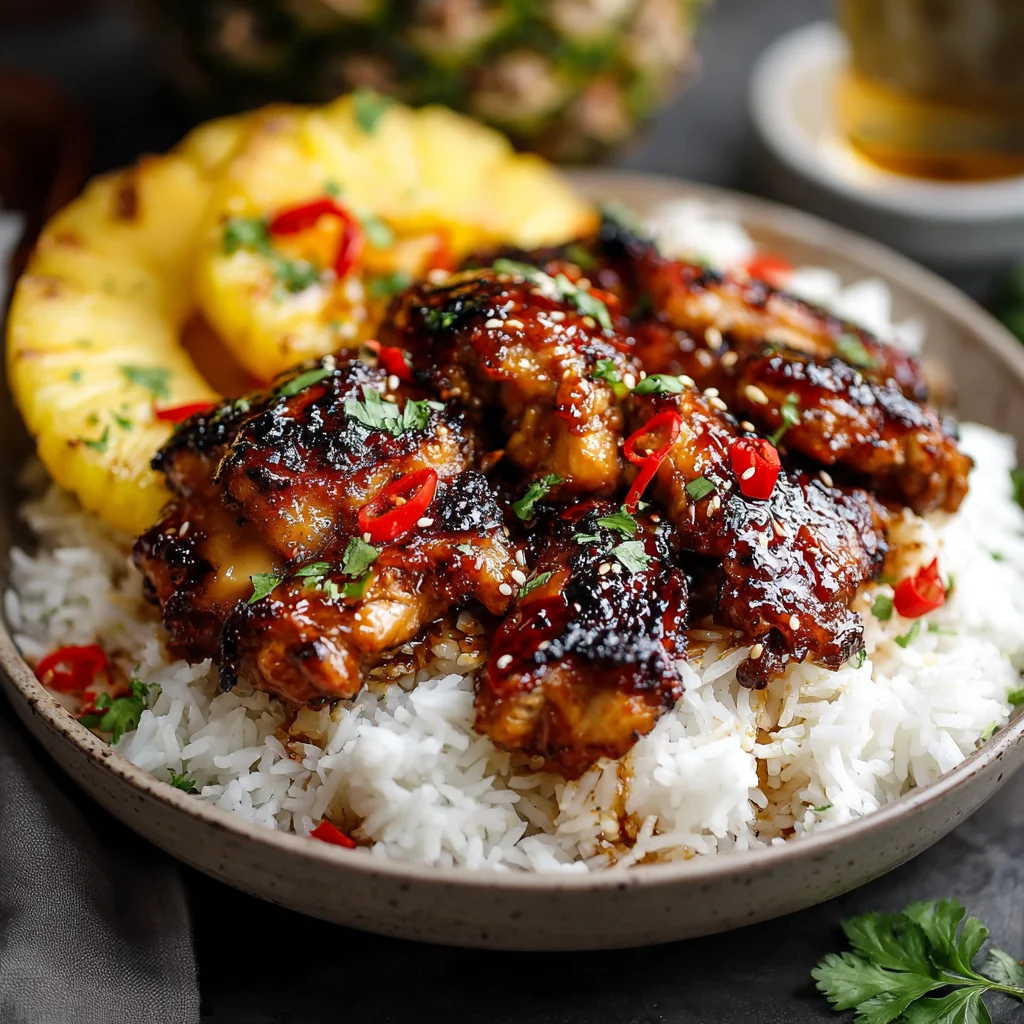
- Serve the tropical delight. Generously scoop the fluffy coconut rice onto individual serving plates. Spoon the luscious Hawaiian chicken, vegetables, and pineapple mixture over the rice, making sure to include plenty of that irresistible tropical glaze. Garnish the finished dish with a sprinkle of freshly chopped cilantro, a scattering of toasted sesame seeds, and a few slices of vibrant green onions for a burst of freshness and visual appeal. Serve immediately and enjoy the taste of paradise!
Tools You’ll Need
- Large mixing bowl
- Small saucepan
- Whisk
- Heavy-bottomed pot with a tight-fitting lid
- Fine-mesh sieve
- Large skillet or wok
- Tongs or spatula
- Measuring cups and spoons
- Cutting board
- Sharp knife
- Grater (for ginger)
Essential Success Tips
- Pat the chicken dry thoroughly before marinating to ensure better browning and caramelization.
- Do not overcrowd the skillet when cooking chicken; cook in batches if necessary to achieve a golden sear. Overcrowding will steam the chicken, preventing it from browning.
- When making the rice, resist the urge to lift the lid or stir the rice during the simmering and resting phases to ensure perfectly cooked, fluffy grains.
- For the glaze, ensure the cornstarch slurry is completely smooth before adding it to the simmering marinade to prevent lumps.
- Taste the finished dish before serving and adjust seasonings (salt, pepper, a squeeze of lime) to balance the flavors perfectly.
Professional Cooking Secrets
- For an extra layer of flavor in the marinade, lightly toast the sesame seeds before adding the sesame oil, then cool before incorporating. This amplifies their nutty aroma.
- To achieve restaurant-quality vibrant vegetables, blanch the bell peppers and red onion briefly in boiling water (30 seconds) before stir-frying. This preserves their color and ensures a crisp-tender texture.
- Infuse the coconut rice with a pandan leaf or a few kaffir lime leaves during cooking for an even more exotic and fragrant aroma, removing them before serving.
Notes
- Storage: Leftovers can be stored in an airtight container in the refrigerator for up to 3 days. Reheat gently in a microwave or on the stovetop, adding a splash of water or pineapple juice if needed to loosen the sauce.
- Variations: Feel free to add other vegetables like snap peas, broccoli florets, or carrots. For a touch of heat, include a pinch of red pepper flakes in the marinade. You can also substitute chicken breast, though thigh meat tends to stay juicier.
- Make Ahead: The chicken can be marinated up to 4 hours in advance. The glaze can be made a day ahead and gently reheated.
Frequently Asked Questions
Can I use chicken breast instead of thighs?
Yes, you can substitute boneless, skinless chicken breast. However, chicken thighs tend to stay more moist and flavorful in stir-fries. If using breast, be careful not to overcook it to prevent dryness.
How can I make the dish spicier?
To add a kick, you can include 1/2 to 1 teaspoon of red pepper flakes in the marinade, or add a dash of sriracha or your favorite chili sauce to the glaze before serving.
What if I don't have fresh ginger?
While fresh ginger offers the best flavor, you can substitute with 1/2 teaspoon of ground ginger if fresh is unavailable. Adjust to your taste preferences.
Nutrition Facts (Per Serving)
Calories: 680, Protein: 45g, Fat: 32g, Carbs: 60g, Fiber: 4g, Sugars: 25g (Note: Nutritional information is an estimate based on ingredients and serving size.)
Allergy Information
Contains soy and coconut. For a gluten-free version, ensure to use tamari instead of regular soy sauce. This recipe is naturally dairy-free.


No comment