
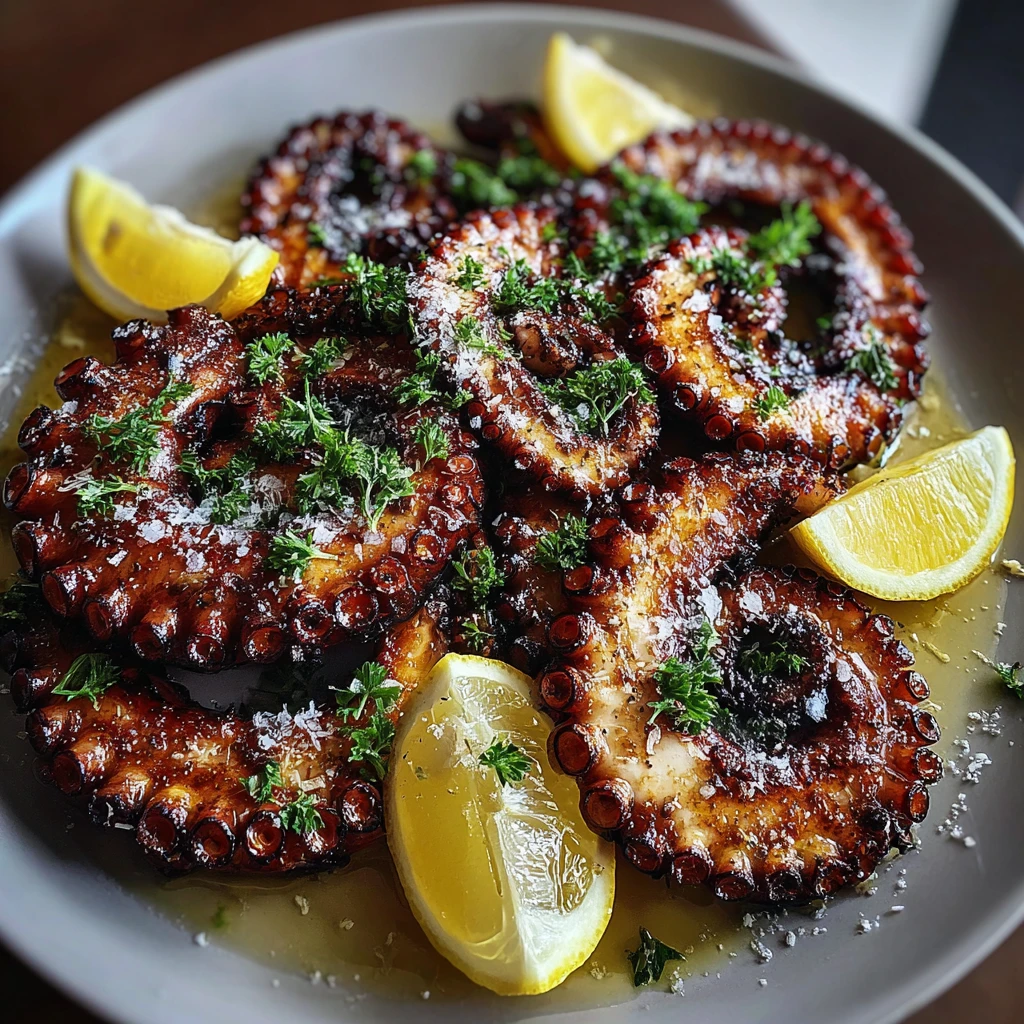
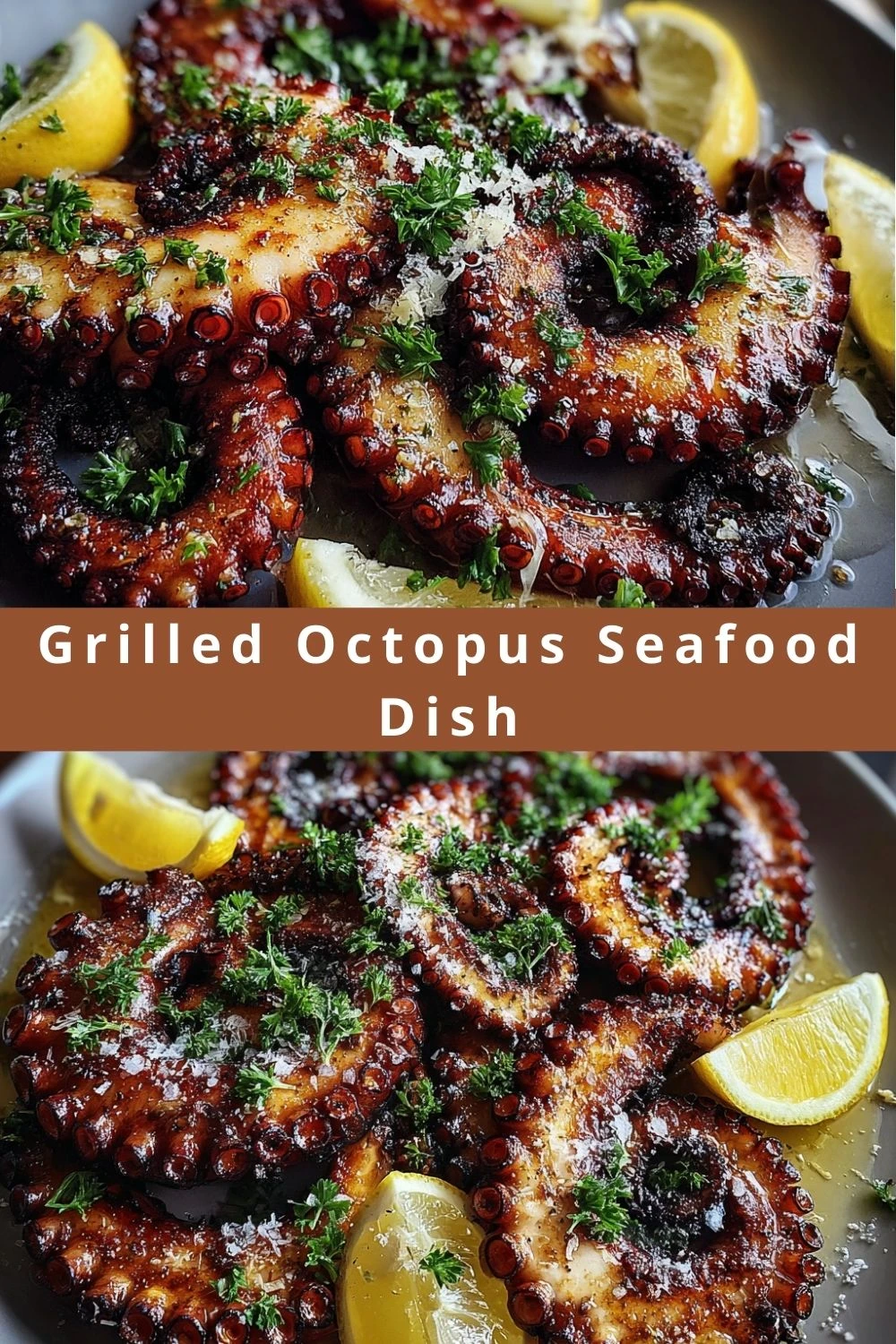
Grilled Octopus Seafood Dish
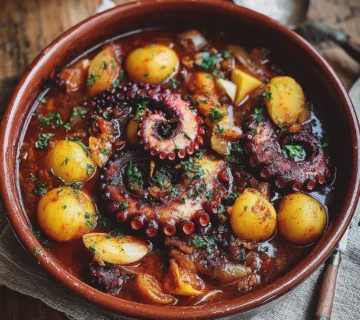
Indulge in the sublime taste of the sea with this Mediterranean Grilled Octopus. Perfectly tenderized and then kissed by the flames of the grill, this dish boasts a smoky char, delicate texture, and vibrant flavors. It's a truly sophisticated seafood experience that transports you straight to the sun-drenched coasts of the Mediterranean.
Prep Time
20 minutes
Cook Time
40 minutes
Total Time
1 hour
Servings
4 servings
Keywords
Why This Recipe Delivers
- Achieves incredibly tender octopus through proper pre-cooking.
- Boasts a beautiful smoky char from the grill, adding depth of flavor.
- Simple yet elegant preparation highlights the natural taste of the seafood.
- Perfect for a sophisticated appetizer or a light main course.
- Infused with classic Mediterranean flavors of garlic, olive oil, and lemon.
Ingredients
- 1 kg (2.2 lbs) Fresh Octopus, ideally bought on the day of cooking
- 15g (1 tbsp) Sea Salt, plus more for boiling
- 5g (1 tsp) Freshly Ground Black Pepper
- 4 cloves Garlic, minced
- 45ml (3 tbsp) High-quality Extra Virgin Olive Oil, plus more for drizzling
- 1 Lemon, cut into wedges, for serving
- 1 bunch Fresh Parsley, finely chopped for garnish
Instructions
- Begin by meticulously rinsing the fresh octopus under cold running water. Focus on thoroughly cleaning the tentacles and body, ensuring no sand or debris remains. Next, locate the octopus's beak, which is a hard, cartilaginous structure found at the center of where the tentacles meet the body. Carefully push it out from the underside and discard it. Also, gently remove the eyes by making a small incision behind them and pulling them away.
- Fill a large, heavy-bottomed pot with generously salted water and bring it to a rolling boil. The salt not only seasons the octopus from within but also helps to firm its flesh and prevent it from becoming bland. Once boiling, carefully submerge the cleaned octopus. Reduce the heat to a gentle simmer, cover, and cook for 30 to 40 minutes, or until the octopus is remarkably tender when pierced with a fork. The exact simmering time will depend on the size and thickness of your octopus. This slow simmering process is critical for achieving a melt-in-your-mouth texture, rather than a rubbery one.
- Once boiled to tenderness, carefully remove the octopus from the pot and drain it thoroughly. Pat it completely dry with paper towels; this crucial step ensures a good sear and char on the grill. In a bowl, combine the 45ml (3 tbsp) of olive oil, 15g (1 tbsp) sea salt, 5g (1 tsp) freshly ground black pepper, and minced garlic. Thoroughly coat the octopus with this aromatic seasoning mixture, ensuring every tentacle is covered.
- Preheat your grill to a medium-high heat. Once hot, place the seasoned octopus directly on the grates. Grill for approximately 3 to 4 minutes per side, or until beautiful char marks appear and the tentacles are slightly crispy at the edges. Be careful not to overcook it at this stage, as the goal is to add smoky flavor and texture, not to further tenderize.
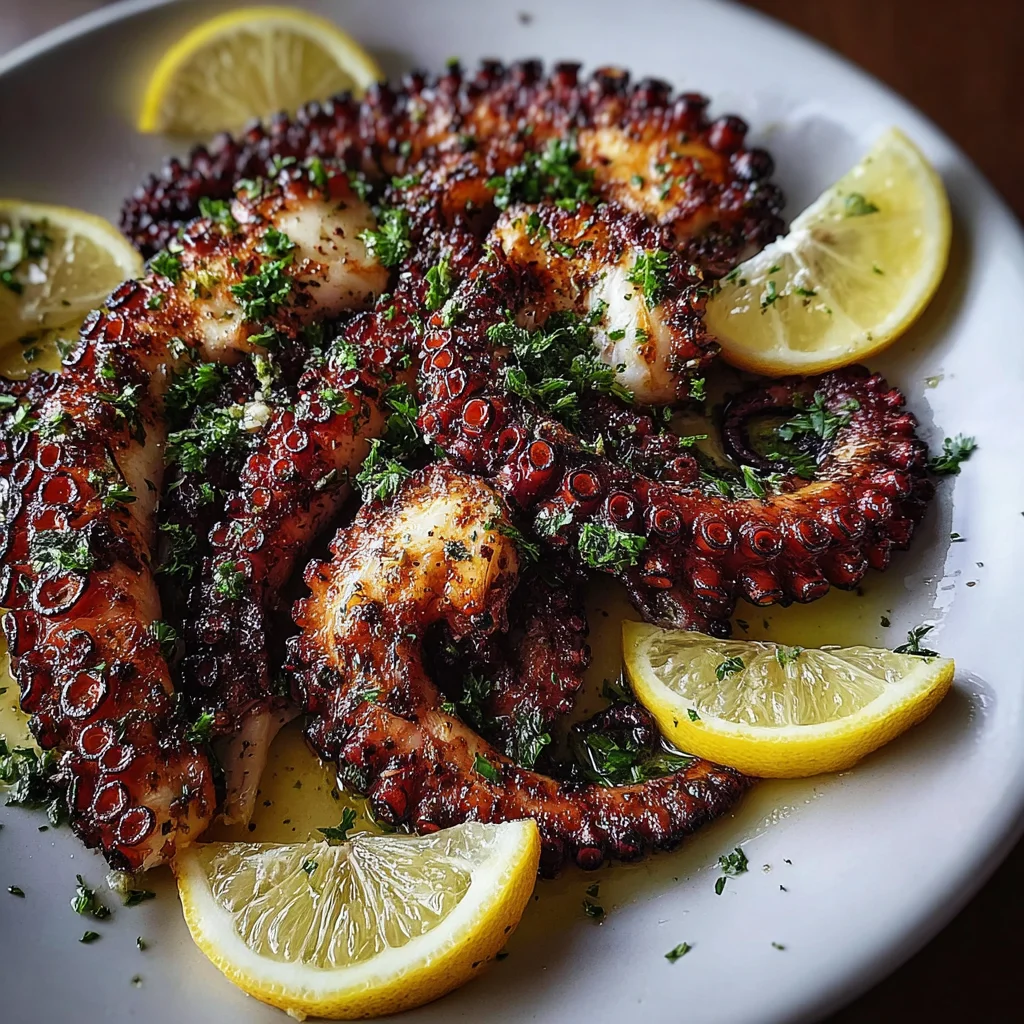
- Carefully remove the grilled octopus from the heat. Transfer it to a serving platter and immediately drizzle with a little extra virgin olive oil. Garnish generously with freshly chopped parsley and serve with fresh lemon wedges on the side. The acidity from the lemon enhances the flavors beautifully and cuts through the richness of the octopus.
Tools You’ll Need
- Large heavy-bottomed pot
- Tongs
- Cutting board
- Sharp knife
- Grill (charcoal or gas)
- Small mixing bowl
Essential Success Tips
- Always buy the freshest octopus possible, preferably on the day you plan to cook it, for the best flavor and texture.
- Do not rush the simmering step; proper tenderization is key to avoiding rubbery octopus. It should yield easily when pierced.
- Ensure the octopus is thoroughly dried after boiling and before seasoning; this promotes excellent charring on the grill.
- Don't overcrowd the grill. If cooking multiple pieces, work in batches to maintain high heat and achieve a consistent char.
- Serve immediately after grilling to enjoy the optimal texture and warmth. A squeeze of fresh lemon is non-negotiable.
Professional Cooking Secrets
- To enhance tenderness, some chefs advocate freezing fresh octopus for 24-48 hours before thawing and cooking, as the ice crystals help break down muscle fibers.
- For an extra layer of flavor during the simmering stage, consider adding aromatic vegetables like a quartered onion, bay leaves, or a splash of red wine to the boiling water.
- A quick sear in a hot cast-iron pan is an excellent alternative to grilling if outdoor grilling isn't an option, providing similar crust and flavor development.
Notes
- Leftover grilled octopus can be stored in an airtight container in the refrigerator for up to 2 days. It's excellent sliced and added to salads or served chilled with a vinaigrette.
- For a spicier kick, add a pinch of red pepper flakes to the seasoning mixture before grilling.
- Consider serving this dish alongside a simple Greek salad, roasted potatoes, or a fresh farro salad for a complete meal.
Frequently Asked Questions
How do I know if my octopus is cooked enough after boiling?
The octopus is perfectly tender when a fork can easily pierce the thickest part of a tentacle without resistance. If it's still firm or rubbery, continue simmering until it reaches the desired tenderness.
Can I use frozen octopus for this recipe?
Yes, absolutely! Frozen octopus is often pre-tenderized by the freezing process. Thaw it completely in the refrigerator overnight before rinsing and proceeding with the boiling and grilling steps.
What if I don't have a grill?
If you don't have a grill, you can achieve a similar charred effect using a very hot grill pan or a cast-iron skillet on the stovetop. Ensure the pan is screaming hot before adding the seasoned octopus for a good sear.
Nutrition Facts (Per Serving)
Calories: Approximately 280-320 per serving, Protein: 30g, Fat: 15g, Carbs: 5g. (Estimates based on 1kg octopus and specified ingredients, divided into 4 servings.)
Allergy Information
Contains shellfish (octopus). Does not inherently contain gluten or dairy, but cross-contamination is possible depending on preparation environment. Always check ingredient labels for specific dietary needs.

No comment