
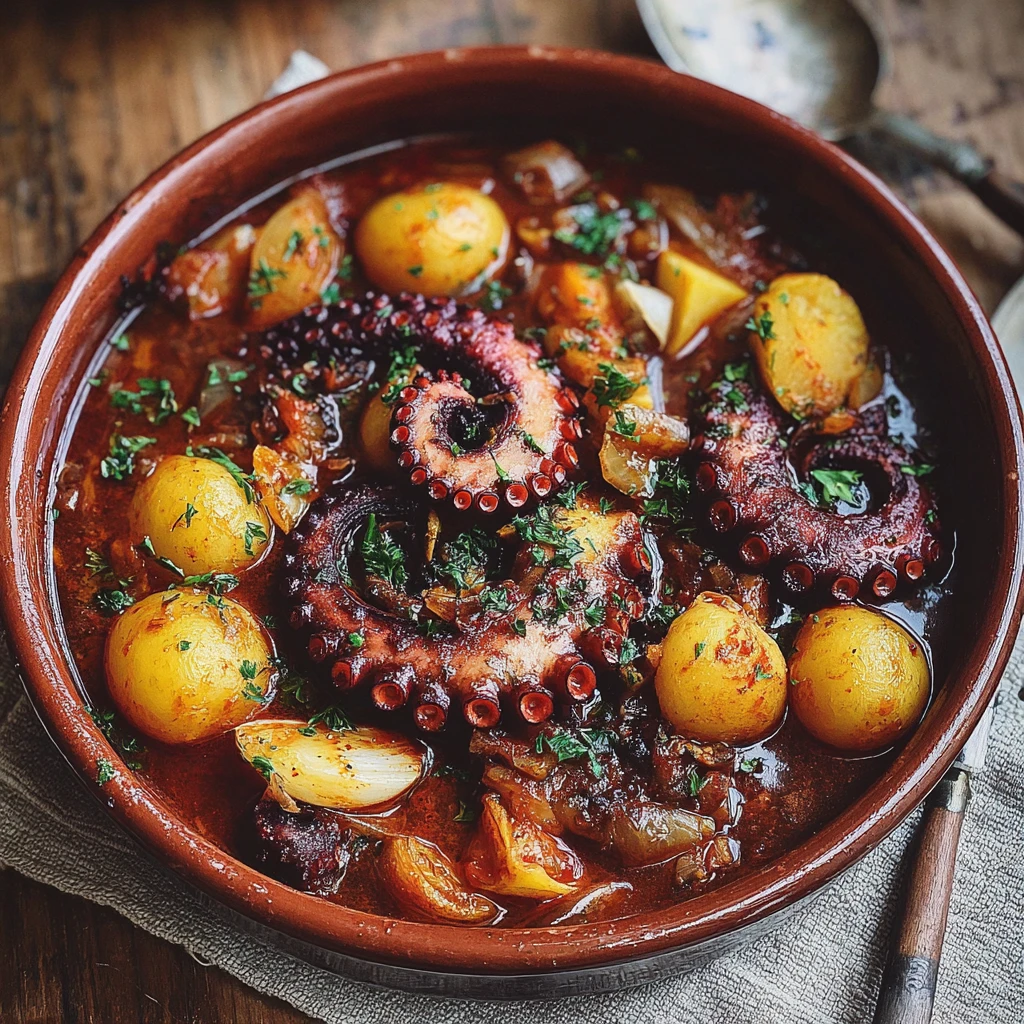
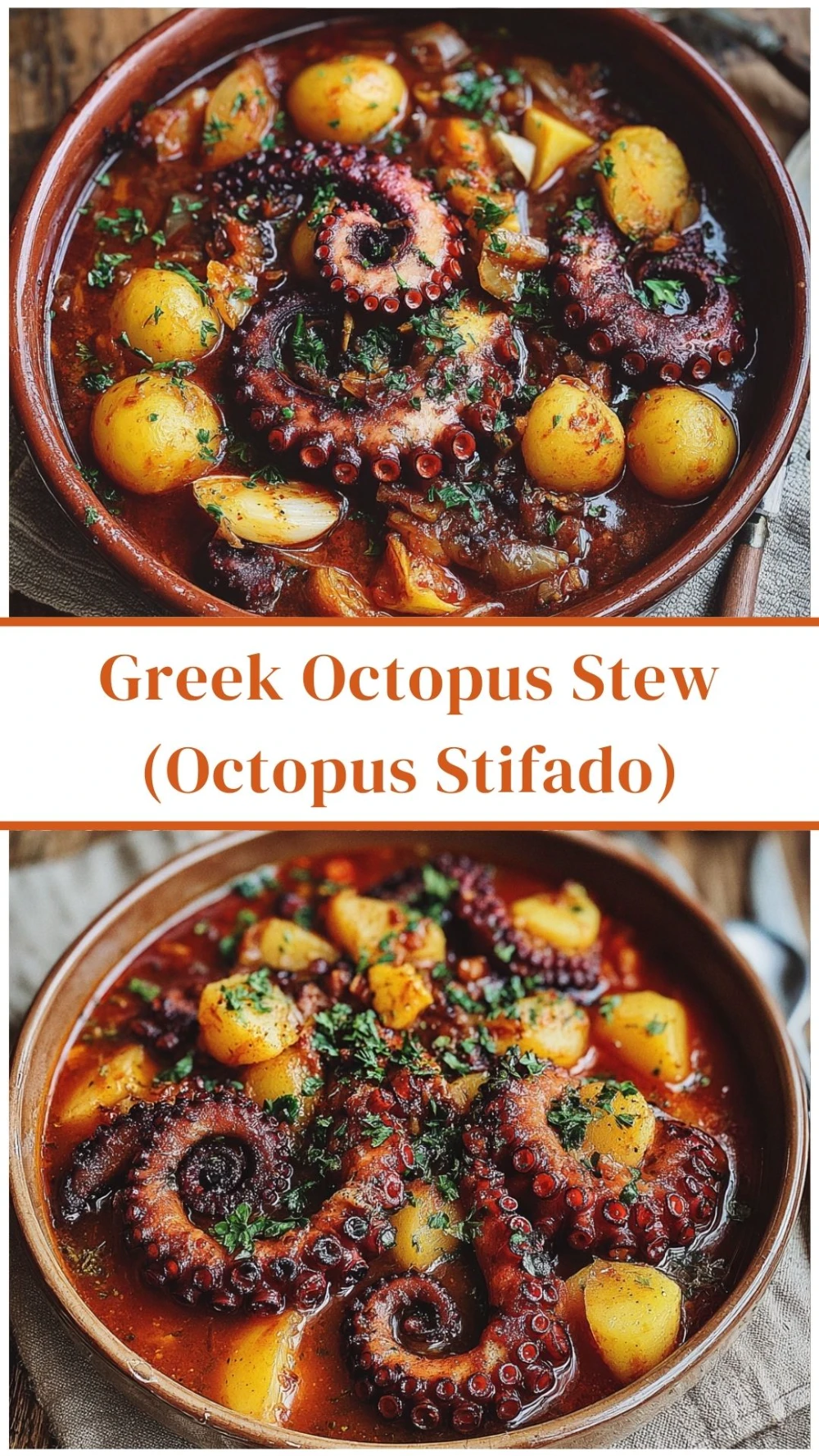
Greek Octopus Stew (Octopus Stifado)
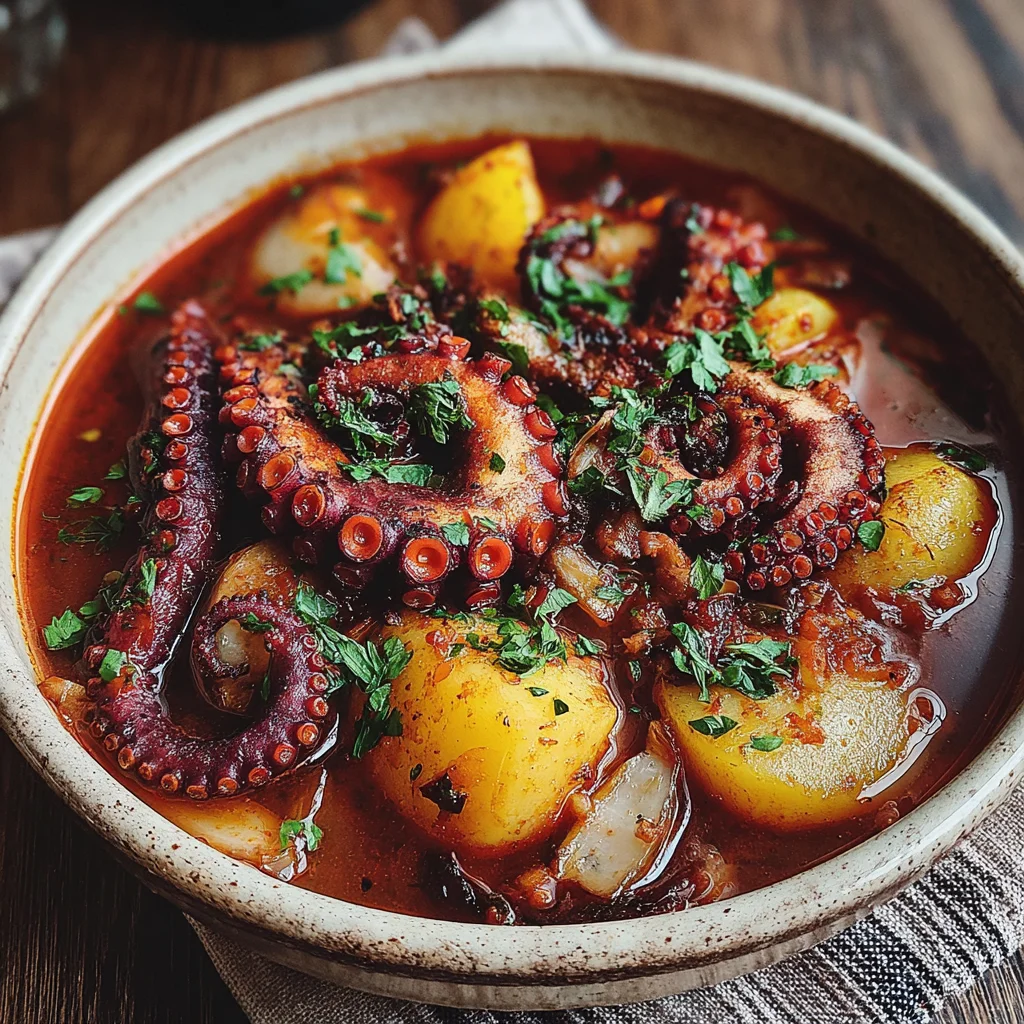
Embark on a culinary journey to the Mediterranean with this authentic Greek Octopus Stifado. This hearty and aromatic stew features tender octopus simmered slowly in a rich, deeply flavored tomato sauce, infused with the warming spices of cinnamon, cloves, and allspice. A true taste of Greek comfort, it's a dish that perfectly balances savory seafood with sweet, tangy notes and a hint of spice, making it an unforgettable dining experience.
Prep Time
45 minutes
Cook Time
2 hours 30 minutes
Total Time
3 hours 15 minutes
Servings
4-6 servings
Keywords
Why This Recipe Delivers
- Incredibly tender, melt-in-your-mouth octopus.
- Rich, aromatic, and deeply spiced tomato sauce.
- A true taste of traditional Greek cuisine.
- Perfect for a cozy, impressive meal.
- Satisfying and full of unique Mediterranean flavors.
Ingredients
- 900g (2 lbs) fresh or frozen octopus, cleaned
- 30ml (2 tbsp) olive oil
- 1 large onion (approx. 200g), finely chopped
- 3 garlic cloves (approx. 15g), minced
- 450g (1 lb) pearl onions, peeled
- 240ml (1 cup) dry red wine
- 240g (1 cup) crushed tomatoes (or tomato puree)
- 30g (2 tbsp) tomato paste
- 2 bay leaves
- 1 cinnamon stick
- 4-5 whole cloves
- 2.5g (½ tsp) ground allspice
- 2.5g (½ tsp) sugar (optional, to balance acidity)
- 240ml (1 cup) fish stock or water
- 30ml (2 tbsp) red wine vinegar
- Salt and freshly ground black pepper, to taste
- Fresh parsley, chopped (for garnish)
Instructions
- Prepare the Octopus. If using fresh octopus, thoroughly rinse it under cold running water. Carefully locate and remove the hard beak, usually found at the center of the tentacles, and any remaining internal organs. For frozen octopus, ensure it is fully thawed before proceeding.
- Tenderize the Octopus. Place the cleaned octopus in a large pot and cover it with water. Bring the water to a gentle simmer (not a rolling boil). Cook the octopus for approximately 30 minutes. This initial cooking phase helps to tenderize the octopus and is crucial for achieving a succulent texture in the final stew. It is not necessary to add salt at this stage, as octopus naturally contains a good amount of salinity.
- Portion the Octopus. Once the initial cooking is complete, carefully remove the octopus from the pot and allow it to cool slightly so it's comfortable to handle. Using a sharp knife or kitchen shears, cut the octopus into uniform, bite-sized pieces, roughly 2.5-5 cm (1-2 inches) in size. Set aside.
- Sauté the Aromatics. In a large, heavy-bottomed pot or Dutch oven, heat 30ml (2 tbsp) of olive oil over medium heat. Add the finely chopped large onion to the pot and sauté, stirring occasionally, for about 5-7 minutes until it becomes translucent and softened.
- Infuse with Garlic. Stir in the minced garlic and cook for an additional minute, being careful not to brown it, until its fragrant aroma fills the kitchen. This step builds the foundational aromatic layer for the stew.
- Caramelize Pearl Onions. Add the peeled pearl onions to the pot. Cook them for 5-7 minutes, stirring periodically, until they begin to take on a beautiful, slight caramelization. This adds a lovely sweetness and depth of flavor.
- Deglaze with Wine. Pour in the 240ml (1 cup) of dry red wine. Using a wooden spoon or spatula, scrape the bottom of the pot to loosen any browned bits (fond), which are packed with flavor. Allow the wine to simmer for 2-3 minutes, reducing slightly and allowing its alcohol to evaporate.
- Build the Stew Base. Add the 240g (1 cup) crushed tomatoes (or tomato puree), 30g (2 tbsp) tomato paste, 2 bay leaves, 1 cinnamon stick, 4-5 whole cloves, 2.5g (½ tsp) ground allspice, and optionally 2.5g (½ tsp) sugar (to balance acidity) to the pot. Stir thoroughly to ensure all ingredients are well combined.
- Add Liquids and Season. Pour in the 240ml (1 cup) of fish stock or water, followed by 30ml (2 tbsp) of red wine vinegar. Season the mixture with salt and freshly ground black pepper to your taste. Remember to taste again later before serving.
- Simmer the Octopus Stew. Gently introduce the pre-cooked, bite-sized octopus pieces into the pot, ensuring they are mostly submerged in the rich sauce. Bring the stew to a gentle simmer, then reduce the heat to the lowest setting. Cover the pot tightly and let it cook slowly for 1.5 to 2 hours, or until the octopus is exceptionally tender and the sauce has thickened to a luscious consistency. Stir occasionally to prevent sticking.
- Final Adjustments and Garnish. Before serving, taste the stew and make any final adjustments to the seasoning, adding more salt, pepper, or a touch more vinegar if desired. Carefully remove and discard the bay leaves, cinnamon stick, and whole cloves, as their purpose is to infuse flavor, not to be eaten.
- Serve. Ladle the hot Greek Octopus Stifado into serving bowls. Garnish generously with freshly chopped parsley for a burst of freshness and color. Serve immediately with crusty bread for dipping, fluffy rice, or pasta.
Tools You’ll Need
- Large pot or Dutch oven
- Sharp knife
- Cutting board
- Measuring cups and spoons
- Wooden spoon or spatula
- Ladle
Essential Success Tips
- Don't overcook the octopus initially; 30 minutes is just for tenderizing. The slow simmer will do the rest.
- Ensure the stew simmers gently on low heat; a rolling boil will toughen the octopus.
- Use good quality olive oil and dry red wine for the best flavor foundation.
- For a deeper flavor, let the stew rest for an hour off the heat before reheating and serving. The flavors will meld beautifully.
- Taste and adjust seasoning at the end; the saltiness of octopus can vary.
Professional Cooking Secrets
- To ensure the octopus is truly tender without being mushy, a chef's trick is to 'shock' it. After the initial 30-minute simmer, plunge the octopus briefly into ice water before cutting. This helps to firm up the texture slightly and prevents it from becoming overly soft during the long stewing process, maintaining a pleasing bite.
- For an even richer, darker sauce, lightly caramelize the tomato paste in the pot for a minute or two before adding the crushed tomatoes and other liquids. This deepens its flavor significantly and adds complexity to the final stew.
- If you can't find pearl onions, you can use regular small onions cut into quarters, or even large shallots. The key is to get that initial caramelization for sweetness.
Notes
- Storage: Leftover Octopus Stifado can be stored in an airtight container in the refrigerator for up to 3 days. The flavors often deepen overnight, making it even better the next day.
- Freezing: This stew freezes beautifully. Allow it to cool completely, then transfer to freezer-safe containers. Freeze for up to 3 months. Thaw overnight in the refrigerator and reheat gently on the stovetop.
- Wine Pairing: Serve this robust stew with a full-bodied red wine, such as an Agiorgitiko from Greece, or a robust Merlot or Cabernet Sauvignon.
Frequently Asked Questions
Can I use frozen octopus for this recipe?
Yes, absolutely! If using frozen octopus, ensure it is fully thawed before you begin the initial tenderizing step. The quality of the final stew will be just as excellent.
Why do I cook the octopus separately first?
The initial 30-minute simmer tenderizes the octopus sufficiently so that it doesn't become rubbery during the longer stewing process. It's a critical step for achieving that desired melt-in-your-mouth texture.
What can I serve with Greek Octopus Stifado?
This flavorful stew pairs wonderfully with crusty bread to soak up the delicious sauce, fluffy rice, or even a simple pasta like orzo or tagliatelle. A fresh green salad makes a perfect accompaniment.
Nutrition Facts (Per Serving)
Calories: 380, Protein: 35g, Fat: 15g, Carbs: 25g (per serving, assuming 6 servings)
Allergy Information
Contains seafood (octopus) and sulfites (from red wine). No common dairy or gluten in the base recipe, but often served with bread or pasta which contain gluten. Always check labels if using pre-made stock.




)
No comment