
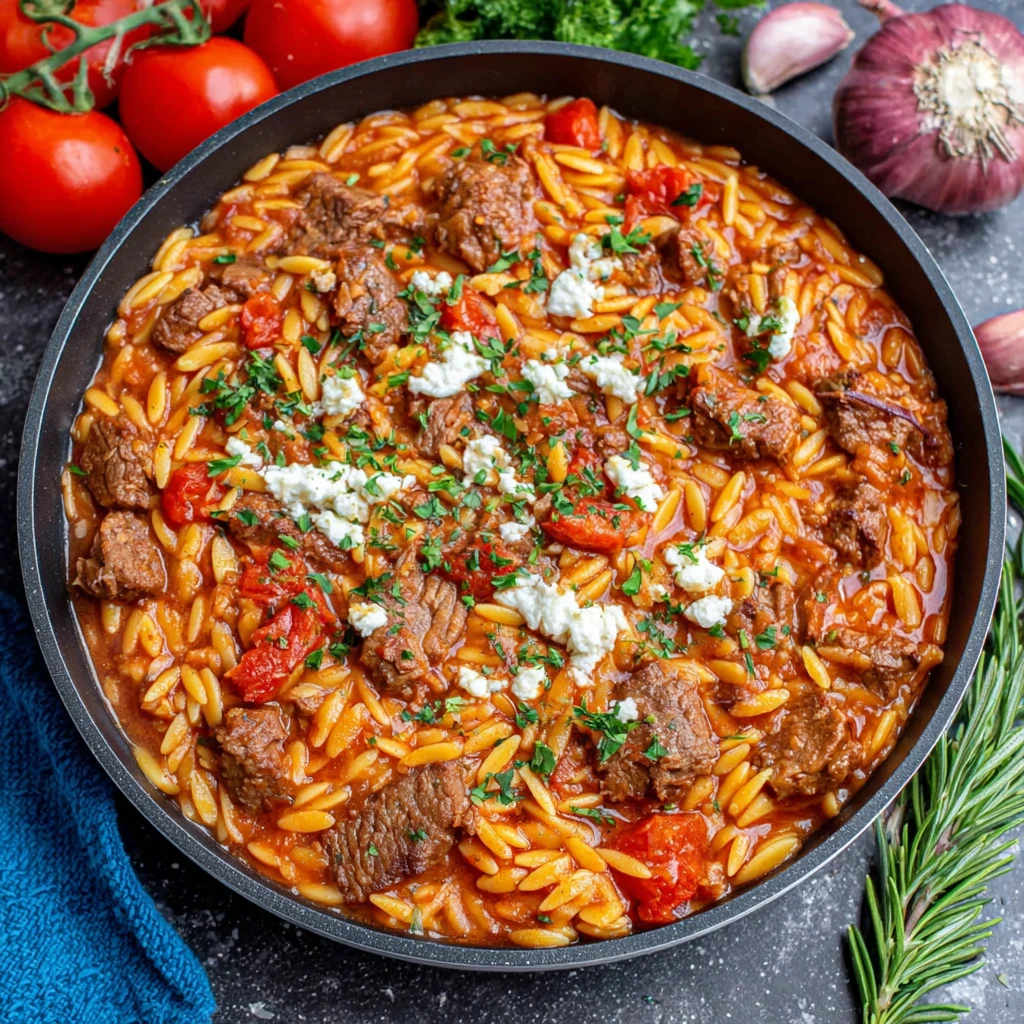
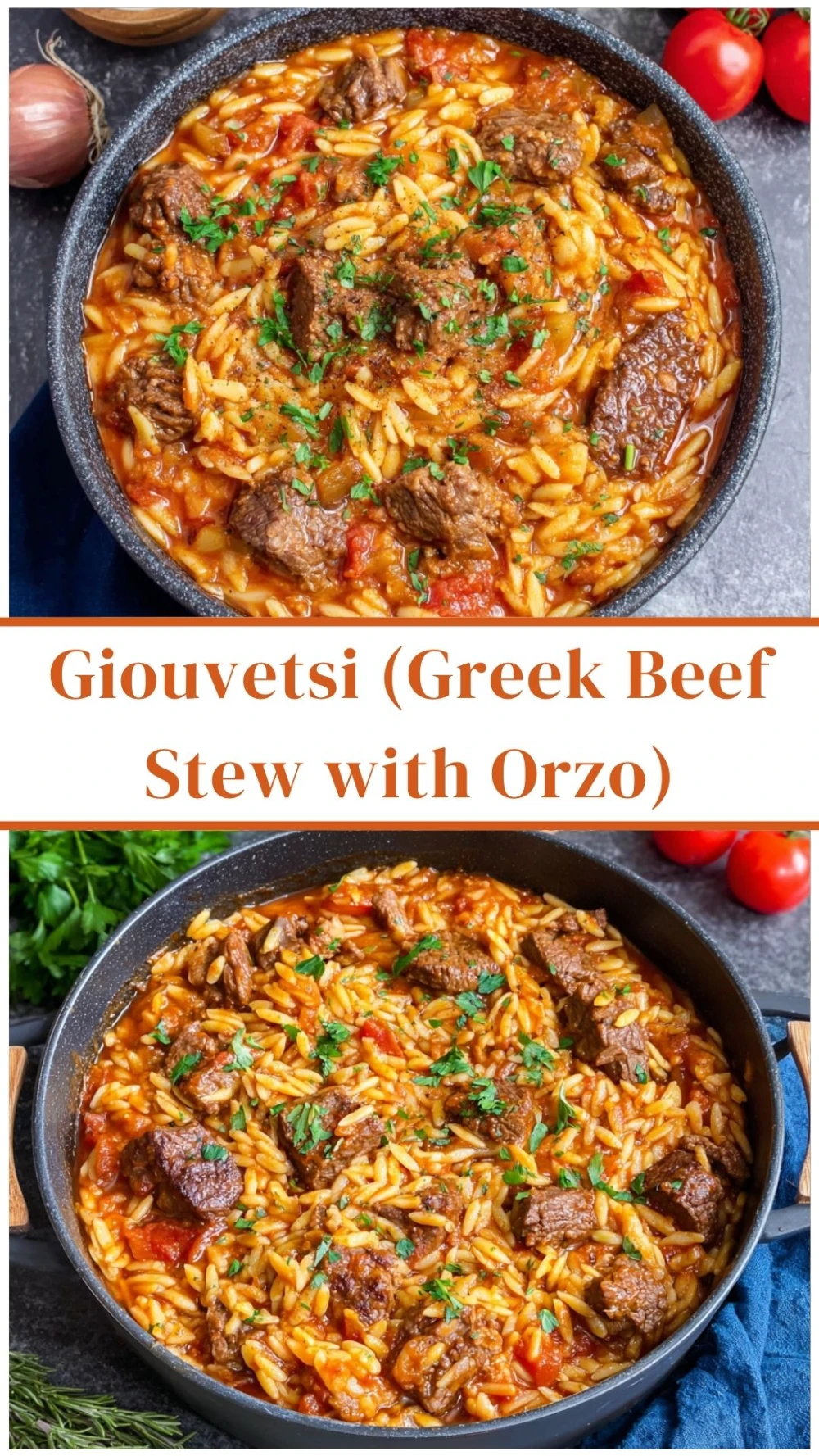
Giouvetsi (Greek Beef Stew with Orzo)
Transport your taste buds to the heart of Greece with Giouvetsi, a soul-warming beef stew featuring tender, slow-cooked beef enveloped in a rich, aromatic tomato sauce. This classic comfort dish is lovingly simmered with fragrant spices, then finished with al dente orzo pasta that absorbs all the incredible flavors, creating a truly satisfying and memorable meal.
Prep Time
25 minutes
Cook Time
60-65 minutes
Total Time
Approximately 1 hour 30 minutes
Servings
4-6 servings
Keywords
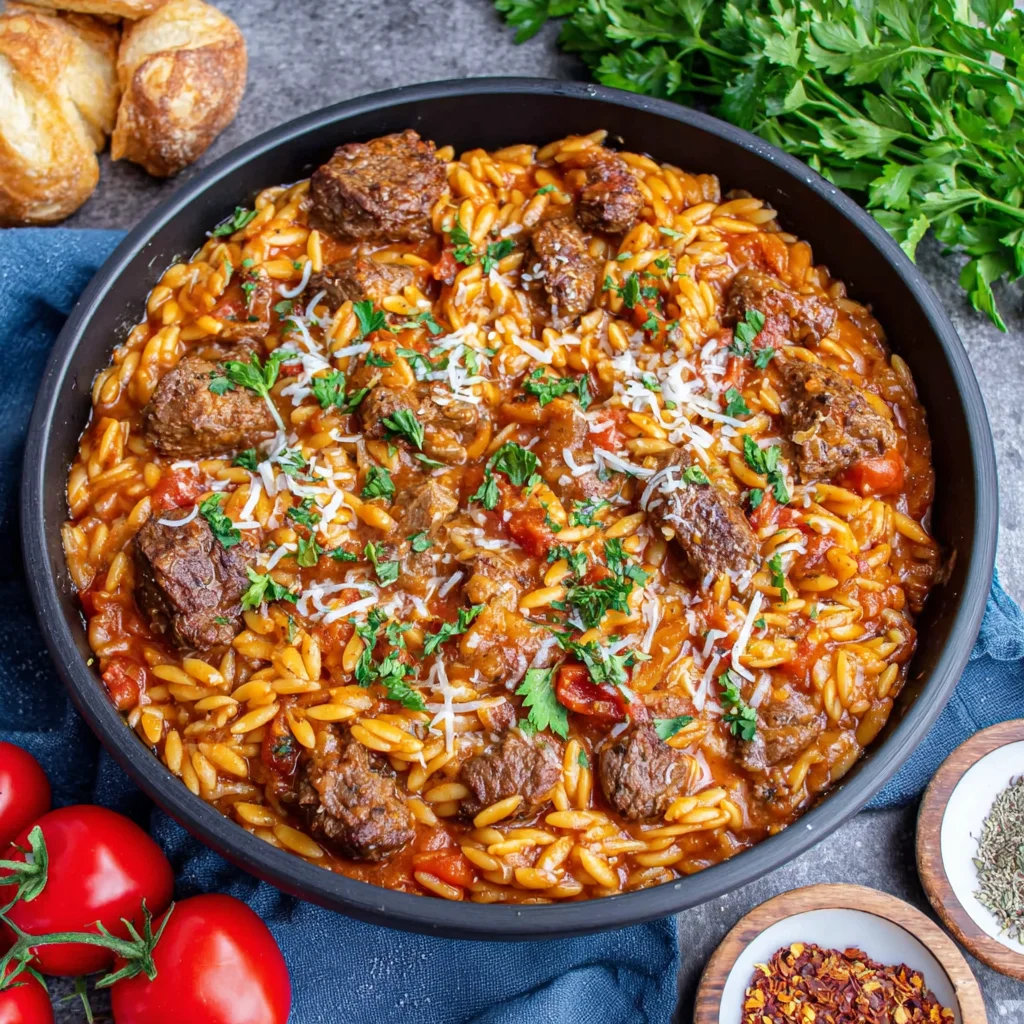
Why This Recipe Delivers
- Rich, deeply flavored beef that melts in your mouth.
- Creamy orzo pasta perfectly soaks up the savory tomato sauce.
- A comforting, hearty meal perfect for any occasion.
- Infused with aromatic Greek spices for an authentic taste.
- Simple to prepare for such a rewarding culinary experience.
Ingredients
- 2 tablespoons (30 ml) olive oil, divided
- 680 g (1 ½ lb) diced beef (such as chuck or round)
- 1 large onion, diced (approximately 200 g)
- 4 garlic cloves, finely chopped
- 100 ml (½ cup) red wine
- 2 tablespoons (30 g) tomato paste
- 400 g (14 oz) can crushed tomatoes
- ½ teaspoon ground nutmeg
- 2 bay leaves
- 1 cinnamon stick
- 500 ml (2 cups) chicken stock
- 400 g (2 cups) orzo pasta
- 40 g (½ cup) grated Kefalotyri or Parmesan cheese
- Salt and freshly ground black pepper to taste
Instructions
- In a heavy-bottomed pot, such as a Dutch oven, add 1 tablespoon (15 ml) of olive oil and heat over medium-high heat until shimmering. Carefully add the diced beef to the hot oil.
- Sprinkle the beef with a generous pinch of salt and cook for 8-10 minutes, turning occasionally, until all sides are beautifully browned. Browning in batches is crucial if your pot is not large enough, to ensure a proper sear rather than steaming the meat. Remove the browned beef from the pot with a slotted spoon and set it aside.
- Add the remaining 1 tablespoon (15 ml) of olive oil to the same pot. Introduce the diced onion and finely chopped garlic. Sauté for 4-5 minutes, stirring frequently, until the onion becomes translucent and fragrant. Scrape up any browned bits from the bottom of the pot with a wooden spoon as you cook the aromatics.
- Pour in the red wine, allowing it to deglaze the pot and scrape up any remaining flavorful fond. Let it simmer for 1-2 minutes until the liquid has mostly evaporated, leaving behind a concentrated flavor.
- Stir in the tomato paste and crushed tomatoes, along with the ground nutmeg, bay leaves, and cinnamon stick. Mix well to combine all the ingredients with the aromatics.
- Pour in the chicken broth and stir thoroughly. Return the seared beef to the pot, ensuring it is submerged in the liquid. Bring the mixture to a gentle boil.
- Once boiling, reduce the heat to low, cover the pot with a lid, and let it simmer for 45 minutes. This slow cooking allows the beef to tenderize and the flavors to meld beautifully.
- Carefully remove the bay leaves and cinnamon stick from the stew.
- Stir in the orzo pasta. Continue to cook, uncovered, for 15-20 minutes, or until the orzo is tender and has absorbed most of the liquid. It is vital to stir constantly during this phase to prevent the orzo from sticking to the bottom of the pot. If the stew appears too dry before the orzo is fully cooked, add a little extra chicken stock or hot water, about 50-100 ml (¼ to ½ cup) at a time.
- Remove the pot from the heat. Stir in the grated Kefalotyri or Parmesan cheese until it melts into the sauce, adding a lovely creaminess and salty depth. Taste and adjust the seasoning with additional salt and freshly ground black pepper as needed.
- Serve the Giouvetsi hot, garnished with a sprinkle of extra grated cheese on top, if desired, for an extra layer of flavor and presentation.
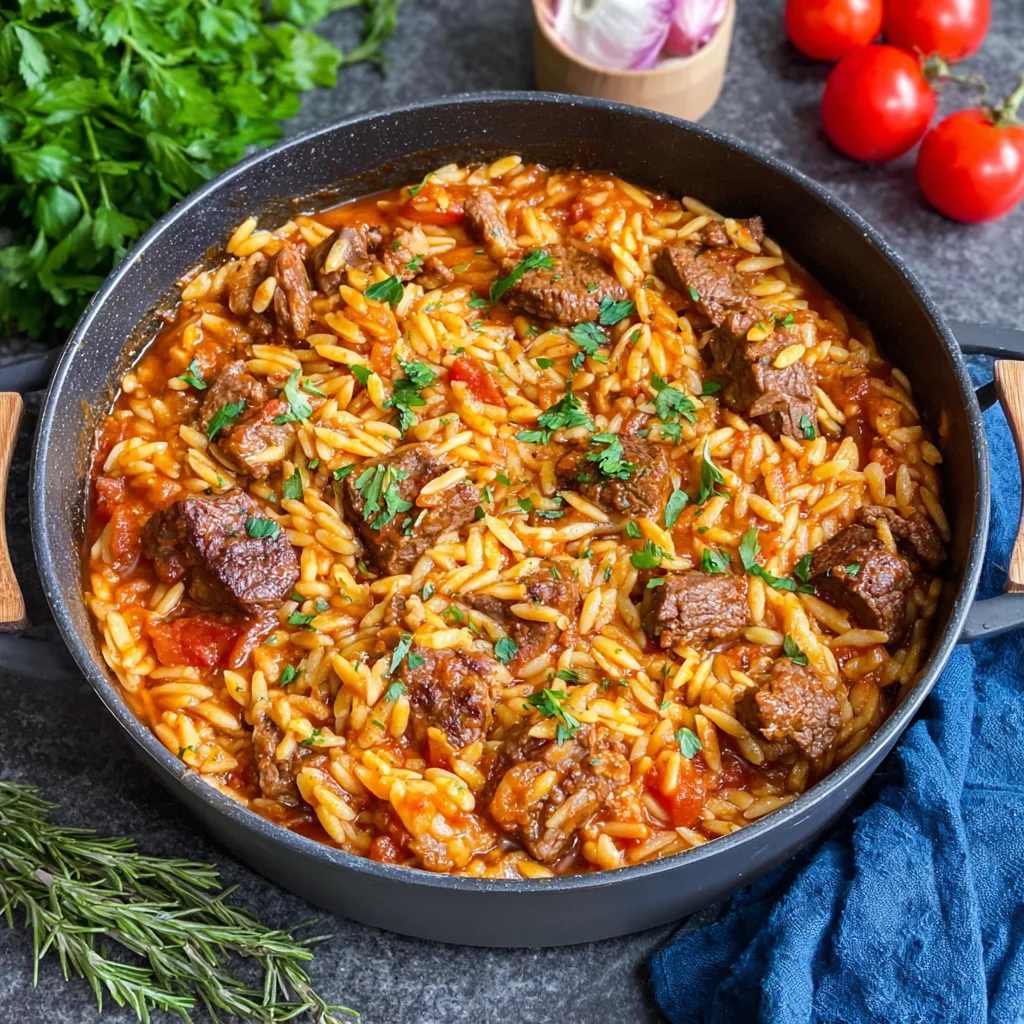
Tools You’ll Need
- Large heavy-bottomed pot or Dutch oven (5-6 liter capacity)
- Cutting board
- Sharp knife
- Measuring cups and spoons
- Slotted spoon
- Wooden spoon or heat-resistant spatula
- Grater (for cheese)
Essential Success Tips
- Do not overcrowd the pot when browning the beef; work in batches to achieve a deep, even sear, which is crucial for flavor development.
- Take the time to properly sauté the onions and garlic until translucent and fragrant, as this builds the foundational aromatic base for the stew.
- Stir the orzo frequently and consistently once added to prevent it from sticking to the bottom of the pot and ensuring even cooking.
- Taste the stew before adding the cheese and adjust seasoning, as different broths and cheeses can vary in saltiness.
- Allow the stew to rest for a few minutes after cooking the orzo; this helps the flavors fully meld and the orzo to settle.
Professional Cooking Secrets
- For an even richer flavor, consider browning the beef in bacon fat or rendered pancetta before adding the olive oil. The smoky undertones will complement the robust beef.
- Toast your orzo lightly in a dry pan for a few minutes before adding it to the stew. This adds a subtle nutty depth and helps it maintain a slightly firmer texture.
- Instead of just chicken stock, use a mix of beef stock and red wine for the liquid component. The deeper beef flavor will enhance the stew's complexity.
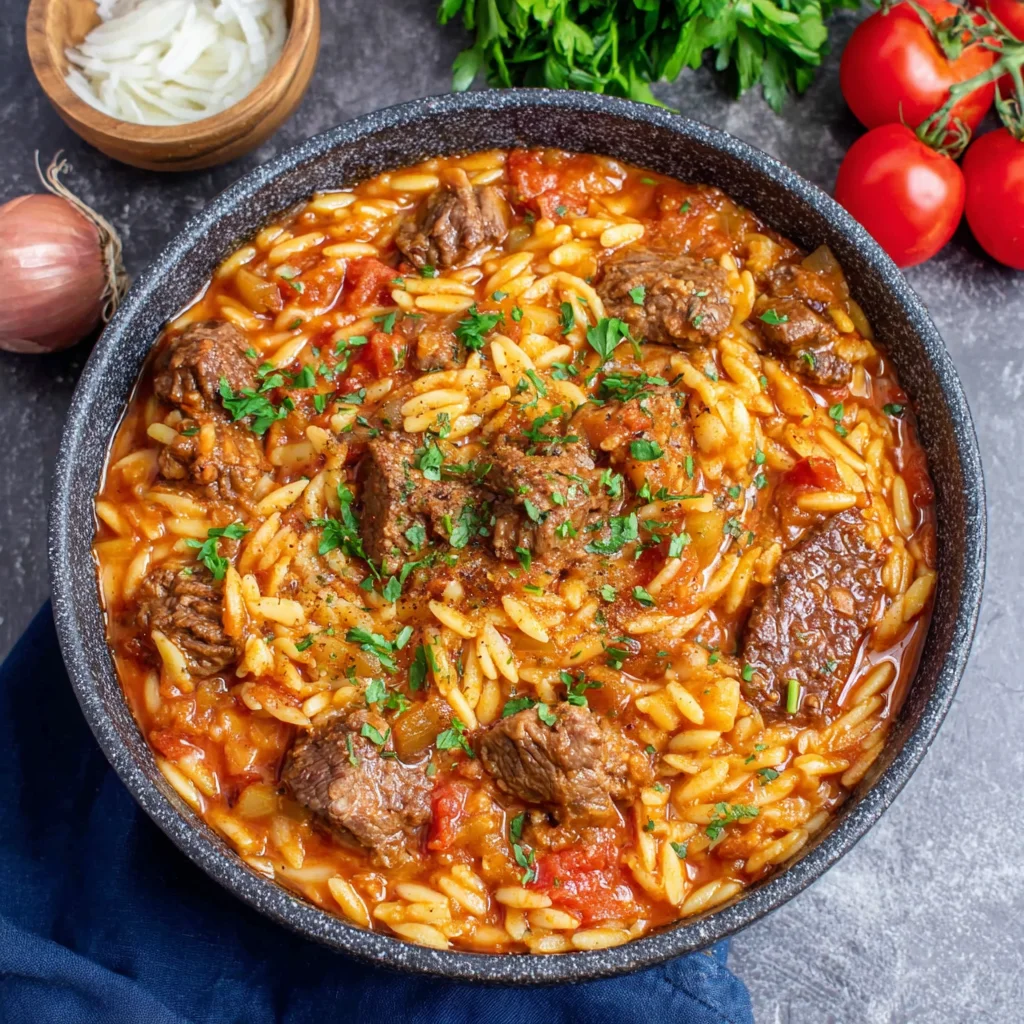
Notes
- Storage: Leftover Giouvetsi can be stored in an airtight container in the refrigerator for up to 3-4 days. It often tastes even better the next day!
- Freezing: This stew freezes well. Once completely cooled, transfer to freezer-safe containers and freeze for up to 3 months. Thaw overnight in the refrigerator and reheat gently on the stovetop, adding a splash of broth if needed.
- Variations: For a richer tomato flavor, add a tablespoon of sundried tomato paste alongside the regular tomato paste. A pinch of dried oregano or a sprig of fresh rosemary can also be lovely additions.
Frequently Asked Questions
Can I use a different type of beef for Giouvetsi?
Yes, while chuck or round are excellent choices for their flavor and ability to tenderize beautifully, you can also use beef stew meat. Ensure it's cut into uniform 2-3 cm (1-inch) pieces for even cooking.
What kind of red wine is best for this dish?
A dry red wine such as Cabernet Sauvignon, Merlot, or Pinot Noir works wonderfully. Avoid sweet wines, as they will alter the flavor profile of the stew. If you prefer not to use alcohol, you can substitute with additional beef or chicken stock.
My orzo stuck to the bottom of the pot. What went wrong?
Orzo is a small pasta that releases a lot of starch, making it prone to sticking. The key is consistent stirring once it's added to the pot, especially during the last 10 minutes of cooking. Also, ensure there's enough liquid initially; if it looks too dry, add more broth.
Nutrition Facts (Per Serving)
Calories: Approximately 650-700 per serving, Protein: 45-50g, Fat: 25-30g, Carbs: 55-60g, Fiber: 5-7g. Note: Nutritional values are estimates and may vary based on specific brands and exact quantities used.
Allergy Information
Contains gluten (orzo) and dairy (Kefalotyri/Parmesan cheese). For a gluten-free option, use gluten-free orzo or substitute with rice or quinoa. For a dairy-free version, omit the cheese or use a dairy-free Parmesan alternative.



)
No comment