
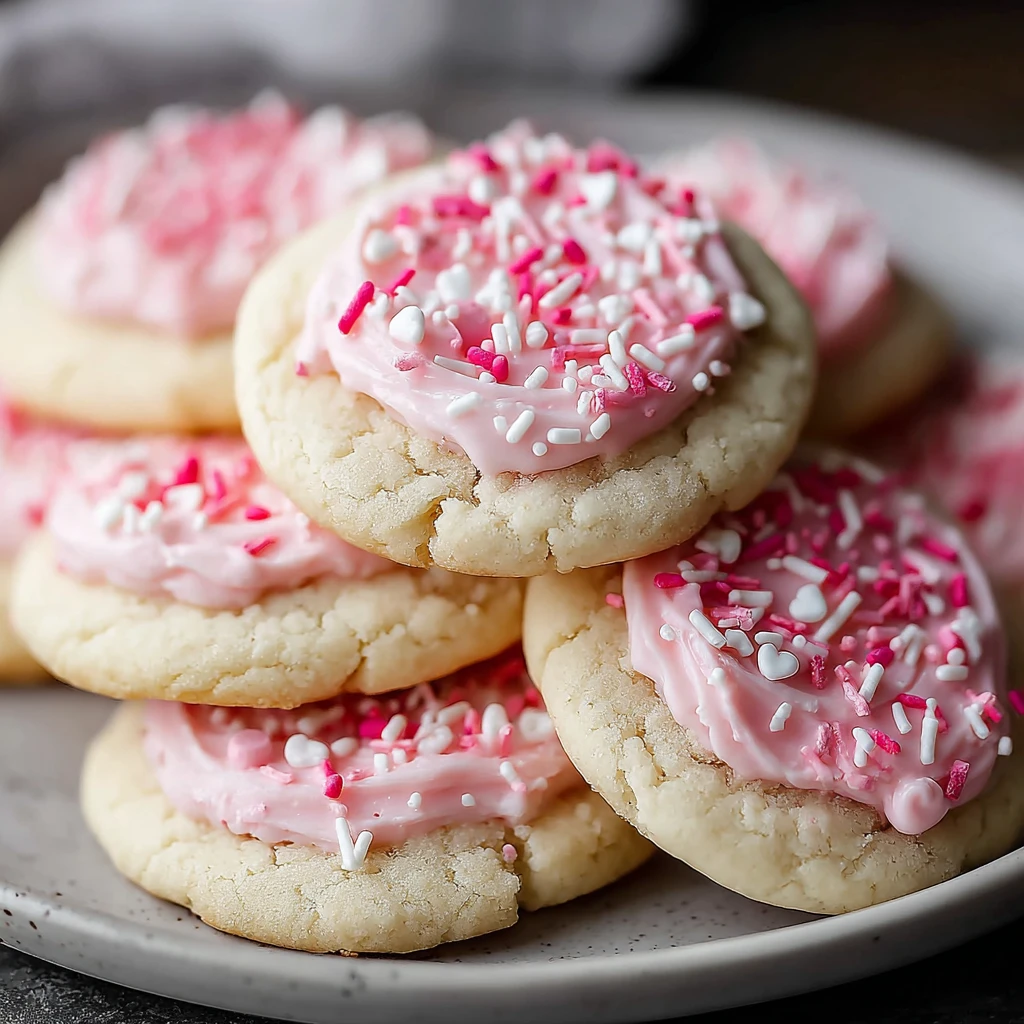
Frosted Sugar Cookies – Irresistibly Soft and Creamy Treats
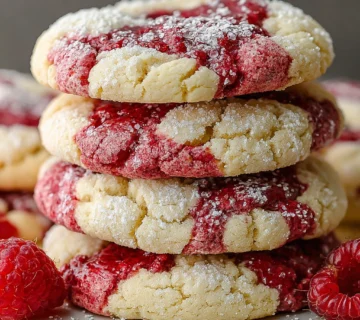
These Frosted Sugar Cookies are the epitome of sweet indulgence, offering an irresistible melt-in-your-mouth texture beneath a luscious, creamy frosting. Each bite delivers a perfect balance of buttery richness and sweet vanilla, making them a delightful treat for any occasion. They are designed to bring joy and a touch of whimsy to your dessert table, whether it's a casual gathering or a festive celebration.
Prep Time
20 minutes
Cook Time
8-10 minutes
Total Time
45 minutes (including cooling time)
Servings
Makes about 24 cookies
Keywords
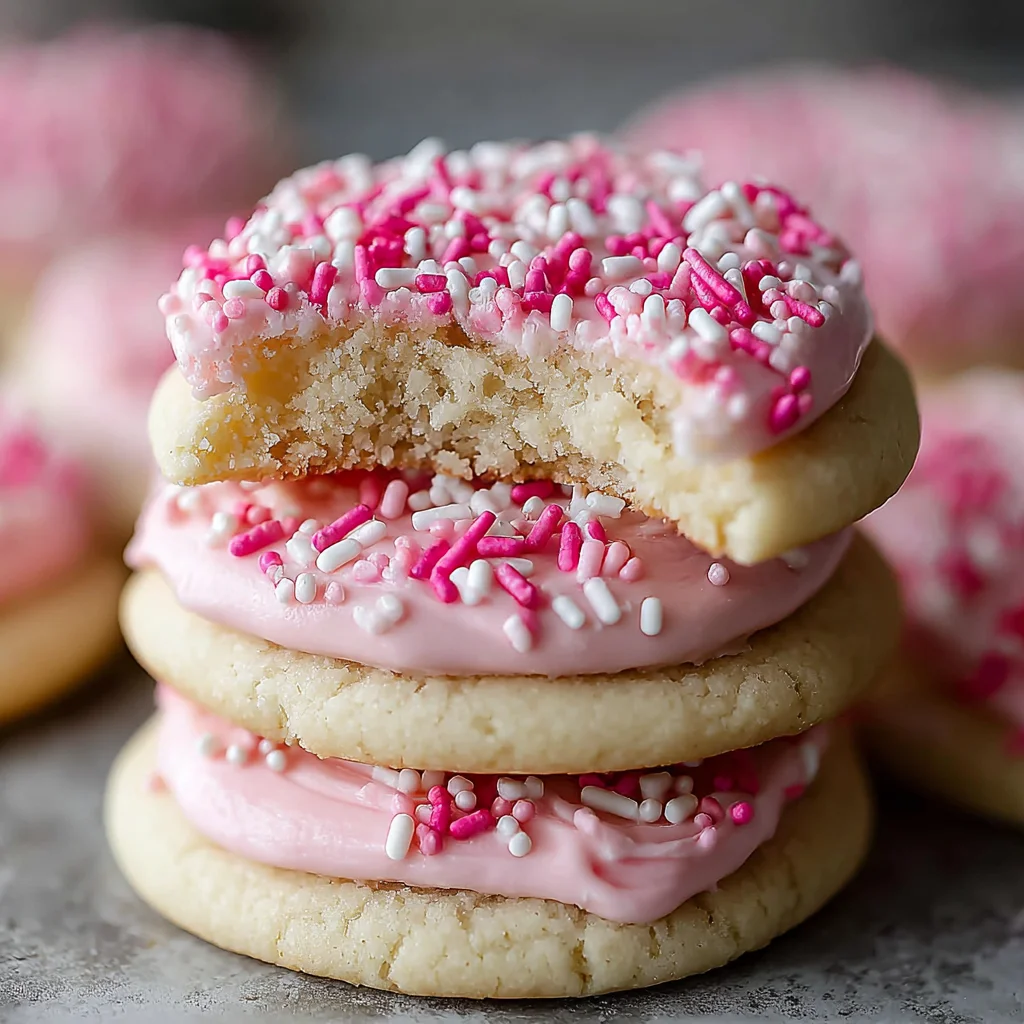
Why This Recipe Delivers
- Melt-in-your-mouth texture that is undeniably soft and tender.
- Creamy, dreamy vanilla frosting that perfectly complements the cookie base.
- Versatile and customizable for any holiday or theme with different food colorings and sprinkles.
- A comforting, classic treat that evokes nostalgia and brings joy.
- Relatively quick to prepare and bake, making it ideal for impromptu baking sessions.
Ingredients
- 240 grams (2 cups) all-purpose flour
- 5 grams (1 teaspoon) baking soda
- 4 grams (1 teaspoon) baking powder
- 170 grams (3/4 cup) unsalted butter, softened
- 200 grams (1 cup) granulated sugar
- 1 large egg
- 10 milliliters (2 teaspoons) vanilla extract
- 2.5 grams (1/2 teaspoon) salt
- 240 grams (2 cups) powdered sugar
- 30 milliliters (2 tablespoons) milk
- 5 milliliters (1 teaspoon) vanilla extract (for frosting)
- A few drops of pink food coloring (or desired color)
- 30 grams (1/4 cup) Valentine’s sprinkles, optional
Instructions
- Preheat your oven to 175°C (350°F). Line two large baking sheets with parchment paper to prevent sticking and ensure even baking. This step prepares your baking surface for easy removal and consistent results.
- In a medium bowl, whisk together the 240 grams (2 cups) of all-purpose flour, 5 grams (1 teaspoon) of baking soda, and 4 grams (1 teaspoon) of baking powder until well combined. This ensures the leavening agents are evenly distributed, promoting a uniform rise in your cookies. Set this dry mixture aside.
- In a large mixing bowl, using either a stand mixer with a paddle attachment or a hand mixer, cream together the 170 grams (3/4 cup) of softened unsalted butter and 200 grams (1 cup) of granulated sugar on medium speed. Continue mixing until the mixture is light, fluffy, and pale in color, typically taking 2-3 minutes. This creaming process incorporates air, contributing to the cookies' soft texture.
- Add the large egg and 10 milliliters (2 teaspoons) of vanilla extract to the creamed butter and sugar mixture. Beat on medium speed until fully incorporated and the mixture is smooth and creamy, scraping down the sides of the bowl as needed. The egg acts as a binder, and vanilla enhances the flavor significantly.
- Gradually add the reserved dry ingredients to the wet mixture, mixing on low speed until a soft, cohesive dough forms. Be careful not to overmix; stop as soon as the flour streaks disappear. Overmixing can develop the gluten too much, leading to tough cookies.
- Scoop the cookie dough into uniform balls, approximately 2 tablespoons (30ml) each, and gently flatten them slightly. Arrange them on the prepared baking sheets, leaving about 5 centimeters (2 inches) of space between each cookie to allow for spreading during baking.
- Bake the cookies in the preheated oven for 8 to 10 minutes. The edges should be lightly set and barely golden, while the centers remain soft and slightly puffy. Avoid overbaking at all costs to ensure the cookies stay wonderfully soft and chewy, not dry or crisp.
- Once baked, remove the baking sheets from the oven and let the cookies cool on the sheets for about 5 minutes. This allows them to firm up slightly before you attempt to move them, preventing breakage.
- Carefully transfer the slightly cooled cookies to a wire cooling rack to cool completely. Ensure the cookies are entirely cool before frosting to prevent the frosting from melting and sliding off, which can ruin the aesthetic and texture.
- While the cookies cool, prepare the frosting. In a medium bowl, whisk together the 240 grams (2 cups) of powdered sugar, 30 milliliters (2 tablespoons) of milk, 5 milliliters (1 teaspoon) of vanilla extract, and a few drops of pink food coloring. Whisk until smooth and creamy. If the frosting is too thick, add a tiny bit more milk, a few drops at a time, until it reaches a spreadable consistency. If too thin, add a bit more powdered sugar. The vanilla extract provides a depth of flavor that complements the cookies perfectly.
- Once the cookies are completely cool, generously frost each one with the prepared creamy frosting using a small offset spatula or butter knife. Aim for an even layer that covers the top surface.
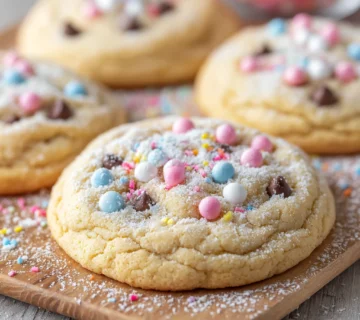
- Immediately after frosting, decorate the cookies with 30 grams (1/4 cup) of Valentine's sprinkles, or your chosen decorations, for a festive finish. Allow the frosting to set slightly, typically for 15-20 minutes, before serving or stacking to avoid smudging.

Tools You’ll Need
- Baking sheets
- Parchment paper
- Stand mixer or hand mixer
- Large mixing bowl
- Medium mixing bowls
- Rubber spatula
- Whisk
- Wire cooling rack
- Measuring cups and spoons (or kitchen scale)
- Small offset spatula or butter knife (for frosting)
Essential Success Tips
- Ensure your butter is truly softened, not melted, for optimal creaming and cookie texture.
- Measure your flour by weighing it (240g) or by using the 'spoon and level' method to avoid dense cookies.
- Do not overmix the dough once the flour is added; mix only until just combined to keep the cookies tender.
- Watch your baking time closely; these cookies are best when slightly underbaked, maintaining their softness.
- Always allow cookies to cool completely on a wire rack before applying frosting to prevent it from melting or running.
Professional Cooking Secrets
- For an extra layer of flavor complexity, brown a portion of your butter before softening it for the cookie dough. This adds a nutty, rich undertone.
- Sift your powdered sugar for the frosting to ensure a perfectly smooth, lump-free consistency. This small step makes a big difference in the final texture.
- A touch of almond extract in the frosting (about 1/4 teaspoon) can elevate the flavor profile, offering a subtle, sophisticated note that pairs beautifully with vanilla.
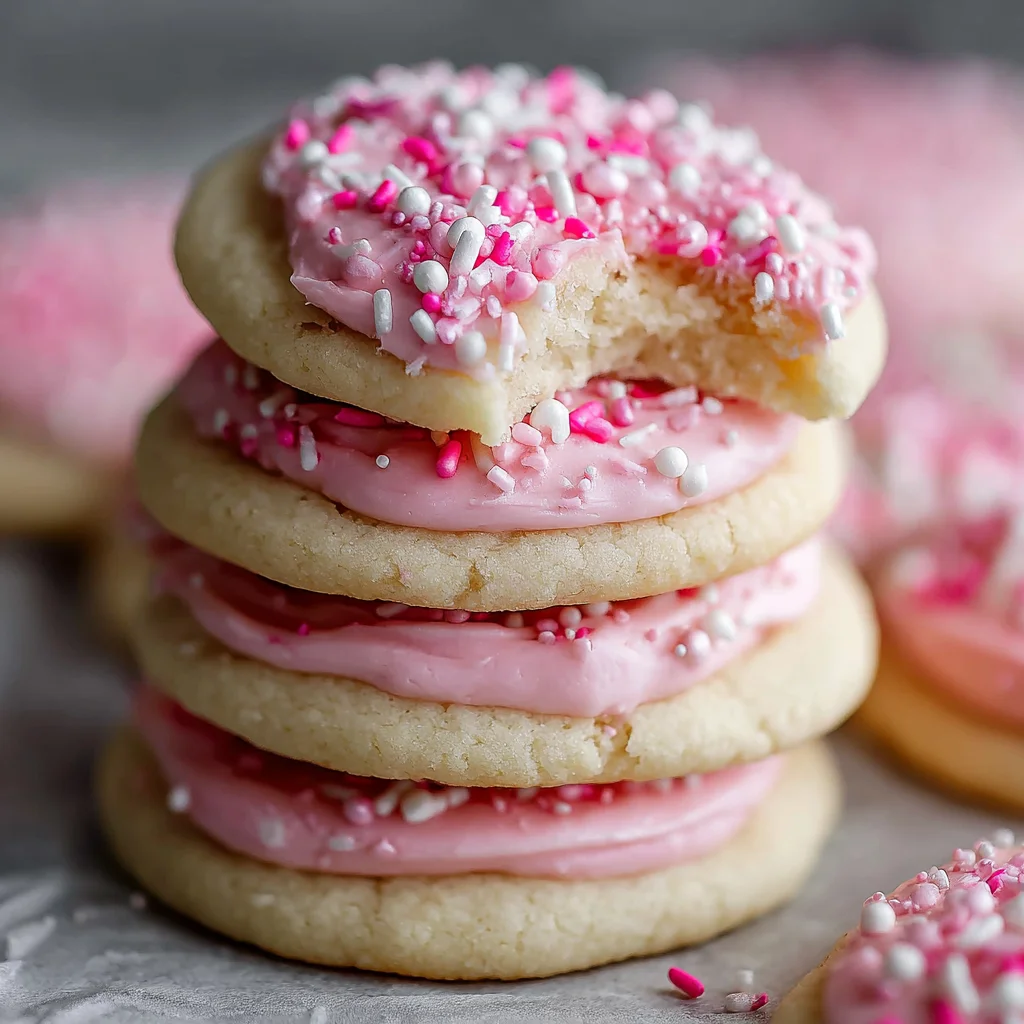
Notes
- For a gluten-free version, swap the all-purpose flour for a 1:1 gluten-free all-purpose flour blend.
- To make these dairy-free, use a high-quality plant-based butter substitute and a non-dairy milk alternative (such as almond or oat milk).
- Feel free to experiment with different food coloring colors and sprinkle themes to match any occasion, from birthdays to seasonal holidays.
- Store frosted cookies in an airtight container at room temperature for up to 3-4 days to maintain freshness. Placing a slice of bread in the container can help keep them soft.
- Unfrosted cookies can be frozen for up to 3 months. Thaw at room temperature before frosting.
Frequently Asked Questions
Can I make the cookie dough ahead of time?
Yes, you can prepare the cookie dough and refrigerate it for up to 2-3 days. Wrap it tightly in plastic wrap before chilling. You may need to let it sit at room temperature for 10-15 minutes before scooping, as it will be firmer.
How do I prevent my sugar cookies from spreading too much?
Ensuring your butter is softened but not melted is key. Also, measuring your flour accurately and avoiding overmixing will help. For extra insurance, you can briefly chill the scooped cookie dough balls on the baking sheet for 10-15 minutes before baking.
What kind of milk should I use for the frosting?
Any type of milk works well, including whole milk, 2%, or even non-dairy alternatives like almond or oat milk. The most important thing is to add it gradually to achieve your desired frosting consistency.
Nutrition Facts (Per Serving)
Calories: Approximately 250 per cookie, Protein: 2g, Fat: 12g, Carbs: 35g (Note: These are estimated values and can vary based on exact ingredient brands and portion sizes.)
Allergy Information
Contains dairy (butter, milk), eggs, and gluten (all-purpose flour). For a gluten-free version, use gluten-free all-purpose flour. For a dairy-free version, use plant-based butter and non-dairy milk.



No comment