

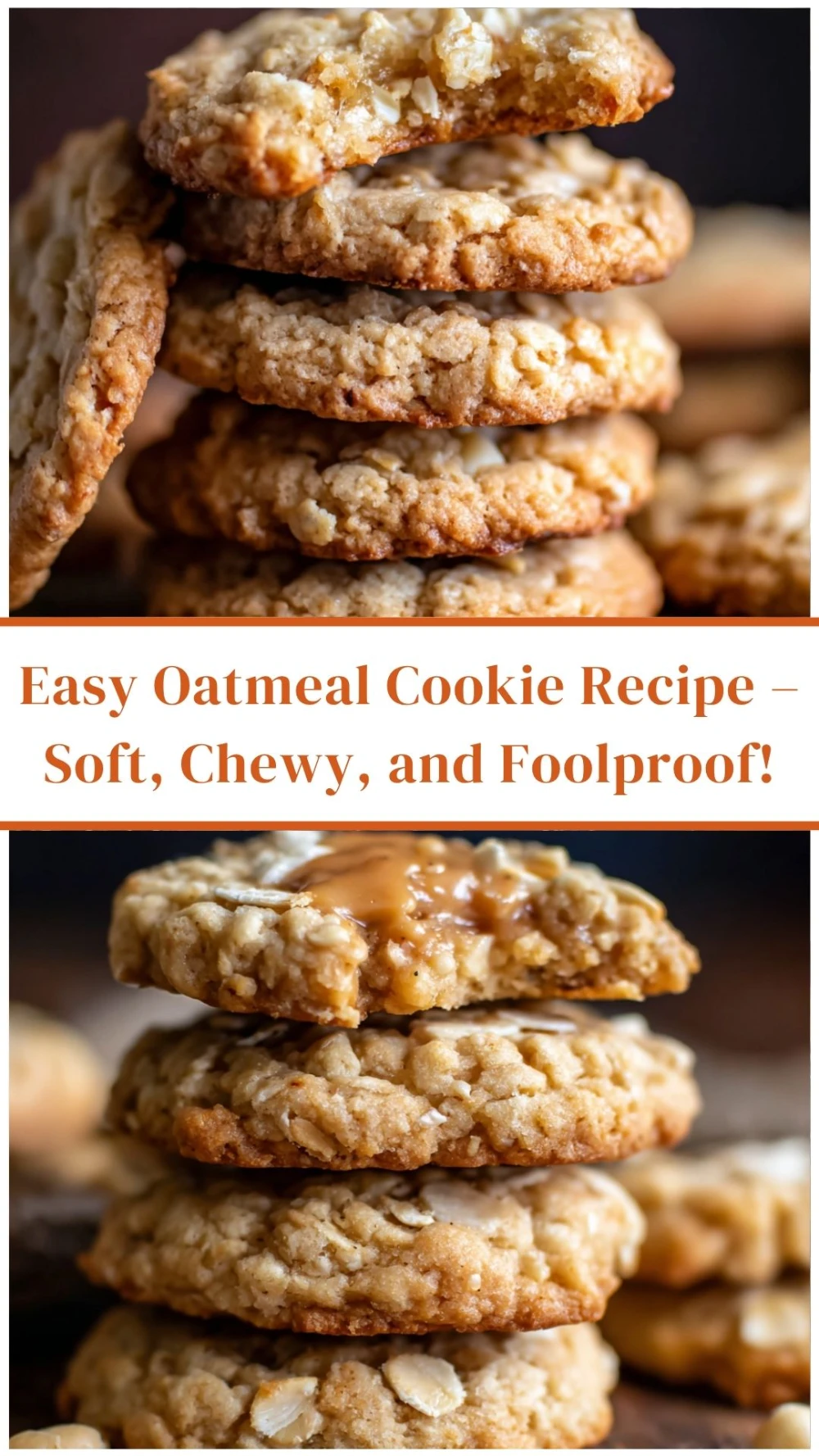
Easy Oatmeal Cookie Recipe – Soft, Chewy, and Foolproof!
Indulge in the nostalgic comfort of these incredibly soft and chewy oatmeal cookies. This foolproof recipe ensures perfectly golden-edged treats with a delightfully tender center every time. Whether you prefer classic raisins or decadent chocolate chips, these cookies are a timeless crowd-pleaser that are simple to make.
Prep Time
15 minutes
Cook Time
8 to 10 minutes
Total Time
Approximately 35 minutes (including cooling)
Servings
Makes about 30 cookies
Keywords

Why This Recipe Delivers
- Incredibly soft and wonderfully chewy texture with perfectly golden edges.
- A truly foolproof recipe, ideal for bakers of all skill levels.
- Versatile and customizable with your favorite add-ins like raisins or chocolate chips.
- Comes together quickly for a comforting homemade treat any day of the week.
- A timeless classic that evokes a sense of warmth and nostalgia.
Ingredients
- 226g (1 cup) unsalted butter, softened
- 200g (1 cup) granulated sugar
- 220g (1 cup) packed light brown sugar
- 2 large eggs, at room temperature
- 5ml (1 teaspoon) vanilla extract
- 240g (2 cups) all-purpose flour
- 5g (1 teaspoon) baking soda
- 2.5g (1/2 teaspoon) fine sea salt
- 270g (3 cups) rolled oats (old-fashioned)
- Optional add-ins: 150g (1 cup) raisins or chocolate chips
Instructions
- Preheat your oven to 175°C (350°F). Prepare your baking sheets by lining them with parchment paper. This prevents sticking and ensures even baking, making cleanup a breeze.
- In a large mixing bowl, using an electric mixer or stand mixer, cream together the softened unsalted butter, granulated sugar, and packed light brown sugar. Beat on medium speed until the mixture is light, fluffy, and pale in color, typically 2-3 minutes. This aeration step is fundamental for achieving a tender, soft cookie texture.
- Add the large eggs one at a time, beating well after each addition to fully incorporate them into the butter mixture. Stir in the vanilla extract until just combined. Ensure your eggs are at room temperature to prevent the mixture from curdling and to promote a smoother batter.
- In a separate medium bowl, whisk together the all-purpose flour, baking soda, and fine sea salt. Whisking ensures these dry ingredients are thoroughly combined and evenly distributed throughout the dough, preventing any pockets of leavening agents.
- Gradually add the whisked dry ingredients to the wet creamed mixture, mixing on low speed until they are just combined. It is crucial not to overmix the dough at this stage, as overmixing can develop the gluten in the flour, leading to tougher cookies.
- Fold in the rolled oats and any optional add-ins such as raisins or chocolate chips using a spatula. Mix gently until they are evenly distributed throughout the cookie dough.
- Drop rounded tablespoons of dough onto the prepared baking sheets, spacing them approximately 5 cm (2 inches) apart. This spacing allows the cookies to spread without touching each other during baking.
- Bake for 8 to 10 minutes, or until the edges of the cookies are lightly golden brown and the centers still appear slightly soft. Remember that cookies continue to cook slightly as they cool, so removing them when they are still a little soft in the middle will ensure a chewy texture.
- Allow the freshly baked cookies to cool on the baking sheets for about 5 minutes. This crucial resting period helps them to firm up and set, preventing them from breaking when transferred. After 5 minutes, carefully transfer the cookies to a wire rack to cool completely.

Tools You’ll Need
- Large mixing bowl
- Medium mixing bowl
- Electric mixer (handheld or stand mixer)
- Rubber spatula
- Whisk
- Measuring cups and spoons
- Baking sheets
- Parchment paper
- Wire cooling rack
Essential Success Tips
- Ensure your butter and eggs are at true room temperature. This allows them to cream together properly, creating a smooth emulsion that traps air for lighter, softer cookies.
- Avoid overmixing the dough once the flour is added. Mix only until the dry ingredients are just incorporated to prevent gluten development, which can lead to tough cookies.
- Do not overbake. Oatmeal cookies are best when slightly underbaked, with edges that are just golden and centers that still look a bit soft. They will set as they cool.
- Use old-fashioned rolled oats, not instant or quick oats, for the best texture. Instant oats absorb too much moisture and can make the cookies dry.
- Cool the cookies on the baking sheet for a few minutes before transferring. This helps them firm up and prevents them from falling apart when moved.
Professional Cooking Secrets
- For an extra layer of flavor, lightly toast your rolled oats in a dry pan over medium heat for 5-7 minutes before adding them to the dough. This deepens their nutty aroma.
- Chill your cookie dough for at least 30 minutes (or up to 24 hours). This allows the flavors to meld, the butter to firm up, and results in thicker, chewier cookies that spread less.
- A sprinkle of flaky sea salt on top of each cookie immediately after baking can elevate the flavor, providing a delightful contrast to the sweetness and enhancing the overall taste.

Notes
- Storage: Store cooled cookies in an airtight container at room temperature for up to 3-4 days. For longer storage, freeze baked cookies for up to 3 months.
- Variations: Feel free to experiment with other mix-ins like chopped nuts (walnuts, pecans), dried cranberries, or white chocolate chips. Adjust the quantity to maintain overall dough consistency.
- Freezing Dough: Unbaked cookie dough balls can be frozen on a parchment-lined baking sheet until solid, then transferred to a freezer-safe bag. Bake from frozen, adding 2-4 minutes to the baking time.
Frequently Asked Questions
Why did my oatmeal cookies spread too much?
Cookies spreading too much can be due to several factors: butter being too soft, oven not being hot enough, overmixing the dough, or not chilling the dough. Ensure ingredients are at the correct temperature and avoid overmixing.
Can I make these cookies gluten-free?
Yes, you can! Substitute the all-purpose flour with a 1:1 gluten-free baking flour blend that contains xanthan gum. Ensure your rolled oats are certified gluten-free, as oats can be cross-contaminated.
What kind of oats should I use for oatmeal cookies?
For the best texture in oatmeal cookies, always use old-fashioned rolled oats. Quick or instant oats are too finely processed and will result in a different, often drier, cookie texture.
Nutrition Facts (Per Serving)
Calories: Approximately 190 per cookie, Protein: 2g, Fat: 10g, Carbs: 24g (estimates vary based on exact ingredients and optional add-ins).
Allergy Information
Contains dairy, eggs, and gluten. For a gluten-free version, use certified gluten-free oats and a 1:1 gluten-free flour blend. For a dairy-free option, use a plant-based butter alternative.







No comment