
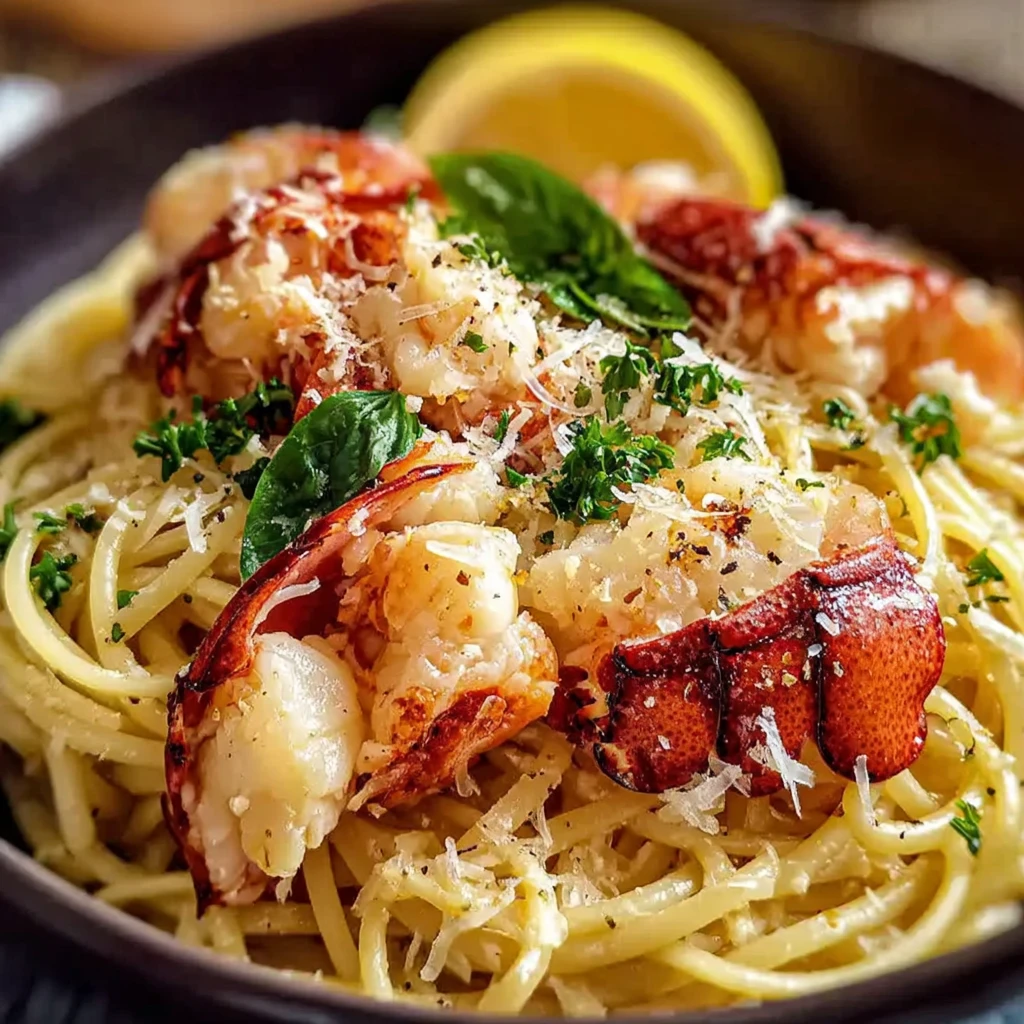
Delicious Lobster Bucatini: A Restaurant-Style Delight at Home
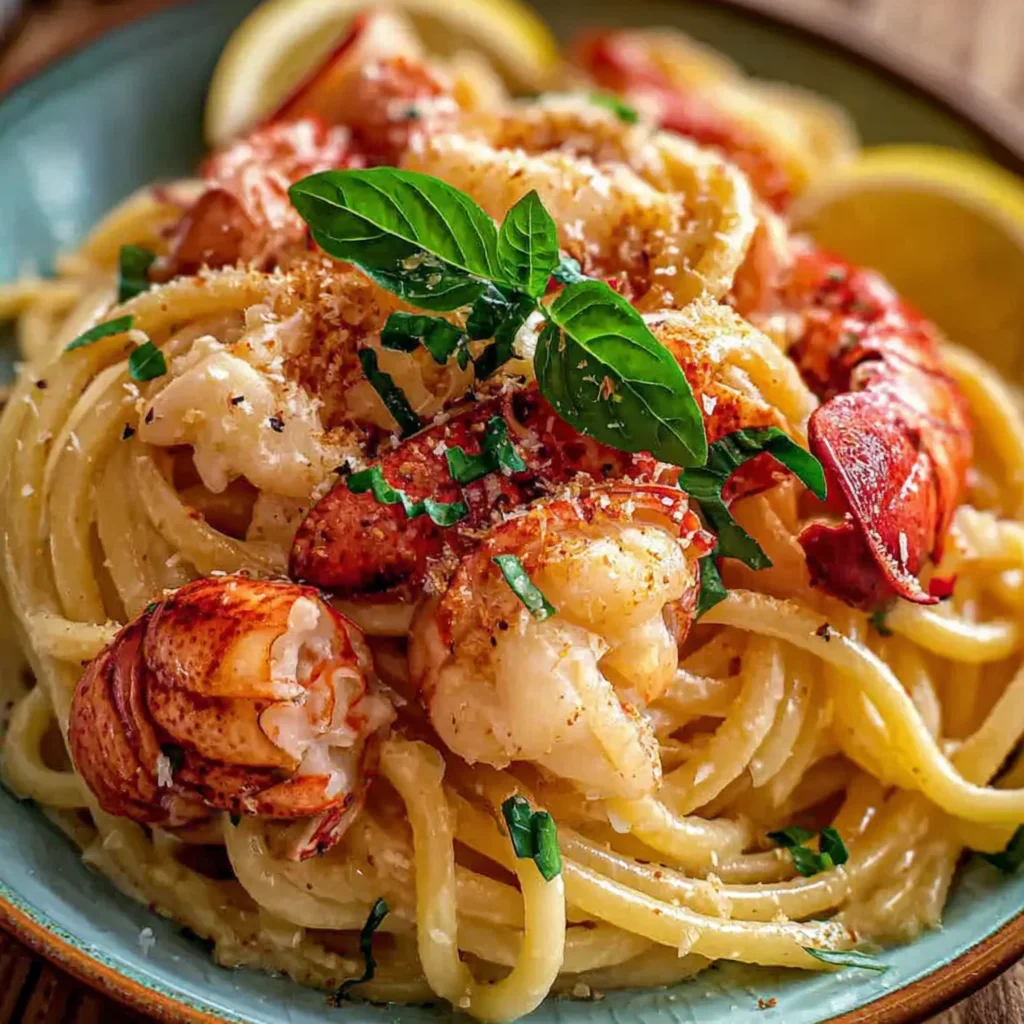
Indulge in the luxury of Lobster Bucatini, a dish that brings gourmet dining right to your kitchen. Succulent lobster meat is gently tossed with al dente bucatini pasta in a luscious, creamy white wine sauce, brightened with lemon and fresh herbs. This elegant yet surprisingly simple meal promises an unforgettable culinary experience, perfect for special occasions or when you simply crave something extraordinary.
Prep Time
20 minutes
Cook Time
25 minutes
Total Time
45 minutes
Servings
4 generous servings
Keywords
Why This Recipe Delivers
- Indulgent restaurant-quality dish made effortlessly at home.
- Combines delicate, sweet lobster with a rich, creamy white wine sauce.
- Ready in under an hour, perfect for a luxurious weeknight meal or special occasion.
- Bursting with fresh flavors from lemon, garlic, shallots, and fragrant herbs.
- Bucatini pasta's unique shape perfectly captures and holds the exquisite sauce.
Ingredients
- 450 grams (1 pound) bucatini pasta
- 2 medium-sized whole lobster tails (approximately 150-200g each), thawed if frozen
- 56 grams (4 tablespoons) unsalted butter, divided
- 45 milliliters (3 tablespoons) extra virgin olive oil
- 4 cloves garlic, minced finely
- 2 medium shallots, diced small
- 120 milliliters (1/2 cup) dry white wine (such as Sauvignon Blanc or Pinot Grigio)
- 120 milliliters (1/2 cup) heavy cream (double cream)
- 1 whole lemon, zest of the whole lemon and juice from half
- 2.5 milliliters (1/2 teaspoon) crushed red pepper flakes (optional, for a hint of heat)
- 60 milliliters (1/4 cup) fresh parsley, finely chopped, plus extra for garnish
- A handful of fresh basil leaves, torn
- Fine sea salt, for seasoning pasta water
- Freshly ground black pepper, to enhance flavors
- Grated Parmesan cheese, for serving
- 150 grams (1 cup) cherry tomatoes, halved (optional, for added freshness)
- A handful of baby spinach (optional, for extra greens)
- 50 grams (1/4 cup) sliced roasted red peppers (optional, for added sweetness and color)
- Optional mix-ins: 100g cooked shrimp or scallops
Instructions
- Prepare the lobster by ensuring the tails are fully thawed. Carefully remove the lobster meat from the shells using kitchen shears to cut along the top of the shell. Once extracted, cut the tender lobster meat into bite-sized chunks, approximately 2-3 cm (1 inch) pieces, and set aside.
- Bring a large pot of water to a rolling boil. Add a generous tablespoon of fine sea salt to the water, ensuring it tastes like the sea, which is essential for perfectly seasoned pasta. Add the bucatini pasta and cook according to package directions until it reaches a perfect al dente texture, typically 9-11 minutes. Before draining, reserve about 240 milliliters (1 cup) of the starchy pasta water; this will be crucial for achieving a silky-smooth sauce.
- While the pasta cooks, heat 2 tablespoons (28g) of the butter along with the olive oil in a large, deep skillet or Dutch oven over medium heat. Once the butter is melted and shimmering, add the finely minced garlic and diced shallots. Sauté for about 2-3 minutes, stirring occasionally, until they become fragrant and translucent but not browned, ensuring their sweet, aromatic flavors are gently released.
- Pour in the dry white wine, increasing the heat slightly. Use a wooden spoon to scrape up any browned bits from the bottom of the pan; this process, called deglazing, incorporates a tremendous amount of flavor into your sauce. Allow the wine to simmer vigorously for 2-3 minutes, reducing slightly and concentrating its bright, acidic notes.
- Gently fold the prepared lobster meat into the skillet. Cook for approximately 4-5 minutes, stirring occasionally, until the lobster turns opaque and is just cooked through. Be careful not to overcook the lobster, as it can become tough and rubbery.
- Reduce the heat to low. Stir in the remaining 2 tablespoons (28g) of butter, the heavy cream, the vibrant lemon zest, and the fresh lemon juice. Mix all the ingredients thoroughly until the butter is melted and the sauce is well combined and heated through for about 2 minutes. If using, add the crushed red pepper flakes now for a subtle kick.
- Add the drained bucatini pasta directly into the skillet with the lobster and sauce. Toss everything gently to ensure the pasta is evenly coated in the rich, creamy sauce. Incorporate the halved cherry tomatoes and the chopped fresh parsley and torn basil. If the sauce appears too thick or needs a little more body, gradually add some of the reserved pasta water, a tablespoon at a time, until your desired consistency is achieved. This starchy water helps to emulsify and bind the sauce beautifully. If desired, stir in optional baby spinach or sliced roasted red peppers here.
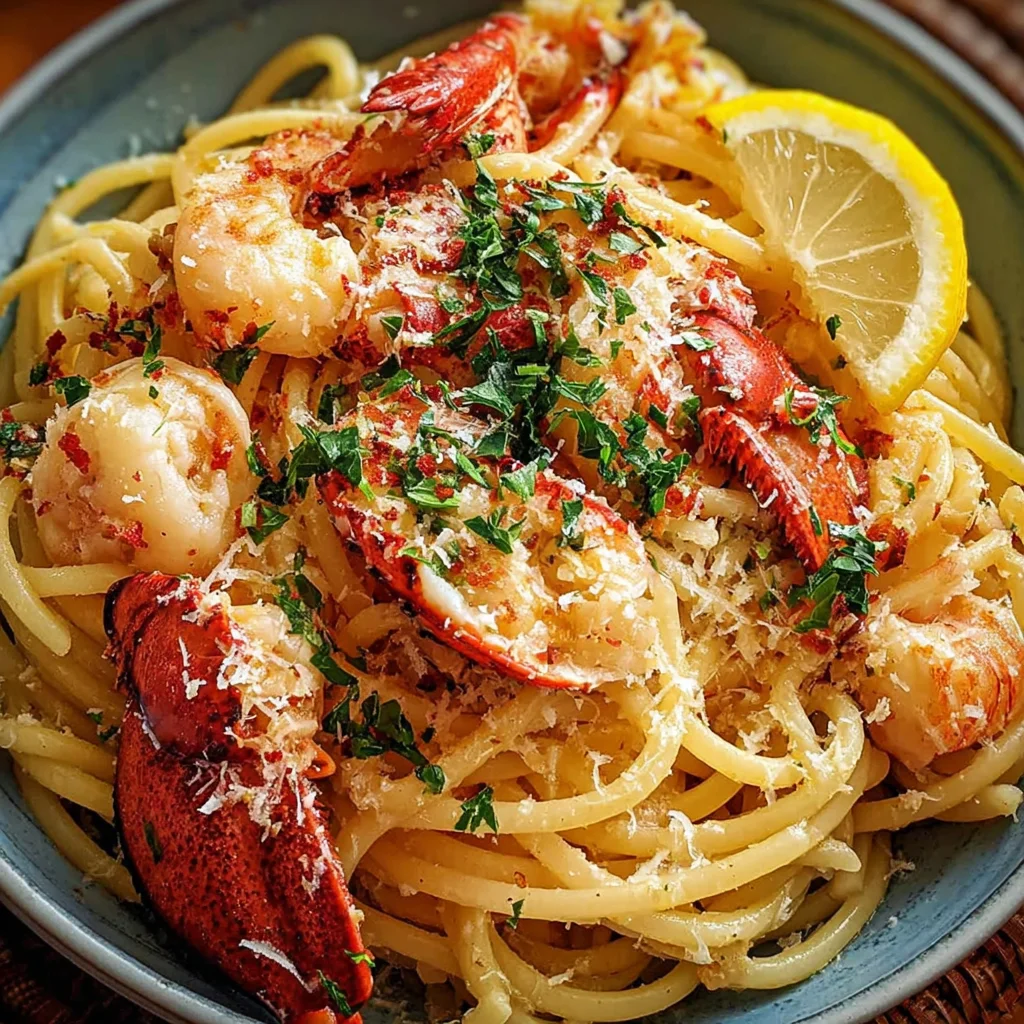
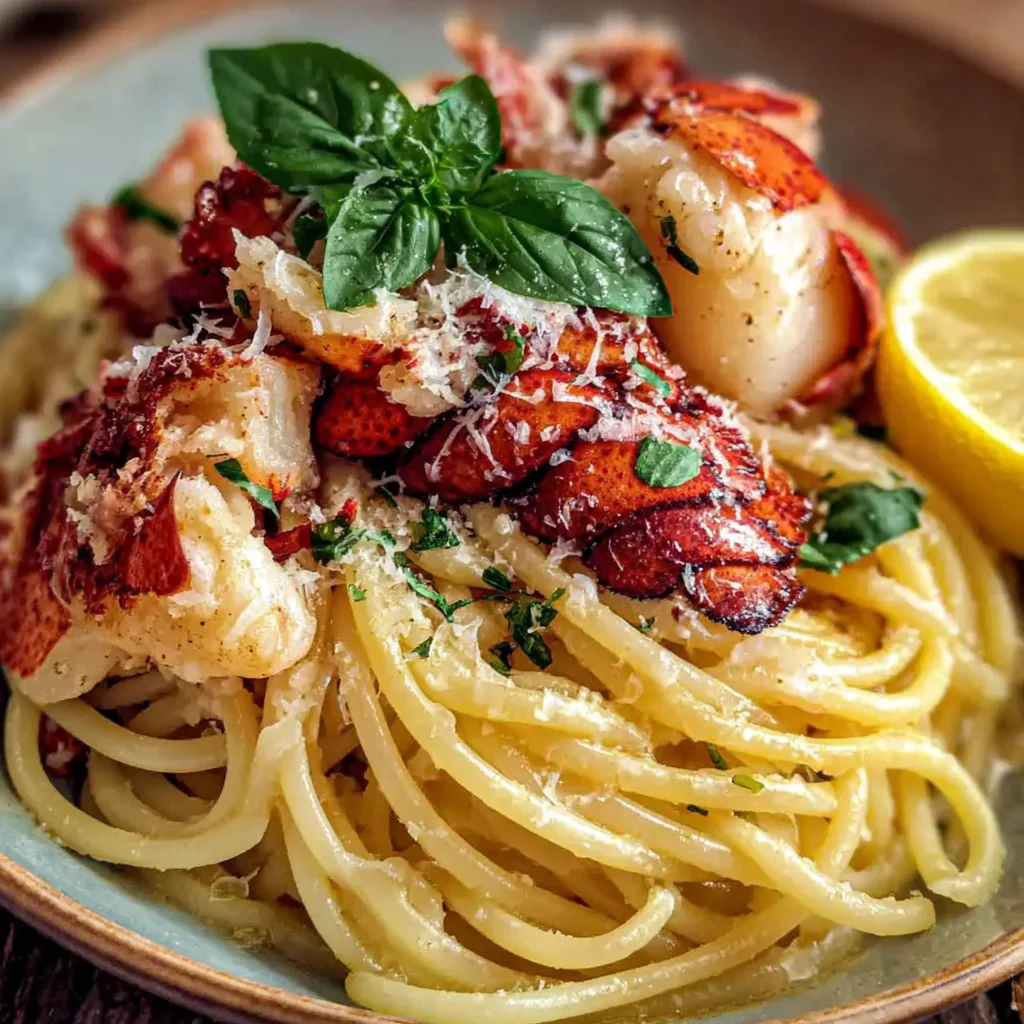
- Immediately transfer the Lobster Bucatini to serving plates. Garnish generously with extra freshly chopped parsley, a few more torn basil leaves, and a liberal sprinkle of grated Parmesan cheese. Serve piping hot and savor this restaurant-quality dish.
Tools You’ll Need
- Large pot for pasta
- Large, deep skillet or Dutch oven
- Wooden spoon or spatula
- Measuring cups and spoons
- Cutting board
- Sharp knife
- Lemon zester/grater
- Citrus juicer (optional)
- Kitchen shears (for lobster tails)
Essential Success Tips
- Do not overcook the lobster: Lobster cooks quickly; remove it from heat as soon as it turns opaque to keep it tender and succulent.
- Salt your pasta water generously: This is the only chance to season the pasta itself and is crucial for a flavorful dish.
- Reserve pasta water: Starchy pasta water is your secret weapon for a perfectly emulsified and creamy sauce; add it gradually to achieve the ideal consistency.
- Use fresh ingredients: The quality of your lobster, herbs, and lemon significantly impacts the final taste.
- Serve immediately: This dish is best enjoyed right after it's prepared to appreciate the fresh pasta and tender lobster.
Professional Cooking Secrets
- Deglazing the pan after sautéing shallots and garlic with white wine helps to lift all the flavorful fond (browned bits) from the bottom, enriching the sauce's depth. Allow it to reduce by half to concentrate the wine's essence.
- Finishing the sauce with a pat of cold butter just before serving, whisked in off the heat, can add an extra layer of glossy richness and help further emulsify the sauce for a velvety texture.
- For maximum herb flavor, add the fresh parsley and basil towards the very end of cooking, just before serving. This prevents them from cooking down too much and losing their vibrant aroma and color.
Notes
- Leftovers can be stored in an airtight container in the refrigerator for up to 1-2 days. Gently reheat on the stovetop with a splash of chicken broth or water to loosen the sauce, as the pasta will absorb much of it.
- Wine Pairing: A crisp Sauvignon Blanc, Pinot Grigio, or even a light Chardonnay would beautifully complement the delicate flavors of the lobster and the creamy sauce.
- For an extra layer of flavor, consider adding a pinch of saffron threads, steeped in a tablespoon of warm pasta water, to the sauce along with the cream.
Frequently Asked Questions
Can I use frozen lobster tails for this recipe?
Absolutely! Frozen lobster tails are perfectly fine and often more accessible. Just ensure they are fully thawed in the refrigerator overnight or under cold running water before preparing them.
What if I don't have bucatini pasta?
While bucatini is fantastic for its ability to hold the sauce, you can substitute it with other long pasta shapes like spaghetti, linguine, or fettuccine. The key is to choose a pasta that can generously cling to the creamy sauce.
Can I make this dish ahead of time?
This dish is best served immediately after preparation to enjoy the optimal texture of the pasta and the tenderness of the lobster. If you need to prep, you can chop your aromatics and cook the lobster ahead of time, but combine everything just before serving.
Nutrition Facts (Per Serving)
Calories: 620, Protein: 40g, Fat: 35g, Carbs: 45g (approximate per serving)
Allergy Information
Contains shellfish (lobster), dairy (butter, heavy cream, Parmesan), and gluten (bucatini pasta). For a gluten-free version, use gluten-free bucatini or spaghetti. To reduce dairy, consider using a dairy-free cream alternative, though the flavor profile will differ.



No comment