
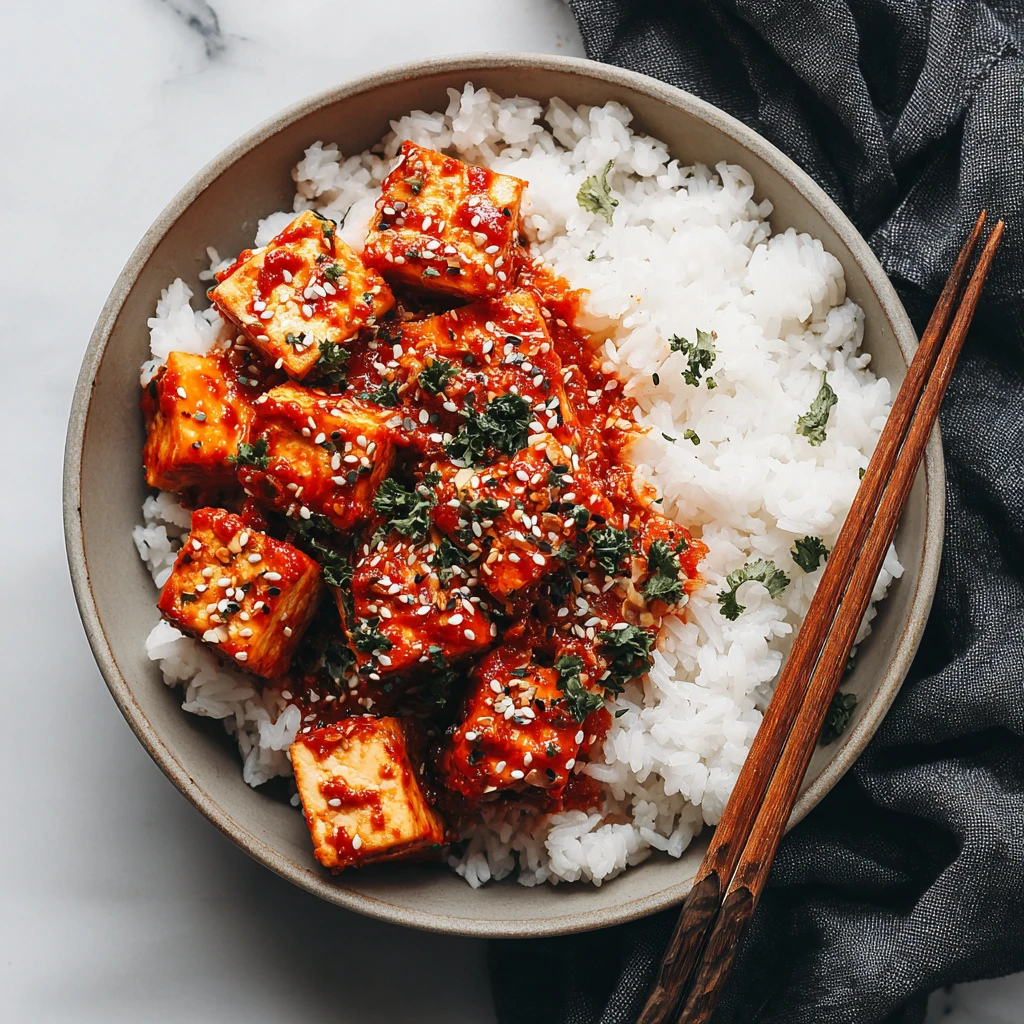
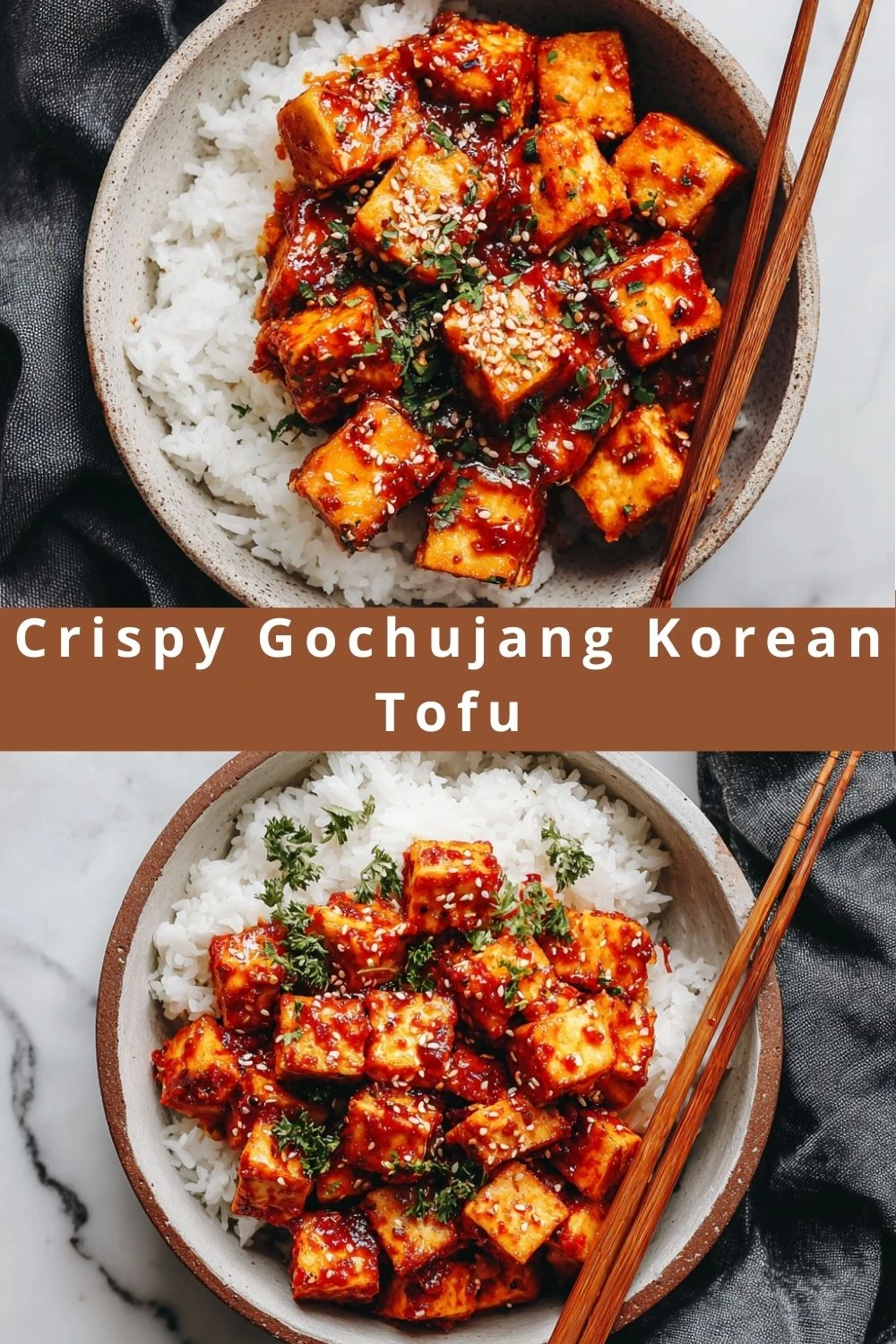
Crispy Gochujang Korean Tofu
Unlock the vibrant flavors of Korea with this irresistibly crispy gochujang tofu. Each cube of tofu is perfectly air-fried or baked to a golden crunch, then generously coated in a sweet, savory, and spicy gochujang sauce. It's a remarkably satisfying plant-based dish that promises a burst of flavor in every bite, perfect for a quick weeknight dinner or an impressive meal for guests.
Prep Time
15 minutes (plus 30 minutes for pressing tofu)
Cook Time
20-25 minutes
Total Time
40-45 minutes
Servings
4 servings
Keywords

Why This Recipe Delivers
- Achieves an incredibly satisfying crispy texture without deep frying.
- Boasts a perfect balance of sweet, spicy, and savory flavors from the gochujang sauce.
- A fantastic plant-based option that's rich in protein and flavor.
- Quick and easy to prepare, making it ideal for busy weeknights.
- Versatile and pairs wonderfully with a variety of sides.
Ingredients
- 400 grams (1 block, 14 oz) extra-firm tofu, pressed and cubed into 2 cm (0.8 inch) pieces
- 15 milliliters (1 tablespoon) neutral vegetable oil (e.g., canola, grapeseed)
- 30 grams (2 tablespoons) cornstarch (corn flour)
- 30 milliliters (2 tablespoons) gochujang (Korean chili paste), adjust to spice preference
- 30 milliliters (2 tablespoons) low-sodium soy sauce (or tamari for gluten-free)
- 30 milliliters (2 tablespoons) pure maple syrup (or agave nectar)
- 5 milliliters (1 teaspoon) toasted sesame oil
- Cooked rice, for serving
- Steamed or stir-fried vegetables (e.g., broccoli, bok choy), for serving
- Sliced green onions, for garnish (optional)
- Toasted sesame seeds, for garnish (optional)
Instructions
- Begin by pressing your extra-firm tofu for at least 30 minutes to remove excess moisture. This is crucial for achieving a truly crispy texture. Once pressed, pat it very dry with paper towels and cut it into uniform 2 cm (0.8 inch) cubes.
- In a medium bowl, drizzle the tofu cubes with the neutral vegetable oil. Toss gently to ensure each piece is lightly coated. Next, sprinkle the cornstarch over the oiled tofu and toss again until every cube is evenly coated. The cornstarch creates a thin, crispy layer when cooked.
- Arrange the cornstarch-coated tofu in a single layer in your air fryer basket or on a baking sheet lined with parchment paper. If using an air fryer, cook at 200°C (400°F) for 18-22 minutes, shaking the basket halfway through, until golden brown and crispy. If baking, preheat your oven to 200°C (400°F) and bake for 25-30 minutes, flipping halfway, until crispy.
- While the tofu is cooking, prepare the gochujang sauce. In a small bowl, whisk together the gochujang, low-sodium soy sauce, maple syrup, and toasted sesame oil until smooth and well combined. Taste and adjust sweetness or spice as desired.
- Once the tofu is perfectly crispy, transfer it to a large mixing bowl. Pour the prepared gochujang sauce over the hot tofu. Gently toss or stir with a spatula until every piece of crispy tofu is thoroughly coated in the glistening, flavorful sauce.
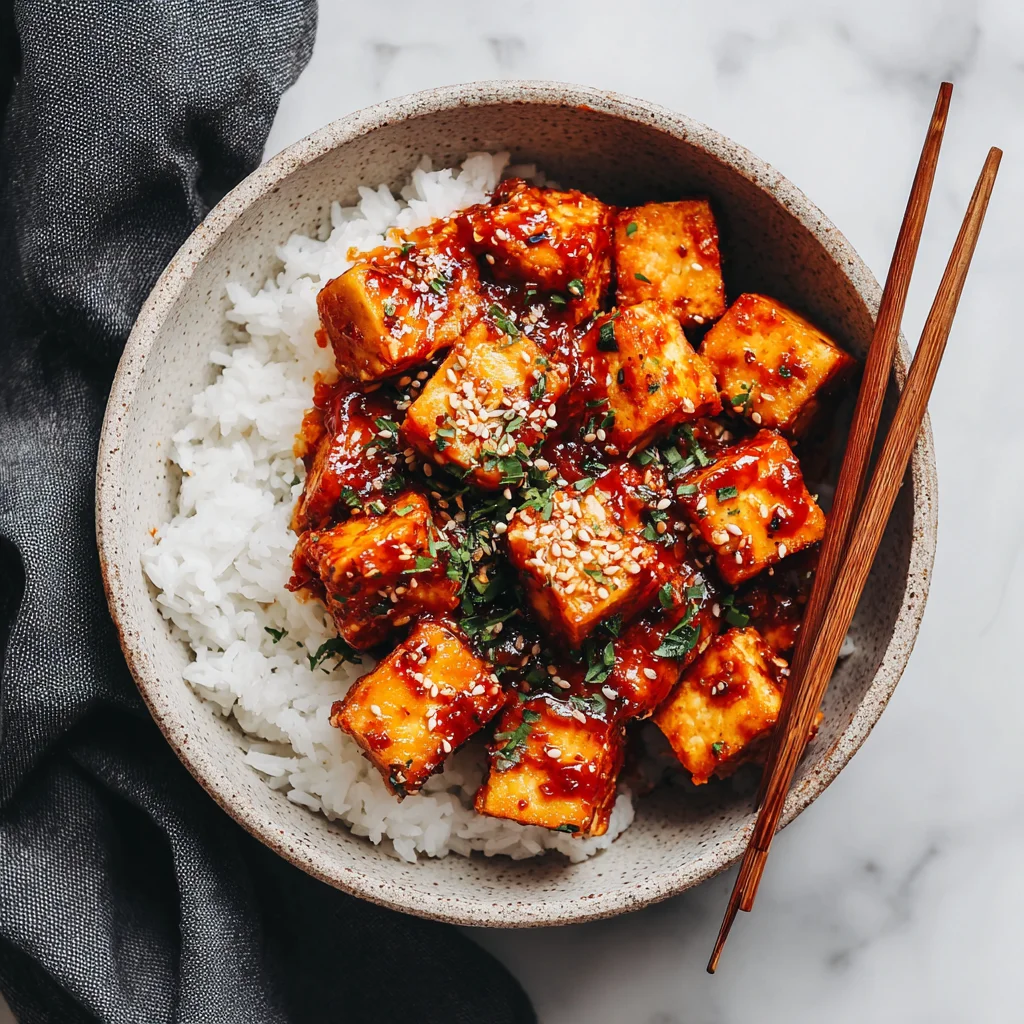
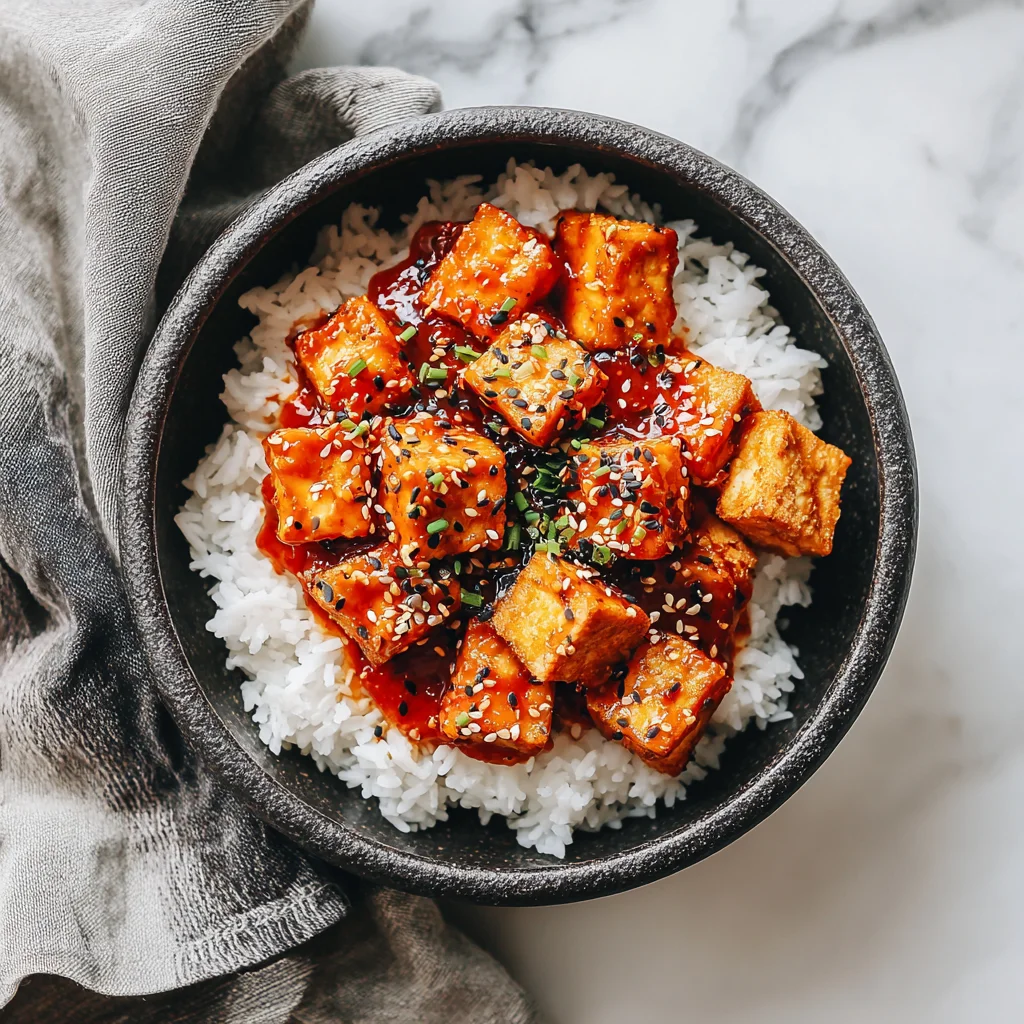
- Serve the crispy gochujang Korean tofu immediately over a bed of warm cooked rice, accompanied by your favorite steamed or stir-fried vegetables. Garnish with sliced green onions and toasted sesame seeds, if desired, for added freshness and crunch.
Tools You’ll Need
- Tofu press (optional, but recommended)
- Large mixing bowls
- Small whisk
- Air fryer or baking sheet with parchment paper
- Spatula or tongs
- Measuring spoons and cups
Essential Success Tips
- Always press your tofu thoroughly. This step is non-negotiable for truly crispy results, as it removes excess water that would otherwise steam the tofu.
- Ensure your tofu cubes are roughly the same size for even cooking and crisping.
- Do not overcrowd the air fryer basket or baking sheet. Cook in batches if necessary to allow proper air circulation and crispiness.
- Adjust the amount of gochujang to your preferred spice level. For a milder flavor, use slightly less; for more heat, add a touch more.
- Serve immediately after coating in the sauce to maintain the crispiness of the tofu.
Professional Cooking Secrets
- For an extra layer of flavor and aroma, lightly toast your cornstarch in a dry pan for a minute or two before coating the tofu. This adds a subtle nutty depth.
- Consider adding a tiny pinch of grated fresh ginger or garlic to the gochujang sauce for a more complex and aromatic profile.
- If you have leftover sauce, it makes an excellent marinade for other proteins or a dressing for a quick salad.
Notes
- Storage: Leftovers can be stored in an airtight container in the refrigerator for up to 3 days. Reheat gently in a pan or air fryer to regain some crispness, though it won't be as crisp as fresh.
- Variations: Experiment with adding other vegetables like bell peppers, mushrooms, or snap peas directly into the pan for the last few minutes of cooking with the tofu, or stir-fry them separately.
- Gluten-Free: Use tamari instead of soy sauce to make this dish entirely gluten-free.
Frequently Asked Questions
Can I pan-fry the tofu instead of air frying or baking?
Yes, you can pan-fry the tofu. Heat 15-30 milliliters (1-2 tablespoons) of neutral oil in a large non-stick pan over medium-high heat. Add the cornstarch-coated tofu in a single layer and cook for 3-5 minutes per side, turning until all sides are golden brown and crispy.
What is gochujang and where can I find it?
Gochujang is a savory, sweet, and spicy fermented Korean chili paste. It's a staple in Korean cuisine and can typically be found in the international aisle of most well-stocked grocery stores, Asian supermarkets, or online.
How can I make this dish spicier or milder?
To make it spicier, simply add more gochujang to the sauce, or a pinch of red pepper flakes. For a milder version, reduce the amount of gochujang to 15 milliliters (1 tablespoon) or less, and consider adding a touch more maple syrup to balance the heat.
Nutrition Facts (Per Serving)
Calories: 380, Protein: 25g, Fat: 18g, Carbs: 30g (estimated per serving, excludes rice and vegetables)
Allergy Information
Contains soy. For a gluten-free version, use tamari instead of soy sauce. Always check ingredient labels for hidden allergens.


No comment