
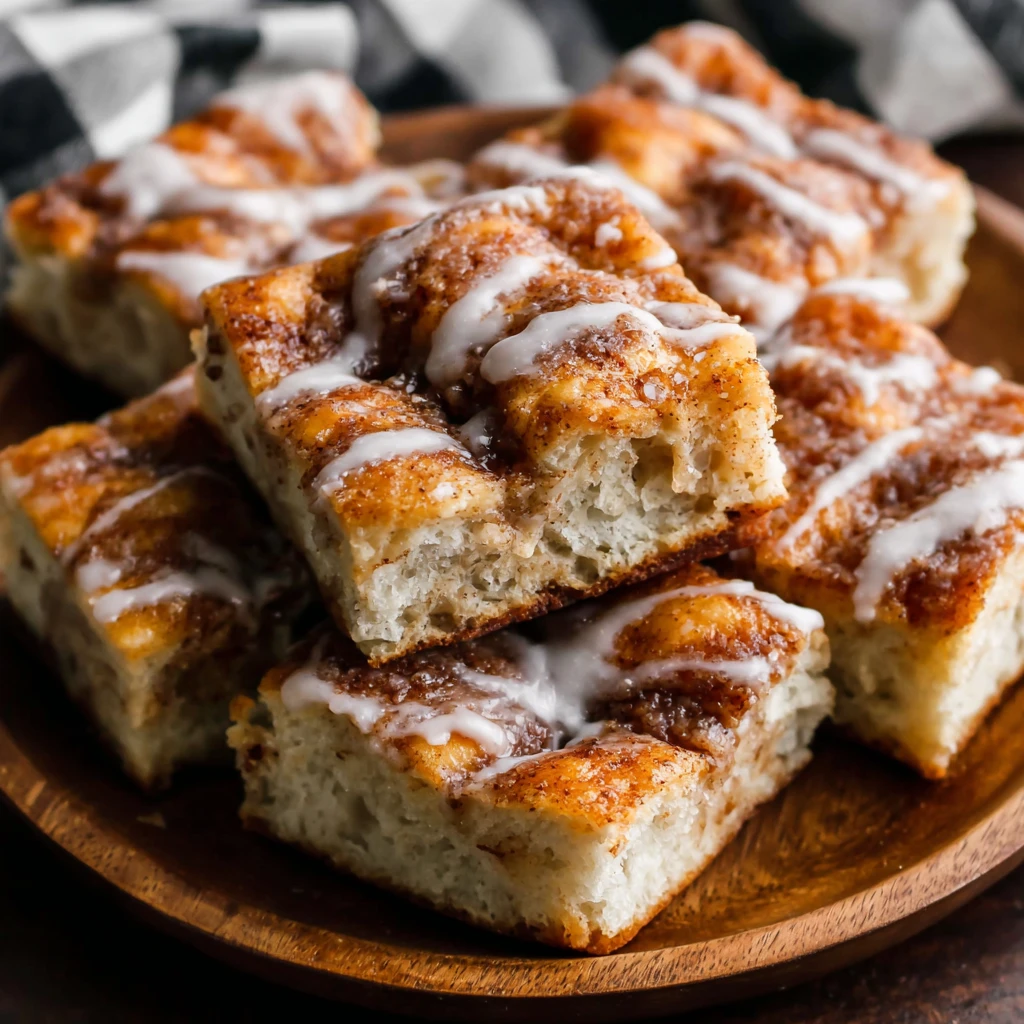
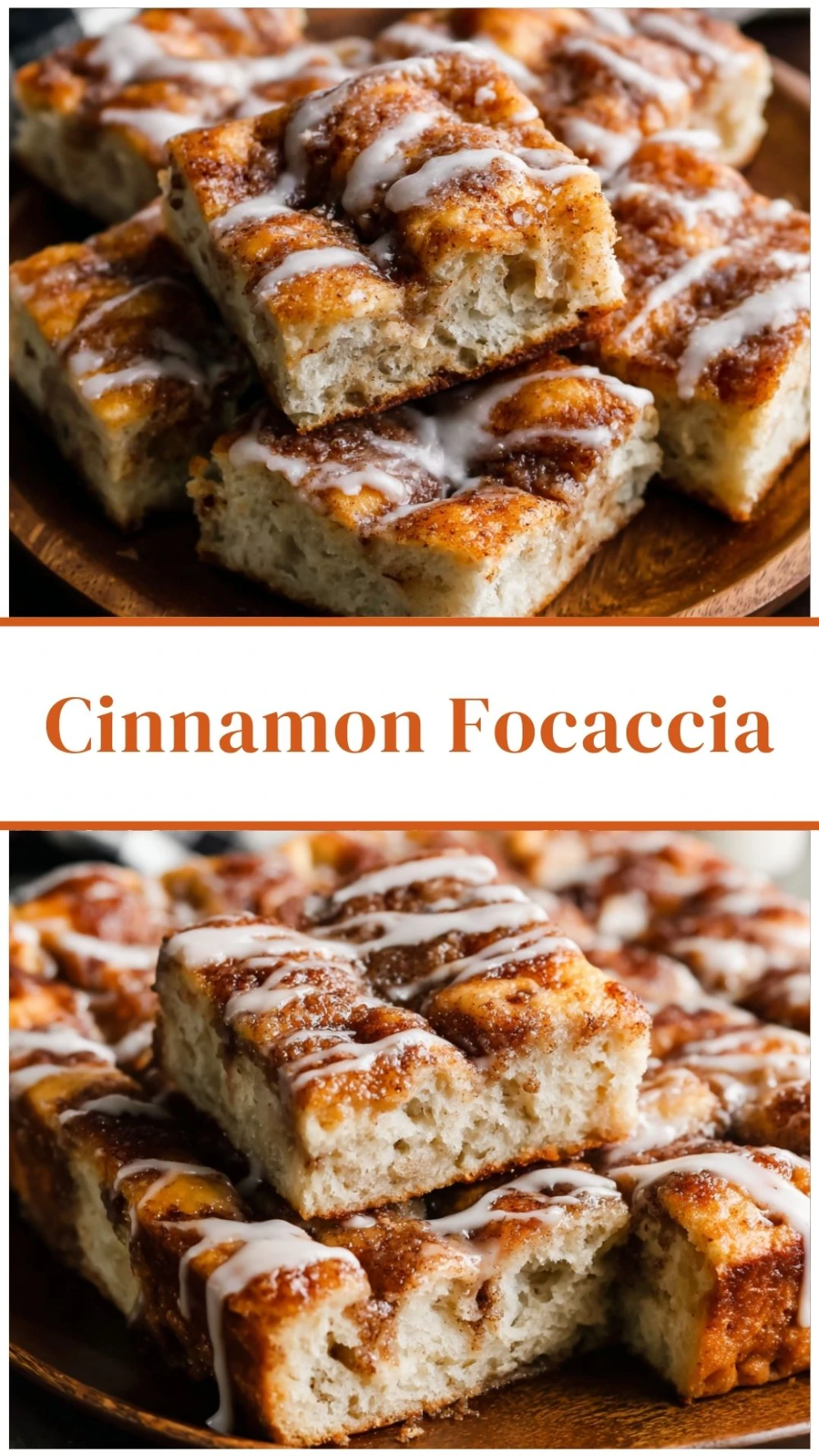
Cinnamon Focaccia
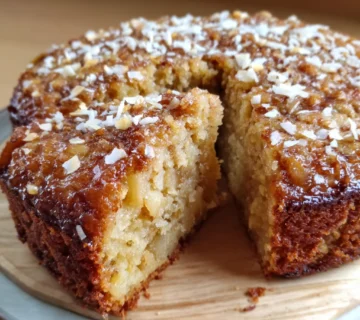
Indulge in the aromatic embrace of this sweet Cinnamon Focaccia, a delightful twist on a classic Italian bread. Infused with warm cinnamon, golden brown butter, and crowned with a luscious vanilla icing, this tender focaccia offers a comforting balance of crisp edges and a pillowy soft interior. It's an exceptional treat perfect for breakfast, brunch, or an afternoon pick-me-up.
Prep Time
30 minutes (plus 13.5-14 hours rise time)
Cook Time
20-25 minutes
Total Time
14-15 hours
Servings
12-16 squares
Keywords
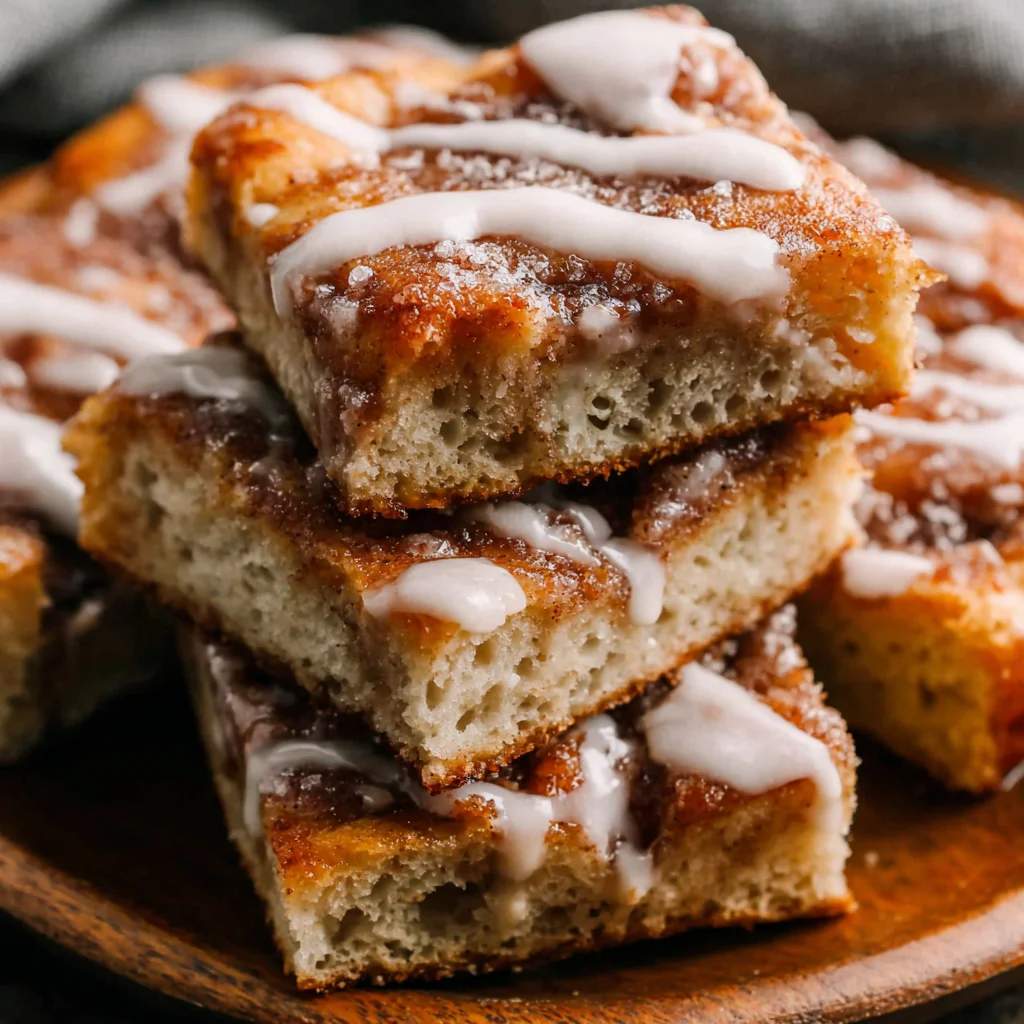
Why This Recipe Delivers
- A unique and irresistible dessert twist on a classic Italian bread.
- Features deep, complex flavors from brown butter and a long cold fermentation.
- Surprisingly simple to make, despite its impressive appearance and taste.
- Perfectly balances crisp edges with a soft, airy, and chewy interior.
- Versatile for any occasion, from brunch to a cozy evening treat.
Ingredients
- 470 mL (2 cups) warm water, heated to approximately 43°C (110°F)
- 7 grams (2 teaspoons) active dry yeast
- 4 grams (1 teaspoon) white granulated sugar
- 480 grams (4 cups) bread flour, spooned and leveled
- 9 grams (1 1/2 teaspoons) fine sea salt
- 15 mL (1 tablespoon) olive oil, plus more for coating
- 28 grams (2 tablespoons) unsalted butter, melted
- For the Cinnamon-Sugar Topping:
- 112 grams (1/2 cup) unsalted butter, for browning
- 75 grams (1/3 cup) light brown sugar, packed
- 4 grams (2 teaspoons) ground cinnamon
- For the Vanilla Icing:
- 120 grams (1 cup) powdered sugar, sifted
- 5 mL (1 teaspoon) vanilla extract
- 37.5 mL (2 1/2 tablespoons) whole milk, adjust for desired consistency
Instructions
- Begin by activating the yeast. In a small bowl, combine the warm water, ensuring it is around 43°C (110°F) to properly awaken the yeast without killing it, and the granulated sugar. Sprinkle the active dry yeast evenly over the surface of the water. Let this mixture sit undisturbed for 10-15 minutes until it becomes foamy and visibly bubbly, indicating the yeast is active and ready to work.
- Prepare the focaccia dough. In a large mixing bowl, thoroughly whisk together the bread flour and fine sea salt, ensuring even distribution. Create a well in the center of the dry ingredients, then pour in the activated yeast mixture along with 15 mL (1 tablespoon) of olive oil. Using a sturdy spatula or wooden spoon, stir everything together until the ingredients are fully combined and a sticky, shaggy dough ball forms. Lightly rub the entire surface of the dough with a small amount of olive oil to prevent it from drying out during the long fermentation.
- Initiate the first rise. Cover the bowl securely with a damp tea towel or plastic wrap. This helps maintain a moist environment for the dough. Place the covered bowl in the refrigerator for a minimum of 12 hours, or ideally up to 24 hours. The cold fermentation process develops profound flavor and a superior texture in the focaccia.
- Prepare for the second rise. Lightly grease a 23×33 cm (9×13-inch) baking pan, then line it with parchment paper, leaving an overhang on the sides to easily lift the focaccia later. Pour the 2 tablespoons of melted butter into the center of the prepared pan. Retrieve the cold dough from the refrigerator. With oiled hands, gently deflate the dough by pulling it from the sides of the bowl and folding it toward the center, repeating this several times. This action helps to redistribute the yeast and gluten. Carefully transfer the dough into the buttered pan, turning it to coat both sides. Cover the pan again and let the dough rise in a warm spot in your kitchen for 1 1/2 to 2 hours, or until it has noticeably increased in volume and become puffy.
- Prepare the brown butter. While the dough undergoes its second rise, melt 112 grams (1/2 cup) of unsalted butter in a small, light-colored saucepan over medium heat. Continuously stir or swirl the pan as the butter melts and cooks. Watch closely as it progresses from clear to foamy, then to a beautiful golden-amber color with small brown specks at the bottom. A distinct nutty aroma will emanate when it's perfectly browned. Immediately remove it from the heat and pour it into a heatproof bowl to prevent it from burning. Allow it to cool for at least 10 minutes before proceeding.
- Create the cinnamon topping. Once the brown butter has cooled slightly but is still liquid, add the light brown sugar and ground cinnamon directly into the brown butter. Stir vigorously until the brown sugar is completely dissolved and the mixture is smooth and fragrant. Set aside.
- Dimple and top the dough. Preheat your oven to 230°C (450°F). Once the focaccia dough has completed its second rise and is airy, lightly moisten your fingertips. Gently but firmly press deep dimples all over the surface of the dough, taking care not to completely flatten it. These dimples will hold the delicious topping. Evenly drizzle the prepared cinnamon-brown butter mixture over the entire dimpled surface of the dough, ensuring every part is coated.
- Bake the focaccia. Place the baking pan into the preheated oven and bake for 20-25 minutes. The focaccia is ready when the edges are deep golden brown and the center is lightly golden and baked through. Its internal temperature should reach 93°C (200°F). Let the focaccia cool in the pan for 10 minutes before carefully transferring it to a wire cooling rack to cool further.
- Finish with vanilla icing. While the focaccia cools, prepare the vanilla icing. In a small bowl, combine the sifted powdered sugar, vanilla extract, and 2 1/2 tablespoons of milk. Whisk thoroughly until the icing is completely smooth and reaches a pourable, yet thick, consistency. If it's too thick, add a few drops more milk; if too thin, add a pinch more powdered sugar. Drizzle the vanilla icing evenly over the warm focaccia. Once iced, slice the focaccia into individual squares and serve immediately to enjoy its peak freshness.
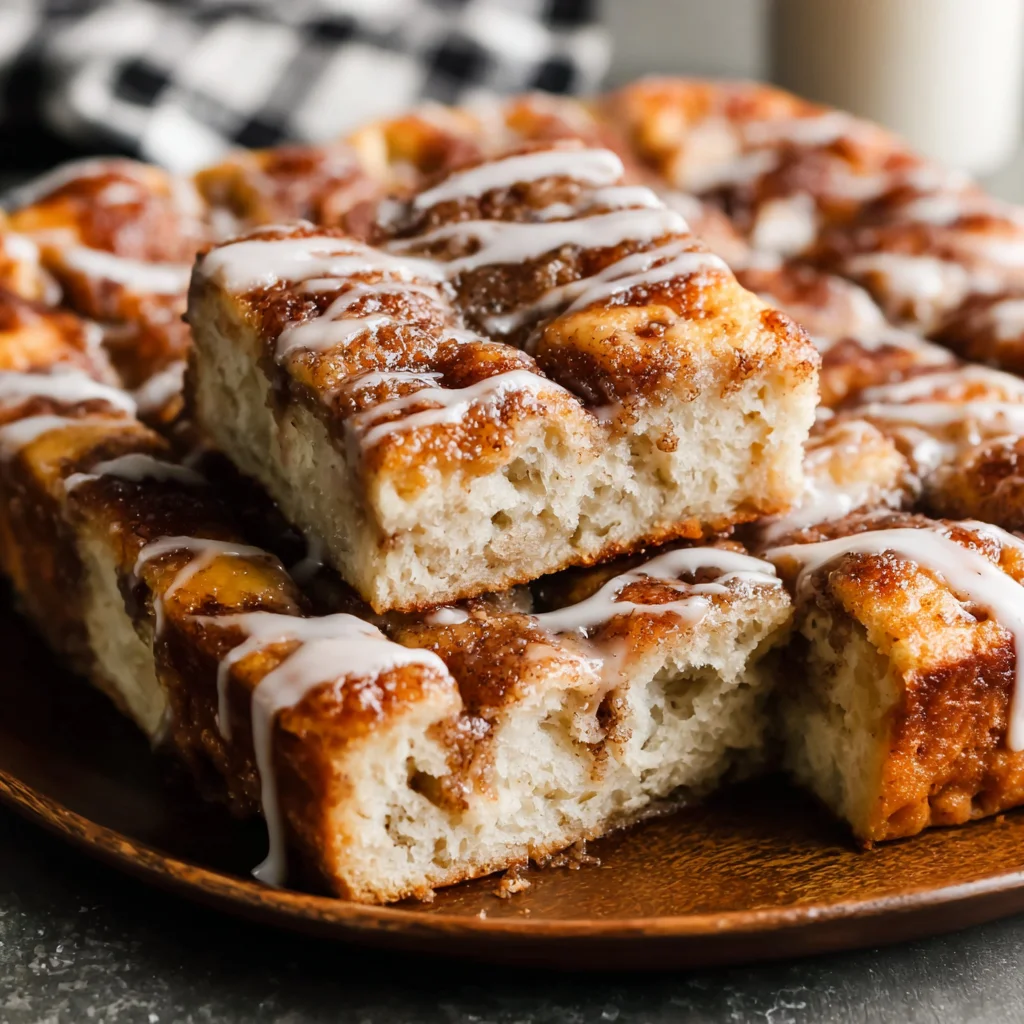
Tools You’ll Need
- Large mixing bowl
- Small bowl (for yeast)
- Whisk or spatula
- Measuring cups and spoons
- 23×33 cm (9×13-inch) baking pan
- Parchment paper
- Small saucepan (for browning butter)
- Wire cooling rack
Essential Success Tips
- Ensure your water temperature is precisely 43°C (110°F) for yeast activation. Too hot will kill it, too cold won't activate it.
- The long cold fermentation in the refrigerator is crucial for flavor development and a tender crumb; do not skip or shorten this step.
- When dimpling the dough, use wet fingertips to prevent sticking and press firmly but gently to create distinct indentations without tearing.
- Do not overbake the focaccia; it should be golden brown, not dark, to maintain its moist texture. An instant-read thermometer should show 93°C (200°F) in the center.
- Cool the brown butter slightly before mixing in the sugar and cinnamon to prevent the sugar from crystallizing too quickly.
Professional Cooking Secrets
- For an even richer flavor, use a high-quality European-style butter for browning; its higher fat content yields a more intense nutty aroma.
- A touch of orange zest, finely grated, added to the cinnamon topping or vanilla icing can elevate the citrus notes and cut through the sweetness beautifully.
- To achieve a truly airy crumb, resist the urge to knead the dough excessively. The simple stirring method combined with the long fermentation develops the gluten structure perfectly.
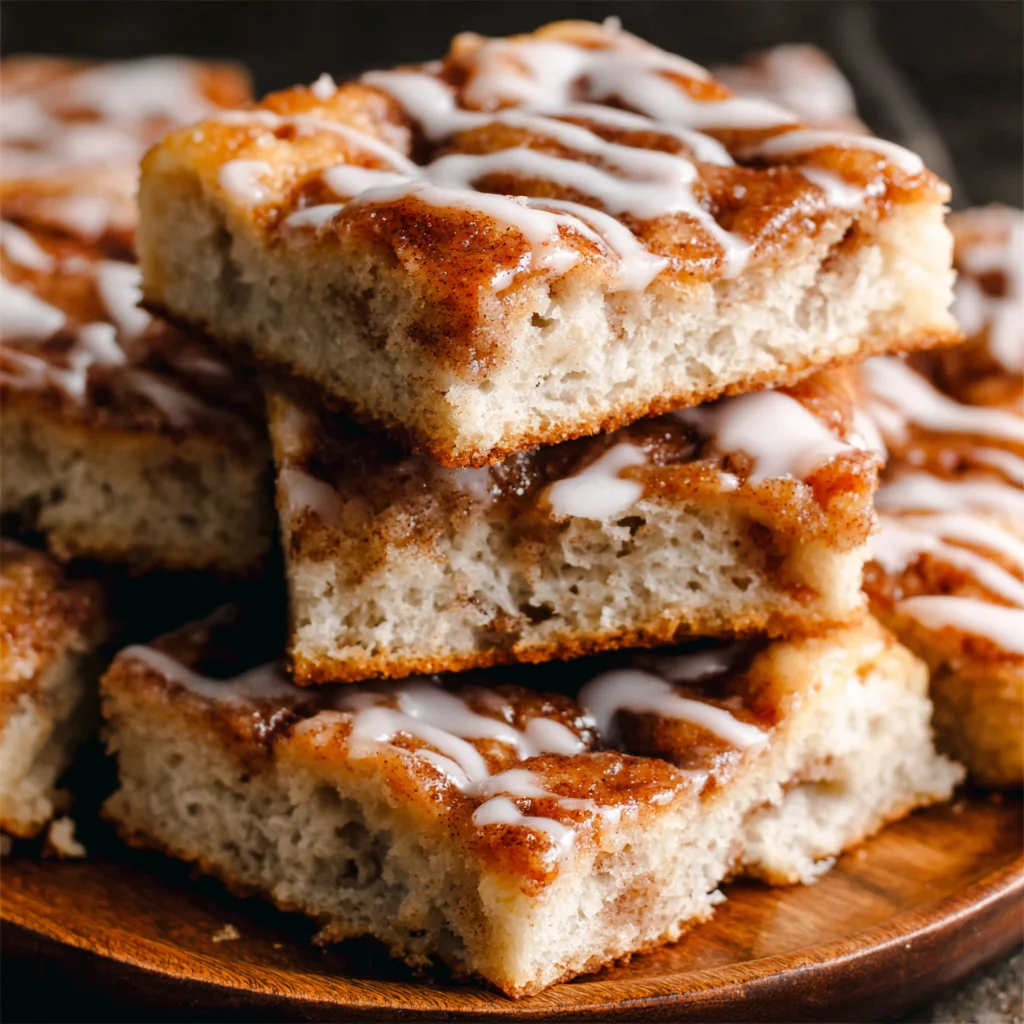
Notes
- Storage: Store leftover focaccia in an airtight container at room temperature for up to 2-3 days. Reheat briefly in the oven for best texture.
- Make ahead: The dough can be prepared up to 24 hours in advance for the first rise, making it convenient for entertaining.
- Brown butter technique: The key to perfect brown butter is constant stirring and watching closely. A light-colored saucepan helps you monitor the color changes effectively.
- Drizzle the vanilla icing while the focaccia is still warm; it will melt slightly and seep into the nooks and crannies, creating a wonderful glaze.
Frequently Asked Questions
Can I use all-purpose flour instead of bread flour?
While bread flour is recommended for its higher protein content, which contributes to a chewier focaccia, you can use all-purpose flour. The texture may be slightly less chewy but will still be delicious.
Why is the first rise in the refrigerator so long?
The extended cold fermentation (first rise) significantly enhances the flavor of the focaccia, creating complex notes that aren't achievable with a quick rise. It also improves the dough's structure and makes it easier to handle.
Can I freeze Cinnamon Focaccia?
Yes, you can freeze baked focaccia. Once completely cooled and before icing, wrap individual slices tightly in plastic wrap and then aluminum foil. Freeze for up to 1 month. Thaw at room temperature and warm in the oven before icing and serving.
Nutrition Facts (Per Serving)
Calories: Approximately 350-400 per serving (based on 12 servings), Protein: 8g, Fat: 18g, Carbs: 45g (with icing).
Allergy Information
Contains wheat (gluten) and dairy. For a dairy-free version, use a plant-based butter alternative and plant-based milk for the icing. Ensure all other ingredients are dairy-free.



No comment