

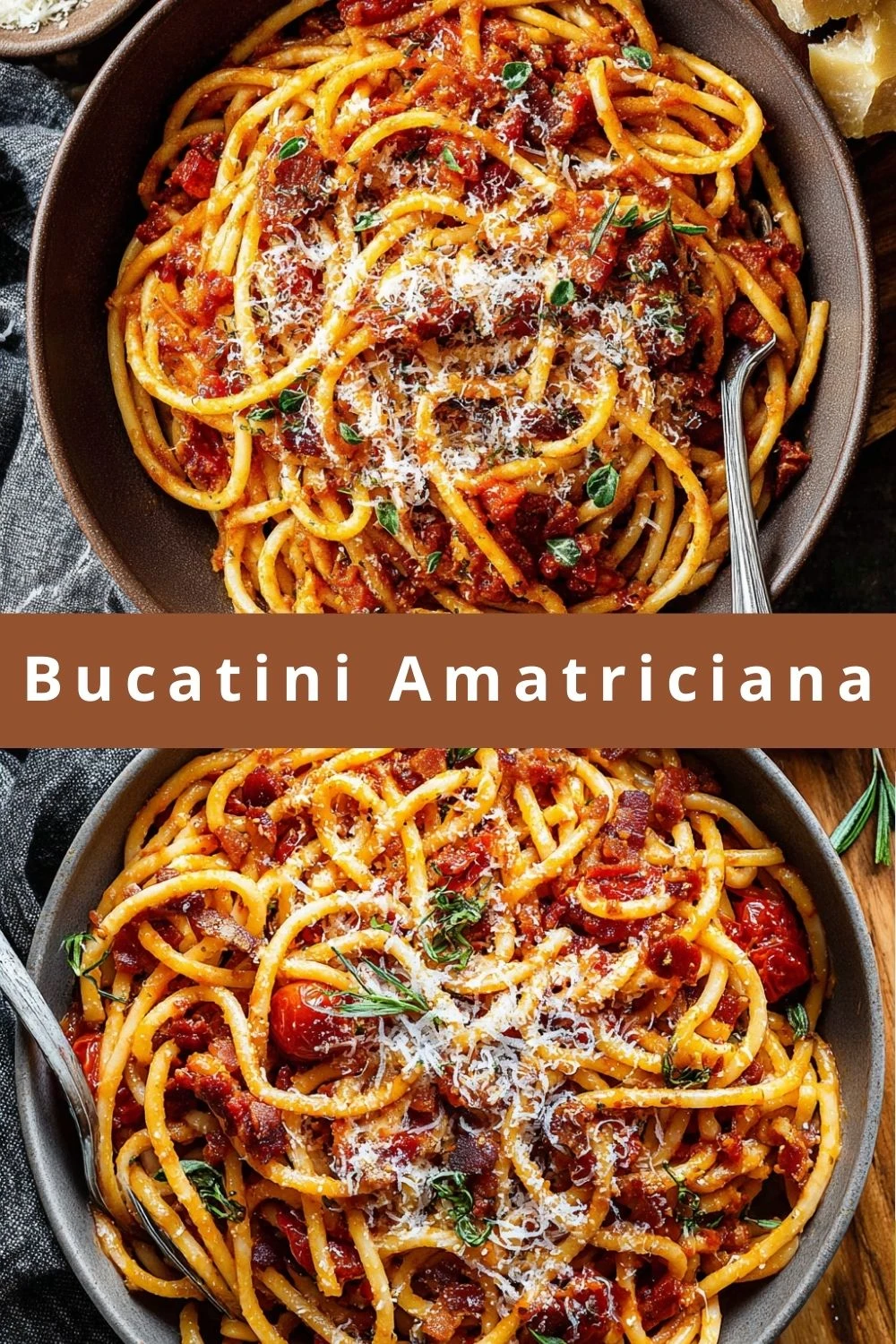
Bucatini Amatriciana
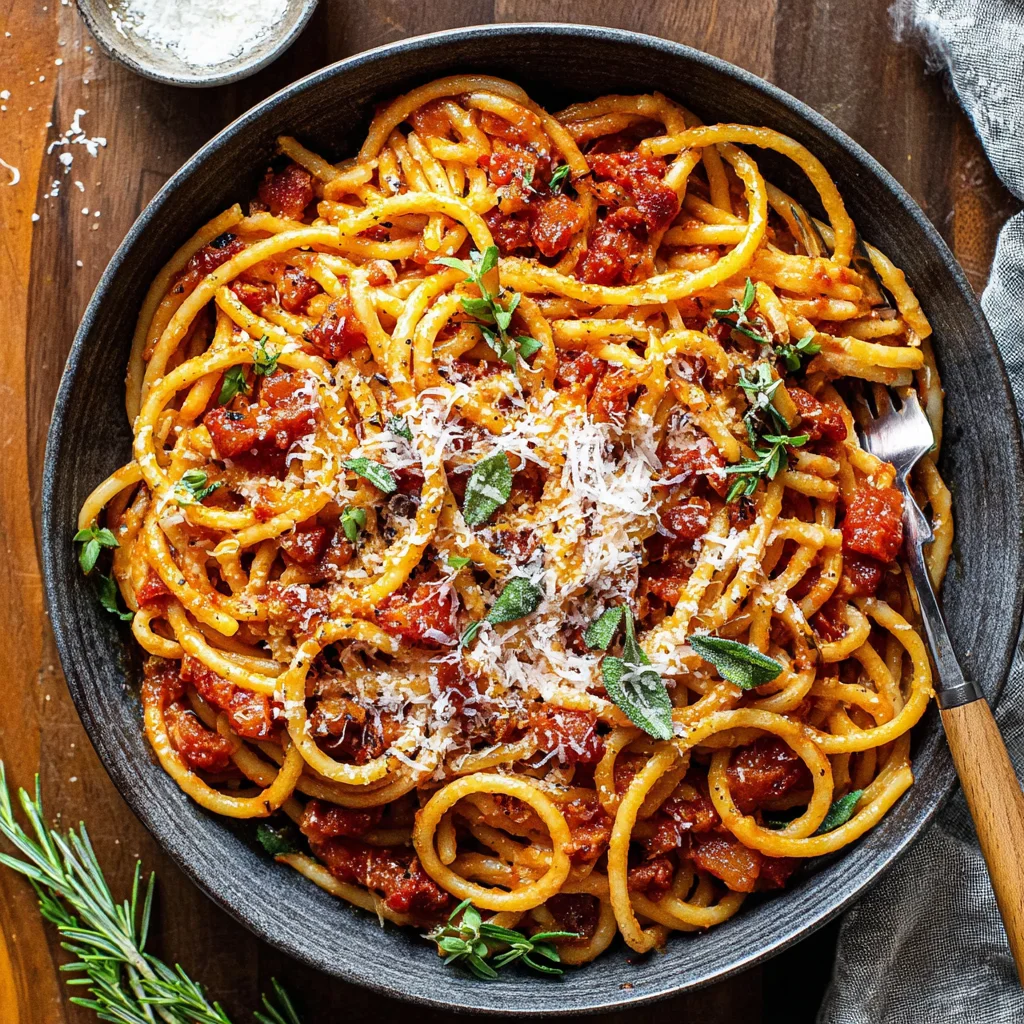
Transport your taste buds to the heart of Rome with this authentic Bucatini Amatriciana. This robust and flavorful pasta dish marries the crispy richness of guanciale with the sweet tang of San Marzano tomatoes, all brought together by a generous dusting of Pecorino Romano cheese. It's a comforting, deeply satisfying meal that’s simpler to master than you might think.
Prep Time
15 minutes
Cook Time
25-30 minutes
Total Time
40-45 minutes
Servings
4 generous servings
Keywords

Why This Recipe Delivers
- Authentic Roman Flavors: True to its roots, offering a taste of classic Italian cuisine.
- Rich & Satisfying: The combination of crispy guanciale and sweet tomatoes creates a deeply satisfying dish.
- Quick Weeknight Meal: Ready in under an hour, making it perfect for busy evenings.
- Simple Yet Elegant: Impress guests with minimal effort thanks to straightforward steps.
- Versatile Ingredient Options: Adaptable with pancetta or bacon if guanciale is hard to find.
Ingredients
- 450 grams (1 pound) bucatini pasta
- 60 grams (1/4 cup) finely diced guanciale, pancetta, or high-quality unsmoked bacon
- 2 sprigs fresh rosemary, leaves finely minced
- 2.5 ml (1/2 teaspoon) crushed red pepper flakes, adjust to taste
- 3 cans (each 400 grams / 14 ounces) whole peeled San Marzano tomatoes, crushed by hand
- Fine sea salt, for pasta water and seasoning
- Freshly cracked black pepper, to taste
- 60 grams (1/4 cup) freshly grated Pecorino Romano cheese, plus extra for serving
- Fresh basil leaves, torn, for garnish (optional)
Instructions
- Bring a large pot of heavily salted water to a rolling boil. Add the bucatini pasta and cook according to package directions until perfectly al dente, usually around 8-10 minutes. The pasta should still have a slight bite to it as it will finish cooking in the sauce.
- While the pasta cooks, heat a large, heavy-bottomed skillet or Dutch oven over medium heat. Add the finely diced guanciale (or pancetta/bacon) and render it slowly until it's beautifully crisp and golden brown, and its fat has completely melted, approximately 8-10 minutes. This slow rendering process is crucial for extracting maximum flavor. Remove the crispy guanciale with a slotted spoon and set aside, leaving the rich rendered fat in the pan.
- Reduce the heat slightly to medium-low. Add the finely minced fresh rosemary and crushed red pepper flakes to the rendered fat. Cook for about 1 minute, stirring constantly, until fragrant and the rosemary is lightly 'fried.' Be careful not to burn the aromatics.
- Carefully add the hand-crushed San Marzano tomatoes to the pan. Stir well to combine all the ingredients. Bring the sauce to a gentle simmer and let it cook for 10-15 minutes, stirring occasionally, allowing the flavors to meld and the sauce to thicken slightly. Season with a generous grind of freshly cracked black pepper.
- Just before draining the al dente pasta, reserve approximately 240 ml (1 cup) of the starchy pasta cooking water. This liquid is essential for emulsifying the sauce and creating a silky texture. Drain the bucatini thoroughly.
- Add the drained bucatini directly to the simmering tomato sauce in the skillet. Add a splash (about 60-120 ml / 1/4 to 1/2 cup) of the reserved pasta cooking water and toss vigorously with tongs, ensuring every strand of pasta is coated in the rich sauce. The pasta water helps bind the sauce to the pasta.
- Remove the pan from the heat. Stir in the freshly grated Pecorino Romano cheese and most of the reserved crispy guanciale. Toss well until the cheese has melted into the sauce, creating a creamy, emulsified texture. Taste and adjust seasoning with additional freshly cracked black pepper and salt if needed (remember that Pecorino Romano and guanciale are inherently salty, so taste before adding more).
- Divide the pasta immediately among warm plates. Garnish with the remaining crispy guanciale, torn fresh basil leaves (if using), and an extra dusting of Pecorino Romano cheese, if desired. Serve piping hot for the best experience.
Tools You’ll Need
- Large stockpot for pasta
- Large, heavy-bottomed skillet or Dutch oven
- Slotted spoon
- Tongs
- Grater for cheese
- Measuring cups and spoons
Essential Success Tips
- Render Guanciale Slowly: Don't rush this step. Slow rendering over medium heat ensures maximum flavor extraction and perfectly crispy bits.
- Use Quality Tomatoes: San Marzano tomatoes are key for the sauce's authentic sweetness and balance. Crushing them by hand yields a better texture than using a food processor.
- Pasta Water is Gold: Always reserve pasta water. Its starch helps emulsify the sauce, creating a glossy, cohesive coating for the pasta.
- Al Dente is Essential: Cook the bucatini until just al dente, as it will continue to cook slightly when tossed with the hot sauce.
- Serve Immediately: Amatriciana is best enjoyed fresh off the stove, so have your plates ready before finishing the dish.
Professional Cooking Secrets
- Emulsification Mastery: The key to a restaurant-quality sauce is emulsification. Adding a small amount of starchy pasta water to the sauce along with the pasta, then tossing vigorously off the heat with the cheese, helps the fat, liquid, and solids come together into a creamy, cohesive sauce.
- Guanciale First, Then Spice: Frying the rosemary and chili flakes directly in the rendered guanciale fat infuses their flavors deeply into the base of the sauce, creating a more profound aromatic profile.
- No Onion, No Garlic (Authentically): While some variations exist, a truly authentic Amatriciana from Amatrice typically omits onion and garlic, letting the guanciale, Pecorino, and tomatoes shine through. Resist the urge to add them for a purist experience.

Notes
- Storage: Leftovers can be stored in an airtight container in the refrigerator for up to 3 days. Reheat gently on the stovetop with a splash of water or broth to loosen the sauce.
- Variations: While guanciale is traditional, good quality pancetta or unsmoked streaky bacon can be used as alternatives. For a slightly spicier kick, increase the crushed red pepper flakes.
- Cheese Choice: Pecorino Romano is the traditional and preferred cheese for Amatriciana due to its sharp, salty flavor. Parmesan can be used in a pinch but will alter the authentic taste profile.
Frequently Asked Questions
What is guanciale and can I substitute it?
Guanciale is cured pork jowl, offering a richer, more nuanced flavor and texture than bacon or pancetta. While it's traditional, you can substitute it with good quality pancetta or unsmoked bacon if guanciale is unavailable. The flavor will be slightly different but still delicious.
Why use San Marzano tomatoes specifically?
San Marzano tomatoes are prized for their balanced sweetness, lower acidity, and delicate flavor, which are ideal for a rich, flavorful sauce like Amatriciana. They provide a superior depth of flavor compared to other canned tomatoes.
Is Amatriciana supposed to be spicy?
Amatriciana traditionally has a subtle warmth from crushed red pepper flakes, adding a pleasant kick without being overly spicy. You can adjust the amount of red pepper flakes to suit your personal preference for heat.
Nutrition Facts (Per Serving)
Calories: 600, Protein: 25g, Fat: 30g, Carbs: 60g (Estimates based on typical ingredients and serving sizes).
Allergy Information
Contains gluten (pasta) and dairy (Pecorino Romano). For a gluten-free version, use gluten-free bucatini or another long pasta. Not suitable for vegetarians due to guanciale/pancetta/bacon.




No comment