

3-Ingredient Easy Sugar Cookies
These 3-Ingredient Easy Sugar Cookies are a testament to simple baking at its finest, delivering pure, unadulterated cookie joy with minimal effort. With a buttery, melt-in-your-mouth texture and a perfectly sweet flavor, they're incredibly versatile and perfect for any occasion. This recipe proves that you don't need a pantry full of ingredients to create something truly delicious and satisfying.
Prep Time
15 minutes
Cook Time
14-16 minutes
Total Time
45-50 minutes
Servings
Makes approximately 30-36 cookies
Keywords

Why This Recipe Delivers
- Incredibly simple to make with only three core ingredients, plus optional flavorings and decorations.
- Achieves a perfect balance of buttery richness and sweet flavor with a delightful tender crumb.
- Versatile for any occasion – from casual snacking to festive decorating for holidays.
- Ready in under an hour, making it perfect for a quick sweet treat or last-minute baking.
- A fantastic beginner-friendly baking project that yields impressive results.
Ingredients
- 226 grams (1 cup) unsalted butter, softened to room temperature
- 158 grams (⅔ cup) granulated sugar, for the dough, plus 37 grams (3 tablespoons) granulated sugar, for coating
- 255 grams (2 cups plus 1 tablespoon) all-purpose flour, spooned and leveled
- 5 milliliters (1 teaspoon) vanilla extract (optional)
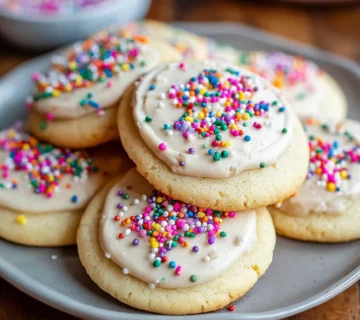
- Rainbow sprinkles or nonpareils (optional, for decoration)
Instructions
- Preheat the oven to 163°C (325°F) and line two large baking sheets with parchment paper. This ensures even cooking and prevents sticking.
- In a large mixing bowl, using an electric mixer, cream together the softened unsalted butter and 158 grams (⅔ cup) of granulated sugar on medium speed until the mixture is light, fluffy, and smooth, about 2-3 minutes. This aeration process incorporates air, which is key for a tender cookie texture.
- Gradually add the 255 grams (2 cups plus 1 tablespoon) of all-purpose flour to the butter-sugar mixture. Mix on low speed until the flour is just incorporated and a cohesive dough forms. If using, fold in the 5 milliliters (1 teaspoon) of vanilla extract at this stage until evenly distributed. Be careful not to overmix, as excessive gluten development can lead to tough cookies.
- Place the remaining 37 grams (3 tablespoons) of granulated sugar in a shallow bowl. Scoop out portions of dough, approximately 20 grams each, and roll them into uniform 2.5-cm (1-inch) balls. Roll each dough ball thoroughly in the reserved sugar until evenly coated, then place them about 5 cm (2 inches) apart on the prepared baking sheets.
- Gently press down on the top of each dough ball with the palm of your hand or the bottom of a glass to slightly flatten them into thick discs. This helps them bake more evenly. If desired, immediately sprinkle with rainbow sprinkles or nonpareils, pressing them lightly into the dough to adhere.
- Bake the cookies in the preheated oven for 14-16 minutes, or until the edges appear lightly golden and the centers are just set but still look soft. The cookies will firm up considerably as they cool. Avoid overbaking for a chewier, more tender result.
- Once baked, remove the baking sheets from the oven and allow the cookies to cool on the sheets for 10-15 minutes. This crucial resting period allows them to set fully before handling, preventing them from breaking. After this initial cooling, transfer the cookies carefully to a wire rack to cool completely.

Tools You’ll Need
- Large mixing bowl
- Electric hand mixer or stand mixer
- Rubber spatula
- Measuring cups and spoons
- Baking sheets
- Parchment paper
- Small shallow bowl for sugar coating
- Wire cooling rack
Essential Success Tips
- Ensure butter is at true room temperature (softened but not melted) for the best creaming results. Cold butter won't incorporate well, and melted butter will lead to greasy, flat cookies.
- Do not overmix the dough once the flour is added; mix only until just combined to keep the cookies tender and prevent them from becoming tough.
- Use a consistent size for rolling dough balls to ensure all cookies bake evenly. A small cookie scoop or kitchen scale can assist with this.
- Pressing the cookies down slightly helps them bake more uniformly and prevents them from puffing up too much in the center.
- Keep a close watch on the cookies during the last few minutes of baking; they can go from perfectly golden to overbaked quickly, especially due to varying oven temperatures.
Professional Cooking Secrets
- For an extra layer of flavor complexity without adding ingredients, lightly toast the flour before mixing. Spread the flour on a baking sheet and bake at 150°C (300°F) for 5-7 minutes, then cool completely before using. This adds a subtle, nutty note to the cookies.
- If you have time, chill the dough for 20-30 minutes after mixing and before rolling. This helps to firm up the butter, resulting in less spread during baking and a slightly chewier, more substantial cookie.
- Experiment with different sugars for coating; coarse turbinado sugar can add a delightful textural crunch and sparkling appearance, while flavored sugars (e.g., cinnamon sugar) can introduce another dimension of taste.

Notes
- Storage: Store cooled cookies in an airtight container at room temperature for up to 5-7 days to maintain freshness.
- Freezing: Baked cookies can be frozen for up to 3 months. Thaw at room temperature. Unbaked dough balls can also be frozen; bake from frozen, adding a couple of minutes to the baking time.
- Variations: For a bright twist, add 5ml (1 teaspoon) of lemon or orange zest to the dough. A pinch of cinnamon or cardamom can also be added for a warm, spiced flavor.
Frequently Asked Questions
Can I use salted butter for these cookies?
While unsalted butter is preferred for better control over the salt content in baking, you can use salted butter. If doing so, be mindful of the added sodium and consider whether any additional salt in other variations would be appropriate.
Why are my sugar cookies spreading too much during baking?
Excessive spreading can occur for several reasons: if your butter was too warm (even slightly melted), if the dough wasn't sufficiently chilled (if you opted to chill it), or if the flour wasn't measured accurately. Ensure your butter is softened but still cool to the touch, and consider chilling the dough for 20 minutes before baking to help firm up the butter.
Can I make these cookies gluten-free?
Yes, you can successfully adapt this recipe to be gluten-free. Substitute the all-purpose flour with a 1:1 gluten-free baking flour blend that contains xanthan gum. The texture might be slightly different, but the delicious flavor will remain.
Nutrition Facts (Per Serving)
Per cookie (estimated, based on 33 cookies): Calories: ~120, Protein: ~1g, Fat: ~7g, Saturated Fat: ~4.5g, Carbs: ~13g, Sugars: ~8g
Allergy Information
Contains dairy and gluten. For a gluten-free version, use a gluten-free all-purpose flour blend. This recipe can be made nut-free; however, always check the labels of any sprinkles or nonpareils if using, as some may contain allergens or be processed in facilities with nuts.



No comment